
Orquesta conocimientos de IA para convertirlos en acción

Tendencias
Categories
Airbus Suspends A220-500 Development Amid Industry Concerns
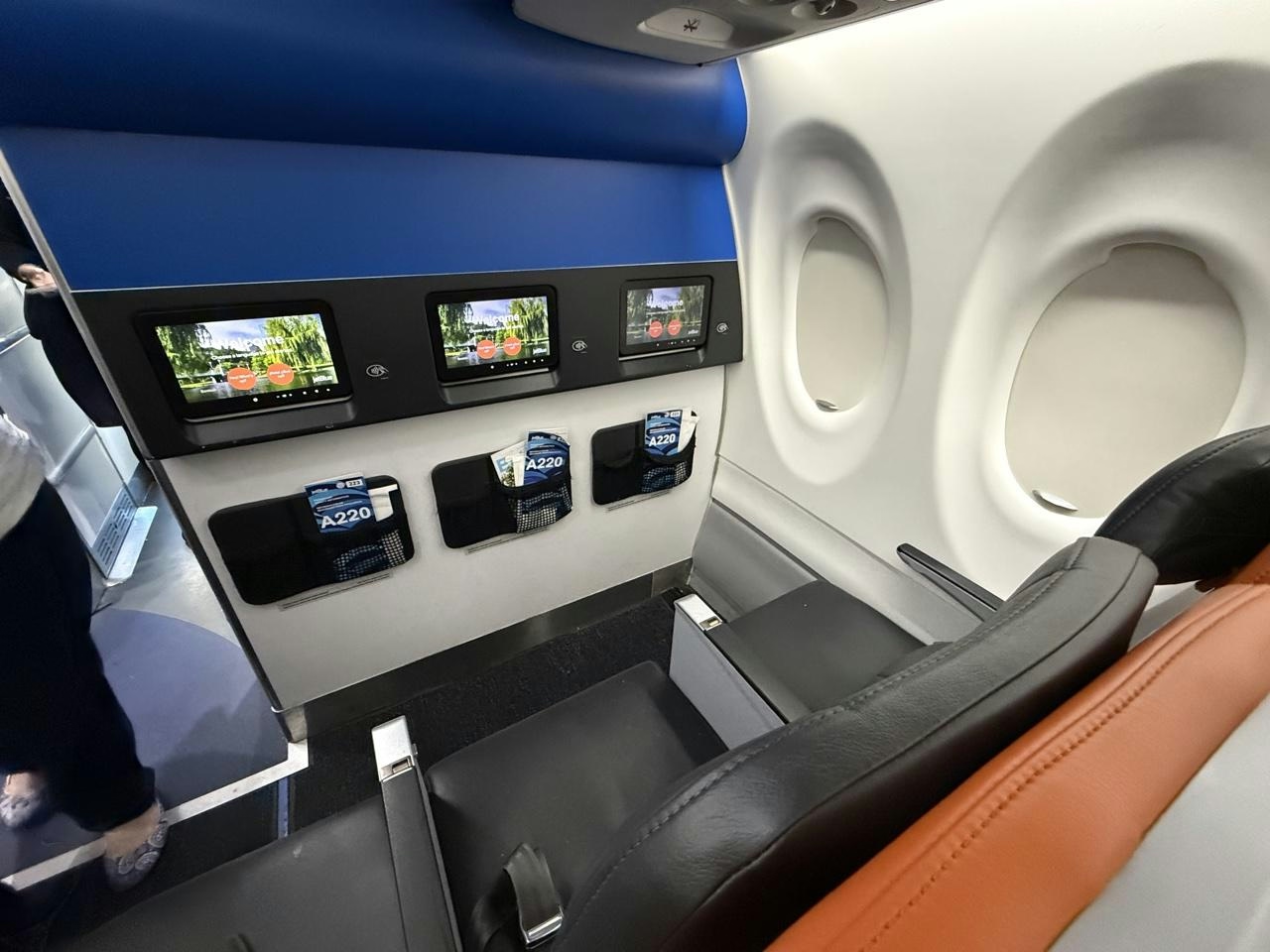
Airbus Suspends Development of A220-500 Amid Industry Challenges
Airbus has announced the suspension of its development program for the A220-500, a stretched variant of the existing A220-300 model. This decision follows growing concerns expressed by airlines, leasing companies, and Airbus’s own commercial teams, according to sources cited by Reuters. The move comes at a time when the European aerospace manufacturer is contending with broader operational difficulties, including delays in its A350 program and the integration of recently acquired U.S. parts factories.
Strategic and Market Considerations
The A220-500 was initially expected to be unveiled at the Farnborough Airshow in July and was designed as a straightforward stretch of the A220-300. The proposed model aimed to increase seating capacity to approximately 180 passengers while retaining the current wing design and Pratt & Whitney GTF engines. This approach was intended to keep development costs low, though it would have resulted in a reduced range compared to the existing aircraft—a compromise that has divided potential customers.
While the larger aircraft promised improved operating costs per seat, some airlines have expressed reservations about sacrificing range and performance for additional capacity. Leasing companies have also responded cautiously, concerned that the introduction of a larger A220 could blur the distinction between the A220 family and the Airbus A320neo series. Many lessors, heavily invested in the A320neo, fear that this overlap could negatively impact the residual values of their existing fleets.
Implications for Airbus and the Single-Aisle Market
The suspension places Airbus in a challenging position. Since acquiring the A220 program from Bombardier in 2018, the manufacturer has struggled to achieve sustained profitability, with recent orders lost to Brazilian competitor Embraer. The A220-500 had the potential to reduce production costs across the A220 line and bolster Airbus’s competitiveness in the single-aisle market. However, internal assessments now question whether the new variant would attract new customers or merely cannibalize demand from the highly successful A320neo.
Market reactions to the suspension have been mixed. Some analysts interpret the pause as a strategic decision, allowing Airbus to concentrate on more profitable segments and address ongoing operational issues. Others view it as a missed opportunity to challenge Embraer more aggressively, especially as the Brazilian manufacturer recently surpassed 500 orders for its E2 family following a significant deal with U.S. lessor Azorra.
Despite Airbus securing the largest A220 order to date from Malaysian low-cost carrier AirAsia, totaling 150 aircraft, the program continues to face financial pressures. The uncertainty surrounding the A220-500’s future has fueled speculation that Embraer could further capitalize on Airbus’s difficulties, potentially expanding its market share in the critical single-aisle segment.
As Airbus reevaluates its strategy, the future of the A220-500 remains uncertain, underscoring the complex interplay between market demand, internal priorities, and an evolving competitive landscape.

Etihad Airways Suspends Airbus A380 Flights on Key Route

Aditya Birla Group Seeks Approval for Aircraft Leasing in GIFT City

Qatar Airways Highlights Innovation and Connectivity at Arabian Travel Market 2026

Hong Kong's Five-Year Plan Includes Andrew Fan's Aircraft Parts Processing Hub Proposal

ACIA Aero Leasing Delivers ATR72-600 to Air Nostrum

RTX Appoints Jill Albertelli as Head of Pratt & Whitney

TAT Technologies Joins Beyond Aero Hydrogen Aircraft Program

AURAK Study Highlights Barriers to Air Taxi Adoption in Emerging Economies

Xiamen Air Selects Altitude for 787 Maintenance at Heathrow

Etihad and Swissport Extend Global Partnership
