
Orquesta conocimientos de IA para convertirlos en acción

Tendencias
Categories
American Airlines’ Plans for Artificial Intelligence
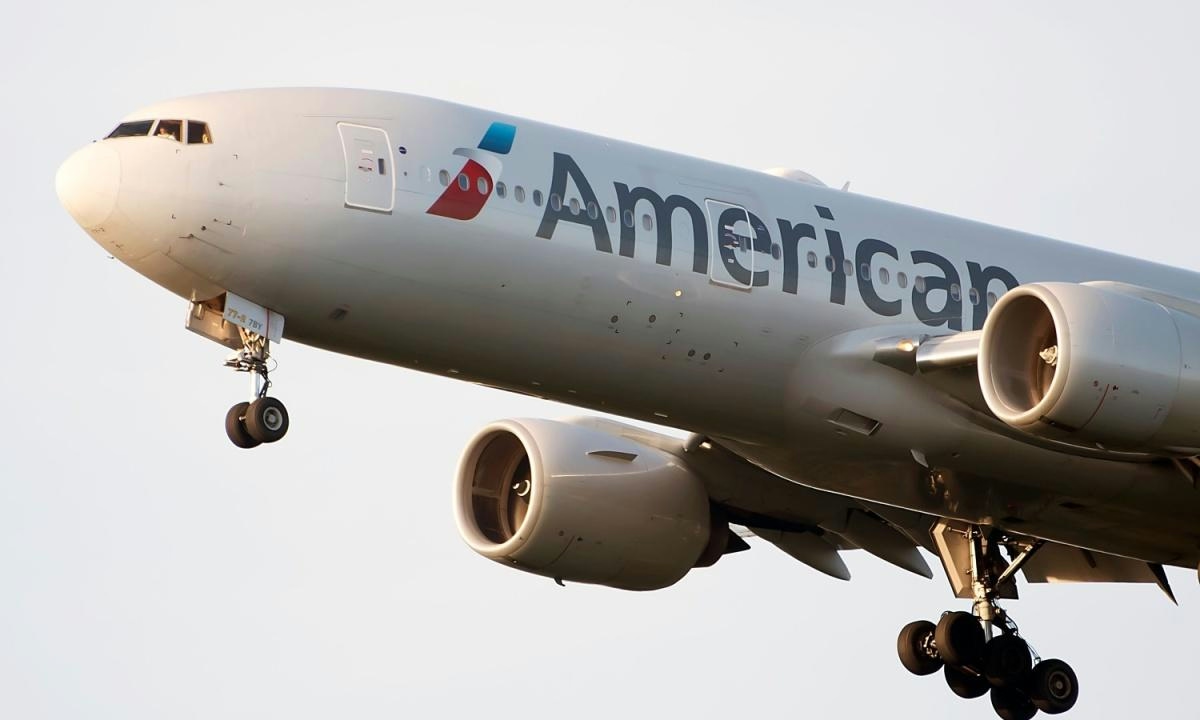
American Airlines Advances Artificial Intelligence Integration Amid Industry Evolution
Last year, American Airlines CEO Robert Isom expressed reservations about employing artificial intelligence for fare pricing. Nevertheless, the airline is actively incorporating AI across various facets of its operations. In a recent interview with Skift, Sam Liyanage, American Airlines’ vice president of digital customer experience, outlined the company’s strategic deployment of AI, particularly in enhancing customer engagement and optimizing operational logistics.
Enhancing Customer Experience Through AI
Liyanage emphasized the airline’s use of generative AI to assist travelers in selecting destinations. He noted a shift in travel search behavior from rigid filters to more natural, conversational queries. The airline’s AI-powered search tool enables customers to input highly specific requests, such as “somewhere warm under $800.” Early data indicates that users are increasingly posing complex, personalized questions that integrate factors like budget, loyalty status, timing, and desired experiences into a single prompt. The AI then synthesizes these elements into clear, actionable options, fostering deeper engagement with search results.
Although Liyanage did not reveal the proportion of customers utilizing the AI-based search tool compared to traditional methods, he stressed that the technology is facilitating a more nuanced and satisfying search experience.
Operational Efficiency and Industry Context
Beyond customer interaction, AI is playing an expanding role in American Airlines’ flight scheduling and logistics. Liyanage explained that the system now analyzes live operational data—including weather conditions, taxi times, and gate availability—to enable rapid, informed decisions aimed at safeguarding the customer journey. This real-time analysis is intended to enhance operational efficiency and reduce disruptions, potentially improving overall customer satisfaction.
American Airlines’ AI initiatives coincide with a broader industry focus on artificial intelligence, driven by high-profile IPOs from companies such as SpaceX, Anthropic, and OpenAI. These developments have spurred increased investment in AI technologies across multiple sectors, including aviation. However, the airline faces challenges as it scales its AI efforts. Market volatility is anticipated to rise in 2026 due to divisions within the Federal Reserve and fluctuating economic indicators, factors that could affect investor confidence. Additionally, market sensitivity to unexpected policy changes remains a concern amid current high valuations.
The expected decline in interest rates, coupled with a surge in AI-related spending, may either support or constrain American Airlines’ stock performance, contingent on the company’s ability to manage operational reliability and costs effectively. Competitors are closely monitoring American Airlines’ AI strategy, recognizing that its success could influence wider industry adoption.
The impact of these AI-driven transformations on customer satisfaction will become clearer with the release of J.D. Power’s annual North America Airline Satisfaction Survey this May, which is poised to provide valuable insights into traveler responses to American Airlines’ technological advancements.

Etihad Airways Suspends Airbus A380 Flights on Key Route

Aditya Birla Group Seeks Approval for Aircraft Leasing in GIFT City

Qatar Airways Highlights Innovation and Connectivity at Arabian Travel Market 2026

Hong Kong's Five-Year Plan Includes Andrew Fan's Aircraft Parts Processing Hub Proposal

ACIA Aero Leasing Delivers ATR72-600 to Air Nostrum

RTX Appoints Jill Albertelli as Head of Pratt & Whitney

TAT Technologies Joins Beyond Aero Hydrogen Aircraft Program

AURAK Study Highlights Barriers to Air Taxi Adoption in Emerging Economies

Xiamen Air Selects Altitude for 787 Maintenance at Heathrow

Etihad and Swissport Extend Global Partnership
