
Orquesta conocimientos de IA para convertirlos en acción

Tendencias
Categories
Analyzing Key Factors and Their Hierarchy in Green Supply Chain Management for China’s Aerospace Manufacturing

Analyzing Key Factors and Their Hierarchy in Green Supply Chain Management for China’s Aerospace Manufacturing
This study offers a systematic examination of the critical factors influencing the adoption of Green Supply Chain Management (GSCM) within China’s aerospace manufacturing sector. It further explores the interrelationships among these factors, providing a hierarchical framework to better understand their relative importance. The research is grounded in data collected through an extensive expert questionnaire survey, designed to capture the complexity and evolving nature of the industry.
Expert Selection and Methodology
To ensure comprehensive and authoritative insights, the study engaged 150 experts representing diverse segments of the aerospace GSCM value chain. These experts were carefully selected based on their professional experience and relevance to the field. The cohort included mid-to-senior managers from aerospace manufacturing enterprises, such as aircraft and engine producers and key system and component suppliers, each averaging 15 years of direct involvement in green transformation or supply chain management initiatives. Academics and researchers from leading universities and specialized aerospace research centers contributed their expertise, bringing over a decade of experience in sustainable operations and industrial policy related to GSCM.
The panel also incorporated consumer representatives, including frequent business travelers and environmentally conscious individuals with a strong interest in sustainability, all holding at least a bachelor’s degree. Executives and technical specialists from recycling and remanufacturing enterprises provided insights into aerospace material recycling, component remanufacturing, and waste management practices. Additionally, government officials and policy researchers from national and local regulatory bodies—such as the Ministries of Industry and Information Technology, Ecology and Environment, Civil Aviation Administration, and the national defense science and technology sector—offered perspectives on industry planning, environmental regulation, and green manufacturing promotion.
All participants were vetted through industry recommendations, academic networks, or professional associations and confirmed their familiarity with aerospace manufacturing and GSCM concepts prior to their involvement.
Questionnaire Design and Analytical Framework
The core instrument of the study was a 14 by 14 influence relationship matrix, focusing on 14 preliminary GSCM factors specific to aerospace manufacturing. Experts independently evaluated the degree of influence each factor exerted on the others using a five-point Likert scale, ranging from zero (no influence) to four (very strong influence). This approach allowed for a nuanced assessment of the interdependencies among factors, reflecting the experts’ professional judgment and experience. The questionnaire was administered through a secure online platform to ensure data integrity and confidentiality.
Industry Context and External Influences
The study situates its analysis within the broader context of China’s aerospace manufacturing environment, which is characterized by significant challenges and dynamic shifts. Government policy changes, economic fluctuations, and geopolitical uncertainties all play a critical role in shaping the sector’s strategic priorities and operational capabilities. These external factors can affect the implementation and effectiveness of GSCM initiatives, influencing how companies prioritize sustainability within their supply chains.
Market dynamics, including variations in consumer confidence and demand for capital goods, further impact supply chain strategies. Competitors respond by adapting production methods and logistics to maintain market position, adding layers of complexity to green supply chain management. Moreover, China’s strategic role as a global supply chain hub and its efforts to deepen integration into international industrial networks introduce additional variables that affect GSCM practices.
By integrating expert-driven analysis with an understanding of these external pressures, the study provides a robust foundation for advancing green supply chain management in China’s aerospace manufacturing sector, highlighting the need for a hierarchical and context-sensitive approach to factor prioritization and implementation.

Bangladesh Launches Initiative to Become Regional Aviation Hub
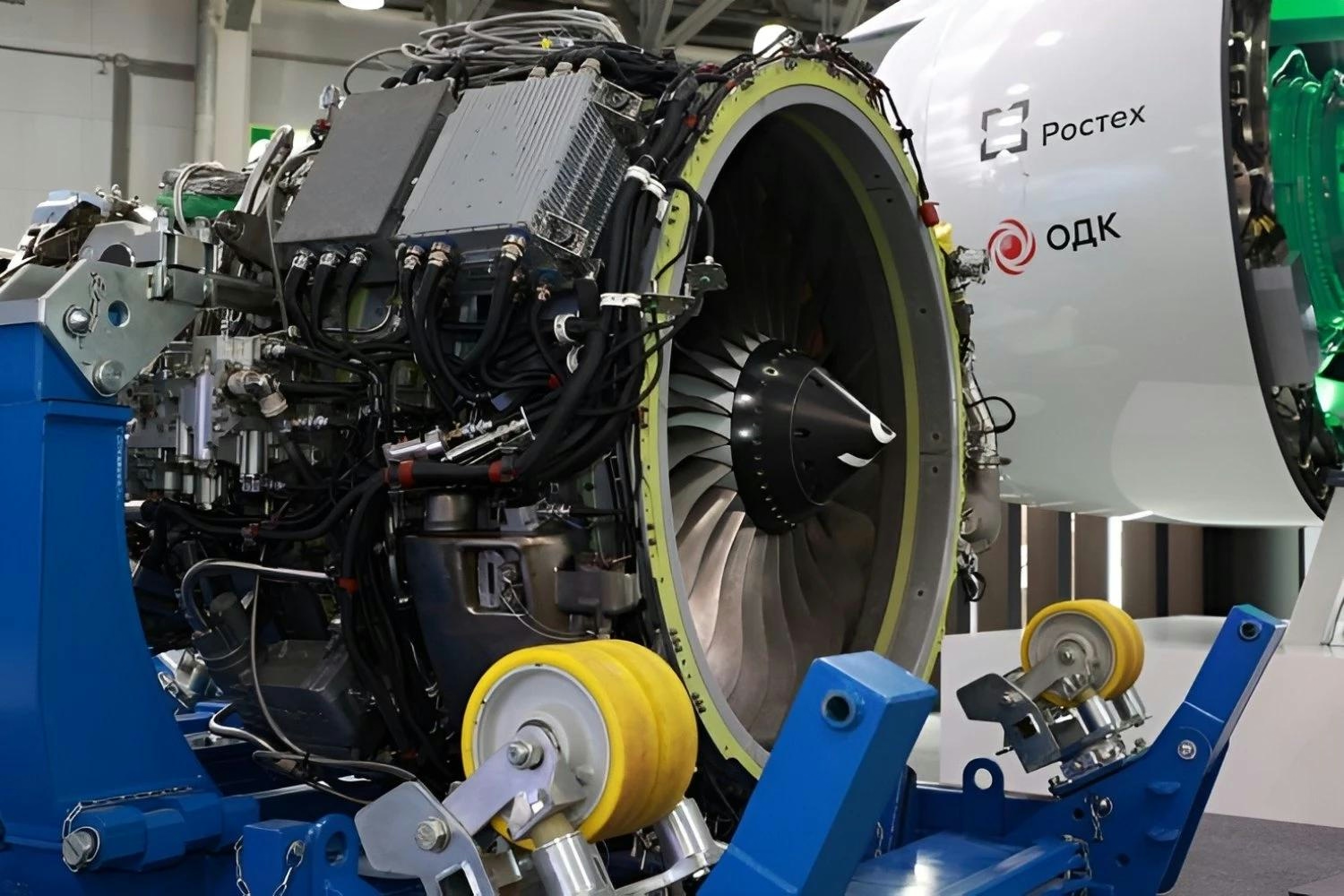
Russia Transports PD-8 Engine to India for International Certification

Kyrgyzstan to Adopt EMPIC GmbH Software for Flight Safety Oversight

Why Hawaiian Airlines Is Waiting Until 2028 To Add A Premium Economy Cabin To Its Airbus A330 Fleet

Engine Fault Causes Royal Navy Helicopter Crash Fatality

Joby Aviation Begins Texas Air Taxi Test Flights Amid Stock Decline

Iberia Receives Full Approval for Airbus A350 Heavy Maintenance

NetJets to Construct Terminal and Hangar at Dallas Love Field

Using AI in Aircraft Purchases

CIAM Unveils RPD-150T Engine to Replace Rotax 150 hp Model
