
Orquesta conocimientos de IA para convertirlos en acción

Tendencias
Categories
ASA Advocates for Development of Sustainable Aviation Fuels

ASA Champions the Advancement of Sustainable Aviation Fuels in Mexico
Aeropuertos y Servicios Auxiliares (ASA) has reaffirmed its pivotal role in driving Mexico’s national strategy to decarbonize air transport through the development of a comprehensive roadmap for Sustainable Aviation Fuels (SAF). Since 2024, ASA has intensified its institutional commitment to aviation sustainability, collaborating closely with government agencies to position Mexico as a leader in the adoption and development of SAF.
Strategic Leadership and Collaborative Efforts
Captain Carlos Manuel Merino Campos, ASA’s Director General and head of the technical working groups for the SAF initiative, emphasized the critical need to harmonize regulations, promote technological innovation, secure adequate raw materials, and comply with stringent international standards. He stated, “If we can align regulations, support technological innovation, ensure sufficient raw materials, and meet the highest international standards, we will take a decisive step toward a cleaner, more competitive, and more responsible aviation sector.” ASA’s efforts have been bolstered by the active participation of key stakeholders, including the National Energy Commission, Petróleos Mexicanos (Pemex), and the National Institute of Ecology and Climate Change, alongside international organizations. Their collaboration is deemed essential to guarantee the technical, economic, and social viability of SAF initiatives within Mexico.
Challenges and Market Dynamics
Despite these advances, the expansion of SAF production faces significant challenges. The industry requires more long-term offtake agreements to scale up output effectively. Additionally, recent policy developments, such as the European Commission’s proposal to broaden its emissions trading system, have introduced further uncertainty. Airlines remain cautious, wary of the so-called “valley of death” period during which producers struggle to increase production capacity, leading to hesitancy in committing substantial investments to SAF projects.
Market reactions have been varied. Some carriers, notably International Airlines Group (IAG), have taken proactive steps by securing long-term SAF offtake agreements and engaging in investment funds dedicated to renewable fuels. Conversely, other airlines maintain a more reserved stance, while some competitors face legal disputes concerning renewable fuel standards. Nonetheless, the sector is witnessing a gradual increase in production volumes and fresh investments, driven by the rising demand for sustainable fuel alternatives.
ASA’s Role in Mexico’s Aviation Fuel Market
In 2025, ASA solidified its position as Mexico’s foremost jet fuel supplier, commanding a majority share of the aviation fuel market and operating a nationwide network of fuel stations that dispense over 5.4 billion liters annually. This extensive logistical infrastructure is expected to be instrumental in integrating sustainable fuels into the country’s aviation fuel supply chain. As ASA advances its SAF roadmap, the agency remains dedicated to addressing industry challenges and supporting Mexico’s transition toward a more sustainable and competitive aviation sector.

Etihad and Swissport Extend Global Partnership

Sepehran Airlines B737 Returns to Mashhad After Tyre and Engine Issues

Etihad Deploys Widebody Fleet to Meet Strong Demand

Korean Air Finalizes $36.2 Billion Deal with Boeing

Australia’s RFDS Queensland Section Orders Six King Air 260Cs

Korean Air Finalizes Order for 103 Boeing Jets and Engines
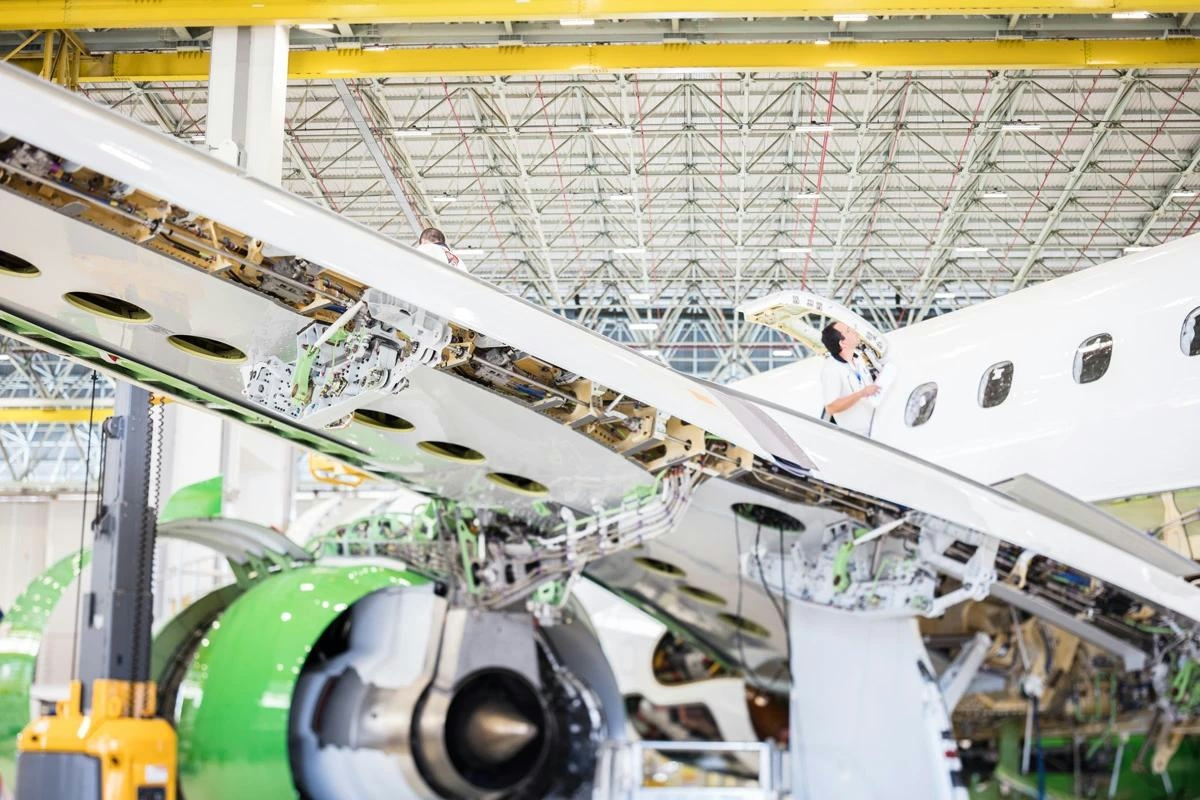
Embraer E195-E2 Features Distinctive Engine Placement Among Regional Jets

What Passengers Can Expect on Boeing’s New 777X Jet

How Ethiopian Airlines Became Africa’s Leading Carrier Amid Gulf Competition

Joby Aviation Extends Autonomous Flight Capabilities with Cross-Country Tour
