
Orquesta conocimientos de IA para convertirlos en acción

Tendencias
Categories
AURAK Study Highlights Barriers to Air Taxi Adoption in Emerging Economies

AURAK Study Highlights Barriers to Air Taxi Adoption in Emerging Economies
A recent study conducted by the American University of Ras Al Khaimah (AURAK) has shed light on the principal obstacles impeding the adoption of air taxis in emerging economies. This research offers a strategic framework for policymakers and industry leaders as the United Arab Emirates intensifies its efforts to advance urban air mobility initiatives.
Research Context and Methodology
Published in the International Journal of Mathematical, Engineering and Management Sciences, the study titled Analyzing the Barriers of Adopting Air Taxis in Emerging Economy Context: A Decision-Making Framework was spearheaded by Professor Tahseen Arshi, Dean of AURAK’s School of Business, in collaboration with researchers from India. The timing of this research is particularly significant, coinciding with ambitious plans by cities such as Dubai to introduce commercial air taxi services alongside substantial investments in regulatory and infrastructural support systems.
Air taxis, predominantly electric vertical take-off and landing (eVTOL) aircraft, are widely regarded as a promising solution to urban congestion, offering faster and more environmentally friendly transportation options. However, despite rapid technological advancements, their broad adoption remains constrained by challenges that extend beyond engineering.
The study employs the Technology-Organization-Environment-Human (TOEH) framework, complemented by Interpretive Structural Modelling (ISM) and MICMAC analysis, to identify and categorize seventeen major barriers into technological, organizational, environmental, and human factors. This approach enabled the researchers to map the interrelationships among these barriers and determine which require immediate attention.
Key Barriers to Adoption
Among the most critical challenges identified are regulatory and legal uncertainty, effective airspace management, technological readiness, infrastructure development, investment requirements, public trust and safety concerns, and awareness and acceptance of the technology. The research highlights regulatory ambiguity as the most influential barrier, underscoring the necessity for clear policy frameworks and standards as a prerequisite for addressing other challenges effectively.
Professor Khalid Hussain, Provost of AURAK, emphasized the importance of a holistic approach, stating, “The future of transportation extends far beyond developing new aircraft. It requires building an ecosystem where technology, regulation, infrastructure, and public confidence evolve together.” This perspective reflects AURAK’s commitment to tackling practical challenges while supporting the UAE’s ambition to lead in innovation and smart mobility.
Global Market Trends and Industry Perspectives
The findings align with broader global trends in the air taxi market. While companies such as Skyhop have made strides with electric seaplanes, others like EHang have encountered setbacks due to regulatory delays, particularly in China. Market responses remain varied, with consumer acceptance and regulatory clarity emerging as pivotal hurdles. Industry strategies also differ, with established manufacturers like Airbus and Embraer focusing on traditional aircraft advancements, whereas innovators such as Virgin and Joby are advancing eVTOL air taxi technologies.
Professor Arshi remarked, “Air taxis have the potential to transform urban transportation, but successful adoption depends on much more than technological innovation. Our study shows that policymakers, regulators, and industry must address regulatory clarity, infrastructure readiness, stakeholder collaboration, and public trust simultaneously.” He expressed hope that the proposed framework would facilitate informed decision-making and accelerate the responsible adoption of urban air mobility in emerging economies.
As the UAE positions itself at the forefront of advanced air mobility, the AURAK study offers a practical decision-making tool to guide governments and industry stakeholders in scaling urban air mobility solutions safely, efficiently, and with broad public acceptance.

Hong Kong's Five-Year Plan Includes Andrew Fan's Aircraft Parts Processing Hub Proposal

ACIA Aero Leasing Delivers ATR72-600 to Air Nostrum

RTX Appoints Jill Albertelli as Head of Pratt & Whitney

TAT Technologies Joins Beyond Aero Hydrogen Aircraft Program

Xiamen Air Selects Altitude for 787 Maintenance at Heathrow

Etihad and Swissport Extend Global Partnership
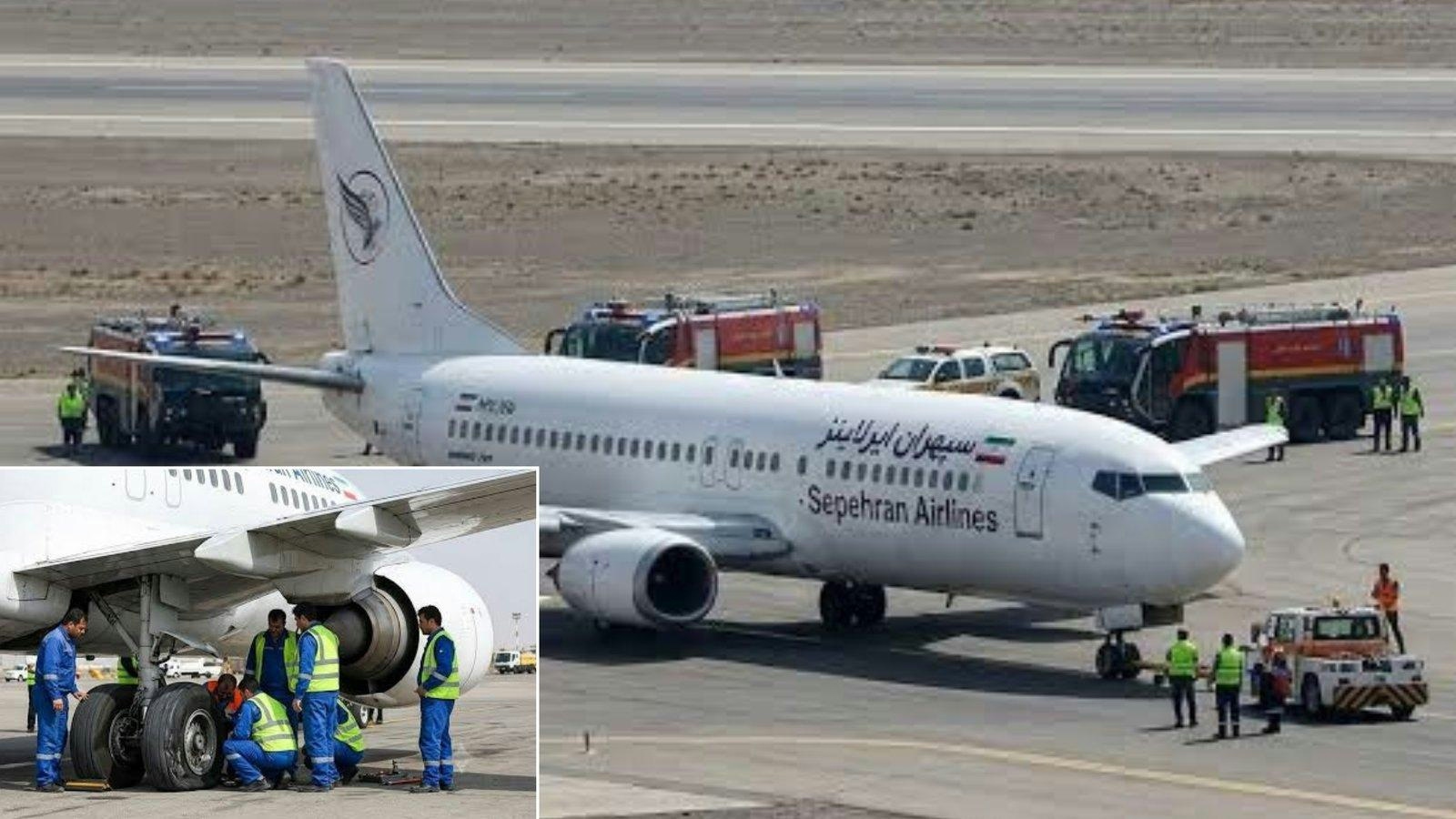
Sepehran Airlines B737 Returns to Mashhad After Tyre and Engine Issues

Etihad Deploys Widebody Fleet to Meet Strong Demand
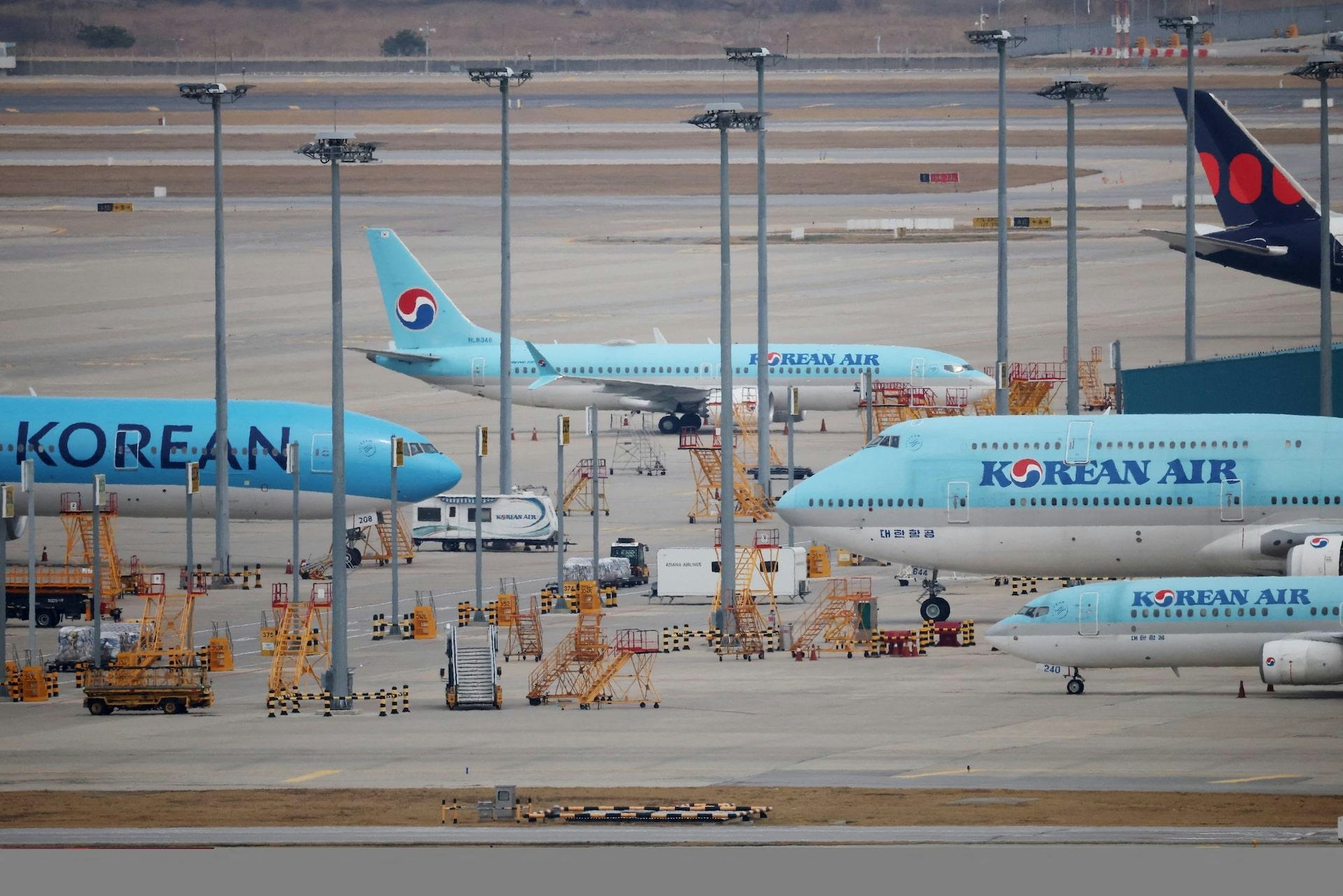
Korean Air Finalizes $36.2 Billion Deal with Boeing
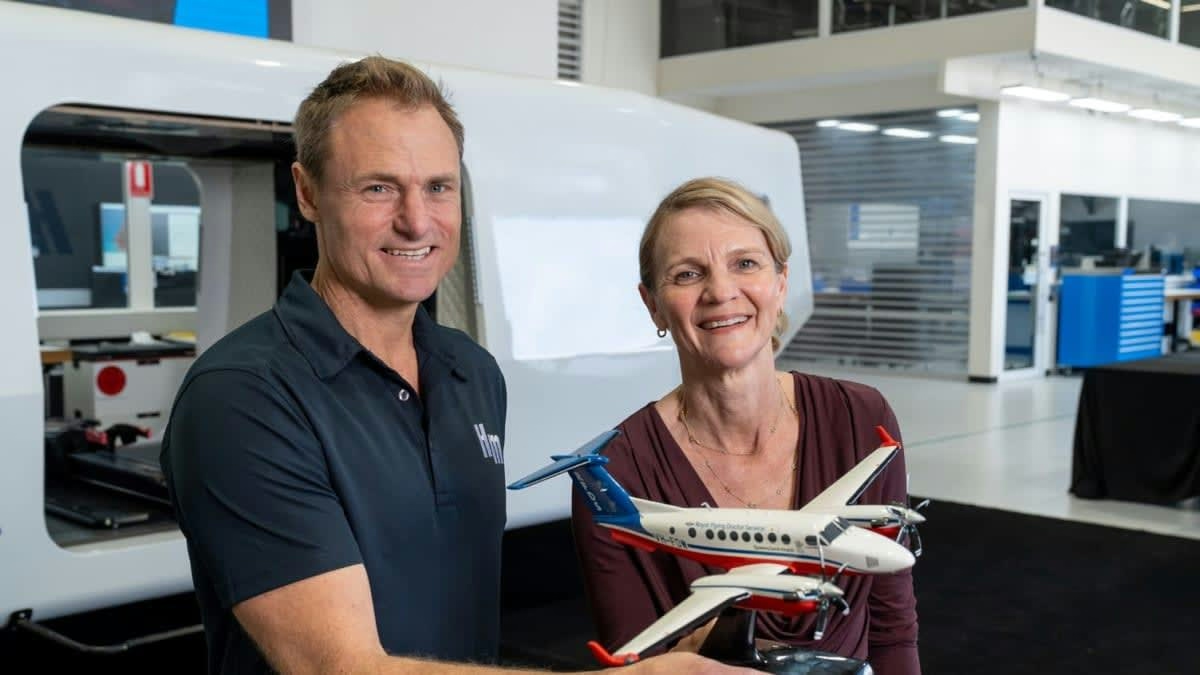
Australia’s RFDS Queensland Section Orders Six King Air 260Cs
