
Orquesta conocimientos de IA para convertirlos en acción

Tendencias
Categories
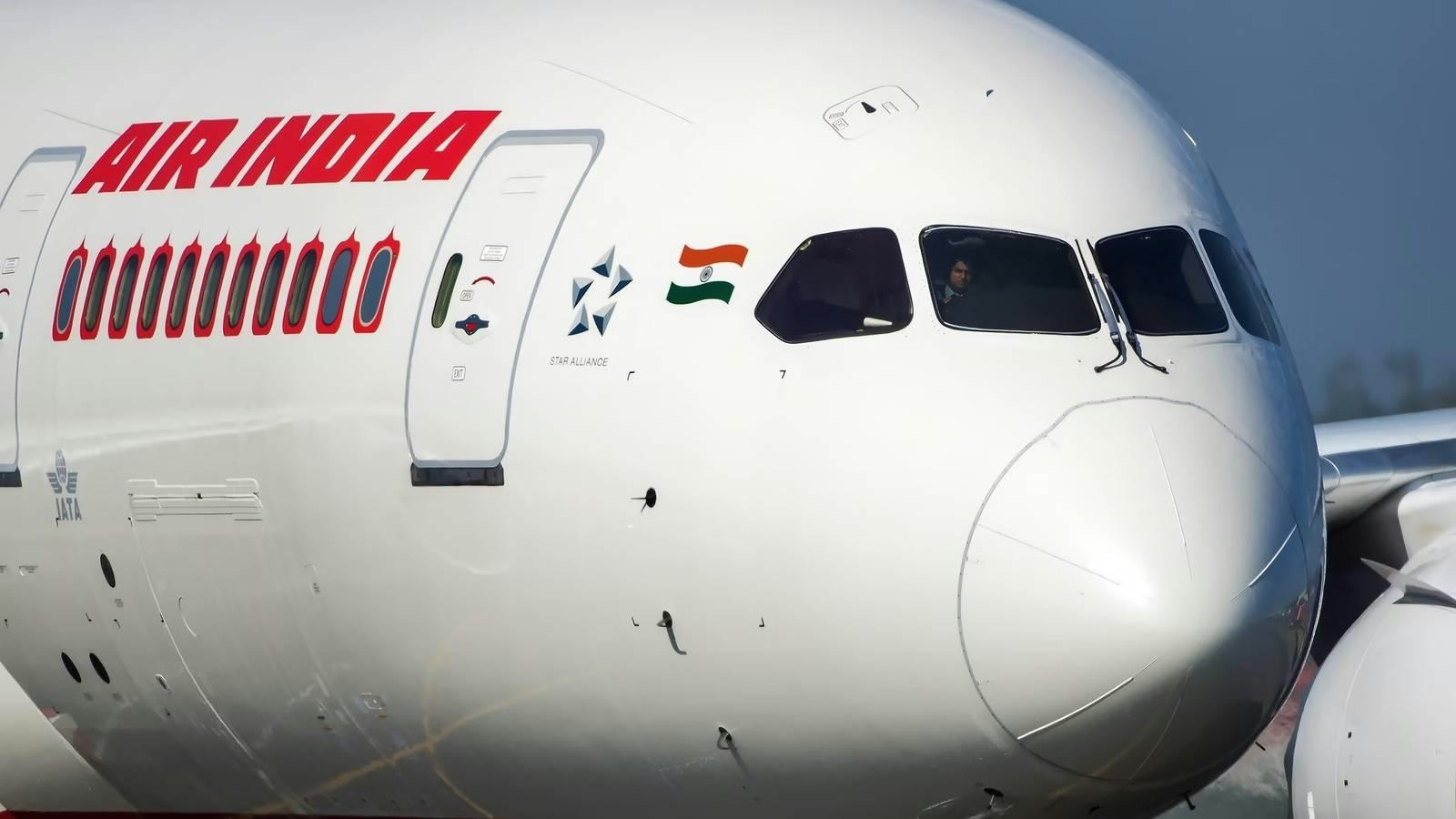
Aviation Regulator Issues Notice to Air India Over Repeated Aircraft Malfunctions
Aviation Regulator Issues Notice to Air India Over Repeated Aircraft Malfunctions
DGCA Raises Concerns Over Operational Safety
India’s Directorate General of Civil Aviation (DGCA) has formally issued a show-cause notice to Air India following the operation of flights AI-358 and AI-357 between Delhi and Tokyo despite prior knowledge of persistent technical malfunctions and ongoing system degradation. The notice, dated December 29, criticizes the operating crew for accepting the aircraft “without adequate understanding of MEL (minimum equipment list) limitations and system interdependencies,” a requirement mandated under the Civil Aviation Requirements (CARs).
The DGCA’s investigation revealed that repetitive faults involving the same systems had been recorded on five previous sectors, indicating a sustained pattern of system degradation. The regulator emphasized that, despite this history, the pilots of the two flights proceeded with operations while fully aware of the repeated snags and existing system issues. A specific violation was noted on June 28, 2025, when flight AI-358 failed to comply with MEL “O” conditions concerning the lower right recirculation fan. The DGCA highlighted that the crew did not adequately assess the combined operational and safety risks posed by multiple inoperative systems, contravening CAR regulations.
Air India and the pilots involved have been given a 14-day window to respond to the notice. The DGCA is considering enforcement actions under the relevant provisions of the Aircraft Rules and CAR in light of these violations.
Context of Regulatory Scrutiny Amidst Safety Concerns
This regulatory action comes amid heightened scrutiny of Air India’s safety practices following the tragic crash of flight AI171, a Boeing 787, in Ahmedabad on June 12, which claimed 260 lives. The incident has intensified examination of the airline’s operational culture and adherence to safety protocols.
Amit Singh, an aviation safety expert and founder of the Safety Matters Foundation, remarked that the issues identified reflect a broader systemic problem within Air India. He pointed to a pattern of dispatching aircraft despite known technical degradations, normalizing defects, and prioritizing procedural compliance over genuine safety. Singh noted on social media that repeated malfunctions, including smoke smells and MEL juggling on Boeing 787s, continue to be overlooked until pilots are held accountable, resulting in a cycle of regulatory notices without substantive change.
The ongoing malfunctions and regulatory interventions present significant challenges for Air India, with potential consequences including increased regulatory scrutiny, financial penalties, and damage to the airline’s reputation. These developments may erode passenger confidence and impact share prices, while competitors could leverage Air India’s difficulties to attract customers.
Broader Industry Challenges in India’s Aviation Sector
Air India’s troubles are not isolated within the Indian aviation industry. IndiGo, another leading carrier, has also faced operational disruptions and regulatory challenges, highlighting the broader difficulties in maintaining reliability and compliance amid rapid sector growth. As Indian airlines navigate complex technical and regulatory demands, the industry faces mounting pressure to enhance safety standards and rebuild public trust.
Comments

Etihad Airways Suspends Airbus A380 Flights on Key Route

Aditya Birla Group Seeks Approval for Aircraft Leasing in GIFT City

Qatar Airways Highlights Innovation and Connectivity at Arabian Travel Market 2026

Hong Kong's Five-Year Plan Includes Andrew Fan's Aircraft Parts Processing Hub Proposal

ACIA Aero Leasing Delivers ATR72-600 to Air Nostrum

RTX Appoints Jill Albertelli as Head of Pratt & Whitney

TAT Technologies Joins Beyond Aero Hydrogen Aircraft Program

AURAK Study Highlights Barriers to Air Taxi Adoption in Emerging Economies

Xiamen Air Selects Altitude for 787 Maintenance at Heathrow

Etihad and Swissport Extend Global Partnership
