
Orquesta conocimientos de IA para convertirlos en acción

Tendencias
Categories
Boeing Anticipates Faster Aircraft Development as Certification Nears Completion
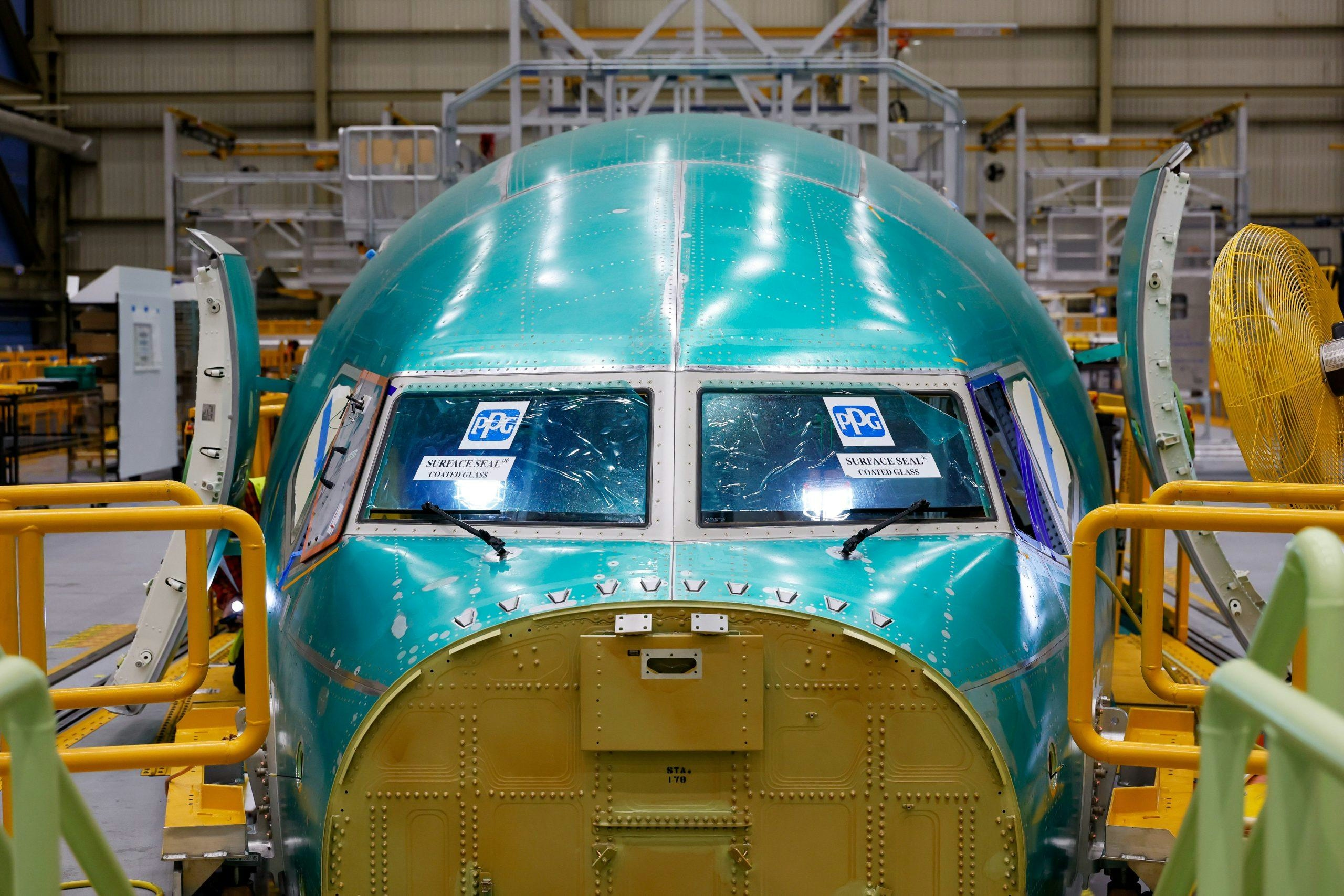
Boeing Accelerates Aircraft Development as Key Certifications Near Completion
Boeing is poised to expedite the development of its next-generation aircraft as it approaches the final stages of critical certifications and scales up production, according to Stephanie Pope, chief executive of Boeing Commercial Airplanes (BCA). While the company does not anticipate launching a new aircraft in the immediate future, Pope emphasized that completing outstanding certifications for the 737 Max 7, Max 10, and 777-9 widebody models will release vital financial and technical resources. This, in turn, will enable Boeing to redirect focus toward future projects.
“You’ll start to see [product development] ramp up as we complete that certification work and we take those resources and move them over,” Pope stated during remarks in London last week. She highlighted that the engineering expertise and capabilities currently dedicated to certification efforts will soon be available to expand Boeing’s product development team.
Certification Progress and Production Expansion
Boeing expects the US Federal Aviation Administration (FAA) to certify the 737 Max 7—the smallest variant in the Max family—this summer, with certification for the larger Max 10 anticipated before the end of the year. Deliveries of the 777-9 are scheduled to commence next year. Despite this progress, regulatory challenges remain significant, as securing these certifications is a prerequisite for fully shifting focus to new aircraft development.
Pope refrained from providing a specific timeline for introducing a new aircraft, noting that such decisions depend on market demand, technological readiness, and Boeing’s financial position. Industry analysts have long projected that Boeing and its rival Airbus will unveil next-generation narrowbody jets in the mid-2030s. However, recent remarks from Rick Deurloo, president of Pratt & Whitney’s commercial engines division, suggest this timeline may extend closer to 2040 due to ongoing supply chain disruptions and the need for greater industry stability.
Boeing’s financial recovery is closely linked to the performance of the 737 Max program, which accounts for up to 70% of BCA’s cash flow. Pope underscored the importance of ramping up production, stating, “Getting that programme up to rate is very, very important to our recovery.” The company is currently increasing 737 production from 42 to 47 jets per month and has recently inaugurated a fourth production line in Everett, supplementing three existing lines in Renton. This new “North Line” is expected to facilitate a production rate of 53 jets per month, with potential for further expansion.
Financial and Technological Outlook
Despite returning to profitability in 2025 with a $2.2 billion profit after five consecutive years of losses totaling $36 billion, Boeing continues to carry a substantial debt load of $44 billion as of March. Investors remain attentive to the company’s financial and technical readiness to embark on new aircraft development, with market reactions reflecting a degree of caution.
On the technological front, Boeing executives have indicated that future narrowbody aircraft must achieve efficiency gains of 20 to 30 percent over current models. Much of this improvement is expected to come from new engine technologies under development by GE Aerospace, Pratt & Whitney, and Rolls-Royce.
The competitive environment is also evolving rapidly. As Boeing signals its intent to accelerate development, competitors such as Airbus may adjust their own timelines in response. The stakes are considerable, with the global aviation market projected to see passenger traffic double and the commercial fleet expand significantly over the next two decades. This intensifies the race for technological innovation and market leadership within the industry.

Anduril, Archer, Expeditors, and StandardAero Announce Key Developments in Aviation Logistics

Volatility Challenges Joby Aviation Stock
Safran stock trades steadily as engines and services support earnings momentum
Mohammed Bellatig Reappointed Head of Morocco’s Aerospace Industry Group

AutoFlight Demonstrates Advanced Air Mobility at Games of the Future 2026 in Astana

How Air France Is Transforming the Digital Passenger Experience

The Role of Lubrication in Aircraft Reliability and Performance
Alaska Airlines 737 Diverts To Eugene After Engine Oil Warning Prompts Mid-Air Shutdown
Boeing Explores AI Applications for C-17 Maintenance
Anta Scaffolding Chosen for Al Maktoum Airport Project, Expands Presence in Dubai
