
Orquesta conocimientos de IA para convertirlos en acción

Tendencias
Categories
Boeing Reports Highest First-Half Aircraft Deliveries Since 2018
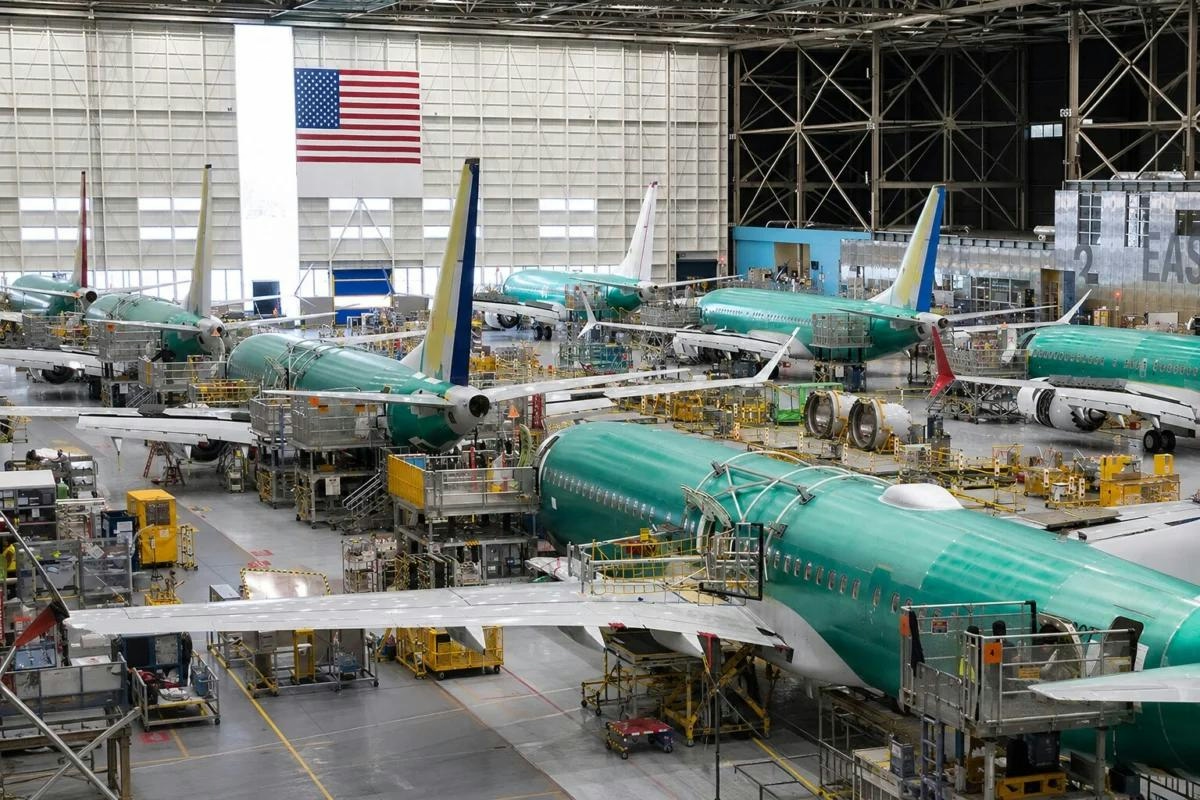
Boeing Reports Highest First-Half Aircraft Deliveries Since 2018
Boeing achieved a significant milestone in June by delivering 64 jetliners, an increase from 60 in May, culminating in its highest first-half aircraft deliveries since 2018. Over the first six months of the year, the U.S. aerospace manufacturer handed over a total of 314 aircraft, representing a 12% rise compared to the same period last year. This growth underscores Boeing’s ongoing recovery and expansion amid a competitive and evolving global aviation market.
Despite this progress, Boeing remains behind its primary competitor, Airbus, which delivered 89 jets in June and 351 aircraft in the first half of the year. Airbus has notably accelerated deliveries of its A320neo family, reinforcing its dominant market position. However, the European manufacturer recently revised its 20-year industry-wide forecast for passenger aircraft demand downward by 1%, attributing the adjustment to geopolitical tensions, including the ongoing conflict in Iran and broader global trade uncertainties.
Delivery Breakdown and Production Outlook
In June, Boeing’s deliveries comprised 42 of its best-selling 737 MAX jets, 13 787 Dreamliners—including five aircraft delayed due to seat certification issues for the startup carrier Riyadh Air—three 777 freighters, and five 767s, three of which are slated for conversion into KC-46 aerial refueling tankers by Boeing’s defense division.
Looking forward, Boeing anticipates an increase in deliveries during the second half of the year, driven by plans to raise monthly production of the 737 MAX from 42 to 47 units. This production ramp-up aims to meet sustained global demand for commercial jets, although manufacturers remain cautious, adjusting forecasts in response to geopolitical and economic uncertainties that continue to influence the industry.
Order Activity and Market Dynamics
In June, Boeing secured 121 new orders while recording eight cancellations, resulting in a net gain of 113 orders for the month. The company’s cumulative orders for the 737 MAX have now reached 7,206, surpassing the 7,159 orders received for its previous best-selling 737 Next Generation model.
Among notable customer developments, Canadian airline WestJet canceled orders for six 737s, while Aviation Capital Group placed an order for six 737s intended for leasing to WestJet. Year-to-date, Boeing has achieved 408 net orders after accounting for cancellations and conversions, reflecting steady demand despite some fluctuations in customer commitments.
Competitive Landscape and Industry Outlook
Boeing and Airbus continue to dominate the commercial aircraft sector, yet other manufacturers are also experiencing growth. Brazilian aerospace company Embraer, for instance, has maintained its full-year targets for both commercial and business jet deliveries, with a marked increase in executive aviation shipments.
Overall, global demand for commercial aircraft remains robust, but the industry faces a complex environment shaped by intensifying competition, shifting market dynamics, and external pressures such as geopolitical conflicts and trade disputes. Both Boeing and Airbus are actively adjusting their strategies and forecasts to navigate these challenges while capitalizing on the sustained appetite for new aircraft worldwide.

Etihad and Swissport Extend Global Partnership

Sepehran Airlines B737 Returns to Mashhad After Tyre and Engine Issues

Etihad Deploys Widebody Fleet to Meet Strong Demand

Korean Air Finalizes $36.2 Billion Deal with Boeing

Australia’s RFDS Queensland Section Orders Six King Air 260Cs

Korean Air Finalizes Order for 103 Boeing Jets and Engines

Embraer E195-E2 Features Distinctive Engine Placement Among Regional Jets

What Passengers Can Expect on Boeing’s New 777X Jet

How Ethiopian Airlines Became Africa’s Leading Carrier Amid Gulf Competition

Joby Aviation Extends Autonomous Flight Capabilities with Cross-Country Tour
