
Orquesta conocimientos de IA para convertirlos en acción

Tendencias
Categories
Boeing Widebody Aircraft to Carry More Passengers Than Airbus Models in 2026
Boeing Widebody Aircraft to Carry More Passengers Than Airbus Models in 2026
Boeing’s Capacity Advantage in Long-Haul Aviation
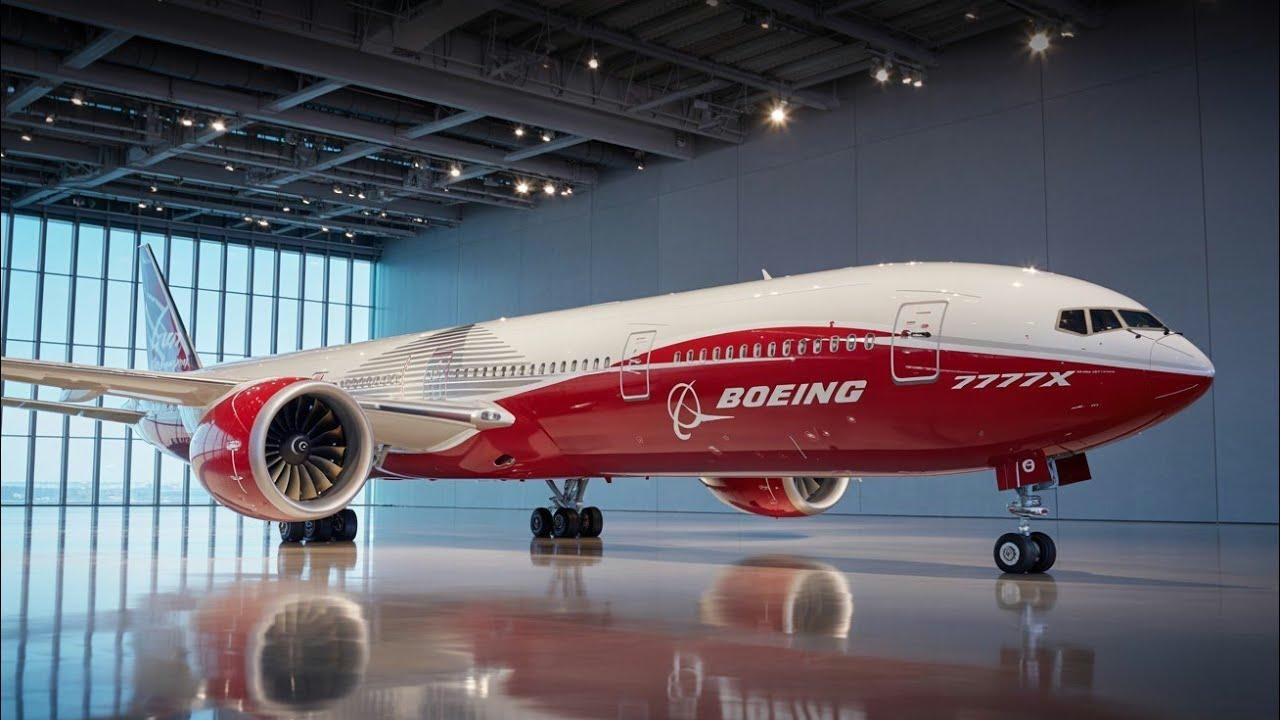
In 2026, Boeing’s widebody aircraft are expected to redefine the long-haul aviation sector by offering significantly greater passenger capacity than comparable Airbus models. Central to this development is the Boeing 777X, which can accommodate up to 434 passengers in high-density configurations, surpassing the seating capacity of Airbus’s flagship widebodies. This advantage is particularly valuable for airlines operating transatlantic and transpacific routes, where maximizing revenue per flight and operational efficiency remains a critical priority.
Leading carriers such as American Airlines, United Airlines, and British Airways have emphasized Boeing widebody orders to address growing passenger demand. The 777X’s adaptable cabin design allows airlines to configure a mix of premium and high-density economy seating, providing flexibility in fleet planning across major hubs in North America and Europe. Similarly, Delta Air Lines has concentrated its recent fleet modernization efforts on Boeing widebodies to support expansion on Asian routes.
Passenger Capacity Comparison: Boeing Versus Airbus
A detailed comparison reveals a clear divergence in design philosophies between the two manufacturers. The Boeing 777X typically seats approximately 434 passengers in a three-class layout, while the Airbus A350-900 accommodates around 314 passengers, representing a difference of roughly 120 seats per flight. The Boeing 787 Dreamliner, depending on configuration, carries between 242 and 330 passengers, whereas the Airbus A330 seats between 250 and 380. Airlines are increasingly favoring Boeing’s higher-capacity models, as the increased seat count reduces per-seat costs on fixed routes and enhances profitability on competitive long-haul corridors.
Data from FlightAware in 2026 indicates that airlines operating Boeing widebodies report higher load factors on premium international routes. This trend highlights the growing importance of seat-mile economics in airline revenue strategies and competitive positioning.
Operational Efficiency and Industry Challenges
Beyond capacity, Boeing’s widebody aircraft offer extended range and improved fuel efficiency. The 777X boasts a range exceeding 8,700 nautical miles, enabling direct ultra-long-haul flights and minimizing the need for stopovers. The 787 Dreamliner’s composite airframe reduces weight by approximately 20% compared to traditional aluminum construction, resulting in lower fuel consumption and operational cost savings.
Environmental considerations are increasingly influencing fleet decisions. Boeing’s widebodies comply with current emissions standards, appealing to airlines committed to sustainability and preparing them for anticipated carbon-neutral regulations in North America and Europe.
Nevertheless, Boeing faces significant challenges in maintaining production efficiency and meeting delivery schedules amid rising demand for high-capacity aircraft. Supply chain disruptions, as highlighted by the International Air Transport Association (IATA), continue to affect both Boeing and Airbus, particularly in the manufacturing of widebody freighters. These issues may impact production timelines and the ability to fulfill airline orders promptly.
Competitive Dynamics and Market Outlook
The aviation market is closely observing how Boeing’s capacity advantage will shape global fleet decisions and route planning. Investors and airlines are monitoring the performance and demand for these larger aircraft, while Airbus is expected to respond by enhancing its widebody offerings through technological upgrades or strategic partnerships to preserve market share.
As airlines restructure their networks to leverage Boeing’s high-capacity widebodies, competition between Boeing and Airbus is set to intensify. Both manufacturers must navigate ongoing production and supply chain challenges to meet the evolving demands of the global aviation market in 2026.

Etihad Airways Suspends Airbus A380 Flights on Key Route

Aditya Birla Group Seeks Approval for Aircraft Leasing in GIFT City

Qatar Airways Highlights Innovation and Connectivity at Arabian Travel Market 2026

Hong Kong's Five-Year Plan Includes Andrew Fan's Aircraft Parts Processing Hub Proposal

ACIA Aero Leasing Delivers ATR72-600 to Air Nostrum

RTX Appoints Jill Albertelli as Head of Pratt & Whitney

TAT Technologies Joins Beyond Aero Hydrogen Aircraft Program

AURAK Study Highlights Barriers to Air Taxi Adoption in Emerging Economies

Xiamen Air Selects Altitude for 787 Maintenance at Heathrow

Etihad and Swissport Extend Global Partnership
