Imagen

AeroGenie — Tu copiloto inteligente.

Pregunta cualquier cosa. Analiza todo. Actúa al instante.

Tendencias

Categories

British firm promises air taxis as affordable as Uber Black by 2028
January 24, 2026By ePlane AI
British firm promises air taxis as affordable as Uber Black by 2028
0
0
Vertical Aerospace
Urban Air Mobility
Electric VTOL

British Firm Aims to Make Air Taxis as Affordable as Uber Black by 2028

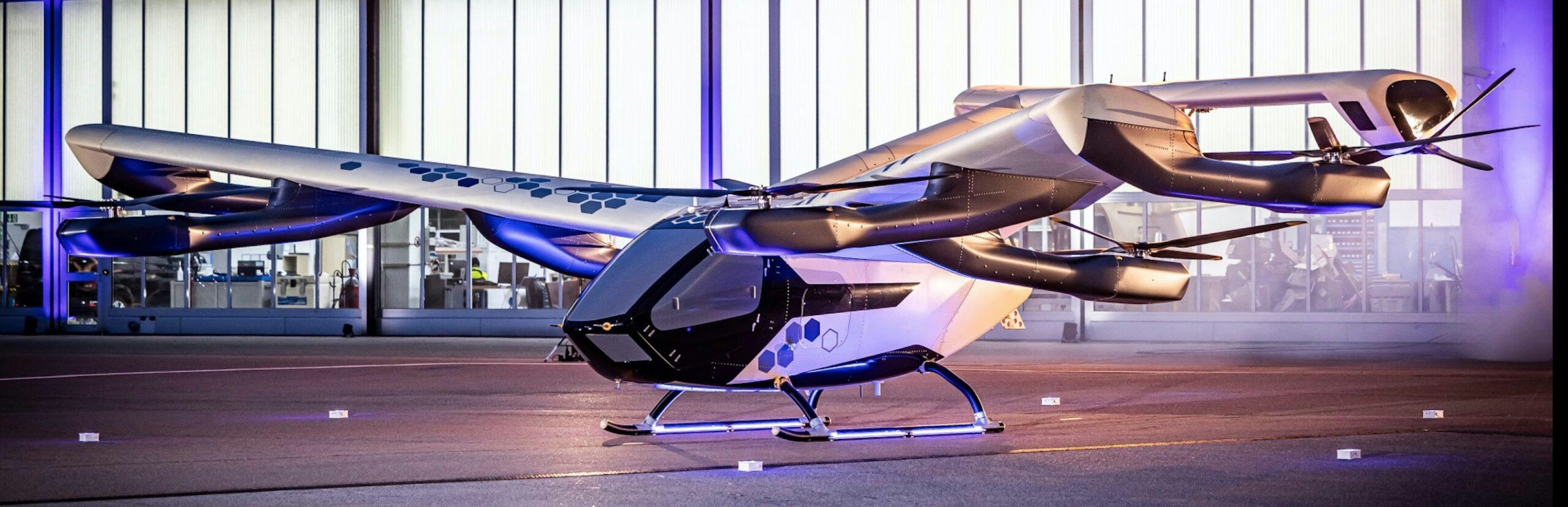
A British aviation company, Vertical Aerospace, has announced ambitious plans to revolutionize urban transportation by offering air taxis at prices comparable to premium ride-sharing services by the end of the decade. The company unveiled its electric Valo aircraft in Manhattan this week, positioning it as a practical solution for everyday commuters rather than an exclusive luxury for the wealthy.

The Valo Aircraft and Its Vision for Urban Mobility

The Valo is a sizable electric vertical take-off and landing (eVTOL) aircraft, boasting a wingspan of nearly 50 feet and the capacity to carry six passengers alongside a pilot and luggage. This makes it larger than many competing eVTOL models currently in development. The aircraft is powered entirely by electricity, featuring eight rotors for vertical lift and four tilting propellers for forward flight. Vertical Aerospace claims this innovative design significantly reduces noise levels compared to traditional helicopters.

Dómhnal Slattery, chairman of Vertical Aerospace, emphasized the company’s mission to “democratize urban air mobility.” He highlighted that, unlike helicopters which have historically catered to affluent travelers, the Valo is intended to serve the broader public. “This is not for the affluent, or the super affluent, which is where helicopters have been forever,” Slattery stated. “We want to open up the mass market.”

The company envisions the Valo operating on short routes of up to 100 miles, such as journeys between city centers and airports. Slattery indicated that fares would be comparable to an Uber Black ride, which currently costs approximately $150 for a trip from downtown Manhattan to JFK Airport, though prices may vary. By utilizing electric power, Vertical Aerospace expects to reduce operating costs relative to conventional helicopters, which are more expensive to maintain, noisier, and require larger spaces for takeoff and landing.

Challenges Ahead: Regulation, Safety, and Market Viability

Despite the promising outlook, Vertical Aerospace faces significant challenges in delivering affordable air taxis by 2028. Regulatory approval remains a formidable obstacle, with the Valo scheduled to begin the certification process with European aviation authorities next year. Slattery acknowledged the stringent nature of European standards, which demand rigorous evidence of safety and reliability. “We want to really show these things are safe; I need to convince people that this becomes as safe as a Boeing 737, because commercial aviation is the safest form of transport in the world,” he explained.

In addition to regulatory hurdles, the company must navigate technological and economic complexities. The high costs currently associated with eVTOL aircraft present a barrier to achieving the promised affordability. Market responses have been cautiously optimistic, reflecting both growing interest in urban air mobility and skepticism about the feasibility of widespread adoption. Established aviation and transportation sectors may approach these developments with caution, while competitors are likely to intensify their own research and development efforts.

As Vertical Aerospace advances its vision, the realization of air taxis as accessible as ride-sharing services will depend on overcoming these regulatory, safety, and cost challenges. The coming years will be pivotal in determining whether flying taxis can transition from futuristic concepts to everyday modes of transport.

More news
Engine fire likely caused fatal Clearwater plane crash, feds say

Engine fire likely caused fatal Clearwater plane crash, feds say

Engine Fire Identified as Likely Cause of Fatal Clearwater Plane Crash A federal investigation has determined that an in-flight engine fire was the probable cause of a tragic plane crash in Clearwater, Florida, which claimed the lives of the pilot and two residents of a mobile home. The National Transportation Safety Board (NTSB) released its report on Tuesday, 27 months after the February 1, 2024 accident. The report highlights how the emergency was exacerbated by the pilot’s difficulty in locating Clearwater Executive Airport during an attempted nighttime emergency landing. Jemin G. Patel, 54, was piloting a Beechcraft Bonanza V35B when the aircraft crashed into a residence at 2647 Pagoda Drive in the Bayside Waters mobile home park. The impact ignited a fire that destroyed both the plane and most of the home, resulting in the deaths of Patel and two women inside the residence, Martha Parry, 86, and Mary Ellen Pender, 55. Findings on Cause and Contributing Factors The NTSB identified the “probable cause” of the accident as an in-flight engine compartment fire triggered by a partially loose flexible fuel hose b-nut at the fuel metering unit. Investigators concluded that leaking fuel from this improperly secured hose ignited the fire, attributing the fault to “incorrect service/maintenance.” The report specifically noted that “unknown maintenance personnel failed to adequately torque the fuel hose b-nut at the metering valve outlet fitting,” which led to the fuel leak. The severity of the crash was further compounded by the pilot’s inability to visually identify the airport at night. Like many general aviation airports, Clearwater Executive Airport’s runway lights remain off until activated by pilots via radio. However, the airport is known to be particularly difficult to locate in darkness, a factor that delayed Patel’s emergency landing and prolonged the crisis. Investigators also found that Patel likely did not promptly follow the “Engine Fire in Flight” checklist procedures, particularly failing to secure the fuel selector valve after recognizing and reporting the fire. The NTSB stated that “had the pilot promptly secured the fuel selector valve and, in conjunction with the steep descent, it is possible that the extent of the in-flight fire could have been mitigated.” The steep descent observed just before impact was interpreted as Patel’s response to the engine fire and his attempt to execute an emergency landing. Implications for Aviation Safety The crash has renewed focus on aviation safety protocols and maintenance standards. Industry experts suggest that incidents of this nature often lead to increased regulatory scrutiny and may prompt revisions to maintenance requirements and oversight practices. Airlines and operators could face higher insurance premiums and mounting pressure to enhance safety measures. In response, competitors may highlight their own safety records and intensify public relations efforts to reassure passengers. The aviation market might experience short-term volatility, with a potential long-term shift toward stricter operational standards and improved safety protocols. The NTSB’s findings emphasize the critical importance of meticulous aircraft maintenance and the challenges pilots encounter during nighttime emergencies, especially at airports with limited visibility.
Top 5 U.S. Airlines by Narrowbody Fleet Size

Top 5 U.S. Airlines by Narrowbody Fleet Size

Top 5 U.S. Airlines by Narrowbody Fleet Size In 2026, single-aisle narrowbody aircraft continue to serve as the cornerstone of U.S. domestic aviation. Five major carriers dominate this segment, collectively operating the vast majority of these jets. American Airlines leads the field with a fleet approaching 900 narrowbody aircraft, comprising a mix of Boeing and Airbus models. Trailing closely are legacy carriers Delta Air Lines and United Airlines, each managing narrowbody fleets numbering well into the 800s. Southwest Airlines and Alaska Airlines complete the top five, maintaining substantial single-aisle operations that are critical to their networks. Industry Challenges and Strategic Responses Despite their dominant positions, these airlines face significant industry challenges. Rising labor costs, evolving credit card regulations, and ongoing supply chain disruptions are reshaping the competitive environment. Delta Air Lines, for instance, continues to emphasize premium service and benefits from strong cash flow, yet it is not immune to these pressures. United Airlines is in the midst of a major fleet renewal, incorporating new Boeing 737 MAX aircraft to enhance efficiency and competitiveness. However, supply chain delays and escalating costs threaten to complicate this process. In response, some carriers are adjusting their business models, shifting from traditional low-cost approaches toward premium offerings to sustain profitability amid these headwinds. The Five Largest Narrowbody Fleets **Alaska Airlines – 337 Narrowbody Aircraft** Seattle-based Alaska Airlines operates the fifth largest narrowbody fleet in the United States, totaling 337 aircraft. The carrier’s mainline fleet consists exclusively of Boeing 737 variants, including 79 737-900ERs, 80 737 MAX 9s, 61 737-800s, along with smaller numbers of 737-700s and 737 MAX 8s. Following its merger with Virgin America, Alaska has streamlined its fleet by phasing out Airbus aircraft to simplify pilot training and maintenance operations. Its regional subsidiary, Horizon Air, operates 89 Embraer E175 jets, serving smaller West Coast markets and feeding traffic into Seattle. The relatively young E175 fleet offers enhanced passenger comfort compared to older regional jets. **Southwest Airlines – 800 Narrowbody Aircraft** Southwest Airlines operates the world’s largest Boeing 737 fleet, with approximately 800 narrowbody aircraft. Based in Dallas, the carrier’s fleet primarily comprises 310 737 MAX 8s, averaging 3.6 years in age, alongside 295 aging 737-700s, which average nearly 20 years, and 195 737-800s. Although the 737-700s are gradually being retired, they remain essential for servicing lower-demand routes. Southwest’s all-737 strategy has long supported its point-to-point network model, but the airline must navigate supply chain constraints that could affect future aircraft deliveries and fleet modernization efforts. **United Airlines** United Airlines operates one of the largest narrowbody fleets in the country, with numbers in the high 800s. The airline is actively engaged in upgrading its fleet by introducing new Boeing 737 MAX aircraft to improve operational efficiency and competitiveness. Nevertheless, persistent supply chain challenges pose risks of delivery delays and increased costs, injecting uncertainty into United’s ambitious fleet renewal plans. **Delta Air Lines** Delta’s narrowbody fleet also numbers in the 800s and includes both Boeing and Airbus aircraft. The airline’s focus on premium service and its robust cash flow have helped it maintain a strong market position despite industry-wide challenges such as rising labor costs and regulatory changes. Delta’s strategy increasingly emphasizes premium offerings as a means to differentiate itself in a highly competitive market. **American Airlines** American Airlines leads the U.S. narrowbody segment with nearly 900 aircraft, split between Boeing and Airbus models. This extensive fleet supports American’s broad domestic and short-haul international network. Like its competitors, American faces pressures from labor, regulatory, and supply chain factors as it strives to maintain its leadership position. As the U.S. airline industry continues to evolve amid shifting market dynamics and operational challenges, the size and composition of these narrowbody fleets will remain central to each carrier’s strategic planning and competitive standing.
C&L Aerospace Appoints Regional Sales Manager for Northern US and Canada

C&L Aerospace Appoints Regional Sales Manager for Northern US and Canada

C&L Aerospace Strengthens Regional Leadership with New Appointment C&L Aerospace has announced the appointment of Ike Knudson as Regional Sales Manager for the Northern United States and Canada, a strategic move designed to enhance the company’s footprint in a competitive and rapidly evolving aerospace market. Based in Minnesota, Knudson brings more than 28 years of specialized experience in the regional aircraft parts sector, with a strong background in aircraft components and maintenance support. Martin Cooper, Senior Vice President of Sales at C&L Aerospace, emphasized Knudson’s industry reputation, stating, “Ike brings a depth of industry experience and customer trust that is difficult to replicate. He is widely respected for his integrity, technical understanding, and commitment to delivering value to customers. We are pleased to welcome him to the C&L team as we continue to strengthen our support across the regional aircraft market.” Expanding Support Across Key Aircraft and Engines In his new role, Knudson will oversee support for a diverse range of aircraft models, including the Embraer E170/E190, ATR 42/72, Beechcraft 1900, and Saab 340. His responsibilities will also extend to managing parts and services related to PW100 and CT7 engines. This appointment aligns with C&L Aerospace’s broader strategy to deepen its engagement with the regional aircraft sector amid ongoing industry transformation. The aerospace industry is currently navigating significant shifts, with companies striving to expand their market reach while adapting to changing customer demands and intensifying competition. C&L Aerospace’s decision to reinforce its regional leadership reflects an effort to address challenges such as market saturation and the presence of established competitors. Industry analysts observe that rival firms often respond to such strategic hires by ramping up marketing efforts, forging new partnerships, or launching innovative products to protect or grow their market share. While C&L Aerospace may experience an immediate uplift in regional sales as Knudson enhances the company’s presence, market conditions are expected to stabilize as competitors recalibrate their approaches. By investing in seasoned leadership, C&L Aerospace signals its commitment to delivering value and maintaining adaptability in the dynamic regional aircraft market.
APOC Aviation Appoints Four to Global Sales Team

APOC Aviation Appoints Four to Global Sales Team

APOC Aviation Strengthens Global Sales Team Amid Growing Market Competition APOC Aviation, a specialist in the trading, leasing, and part-out of aircraft, engines, and landing gear, has announced the appointment of four seasoned professionals to its global sales team. This strategic expansion targets the landing gear, components, and engines divisions, reflecting the company’s ambition to broaden its customer base and asset portfolio across Europe and the Asia-Pacific region. The move comes as the aviation market experiences heightened competition and evolving demand dynamics. New Appointments and Regional Focus The newly appointed team members include Bill Chen and Dovydas Vaitkevičius in the landing gear division, Anna Coval in components, and Jarhyd Rees in engines. Bill Chen, based in China, assumes the role of regional sales director for landing gear in the Asia-Pacific region. With over ten years of experience in Boeing landing gear sales, Chen is expected to enhance APOC’s regional presence significantly. Lithuania-based Dovydas Vaitkevičius joins as landing gear sales manager, tasked with expanding the global customer base while overseeing repair management and exchange programs. In the United Kingdom, Anna Coval has been appointed sales manager for components. Bringing more than 15 years of experience in supply chain and sales within manufacturing and aviation sectors, Coval will manage the full sales lifecycle and cultivate strategic accounts. Also UK-based, Jarhyd Rees takes on the role of sales manager for engines, where he will support a global customer network, lead engine material sales, and align inventory with shop visit demand. Strategic Outlook and Market Context Gavin Simmonds, Chief Executive of APOC Aviation, emphasized that the expansion of the sales team is a proactive response to strong market momentum and increasing customer demand across multiple asset classes. He highlighted the industry’s growing focus on sustainability, cost efficiency, and maximising asset life cycles, noting that APOC is scaling its operations to provide high-quality materials supported by knowledgeable and responsive service worldwide. Despite these positive developments, APOC’s growth occurs within a challenging global aviation environment. Market saturation and intensifying competitive pressures are prompting established players to enhance their sales efforts to protect or increase market share. In regions such as Brazil, structural barriers and underdevelopment continue to limit growth potential, as noted by Azul CEO John Rodgerson, who pointed to the country’s untapped opportunities despite these challenges. Concurrently, the broader business aviation sector has experienced a surge in activity, with global operations reaching record levels in February, according to Argus, underscoring the importance of strategic positioning in this dynamic market. Perspectives from the New Team Members The new appointees expressed confidence in APOC’s strategic direction. Bill Chen remarked on the company’s professionalism and market-leading value, expressing enthusiasm for strengthening APOC’s footprint across Asia-Pacific and delivering reliable solutions for major aircraft types. Dovydas Vaitkevičius highlighted the company’s structured segmentation across core asset classes as an ideal platform for delivering high-quality service, aligning with his own professional values. Anna Coval praised APOC’s commitment to quality, sustainability, and long-term partnerships, noting that the company’s responsible approach to teardown and rejuvenation of aviation resources aligns with industry trends. Jarhyd Rees underscored APOC’s strong corporate culture and ambitious growth plans within the aviation aftermarket, expressing eagerness to build enduring, trusted relationships with customers. As APOC Aviation continues to expand its sales capabilities, it navigates a complex and evolving global aviation market, balancing significant opportunities with ongoing sector challenges.
Wizz Air Introduces Bluetooth Technology to Enhance In-Flight Experience

Wizz Air Introduces Bluetooth Technology to Enhance In-Flight Experience

Wizz Air Introduces Bluetooth Technology to Enhance In-Flight Experience Wizz Air has launched a Bluetooth-enabled in-seat ordering system across its fleet of more than 260 aircraft, marking a significant advancement in the airline’s digital service offerings. This new technology allows passengers to order food, beverages, and retail products directly from their smartphones without requiring internet connectivity. By leveraging onboard Bluetooth networks, the system transmits orders instantly to cabin crew, streamlining service and enhancing the overall passenger experience. Seamless Ordering and Operational Efficiency The introduction of this Bluetooth system enables passengers to browse menus, place orders, and complete transactions on their personal devices, eliminating the need for traditional ordering methods. This innovation promises faster service delivery, reduced waiting times, improved order accuracy, and minimized physical interaction between passengers and crew. Additionally, Wizz Air is exploring other low-bandwidth connectivity solutions, including messaging services and onboard entertainment, as part of a broader initiative to create a digitally connected cabin environment. From an operational perspective, the system reduces aisle congestion by sending orders directly to cabin staff, which can contribute to shorter turnaround times and a more efficient service flow. These improvements reflect a growing trend in the aviation industry toward integrating digital tools that enhance both passenger convenience and airline efficiency. Airlines as Digital Retail Platforms Wizz Air’s adoption of Bluetooth ordering technology positions the airline not merely as a transport provider but as a digital retail platform. Passengers gain the ability to browse products in real time, make instant purchases, and receive personalized offers tailored to their preferences. This capability supports the expansion of ancillary revenue streams, a critical focus for airlines facing intense market competition. By utilizing passenger data, airlines can customize offerings, promote destination-specific experiences, and increase onboard spending, effectively transforming the journey into an extension of the travel experience. This shift underscores the growing importance of digital innovation in driving revenue and enhancing customer engagement within the aviation sector. Industry Trends and Competitive Challenges The move aligns with the broader industry adoption of “Bring Your Own Device” (BYOD) models, where passengers use their smartphones for entertainment and retail services instead of seatback screens. This approach reduces hardware and maintenance costs for airlines, contributes to lighter aircraft and improved fuel efficiency, and simplifies cabin design. For travelers, BYOD offers greater control and personalization, and it is increasingly becoming standard across both low-cost and full-service carriers. However, Wizz Air’s technological advancement comes amid significant financial pressures. The airline recently reported a €50 million profit loss attributed to geopolitical crises, including the ongoing Middle East conflict. This context raises questions about the cost-effectiveness of new technology investments, especially as competitors such as American Airlines pursue advanced in-flight connectivity through partnerships with Starlink and Amazon, while United and Delta offer free Wi-Fi services to passengers. Market observers may express skepticism regarding the return on investment for Wizz Air’s Bluetooth system, and rival carriers are expected to accelerate their own digital upgrades to maintain competitive advantage. Nonetheless, Wizz Air’s initiative represents a notable step in the ongoing digital transformation of air travel, highlighting the critical role of innovation in enhancing passenger experience and operational performance amid evolving industry challenges.
How AI Is Transforming Private Aviation

How AI Is Transforming Private Aviation

How AI Is Transforming Private Aviation The private aviation sector, traditionally associated with luxury and exclusivity, is undergoing a profound transformation driven by artificial intelligence. While the industry’s outward image centers on bespoke services and premium aircraft, the underlying reality involves managing a complex web of logistical variables. Each flight demands the precise coordination of aircraft availability, crew scheduling, airport access, regulatory compliance, fuel management, weather conditions, and timing. Historically, these elements have been orchestrated by experienced brokers and operators relying heavily on human expertise and manual processes. AI’s Role in Streamlining Operations Artificial intelligence is now reshaping this intricate landscape by introducing greater efficiency and foresight. Rather than initiating every booking from a customer’s immediate request—such as destination, timing, and preferences—AI systems analyze extensive historical data, including frequent routes, preferred aircraft types, budget parameters, and travel patterns. This data-driven approach enables the anticipation of client needs, thereby streamlining the booking process and delivering a more personalized experience. The industry’s increasing connectivity is accelerating this evolution. Unlike sectors such as payments and logistics, which have long benefited from standardized APIs facilitating seamless data exchange, private aviation has faced challenges due to the complexity and variability of its data. However, recent developments in structured APIs now provide real-time access to aircraft availability and pricing. This advancement allows multiple platforms to aggregate and analyze data concurrently, echoing the progress seen in travel aggregators. Nonetheless, aviation data remains less standardized and more dynamic, presenting ongoing integration challenges. Within this interconnected ecosystem, AI functions as a sophisticated decision engine. By collecting data from diverse sources and applying user-specific criteria, AI narrows down options efficiently. This automation not only accelerates the booking process but also improves accuracy and enhances customer satisfaction. Disruption and Innovation Across the Industry The integration of AI and automation is disrupting established business models, particularly affecting intermediaries such as brokers and travel agents. In the broader travel industry, the emergence of AI-powered agents capable of automating planning, booking, and operational tasks has led to significant market selloffs, reflecting investor concerns over the diminishing role of traditional middlemen. Beyond booking, AI is making substantial inroads into aviation maintenance, repair, and overhaul (MRO). Practical applications include optimizing maintenance schedules, predicting component failures, and streamlining logistics. These innovations are driving industry consolidation and prompting the development of new MRO strategies as companies adapt to a more data-centric operational environment. Concurrently, the technology investment landscape is shifting. Capital is increasingly concentrated among a select group of AI-focused companies, raising concerns that other sectors may become underfunded. This concentration risks creating a vacuum that could slow innovation outside the AI domain. Despite these challenges, the trajectory of private aviation is unmistakable. The industry is becoming more interoperable, efficient, and customer-centric. AI is not merely enhancing the booking experience; it is fundamentally redefining operational practices across the sector—from the cockpit to the hangar—and reshaping the competitive landscape for the foreseeable future.
Europe’s Business Aviation Market Set for Record Growth Amid Regional Diversity

Europe’s Business Aviation Market Set for Record Growth Amid Regional Diversity

Europe’s Business Aviation Market Set for Record Growth Amid Regional Diversity Europe’s business aviation sector is poised for unprecedented expansion, driven by increasing demand for flexible, high-end travel and a heightened focus on personalized service. Currently valued at over €57 billion, the market is projected to grow at an annual rate approaching 10% over the next five years. This growth reflects strong investor confidence and a clientele seeking travel experiences that extend beyond conventional commercial flights. Innovation and Regional Nuances Operators throughout Europe are embracing innovation by integrating advanced technologies, adopting adaptive operational strategies, and tailoring services to regional preferences. The industry exhibits marked diversity, with Northern Europe characterized by structured precision and Southern markets demonstrating dynamic flexibility. This regional variation is reshaping standards of luxury, efficiency, and client-centric service across the continent. Although business aviation represents a relatively small fraction of total flight volumes, its influence on productivity, investment, and cross-border collaboration is substantial. The sector’s capacity to offer direct, time-efficient travel—often connecting destinations inaccessible to commercial airlines—has become essential for executives and decision-makers operating in fast-paced environments. Evolving Client Expectations and Service Complexity Passenger expectations are undergoing a significant transformation. Luxury is increasingly defined by convenience, digital integration, and seamless service delivery. Modern clients demand journeys that align with their daily routines, requiring uninterrupted connectivity, personalized cabin environments, and smooth coordination from booking through to arrival. This shift has accelerated the adoption of high-speed onboard internet, intelligent cabin designs, digital booking platforms, and real-time communication tools, positioning efficiency and adaptability at the core of the travel experience. The rising complexity of service delivery necessitates commercial teams to possess a combination of strategic insight, operational expertise, and strong client relationship management skills. Coordinating a single journey involves intricate logistics, including flight planning, crew readiness, ground handling, and bespoke client requests, leaving minimal margin for error. Agility has become a critical competitive advantage, as clients frequently require rapid adjustments to schedules, destinations, or onboard arrangements with little notice. Challenges and Market Outlook Despite the sector’s robust growth, it faces significant challenges. Geopolitical instability, as emphasized by Dassault’s CEO, continues to pose risks to operational planning and execution. Furthermore, the proliferation of illegal charters, particularly in the Asia-Pacific region, threatens to undermine legitimate operators and disrupt market integrity, adding complexity to an already demanding environment. Nonetheless, market sentiment remains optimistic. The industry has reported record growth, supported by increased global operations and a strong performance in the fourth quarter. Strategic investments underscore this confidence; for instance, Vertical Aerospace recently secured $50 million to advance the development of electric vertical takeoff and landing (eVTOL) aircraft. The International Aircraft Dealers Association’s latest report further highlights sustained market confidence and vigorous activity. Global economic shifts, geopolitical developments, and major international events continue to influence demand patterns. Periods of intensified business activity, large-scale conferences, and global sporting events often trigger demand surges, requiring operators to anticipate fluctuations and allocate resources efficiently. Europe’s regional diversity adds further complexity, demanding operational flexibility and a nuanced understanding of client needs. In this evolving landscape, Europe’s business aviation market is not only expanding but also setting new standards for innovation, adaptability, and client-focused service.
India’s Aviation Sector Faces Aircraft Supply Bottleneck Despite Large Backlog, Says Naidu

India’s Aviation Sector Faces Aircraft Supply Bottleneck Despite Large Backlog, Says Naidu

India’s Aviation Sector Faces Aircraft Supply Bottleneck Despite Large Backlog, Says Naidu India’s aviation industry is currently grappling with a critical supply bottleneck in aircraft availability, which threatens to impede its rapid growth despite a substantial backlog of orders. Industry leaders and government officials have highlighted that these supply constraints are causing operational inefficiencies and could lead to widespread delays across the sector. Operational and Financial Challenges Amid Supply Constraints The Ministry of Civil Aviation has reported a fivefold increase in losses for Indian airlines in the 2024-25 fiscal year. This sharp rise is attributed to escalating operational costs compounded by persistent supply chain disruptions. The delayed delivery of new aircraft has intensified financial pressures on carriers, restricting their ability to expand capacity and adequately meet the surging passenger demand. IndiGo, India’s largest airline, remains the dominant employer of pilots, with a workforce of 11,394 pilots across major carriers. This concentration reflects the rapid expansion of the aviation market but also underscores the strain on human resources as airlines struggle to keep pace with growth amid limited aircraft availability. Regulatory Pressures and Market Dynamics Adding to the sector’s challenges, regulatory scrutiny has intensified. The Competition Commission of India is currently investigating the online travel agency MakeMyTrip over allegations of anti-competitive practices. This probe highlights increasing concerns about maintaining fair competition and transparency within the aviation ecosystem. In parallel, Indian carriers have been mandated to allocate at least 60% of domestic seats without additional fees. This regulatory measure aims to enhance air travel affordability for the general public, even as airlines contend with mounting operational and financial difficulties. Industry experts caution that unless the aircraft supply bottleneck is addressed, India’s aviation sector may continue to experience delays, rising costs, and diminished operational efficiency. Airlines are thus tasked with balancing ambitious growth targets alongside regulatory compliance and sustainable operations in a challenging environment.
Flying cars are closer than ever—but lawmakers could hold them back

Flying cars are closer than ever—but lawmakers could hold them back

Flying Cars Are Closer Than Ever—But Lawmakers Could Hold Them Back Flying cars have long been a fixture of popular imagination, from the futuristic visions of *The Jetsons* to the ambitious promises of Silicon Valley innovators. After decades of anticipation, the prospect of airborne personal transportation is finally approaching reality. The emerging field of advanced air mobility (AAM), which includes electric vertical takeoff and landing (eVTOL) aircraft, has made notable progress. Several companies are actively engaged in regulatory certification processes with the U.S. Federal Aviation Administration (FAA) and international aviation authorities. Industry leaders, alongside the U.S. government, are targeting 2028 for the commercial launch of air taxi services, with plans to highlight these innovations during the Los Angeles Summer Olympics. Technological Advances and Industry Developments Prominent firms such as Archer Aviation, Joby Aviation, and Beta Technologies are developing eVTOL aircraft capable of carrying four to five passengers over distances of less than 200 miles. These vehicles combine the vertical takeoff and landing capabilities of helicopters with horizontal flight enabled by tilting or dedicated propellers. Although battery technology currently limits their range, the shift to electric propulsion offers significant benefits, including reduced emissions, lower noise levels, and enhanced safety features. Unlike traditional helicopters, which rely on a single main rotor and thus present a potential single point of failure, eVTOLs employ multiple independent electric motors. This design provides redundancy and quieter operation. Beta Technologies, for instance, asserts that its Alia A250 eVTOL could reduce energy costs per flight hour by 90 percent compared to a similarly sized Bell 407 helicopter. Regulatory and Infrastructural Challenges Despite these technological strides, the path to widespread adoption remains fraught with challenges. The commercialization of AAM depends not only on continued innovation but also on the establishment of specialized infrastructure, particularly vertiports for takeoff and landing. Policy decisions at the state and local levels will be critical in shaping this infrastructure. However, well-intentioned lawmakers, concerned with safety, noise pollution, and zoning regulations, risk inadvertently impeding the industry’s growth before it can fully develop. The regulatory landscape is further complicated by fragmented legal frameworks and geopolitical tensions, which have resulted in divergent technical standards across different regions. While the Trump administration supported pilot programs for flying cars, regulatory progress has been slow and contentious. Structural barriers also persist in emerging markets. For example, in Brazil, underdeveloped infrastructure and the need for systemic investment continue to hinder progress, as noted by Azul CEO John Rodgerson. Public skepticism adds another layer of difficulty. The rollout of self-driving taxis has already encountered resistance, with many consumers expressing wariness toward new transportation technologies. Similar doubts could slow the acceptance of flying cars, particularly if early incidents or regulatory missteps undermine public trust. For eVTOLs to transcend niche air taxi services and achieve broader urban air mobility, the industry must navigate these regulatory, infrastructural, and perceptual obstacles. While the technology is advancing rapidly, the future of flying cars may ultimately depend less on engineering breakthroughs and more on the willingness of lawmakers and the public to embrace this new mode of transportation.
EASA Warning on Stolen Engine Parts Leads UK Airlines to Increase Compliance Checks

EASA Warning on Stolen Engine Parts Leads UK Airlines to Increase Compliance Checks

EASA Warning on Stolen Engine Parts Spurs Heightened Compliance Among UK Airlines The European Union Aviation Safety Agency (EASA) has issued an urgent alert following the theft of more than 600 high-value turbofan engine parts in Spain, raising significant concerns within the aviation industry. The stolen components, which include critical, life-limited parts for widely used engines such as the CFM56, V2500, PW1100G, and Rolls-Royce RB211, are integral to the fleets of major UK carriers including British Airways, EasyJet, and several cargo operators. Authorities fear these parts may have entered the secondary market, posing a serious risk to aircraft safety. Regulatory Response and Industry Impact In response to the theft, the UK Civil Aviation Authority (CAA) and the Serious Fraud Office (SFO) have mandated that airlines immediately quarantine any suspect inventory and verify serial numbers against EASA’s published list of stolen parts. Although no aircraft have been grounded to date, the incident has prompted a surge in compliance checks and intensified scrutiny across UK airlines. Maintenance teams are now conducting more rigorous inspections to ensure that no counterfeit or non-airworthy components have been installed, a process expected to increase operational costs and potentially cause delays. This development arrives amid ongoing industry unease following the 2025 AOG Technics scandal, which involved falsified documentation and forced British carriers to remove dozens of engines, resulting in an estimated $53 million in operational losses. The current theft underscores the persistent vulnerabilities in the aviation supply chain and highlights the critical need for stringent controls to prevent fraud. Market and Operational Repercussions The market has reacted swiftly to the warning. Insurers are reassessing risk profiles, with some carriers anticipating higher premiums due to the elevated threat of counterfeit parts. Maintenance schedules are under considerable pressure, and the potential for operational disruptions—including flight delays and rescheduling—has become a growing concern for both airlines and passengers. In response, competitors are strengthening security protocols and increasing collaboration to detect and report fraudulent activities. Industry groups such as the Aviation Supply Chain Integrity Coalition are advocating for the universal adoption of electronic authorised release certificates (eARCs) to close existing documentation gaps. Several UK airlines have already transitioned maintenance records to blockchain-enabled platforms, allowing real-time verification by regulators and lessors, thereby enhancing supply chain transparency. Implications for Mobility and Travel Management For mobility and travel managers, the situation demands heightened vigilance and flexibility. Technical delays or groundings linked to counterfeit parts can trigger widespread schedule disruptions, missed connections, and increased rebooking costs. Organisations managing time-sensitive assignments or group travel are advised to incorporate additional buffer time into itineraries and closely monitor delay metrics from key UK carriers. Those rerouting employees through alternative airlines or hubs must also ensure compliance with last-minute visa and entry requirements. Services such as VisaHQ can assist by expediting visa applications and providing real-time updates to mitigate further disruption. The EASA warning reinforces the growing importance of aviation security as a fundamental component of global mobility compliance, alongside immigration and health-and-safety protocols. As airlines and regulators work to restore confidence in the supply chain, organisations are encouraged to stay informed of evolving safety directives and prioritise carriers with robust digital provenance systems. Building flexibility into travel policies will be essential to safeguard employee well-being and maintain critical business travel amid ongoing supply-chain challenges.
line










