image

AeroGenie: Su copiloto inteligente.

Pregunta cualquier cosa. Analiza todo. Actúa al instante.

Tendencias

Categories

Croatia Airlines Nears Next A220 Deliveries as Fleet Transition Accelerates
June 16, 2025By ePlane AI
Croatia Airlines Nears Next A220 Deliveries as Fleet Transition Accelerates
0
0
Croatia Airlines
Airbus A220
Fleet Renewal

Croatia Airlines Nears Next A220 Deliveries as Fleet Transition Accelerates

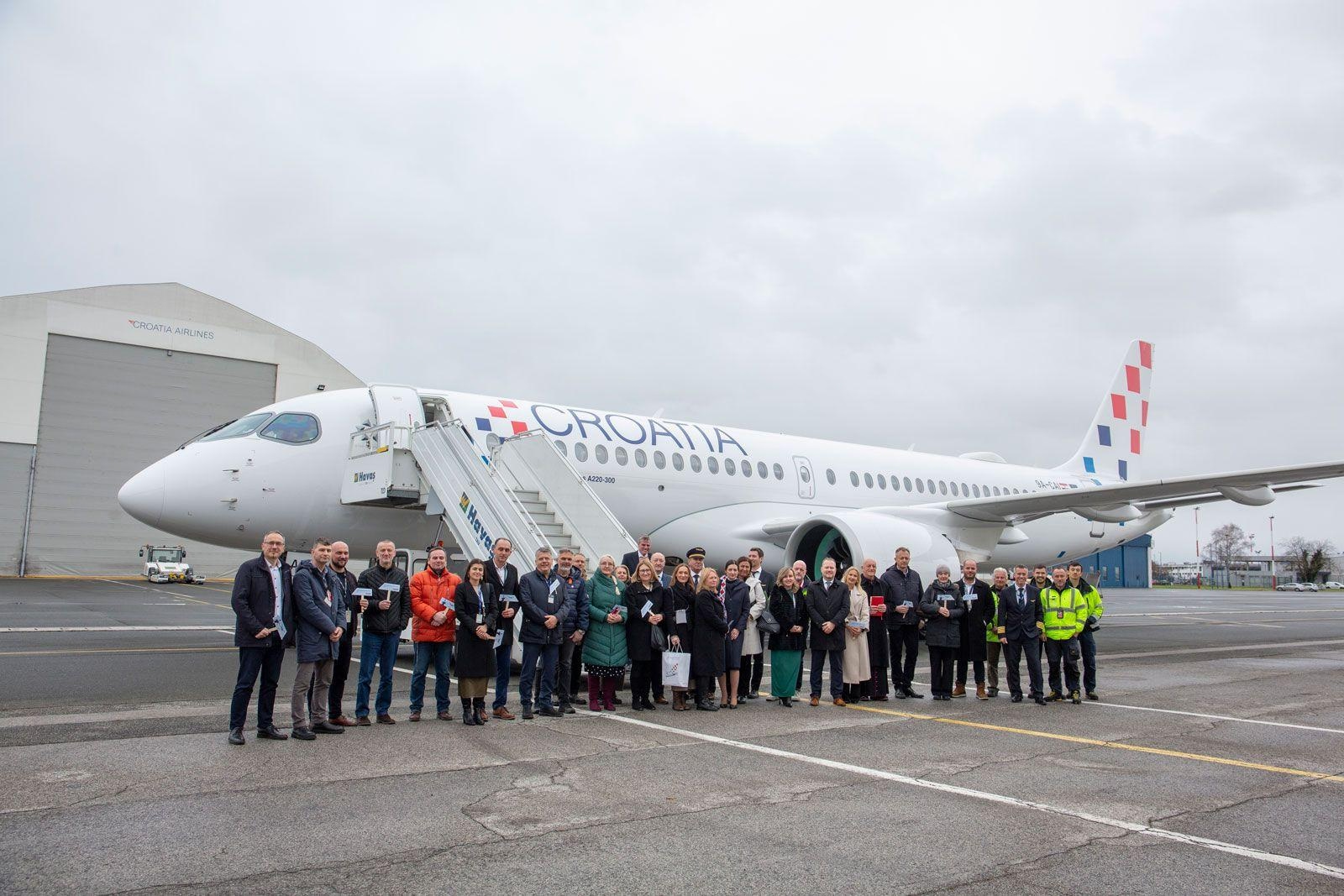
Two new Airbus A220-300 aircraft destined for Croatia Airlines have successfully completed test flights in Montreal, marking a significant step forward in the airline’s ongoing fleet renewal program. Registered as 9A-CAN and 9A-CAM, these jets are expected to be delivered later this month. Their arrival will increase Croatia Airlines’ A220 fleet to five aircraft, advancing the carrier’s goal of operating a single-type fleet by 2027.

Progress in Fleet Renewal and Operational Integration

The aircraft with manufacturer serial number 55363, designated 9A-CAN, completed a three-and-a-half-hour test flight on Friday, followed by 55357 (9A-CAM), which undertook a nearly three-hour flight on Saturday. These deliveries are part of a broader plan for Croatia Airlines to receive five A220s in 2024, with one already in active service. The airline’s transition to an all-A220 fleet reflects a strategic response to evolving market conditions and operational requirements within the aviation industry.

Operational integration of the new A220s is advancing swiftly. According to preliminary schedules, four A220s are slated to operate simultaneously on the morning of June 30, with flights departing from Zagreb to Stockholm, Amsterdam, Copenhagen, and Paris. The airline anticipates deploying all five A220s concurrently for the first time on July 2, although it notes that these plans remain subject to adjustment.

Industry Context and Future Outlook

Croatia Airlines’ fleet modernization occurs amid a dynamic period for the airline sector, as carriers adapt to shifting market dynamics and competitive pressures. The move to a uniform A220 fleet positions Croatia Airlines alongside other European operators modernizing their narrowbody aircraft. Airbus, for instance, is reportedly close to finalizing a deal to supply A220 jets to Poland’s LOT, highlighting the competitive environment in which Croatia Airlines is operating.

The airline had considered showcasing one of its new A220s at the Paris Air Show, held from June 16 to 19. However, current flight schedules indicate that all three A220s currently in service will be engaged in regular operations during that week, except on June 19, when only two are scheduled to fly.

As part of its broader modernization efforts, Croatia Airlines is gradually phasing out its remaining Airbus A320 aircraft. One of the two A320s is expected to be retired by the end of 2024, with the second tentatively scheduled for retirement on February 8, 2026. The final flight for the latter is planned to operate on the Frankfurt–Zagreb route, though the airline acknowledges that these details may evolve as the transition continues.

“The fleet replacement process is complex and requires flexibility,” Croatia Airlines stated. “Our planning accounts for multiple retirement scenarios for existing aircraft, and we’re applying the same adaptive approach to pilot training during the transition.”

With the steady expansion of its A220 fleet, Croatia Airlines is entering a new phase of modernization aimed at enhancing operational efficiency and improving the passenger experience amid a rapidly changing industry landscape.

More news
Comparing the Fuselage Lengths of the Airbus A350-1000 and Boeing 787-10

Comparing the Fuselage Lengths of the Airbus A350-1000 and Boeing 787-10

Comparing the Fuselage Lengths of the Airbus A350-1000 and Boeing 787-10 Overview of Aircraft Dimensions In the ongoing discourse surrounding modern widebody aircraft, discussions frequently emphasize fuel efficiency, passenger comfort, or airline preferences. However, a fundamental yet often overlooked question concerns the comparative fuselage lengths of the Airbus A350-1000 and the Boeing 787-10 Dreamliner. While seemingly straightforward, fuselage length is a critical factor influencing passenger capacity, cabin layout flexibility, and the operational roles for which each aircraft is designed. Even minor variations in overall length can significantly impact these aspects. Both the A350-1000 and 787-10 represent the largest variants within their respective families, tailored for high-capacity, long-haul operations. This analysis draws on technical data and operational insights to clarify which aircraft possesses the longer fuselage and explores the implications of this difference within the broader context of Airbus and Boeing’s design philosophies. Fuselage Length Comparison The Airbus A350-1000 features a notably longer fuselage than the Boeing 787-10, a distinction that may not be immediately apparent when viewing the aircraft side by side. The A350-1000 measures approximately 73.8 meters from nose to tail, surpassing the 787-10’s length of about 68.3 meters by more than five meters. This length advantage allows the A350-1000 to accommodate a greater number of passengers, increase cargo volume, and offer enhanced cabin flexibility. In practical terms, this translates to higher seating capacities and improved performance on premium-heavy or ultra-long-haul routes where space and payload are critical. These factors often influence airline decisions when evaluating these two aircraft types for their fleets. The difference in length is a deliberate design choice: Airbus extended the A350 platform to compete more directly with Boeing’s larger widebodies, whereas the 787-10 represents the maximum stretch Boeing could achieve without compromising the Dreamliner’s range or performance. This contrast highlights the distinct approaches each manufacturer has taken in addressing the large twin-engine market. Operational and Design Implications Fuselage length is determined by more than just aesthetic considerations. Aircraft manufacturers must carefully balance aerodynamics, structural integrity, engine capabilities, and intended route profiles when deciding how far to stretch an airframe. Each additional meter affects weight distribution, landing gear stress, and fuel consumption patterns. Airlines continuously evaluate these parameters to optimize fleet performance, particularly as fluctuating fuel prices place a premium on minimizing fuel burn. The A350-1000 was engineered with a reinforced wing structure, higher-thrust engines, and an extended fuselage from the outset, specifically to support high-capacity, long-range missions. This design reflects Airbus’s strategic focus on serving markets traditionally dominated by larger quadjet aircraft, offering a modern, efficient alternative. Conversely, Boeing’s 787-10 represents a balance between increased capacity and maintaining the Dreamliner’s hallmark range and efficiency, illustrating a different philosophy in widebody aircraft development.
Thailand Establishes U-Tapao Aircraft MRO Center Contract for January 2026

Thailand Establishes U-Tapao Aircraft MRO Center Contract for January 2026

Thailand to Establish U-Tapao Aircraft MRO Center with Contract Signing in January 2026 BANGKOK — Thailand is advancing its strategic initiative to develop a major aircraft maintenance, repair, and overhaul (MRO) center at U-Tapao Airport, with a contract signing scheduled for January 7, 2026. This announcement was made by Chula Sukmanop, secretary-general of the Eastern Economic Corridor (EEC) Policy Committee, underscoring the government’s commitment to positioning the country as a key aviation hub in the region. Project Overview and Strategic Importance The MRO facility, which will occupy approximately 210 rai (84 acres) within the EEC—a vital economic development zone on Thailand’s eastern seaboard—is set to be submitted for approval to the EEC board in December 2025. Currently, large-scale MRO centers in Asia are predominantly operated by Singapore and China, highlighting the strategic significance of Thailand’s entry into this market. The new center aims to enhance the country’s aviation infrastructure and attract regional airline clients seeking comprehensive and cost-effective maintenance services. Under the proposed framework, Thai Airways International will be granted operating rights for the entire site and is expected to establish a subsidiary to oversee the center’s operations. The airline may choose to operate the facilities directly, enter joint ventures with specialized partners, or lease space to private operators. The center will be equipped to service a broad range of aircraft, including models from Airbus and Boeing, ensuring operational flexibility and wide market appeal. Financial and Operational Framework The land lease for the MRO center will span 50 years, with rental rates structured to encourage early investment. Revenue sharing with the state is planned to begin in the fifth year of operations, starting at 3% for years five through ten, increasing to 5% for years ten to fifteen, and reaching 7% thereafter. This phased approach aims to balance initial development incentives with long-term fiscal contributions. Following the contract signing, the project will proceed to detailed design and an environmental impact assessment (EIA), which will be expedited under EEC regulations. The EIA is expected to be completed within 180 days after submission of the full design documents. Construction is scheduled to commence in early 2027, with a projected duration of approximately three years. This timeline aligns with the completion of U-Tapao Airport’s second runway, which is currently under construction and anticipated to be finished within four years. Meanwhile, the passenger terminal development will continue as planned, unaffected by the high-speed rail project, thereby enabling the airport to accommodate increased passenger volumes once the new runway becomes operational. Regional Context and Market Implications The establishment of the U-Tapao MRO Center occurs amid intensifying competition in the regional MRO market. Neighboring countries may respond by upgrading their own facilities to attract airline clients, while airlines across Asia are expected to show growing interest in cost-effective maintenance solutions. The project’s long-term viability will also be influenced by factors such as the economic stability of the Thai Baht and broader trends in trade and tourism, which affect the region’s attractiveness as an aviation hub. As Thailand advances this significant infrastructure project, the U-Tapao MRO Center is poised to play a pivotal role in shaping the country’s aviation industry and enhancing its competitive position within the regional market.
United Airlines Announces Routes for New Premium Boeing 787s

United Airlines Announces Routes for New Premium Boeing 787s

United Airlines Announces Routes and Upgrades for New Premium Boeing 787s United Airlines is preparing to introduce a new generation of premium-focused Boeing 787 Dreamliners by the end of 2025, with inaugural flights from San Francisco to Singapore and London Heathrow scheduled for early 2026. These aircraft will showcase the airline’s most luxurious interiors to date, designed to enhance the long-haul travel experience and strengthen United’s competitive position in the international aviation market. Enhanced Cabin Design and Passenger Experience The updated Dreamliners will feature a total of 99 premium seats, marking the highest number of premium seats in United’s fleet and the most premium-heavy configuration among U.S. carriers. The business class cabin will include two new United Polaris Studio suites in the first row of each section, totaling eight suites per aircraft. These suites offer direct aisle access, lie-flat beds, privacy doors, and are 25% larger than standard Polaris seats, with an additional ottoman for companion seating. The remaining 56 Polaris business class seats will also receive upgrades, including sliding doors and enlarged 19-inch 4K OLED seatback screens. In addition to the physical enhancements, United is elevating its in-flight service with premium offerings such as Ossetra caviar amuse-bouche, exclusive entrée selections, and Champagne Laurent-Perrier Cuvée Rosé for premium passengers. The signature Polaris “sundae cart” will introduce new limited-time Tillamook ice cream flavors, while curated specialty snack boxes will be served post-dessert in the Studio suites. The airline’s acclaimed wine selection will be further enriched by rotating regional menus. Beyond business class, the new 787s will include 35 United Premium Plus seats—the largest number in United’s fleet—alongside 33 Economy Plus and 90 standard Economy seats. All cabins will benefit from refreshed interiors, expanded Starlink Wi-Fi connectivity, and streamlined Star Alliance booking processes, reflecting United’s commitment to improving the travel experience for all passengers. Market Context and Strategic Outlook United’s investment in premium cabins comes amid growing competition from carriers such as Air Premia, Aer Lingus, and Porter Airlines, which are also expanding their long-haul services and premium offerings. This competitive environment presents challenges for United as it seeks to maintain profitability while investing heavily in luxury amenities. Industry observers are closely monitoring how United will balance its focus on premium travelers with the needs of economy passengers, especially as rivals may respond with similar upgrades or new route launches. Andrew Nocella, United’s Executive Vice President and Chief Commercial Officer, highlighted the airline’s strategic vision, stating, “We already deliver a superior international experience and fly to the most places across the Atlantic and Pacific—these innovations provide a more premium experience overall, give customers even more reasons to choose United, and set our airline up to grow into the next decade and beyond.” As United prepares to deploy its new Dreamliners, the airline is betting that a combination of luxury, advanced technology, and enhanced service will distinguish it in a crowded transcontinental market, while ensuring that improvements benefit all passengers, not solely those in premium cabins.
Boeing Introduces Remote Co-Pilot Technology

Boeing Introduces Remote Co-Pilot Technology

Boeing Introduces Remote Co-Pilot Technology Powered by Artificial Intelligence Boeing is pioneering a transformative approach in aviation by integrating artificial intelligence as a “remote co-pilot” across its engineering, manufacturing, and maintenance operations. These AI tools, operating under stringent human supervision, are designed to identify defects, expedite design workflows, and improve aircraft reliability. This initiative signals a future where aviation becomes increasingly intelligent without diminishing the essential role of human expertise. For Boeing software engineer Grace Chrysilla, the impact of this shift is already evident. An internal AI assistant now reviews her code, accelerates analysis, and generates functional software within seconds—tasks that previously required days to complete. Chrysilla describes the technology as “another expert on your team,” underscoring that AI serves to augment rather than replace human effort. Currently, Boeing has integrated more than 70 generative AI applications into its daily operations, spanning engineering, supply chain management, and internal support functions. This represents a significant transformation for one of the aerospace industry’s most scrutinized companies, particularly in a sector where safety, regulatory compliance, and trust remain paramount. AI as a Collaborative Partner in Aviation Boeing’s leadership emphasizes that AI is intended to support human judgment rather than supplant it. The company has centralized its AI initiatives with two primary goals: enhancing internal productivity and improving product quality and customer experience. This centralized approach is designed to prevent fragmented experimentation and ensure that AI deployments adhere to the rigorous standards demanded by regulators and airline customers. Abhi Seth, Boeing’s Chief AI and Data Officer, along with Chief AI Officer Vishwa Uddanwadiker, stress that AI is meant to extend human capabilities. Uddanwadiker notes, “In aerospace, guessing is unacceptable. If the system doesn’t have sufficient data, it’s designed to hold back—not to invent an answer.” This cautious approach reflects the critical importance of accuracy and reliability in aviation. Practical Applications and Industry Challenges The most tangible effects of Boeing’s AI integration are visible on factory floors and maintenance lines. Computer vision systems now analyze engineering drawings to enhance clarity for mechanics and reduce turnaround times. AI-driven visual inspections detect defects earlier in the supply chain, mitigating costly delays and safety risks. Predictive maintenance models enable airlines to identify potential issues proactively, thereby minimizing downtime and enhancing fleet reliability—a vital advantage as global travel demand recovers. In digital engineering, AI-powered simulations facilitate virtual testing of complex systems before physical components are produced, shortening development cycles and reducing costs. Internal virtual assistants manage thousands of daily support requests, allowing engineers and technicians to focus on higher-value tasks. Boeing estimates that some AI co-pilot tools save employees up to two hours per day. To date, over 8,000 Boeing employees have completed training through the company’s GenAI Academy, with more than 2,600 certified as advanced users capable of developing AI solutions independently. Despite these advancements, Boeing faces considerable challenges. Regulatory approval processes may delay the widespread adoption of AI technologies, and integrating AI with existing aircraft systems presents significant technical complexities. The company also contends with competition from other aviation technology firms, many of which are accelerating their own AI development efforts or forming strategic partnerships. Market responses to Boeing’s AI initiatives have been mixed. Some investors express concern about the financial costs and the potential implications for traditional pilot roles, while others regard the technology as a significant advancement in aviation safety and operational efficiency. As Boeing continues to refine its remote co-pilot technology, its approach offers insight into how AI may reshape the aviation industry—enhancing human capability while navigating the intricate demands of safety, regulation, and competitive dynamics.
The Airbus A350-1000’s Fuel Efficiency Advantage Explained

The Airbus A350-1000’s Fuel Efficiency Advantage Explained

The Airbus A350-1000’s Fuel Efficiency Advantage Explained The Airbus A350-1000 is widely recognized as one of the most fuel-efficient large twin-aisle airliners currently in operation. Airlines utilizing this aircraft consistently report operating costs that are lower than anticipated, alongside significant fuel savings even on the longest routes. This level of efficiency is the result of a meticulously integrated design strategy encompassing aerodynamics, structural engineering, propulsion, and advanced onboard systems. Given that fuel represents the largest and most unpredictable expense for long-haul flights, these savings directly enhance route economics, increase payload capacity, and reduce CO₂ emissions per passenger-kilometer. Six Pillars of Efficiency The A350-1000’s superior fuel economy is founded on six key areas, each contributing to its exceptional performance. The aircraft’s aerodynamic architecture benefits from a clean-sheet design approach, employing advanced computational fluid dynamics and wing optimization techniques. Although the -1000 shares its 212-foot (64.75 m) wing with the smaller -900 variant, the wing was engineered with growth in mind, enabling the -1000 to accommodate more passengers without increasing aerodynamic drag. Innovations such as morphing wings and optimized winglets further reduce drag during climb and cruise phases, enhancing lift-to-drag ratios and lowering hourly fuel consumption. Central to the aircraft’s efficiency is the Rolls-Royce Trent XWB-97 engine, one of the most fuel-efficient large turbofans in commercial aviation. Specifically designed for the -1000, this engine delivers high thrust with excellent specific fuel consumption. Its high bypass ratio and advanced core aerodynamics generate greater thrust for less fuel, while the use of cutting-edge materials and improvements in thermal efficiency contribute to further reductions in fuel burn. Feedback from operators and independent analyses consistently affirm the engine’s superior real-world performance. The A350-1000’s airframe incorporates over 50% advanced composite materials, significantly reducing weight while maintaining strength and durability. This lightweight structure plays a crucial role in enhancing fuel efficiency. Complementing this is a suite of modern flight systems and avionics that optimize aircraft performance throughout all phases of flight, from takeoff to landing, ensuring operations at peak efficiency. The spacious cabin design allows airlines to maximize seat count and payload, which further decreases fuel consumption per passenger. Underpinning all these features is an integrated design philosophy that ensures aerodynamic, structural, and propulsion efficiencies are harmonized and fully realized in everyday operations. Market Impact and Competitive Landscape The fuel efficiency of the A350-1000 has garnered considerable attention in the aviation market. Airlines such as China Airlines have expanded their orders, reflecting strong confidence in the aircraft’s operational performance and economic benefits, despite Airbus facing unrelated quality challenges with its A320 family. Qantas’s Project Sunrise, which plans to deploy the A350-1000 for ultra-long-haul flights, further highlights the aircraft’s appeal and its potential to dominate the market segment. Nevertheless, competition remains intense. Boeing’s forthcoming 777-9 targets the same high-capacity, long-range market and promises its own advancements in fuel efficiency. Despite this, the A350-1000’s established track record and expanding customer base position it as a leading contender in the next generation of efficient long-haul air travel.
McNally Capital Expands Aviation Operations to Support Global Tourism

McNally Capital Expands Aviation Operations to Support Global Tourism

McNally Capital Expands Aviation Operations to Support Global Tourism McNally Capital has made a strategic entry into the global aviation services market through its acquisition of Airforce Turbine Service (ATS), a prominent independent provider specializing in the maintenance, repair, and overhaul (MRO) of PT6A turboprop engines. This acquisition represents the inaugural investment from McNally Capital’s third fund and highlights the firm’s dedication to expanding its footprint within the aviation sector, a vital component of global transportation and tourism. Strengthening Aviation Maintenance Capabilities Established in 1989 and based in Mathis, Texas, ATS has earned a strong reputation for its expertise in servicing the widely utilized PT6A engine, which powers both commercial and private aircraft. With operational facilities spanning Malaysia, South Africa, and Guatemala, ATS caters to a broad international customer base by providing comprehensive MRO services, field support, and aftermarket solutions. The acquisition by McNally Capital is anticipated to enhance ATS’s infrastructure and operational capacity, enabling the company to better address the increasing global demand for aviation maintenance and support. The reliability and efficiency of aviation services remain critical to the tourism industry, one of the world’s largest economic sectors. Airlines, airports, and tourism operators rely heavily on MRO providers like ATS to maintain fleet readiness, reduce aircraft downtime, and ensure passenger safety. The growth of the aviation sector, particularly across Asia, Africa, and Latin America, is closely linked to the recovery and expansion of global tourism, underscoring the essential role companies like ATS play in facilitating the smooth movement of travelers worldwide. Navigating Industry Challenges and Market Dynamics Despite the promising outlook, McNally Capital’s expansion into aviation faces notable challenges. The complexity of regulatory environments presents a significant hurdle, especially as globally recognized type certifications become increasingly crucial to circumvent insurance and financing complications. Additionally, the industry is preparing for a rise in aviation insurance premiums expected to commence in 2026, which may elevate operational costs for service providers and their clients alike. Market reactions to the acquisition are expected to be mixed; while some stakeholders anticipate a positive impact on tourism infrastructure, others remain cautious about potential cost pressures and regulatory obstacles. Competitor responses to McNally Capital’s move are likely to vary. Some players may intensify efforts to protect or expand their market share, while others might pursue collaborative approaches to address shared regulatory and operational challenges. Beyond its core maintenance offerings, ATS’s extensive aftermarket services assist airlines in managing their fleets more efficiently, thereby supporting operational reliability and enhancing customer satisfaction. In the context of global tourism, maintaining aircraft in optimal condition is essential for adhering to flight schedules and ensuring seamless travel experiences, particularly in high-demand regions. McNally Capital’s investment in ATS aligns with its broader strategy of focusing on mission-critical sectors that support global infrastructure. By reinforcing aviation services, the firm aims to contribute to the sustained growth and resilience of international tourism while navigating the evolving complexities of a dynamic industry.
Two Young Climbers Begin Winter Ascent of McKinley

Two Young Climbers Begin Winter Ascent of McKinley

Two Young Climbers Begin Winter Ascent of McKinley Lane Christenson, 22, and Dalton Borton, 20, both students at the University of Alaska Anchorage, have embarked on a demanding winter ascent of Denali, also known as Mt. McKinley, which rises to 6,190 meters. The pair arrived at the Kahiltna Glacier two days ago, preparing to spend Christmas isolated on the mountain’s icy slopes. Their expedition takes place during the harshest season, when Denali’s severe cold and limited daylight render it one of the most formidable climbs worldwide. Experience and Preparation for Extreme Conditions Despite their youth, Christenson and Borton possess considerable experience navigating Alaska’s challenging mountain terrain. Borton first summited Denali in 2022 at the age of 17 and returned in March 2023 to tackle the technical Cassin Ridge under wintry conditions. Christenson reached Denali’s summit earlier this year during the conventional late spring season and also summited Bashful Peak, Anchorage’s highest point, in 2023. Nevertheless, a winter ascent of Denali presents a significantly greater challenge, with temperatures often colder than those encountered in the high Himalayas and the added difficulty of near-constant darkness due to the mountain’s northern latitude. The climbers will face the vast Alaska Range entirely alone, confronting not only the physical rigors of the climb but also the psychological strain of isolation. Their meticulous preparation includes specialized gear such as down suits and boots designed for 8,000-meter Himalayan peaks, as well as sleds, skis, and sufficient food and fuel to sustain their journey. Each will begin the ascent hauling approximately 200 pounds (91 kilograms) of equipment. The Rarity and Risks of Winter Ascents Winter ascents of Denali are exceptionally rare. According to Denali National Park records, only 17 people have reached the summit during winter, with six fatalities recorded in these attempts. The first successful winter ascent occurred in 1967, completed by Art Davidson, Ray Genet, and Dave Johnston over a 42-day expedition. In the past decade, only two climbers—both solo—have summited Denali in winter: Lonnie Dupre in 2015 and Jost Kobusch in 2023. Such high-profile expeditions often have broader implications beyond the climbing community. Companies specializing in winter mountaineering equipment may experience increased interest and sales as attention focuses on the specialized gear required for such extreme conditions. Meanwhile, the insurance industry, already contending with economic challenges, may be indirectly affected as businesses supporting adventure tourism and extreme sports reassess risk and coverage in light of these demanding undertakings. As Christenson and Borton commence their ascent, they join a select group of climbers who have dared to confront Denali’s winter extremes, pushing the limits of endurance and adventure.
Elroy Air’s Autonomous Chaparral Delivers Lunch on A-to-B Flight

Elroy Air’s Autonomous Chaparral Delivers Lunch on A-to-B Flight

Elroy Air’s Autonomous Chaparral Completes First Point-to-Point Cargo Flight Elroy Air has achieved a significant milestone with its Chaparral, an autonomous vertical takeoff and landing (VTOL) cargo aircraft, completing its first point-to-point flight. The full-scale C-1 prototype successfully took off and landed vertically at the company’s Byron, California facility on December 10. During this demonstration, the aircraft transported a 213-pound payload—including lunch for the team—over a 2.6-mile route at speeds reaching up to 60 miles per hour. Design and Capabilities The Chaparral is engineered to carry payloads of up to 300 pounds across distances of up to 300 miles, targeting both commercial and military logistics markets. Its hybrid-electric powertrain powers eight vertical and four forward propellers, while a turbogenerator recharges the batteries during flight. The aircraft operates fully autonomously, managing all phases of flight and ground operations without human intervention. It is equipped to autonomously pick up and deposit cargo using Elroy’s modular Hatch Load pods, which are designed to accommodate a variety of missions. These range from express delivery and heavy cargo transport to humanitarian aid, medical supply distribution, and military intelligence, surveillance, and reconnaissance (ISR) tasks. Market Interest and Industry Context Elroy Air’s CEO Andrew Clare has disclosed a backlog of approximately 1,500 preorders, with notable customers including FedEx, Bristow Group, and Lease Corporation International (LCI). The Chaparral has also garnered interest from the U.S. military, which is actively evaluating its potential for defense applications. Dave Merrill, Elroy’s founder and executive chairman, emphasized the company’s collaboration with the U.S. Air Force, Marine Corps, and logistics leaders such as FedEx to develop the Chaparral as a versatile platform capable of supporting a wide range of missions. This achievement arrives amid growing pilot shortages in the aviation industry, which have intensified interest in autonomous aircraft solutions. Nonetheless, regulatory approval and safety concerns remain significant challenges for Elroy Air and other companies in the advanced air mobility sector. Investor sentiment is divided; while some are optimistic about the transformative potential of autonomous cargo delivery, others remain cautious regarding the long-term viability and profitability of such technologies. Competitive Landscape and Future Plans The autonomous air mobility sector is becoming increasingly competitive, with companies like Joby Aviation, Archer Aviation, and Wisk Aero advancing their own electric and autonomous aircraft programs. Broader developments in autonomous transport, such as Rivian’s recent progress with AI chips for self-driving trucks, underscore the industry-wide race to deploy next-generation autonomous vehicles. Elroy Air is collaborating with Kratos, a manufacturer known for jet-powered composite uncrewed aircraft, to produce its first production-intent Chaparral by 2026. The company aims to scale production to hundreds of units annually. Since its initial flight in 2023, the C-1 prototype has participated in demonstrations with the U.S. Marine Corps at Arizona’s Yuma Proving Ground. Elroy Air currently holds active contracts with the U.S. Army, Air Force, and partners in Japan as it continues to expand the operational capabilities of its autonomous cargo platform.
Texarkana College Holds First Graduation for Aviation Maintenance Technician Program

Texarkana College Holds First Graduation for Aviation Maintenance Technician Program

Texarkana College Celebrates First Graduates of Aviation Maintenance Technician Program Texarkana College has reached a pivotal milestone with the graduation of its inaugural class from the Aviation Maintenance Technician program, a timely development amid a nationwide shortage of skilled aircraft mechanics. Each member of this first cohort earned the Federal Aviation Administration (FAA) Airframe and Powerplant (A&P) certification, widely regarded as the industry’s benchmark for technical proficiency. In addition, students obtained the SAE AS7489 Aerospace Coating Application Specialist (ACAS) certification, reflecting advanced expertise in corrosion prevention and aircraft painting in compliance with FAA standards. Hands-On Training and Immediate Industry Impact The intensive one-year program offered students practical experience within Texarkana College’s modern hangar facility at Texarkana Regional Airport, designed to replicate a professional Maintenance, Repair, and Overhaul (MRO) environment. This immersive training has already resulted in immediate employment opportunities, with graduates receiving job offers from prominent employers including Aerotek, Boeing, SkyWest Airlines, and various regional aviation firms. Brandon Sanders, Director of Aviation at Texarkana College, emphasized the program’s employment focus, stating, “Our goal is to get each graduate hired before they leave our program. We are committed to showing the industry that Texarkana can supply a high volume of quality mechanics to support their operations.” Texarkana College President Dr. Jason Smith highlighted the significance of regional collaboration and industry partnerships in the program’s success. “This program exemplifies how strong collaborations drive workforce success. Our partnership with Texarkana Regional Airport has allowed us to respond directly to industry demand and prepare highly skilled mechanics ready to enter the workforce,” he said. Addressing a Critical Industry Shortage The launch of Texarkana College’s FAA Part 147-approved program coincides with a global shortage of aviation maintenance technicians, a challenge prompting innovative responses across the sector. Industry players are adopting new strategies, such as AI tools introduced by companies like Zymbly to enhance workforce productivity, and expanded career development initiatives by major airlines including JetBlue Airways in collaboration with aviation schools. This growing demand for specialized training is also evident in programs at other institutions, such as Hagerstown Community College’s Automotive Service Technician program and evolving team-building approaches for diesel technicians highlighted in industry reports. Graduates of Texarkana College’s program enter a high-demand field, with starting salaries frequently exceeding $80,000 annually. The college plans to expand the program by enrolling new cohorts each fall, spring, and summer semester, aiming to graduate approximately 300 certified A&P mechanics annually to address both regional and national workforce needs. Texarkana College’s initiative reflects the broader evolution of technical education, as academic institutions and industry partners collaborate to confront critical labor shortages and secure a steady pipeline of skilled aviation professionals.
United’s 737 MAX 10s Have Flown Over 300 Hours Without Passengers

United’s 737 MAX 10s Have Flown Over 300 Hours Without Passengers

United’s 737 MAX 10s Accumulate Over 300 Hours of Passenger-Free Flight Boeing’s newest commercial aircraft models continue to encounter significant certification delays, with the 737 MAX 7 and 10 narrowbodies, alongside the 777X widebody family, entering service years later than initially planned. Despite these setbacks, many of the aircraft have already been manufactured and are undergoing regular test flights to maintain airworthiness while awaiting regulatory approval. United Airlines’ Experience with the 737 MAX 10 For United Airlines, the delays have had a pronounced impact. Data from Aviation Flights reveals that United’s undelivered Boeing 737 MAX 10s have collectively logged more than 300 flight hours without carrying passengers. According to fleet information from ch-aviation, United currently holds orders for 167 MAX 10 aircraft, with those already produced averaging 2.6 years in age. The oldest of these, registered as N27751, first took to the skies in June 2021 and most recently completed a test flight from Boeing Field on December 16. Other aircraft in the series, including N27752 and N27753, have also conducted recent test flights, underscoring ongoing efforts to keep the jets operationally ready. These flights form part of the broader certification process, which remains a critical barrier before the aircraft can enter commercial service. United initially emphasized the MAX 10’s potential to enhance its domestic network by introducing larger and more efficient aircraft. However, the airline continues to await delivery as the certification timeline extends. Industry-Wide Challenges and Developments In addition to Boeing-related delays, United has faced minor operational disruptions unrelated to the manufacturer, such as a recall affecting six Airbus A320 aircraft in its fleet. This situation highlights the broader challenges airlines face in managing supply chain complexities and certification issues across multiple manufacturers. Other carriers are closely monitoring the progress of the MAX 10. WestJet Airlines, for instance, is advancing its own certification process and expects to receive its first MAX 10 by the end of 2026. The wider industry remains cautious, aware that further delays could influence competitive dynamics and fleet planning strategies. Boeing is actively addressing ongoing quality concerns through an internal initiative described as a “war on defects,” aimed at resolving production issues and meeting growing demand. Despite these efforts, the company continues to face scrutiny as it refines its manufacturing processes. Innovation Amidst Delays: The ecoDemonstrator Program Among United’s future MAX 10s, aircraft N27602 stands out as part of Boeing’s ecoDemonstrator research program in partnership with NASA. This jet, distinguished by a striped livery, has been used for test flights powered by Sustainable Aviation Fuel (SAF). Accompanied by a NASA Douglas DC-8 to measure emissions, these flights contribute to research comparing the environmental impact of SAF against conventional jet fuel, including differences in contrail formation. As Boeing and its airline customers navigate certification delays, quality challenges, and evolving regulatory requirements, the 737 MAX 10 remains a focal point for the aviation industry—symbolizing both innovation and the complexities inherent in modern aircraft manufacturing.
Ask AeroGenie










