
Orquesta conocimientos de IA para convertirlos en acción

Tendencias
Categories
Delta Air Lines May Cancel New Business Class Seat for Transcontinental Flights
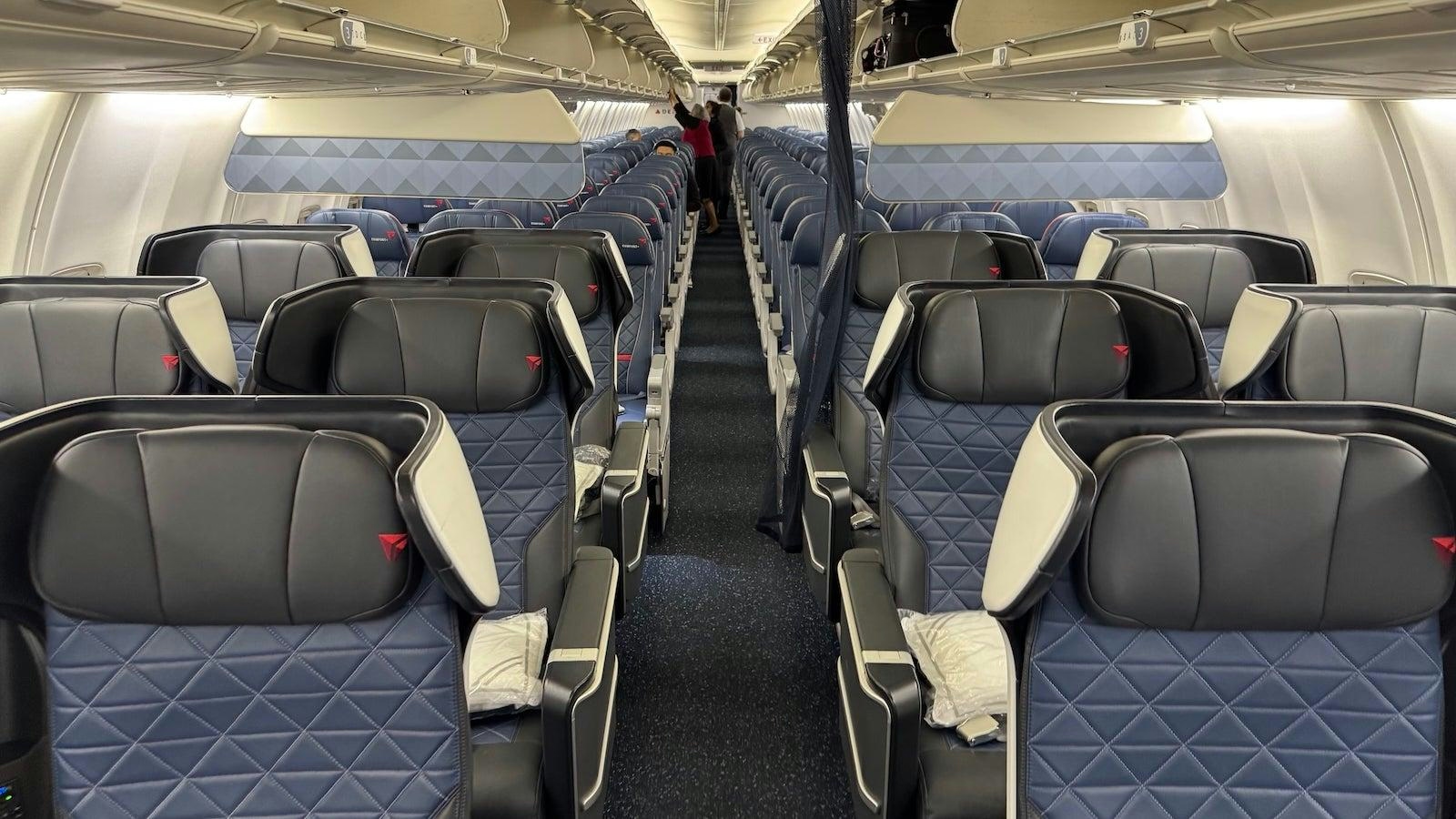
Delta Air Lines Considers Cancelling New Business Class Seat for Transcontinental Routes
Delta Air Lines is reportedly reevaluating its plans to introduce a new lie-flat Business Class seat on its Airbus A321neo aircraft, which were intended to replace the aging Boeing 757s on key transcontinental routes such as Los Angeles to New York JFK. The airline’s initial strategy centered on the Safran Vue Business Class seat, a reverse herringbone design promising enhanced privacy and comfort. However, ongoing and unresolved certification challenges with the seat have cast doubt on its future deployment.
Certification Delays and Design Features
The Safran Vue seat, unveiled in 2022, was designed to offer passengers all-aisle access and sliding privacy doors, with a layout that positions seats facing the window rather than the aisle. This configuration was intended to provide superior privacy compared to the herringbone-style lie-flat seats used by competitors like American Airlines and United Airlines. Safran emphasized the seat’s ability to prevent direct eye contact between passengers, positioning it as a significant upgrade over existing narrow-body Business Class products, which are often criticized for their cramped nature relative to widebody aircraft.
Despite these advantages, the Federal Aviation Administration (FAA) has yet to certify the Safran Vue seat, delaying its introduction well beyond the A321neo’s planned 2024 debut. This certification impasse forced Delta to place some of its new aircraft into long-term storage. In the interim, the airline has temporarily outfitted certain A321neos with 44 standard Business Class recliners for use on shorter domestic routes, a stopgap measure that falls short of the premium experience originally promised.
Strategic and Operational Implications
The prolonged certification delay has prompted speculation that Delta may abandon the Safran Vue seat in favor of the Thompson Vantage Solo seat, a move that would represent a significant shift in the airline’s premium product strategy for narrow-body aircraft. Aviation insider JonNYC has reported that this potential pivot reflects Delta’s need to find a viable alternative amid ongoing regulatory hurdles.
Compounding these challenges are operational difficulties, including crew scheduling problems that have led to hundreds of flight cancellations. These disruptions threaten to undermine Delta’s service reliability and could alienate premium passengers accustomed to lie-flat seating on transcontinental flights. The potential reduction in Business Class offerings risks diminishing the airline’s competitive standing in a market where premium comfort is a key differentiator.
Market Impact and Future Outlook
The uncertainty surrounding Delta’s Business Class product may prompt dissatisfied passengers to consider rival carriers. American Airlines and United Airlines, both offering established lie-flat seats on transcontinental routes, are well positioned to capitalize on Delta’s setbacks. These competitors may intensify efforts to attract business travelers by emphasizing their superior premium cabin experiences.
With no clear resolution in sight for the FAA certification and mounting operational pressures, Delta faces critical decisions regarding the future of its transcontinental Business Class service. The airline’s forthcoming actions will be closely monitored by industry analysts and frequent flyers alike, as they will shape the competitive dynamics of premium air travel on key domestic routes.

Etihad Airways Suspends Airbus A380 Flights on Key Route

Aditya Birla Group Seeks Approval for Aircraft Leasing in GIFT City

Qatar Airways Highlights Innovation and Connectivity at Arabian Travel Market 2026

Hong Kong's Five-Year Plan Includes Andrew Fan's Aircraft Parts Processing Hub Proposal

ACIA Aero Leasing Delivers ATR72-600 to Air Nostrum

RTX Appoints Jill Albertelli as Head of Pratt & Whitney

TAT Technologies Joins Beyond Aero Hydrogen Aircraft Program

AURAK Study Highlights Barriers to Air Taxi Adoption in Emerging Economies

Xiamen Air Selects Altitude for 787 Maintenance at Heathrow

Etihad and Swissport Extend Global Partnership
