Imagen

AeroGenie — Tu copiloto inteligente.

Pregunta cualquier cosa. Analiza todo. Actúa al instante.

Tendencias

Categories

Delta Airlines Chooses GE Aerospace GEnx Engines Amid Hypersonic Missile Tests
January 28, 2026By ePlane AI
Delta Airlines Chooses GE Aerospace GEnx Engines Amid Hypersonic Missile Tests
0
0
Delta Air Lines
GE Aerospace
GEnx Engine

Delta Airlines Selects GE Aerospace GEnx Engines Amid Hypersonic Missile Developments

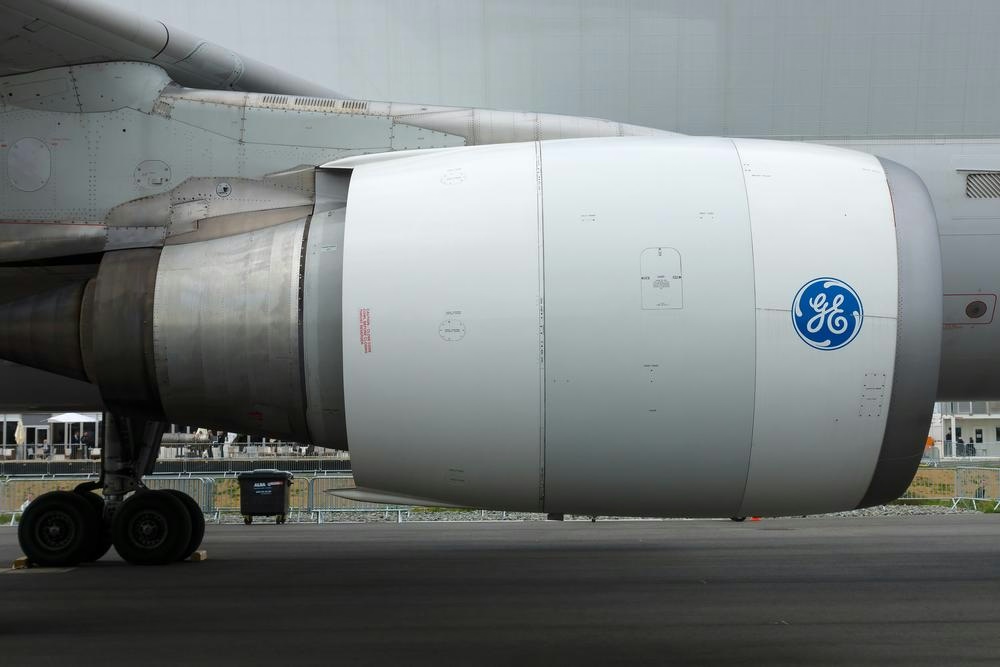
GE Aerospace has secured a significant contract with Delta Air Lines, which has chosen the company’s GEnx engines to power 30 new Boeing 787-10 aircraft. Announced on January 13, the agreement also includes the provision of spare engines and long-term service support, reinforcing GE Aerospace’s strong position in the commercial aviation sector.

Strategic Partnership and Engine Performance

Delta’s selection of the GEnx engine reflects the company’s commitment to enhancing operational efficiency and reliability across its international network. Introduced in 2011, the GEnx engine has amassed over 70 million flight hours and currently powers nearly two-thirds of all Boeing 787 aircraft worldwide. Ed Bastian, Delta’s chief executive officer, emphasized that the engines are “foundational to our growth vision,” enabling the airline to connect passengers to global destinations with improved performance.

GE Aerospace’s Dual Focus: Commercial Aviation and Defense

The timing of Delta’s decision coincides with GE Aerospace’s increasing prominence in defense technology, particularly in the development of hypersonic missile engines. In collaboration with Lockheed Martin, GE Aerospace recently completed tests on a liquid-fueled rotating detonation ramjet designed to propel hypersonic missiles at unprecedented speeds with enhanced fuel efficiency and extended range. This advancement underscores the company’s expanding role in cutting-edge military applications alongside its commercial aviation business.

This dual focus presents potential challenges. GE Aerospace’s involvement in hypersonic missile technology may invite regulatory scrutiny and ethical debates, as governments and the public assess the implications of advanced military capabilities. Market responses to Delta’s engine selection are likely to be mixed; while the GEnx’s proven reliability and performance, particularly in the Asia-Pacific region, are widely recognized, concerns may arise regarding the impact of GE’s defense activities on its commercial partnerships.

Industry Competition and Future Outlook

The aerospace sector is poised for intensified competition as other carriers, including United Airlines, plan to expand their fleets with new Boeing 787 deliveries. Competitors are expected to highlight innovations and reliability in their own engine technologies to capture market share. Furthermore, the industry’s growing emphasis on hypersonic technology could shift resources and focus away from commercial engine development, potentially influencing the long-term strategies of airlines like Delta that depend on continuous innovation and support for their fleets.

As a leading designer, manufacturer, and service provider of advanced jet engines and integrated systems for commercial, military, and business aircraft, GE Aerospace’s balancing act between its commercial and defense roles will remain a critical factor for its airline partners and the broader aviation industry.

More news
Wings India 2026 Opens with HAL Debuting SJ-100 and H-228 Aircraft

Wings India 2026 Opens with HAL Debuting SJ-100 and H-228 Aircraft

Wings India 2026 Opens with HAL Debuting SJ-100 and H-228 Aircraft Wings India 2026 commenced with a significant milestone for Indian aviation: the formal unveiling of Hindustan Aeronautics Limited’s (HAL) SuperJet SJ-100 and H-228 commuter aircraft. This event represents India’s most substantial advancement in civil aircraft production since the Avro era, signaling a strategic transition from being primarily an aviation market to becoming an emerging manufacturer of commercial aircraft. HAL’s Expanding Civil Aviation Portfolio At Hyderabad’s Begumpet Airport, HAL showcased a comprehensive civil aviation portfolio that includes regional fixed-wing aircraft, helicopters, and advanced platforms. Central to this exhibition were the SJ-100 regional jet, the H-228 commuter aircraft, and the Dhruv New Generation helicopter. HAL’s presence at the event underscores a new phase in Indian aviation, where aircraft are not merely imported but increasingly designed and manufactured domestically. The SJ-100’s debut is particularly noteworthy. Originally developed by Yakovlev under Russia’s United Aircraft Corporation, the aircraft is now undergoing full localization as part of India’s ‘Make in India’ initiative. The SJ-100 is designed to carry up to 103 passengers over routes of approximately 3,500 kilometers. It features advanced technologies such as fly-by-wire controls, CAT IIIA autoland capability, and is powered by PD-8 engines. HAL’s effort to position a fully domestically produced passenger aircraft marks the first such initiative since the conclusion of the Avro HS-748 programme in the late 1980s. Industry experts regard the SJ-100 as a critical test of India’s ability to leverage its extensive defense aerospace expertise to establish a sustainable civil manufacturing ecosystem. However, HAL faces considerable challenges, including stiff competition from established international manufacturers, the need for significant investment in local production infrastructure, and the imperative to comply with stringent global aviation standards. Market responses are anticipated to be mixed; regional airlines may demonstrate strong interest in these domestic offerings, while larger carriers might continue to prefer established international models. In response, global competitors are expected to intensify marketing efforts or pursue partnerships to reinforce their positions within the Indian market. Dr. D K Sunil, Chairman and Managing Director of HAL, emphasized the company’s growing civil aviation ambitions, stating, “HAL is steadily expanding its civil aviation footprint and the showcase of Dhruv NG, H-228, and the SJ-100 trinity at Wings India reflects our focused thrust in strengthening regional connectivity, civil utility operations, and future-ready aircraft programmes, while reinforcing India’s journey towards self-reliance in civil aviation.” In addition to the standard SJ-100, HAL also presented the SJ-100 Aurus business jet variant, targeting the expanding corporate and government aviation sectors. The H-228: Addressing Regional Connectivity Needs While the SJ-100 symbolizes India’s re-entry into jet manufacturing, the H-228 is tailored to meet the operational demands of regional air travel. Evolved from the Dornier lineage and adapted for Indian conditions, the H-228 is designed to operate on short and semi-prepared runways, making it particularly suitable for India’s UDAN regional connectivity scheme. Both land and amphibious variants were displayed, highlighting their versatility for applications ranging from island connectivity to coastal surveillance. HAL plans to conduct customer demonstration flights of the H-228 during the event, aiming to attract interest from state governments, charter operators, and regional airlines. Wings India 2026 thus represents a pivotal moment for Indian civil aviation, bringing HAL’s ambitions and challenges into sharp focus on the global stage.
Profile: Gama Aviation

Profile: Gama Aviation

Profile: Gama Aviation Comprehensive Air Ambulance Operations Gama Aviation manages an extensive fixed-wing air ambulance service across the United Kingdom, operating a fleet of seven King Air 200 aircraft from bases in Bristol, Bournemouth, and Glasgow. These planes primarily facilitate long-distance medical repatriation missions, ensuring critical patient transfers over extended ranges. In addition to its fixed-wing operations, the company maintains a rotary-wing fleet comprising eight Airbus H145 D2 helicopters—three of which are currently undergoing upgrades to the D3 variant—and five Leonardo AW169 helicopters, with an additional AW169 expected to join the fleet in early 2025. Both fixed- and rotary-wing aircraft provide limited backup support, available to assist air ambulance and Helicopter Emergency Medical Services (HEMS) operators on an ad hoc basis or during special events. Duncan Daines, Group Head of Engagement at Gama Aviation, emphasized the company’s recent partnership with Silverstone, where it supplied air ambulance services for high-profile FIA events at the Northamptonshire motor racing circuit, including the British Grand Prix and the UK round of MotoGP. Fleet Expansion and Medical Capabilities Looking forward, Gama Aviation is preparing for significant fleet growth. A new Airbus H145 D3 arrived just before Christmas and is currently stationed at Staverton (Gloucester Airport) awaiting embodiment. The company anticipates the arrival of three King Air 360Cs and two additional Airbus H145 D3 helicopters in 2026. These King Air 360Cs will be delivered as green aircraft and subsequently customized by Gama Aviation, featuring innovations such as a bariatric patient lift and bespoke cabin interiors tailored to medical requirements. The H145 D3s will be outfitted with Aerolite interiors and further modifications designed to enhance their medical mission capabilities. Onboard medical equipment is standardized according to mission needs. Dr. Simon Forrington, Gama Aviation’s Medical Director, explained that aircraft are equipped with intensive care unit (ICU) kits for doctor-led missions, while smaller kits are used for flights staffed solely by nurses or paramedics. At the 2025 Verticon trade show in Dallas, Gama Aviation placed an order for three additional AW169 helicopters, which will be configured specifically for emergency medical services (EMS). The AW169 EVO variant, featuring an enhanced maximum takeoff weight of 5,100 kilograms and skid landing gear, is designed to support advanced EMS operations, including complex transfers such as intra-aortic balloon pump (IABP) and extracorporeal membrane oxygenation (ECMO), alongside traditional HEMS missions. In collaboration with Dorset and Somerset Air Ambulance, Gama Aviation is also developing a new multi-modal patient loading system compatible with both the standard and EVO versions of the AW169. Operational Challenges and Market Outlook As Gama Aviation expands its operations, its extended Part 145 maintenance and paint shop capabilities are coming under increased scrutiny amid evolving conditions in the business aviation market. Recent adjustments to component repair pricing by competitors, notably Duncan Aviation, have intensified pressure on Gama Aviation to sustain competitive pricing and operational efficiency. Industry analysts expect that similar pricing trends may become more widespread, prompting a closer examination of Gama Aviation’s cost structures. Furthermore, broader forecasts for the business aviation sector in 2026 indicate potential challenges arising from shifting market demand and longer lead times for new aircraft deliveries. These factors could influence Gama Aviation’s strategic priorities and market positioning in the coming years, as the company navigates a complex and dynamic operational environment.
Delta Air Lines Orders 31 Additional Airbus Widebody Aircraft

Delta Air Lines Orders 31 Additional Airbus Widebody Aircraft

Delta Air Lines Expands Widebody Fleet with Major Airbus Order Delta Air Lines has confirmed a firm order for 31 additional Airbus widebody aircraft, consisting of 16 A330-900s and 15 A350-900s. This acquisition forms a key part of the airline’s broader fleet modernization strategy aimed at enhancing its long-haul operational capabilities amid an increasingly competitive international aviation market. The agreement also includes options for 20 more aircraft, reflecting Delta’s long-term commitment to expanding and renewing its widebody fleet. Strengthening Airbus Fleet Presence Upon delivery of the new aircraft, Delta’s widebody fleet will comprise 55 A330neos and 79 A350 jets, solidifying its status as one of the largest operators of Airbus widebodies globally. The airline currently operates a diverse Airbus fleet exceeding 500 aircraft, ranging from the smaller A220 to the long-range A350-900. Additionally, Delta maintains a substantial backlog of approximately 200 Airbus planes, including the larger A350-1000 variant, underscoring its ongoing investment in Airbus technology. The A330neo models ordered are equipped with the latest Rolls-Royce Trent 7000 engines, enabling non-stop flights of up to 8,100 nautical miles (15,000 kilometers). These aircraft deliver a 25% improvement in fuel efficiency, CO₂ emissions, and operating costs compared to previous generation models. Meanwhile, the A350-900 is engineered for ultra-long-haul routes, capable of flying up to 9,700 nautical miles (18,000 kilometers), setting new benchmarks for intercontinental travel efficiency. Both aircraft types are certified to operate with up to 50% Sustainable Aviation Fuel (SAF), aligning with Airbus’s ambition to achieve full SAF capability across its fleet by 2030. As of December 2025, the A350 Family had amassed over 1,500 orders from 67 customers worldwide, while the A330 Family had secured more than 1,900 orders globally. Market Context and Challenges Delta’s substantial investment coincides with similar fleet expansion efforts by other major U.S. carriers, including United Airlines and American Airlines, as they seek to meet rising demand for international travel. This intensifying competition is likely to accelerate fleet renewal initiatives across the industry and may influence negotiations with aircraft manufacturers. Despite positive market reception and investor confidence in Delta’s growth strategy, the airline faces potential headwinds. Ongoing supply chain disruptions and escalating fuel prices pose risks to delivery schedules and operational costs. Nonetheless, Delta’s latest order underscores its determination to maintain a competitive advantage in the global aviation sector while advancing its sustainability goals.
Acumen Aviation Reports Strong 2025 Performance Amid Aircraft Shortage and Market Volatility

Acumen Aviation Reports Strong 2025 Performance Amid Aircraft Shortage and Market Volatility

Acumen Aviation Reports Strong 2025 Performance Amid Aircraft Shortage and Market Volatility Acumen Aviation has released its 2025 Operational Review, detailing a robust performance despite a challenging year characterized by severe aircraft shortages, market volatility, and increasing technical complexity within the global aviation sector. The company’s results emerge against a backdrop of persistent original equipment manufacturer (OEM) delivery delays, widespread supply chain disruptions, and ongoing engine maintenance difficulties. These factors have collectively contributed to one of the most constrained supply environments in recent history. Industry Challenges and Market Dynamics The supply constraints were intensified by global trade tensions, with tariffs and embargoes affecting the availability of essential materials such as steel and aluminum. Operational disruptions further compounded these challenges, notably the temporary Jet A-1 fuel shortage at Cape Town International Airport in November 2025. Additionally, significant outages in airline crew management systems have driven heightened demand for business aviation services. In response, competitors have adjusted fuel inventory policies and explored enhanced buyer-side protections for aircraft charters to mitigate cost volatility arising from mechanical issues. Acumen’s Strategic Response and Operational Highlights Amid these headwinds, Acumen’s Leasing and Advisory division leveraged strong secondary-market demand, managing 10 Irish special purpose vehicles (SPVs) encompassing 24 leased assets. The division facilitated a diverse range of transactions involving aircraft, engines, freighters, and part-out deals on a global scale. Meanwhile, the company’s Technical Asset Management team oversaw approximately 350 assets, with a notable increase in redelivery activity, particularly in Asia. This focus aimed to minimize downtime and protect lease revenue streams. In a highly volatile valuation environment, Acumen completed over 1,500 appraisals throughout 2025, including more than 30 for asset-backed securities (ABS) transactions, utilizing its proprietary fin-S valuation platform. The company’s Continuing Airworthiness Management Organisation (CAMO) operations demonstrated resilience amid regulatory and maintenance pressures, maintaining key international approvals and securing ISO 27001 certification. Embracing Digital Transformation The review underscores digital transformation as an operational imperative rather than a mere competitive advantage. Acumen expanded its data management and digital asset oversight capabilities, now managing nearly 2,260 assets across its systems. This expansion has strengthened compliance, enhanced predictive analytics, and improved asset marketability—critical factors in an increasingly constrained and competitive market environment. Despite Acumen’s strong performance, the broader aviation market remains cautious. Persistent uncertainty in Latin America and the Caribbean, coupled with the unpredictability of future disruptions affecting airlines, continues to influence industry sentiment. As competitors recalibrate their strategies to navigate these challenges, Acumen’s operational resilience and digital focus position it well to adapt to evolving market dynamics.
AerSale Opens New Aerostructures MRO Facility in Florida

AerSale Opens New Aerostructures MRO Facility in Florida

AerSale Expands Aerostructures MRO Operations with New Florida Facility AerSale Corporation has officially opened a new, advanced Aerostructures Maintenance, Repair, and Overhaul (MRO) facility in Hialeah Gardens, Florida, marking a pivotal development in the company’s expansion strategy. This new site replaces the previous operation in Medley and increases AerSale’s aerostructures MRO capacity threefold to nearly 90,000 square feet. The enlarged footprint is intended to enhance throughput and technical capabilities, positioning the company to better meet the growing demand for high-quality structural repairs in the aviation sector. Enhanced Capabilities and Strategic Location The Hialeah Gardens facility is outfitted with cutting-edge infrastructure, including a new heating oven, paint booth, and sanding booth, designed to accommodate larger wide-body aircraft components. It is equipped to service Boeing 777 and Airbus A330 airframe parts, as well as engine nacelles and thrust reversers for GE90 and Rolls-Royce Trent engines. These technological upgrades are expected to improve operational reliability, streamline workflows, and enable faster, more consistent turnaround times through optimized processes and redundant equipment. Strategically situated between Miami International Airport and Fort Lauderdale-Hollywood International Airport, the facility offers significant logistical advantages. This location facilitates efficient service delivery to airlines, operators, and lessors across the Americas and international markets, thereby broadening AerSale’s customer base and strengthening its competitive position within the MRO industry. Market Context and Competitive Challenges AerSale’s expansion occurs amid heightened competition in the MRO sector. Established companies such as Daher Turboprop, which is currently experiencing strong sales growth, may influence market dynamics and present challenges as AerSale seeks to increase its market share. The inauguration of the new facility is likely to attract closer scrutiny from investors and stakeholders focused on operational efficiency and cost control. In response, competitors may accelerate their own strategic initiatives to enhance MRO capabilities or adjust their market positioning to counter AerSale’s growth trajectory. Nicolas Finazzo, Chairman and Chief Executive Officer of AerSale, characterized the new facility as a significant advancement for the company’s Aerostructures MRO business. He highlighted that the investment in expanded space and advanced equipment enhances AerSale’s ability to address evolving fleet and operational requirements. The launch of the Hialeah Gardens site reaffirms the company’s commitment to investing in infrastructure, technology, and capabilities that deliver tangible value across the global aviation aftermarket. As AerSale scales up operations at its new facility, it will navigate both opportunities and challenges within a rapidly evolving MRO landscape, where efficiency, innovation, and adaptability remain critical to sustained success.
Avmax Acquires Condor Aircraft Accessories

Avmax Acquires Condor Aircraft Accessories

Avmax Acquires Condor Aircraft Accessories, Enhancing MRO Capabilities Avmax Group Inc. has completed the acquisition of Condor Aircraft Accessories, a strategic move designed to bolster its aircraft component maintenance capabilities and expand its service offerings both within Canada and internationally. This integration brings together two Alberta-based aviation companies renowned for their dedication to quality, safety, and technical expertise. Strengthening Maintenance and Repair Operations The merger combines Avmax’s established aviation platform with Condor’s specialized proficiency in aircraft component repair and management. This partnership significantly broadens in-house maintenance, repair, and overhaul (MRO) capabilities across a diverse range of aircraft components and operational platforms. Condor’s decades of experience complement Avmax’s existing strengths in MRO services, aircraft leasing, and lifecycle management. Together, the organizations represent over 85 years of combined aviation experience, united by a shared commitment to craftsmanship and stringent safety standards. As part of the acquisition, the Avmax Component Shop and Condor Aircraft Accessories will be operationally integrated, with Condor’s approved maintenance organization (AMO) functioning as a division within Avmax. This alignment is expected to enhance technical expertise across both facilities, ensuring a seamless experience for customers and partners. Importantly, day-to-day operations and existing points of contact will remain unchanged, minimizing disruption to service. Customers stand to benefit from improved component support, greater operational efficiency, and access to Condor’s extensive sector knowledge. Challenges and Market Implications Despite the promising outlook, the acquisition presents challenges, particularly in integrating operations and maintaining supply chain continuity. Navigating potential regulatory hurdles will also be essential to the partnership’s success. Achieving operational synergy while preserving service quality throughout the transition will be critical. The deal has attracted increased investor interest in Avmax’s expanded capabilities in aircraft accessories. Competitors within the industry may respond by enhancing their own service offerings or pursuing strategic partnerships to safeguard their market positions. This transaction occurs amid a broader surge in mergers and acquisitions within the industrial sector, reflecting a conducive environment for such consolidations. However, Avmax’s ability to effectively integrate Condor’s operations and realize the anticipated benefits will be closely monitored by customers and industry observers alike. Through this acquisition, Avmax aims to deliver more comprehensive and efficient MRO solutions, while managing the complexities involved in uniting two established aviation service providers.
University of Tokyo and Narita Airport to Establish Aviation Innovation Hub

University of Tokyo and Narita Airport to Establish Aviation Innovation Hub

University of Tokyo and Narita Airport to Establish Aviation Innovation Hub The University of Tokyo’s Research Centre for Advanced Science and Technology (RCAST) has formalized a comprehensive collaboration with Narita International Airport Corporation (NAA) to create an aviation innovation hub at Narita International Airport. This strategic partnership seeks to enhance industry–academia cooperation and transform the airport into the nucleus of a future “Airport City,” thereby promoting technological progress and economic growth within Japan. Objectives and Collaborative Initiatives The agreement outlines a series of concrete initiatives aimed at accelerating the development and practical application of advanced science and technology in the aviation sector. These include joint research projects, the establishment of a social collaboration research division, and the encouragement of co-creation with supporting companies. Through these efforts, the collaboration intends to reinforce Narita Airport’s position as a critical transportation hub while evolving it into a center for innovation. Central to the partnership is the creation of an academia-driven innovation ecosystem within the Airport City, designed to foster collaboration among academic institutions, industry stakeholders, and government entities. Research activities will focus on sustainable aviation, next-generation air traffic management, and the optimization of airport operations through field experiments conducted in real airport environments. Additionally, the initiative aims to advance science-based airport design by developing automation technologies and improving ground handling processes. The integration of airport management, aircraft operations, and air traffic control systems is another key area of focus, intended to facilitate seamless operational coordination. Furthermore, the project envisions the realization of the Airport City concept as a regional co-creation hub that leverages aviation networks, geopolitical considerations, and supply chains to benefit both national and regional economies in Japan. Challenges and Industry Implications Despite the promising outlook, the partnership faces significant challenges. Securing adequate funding and developing the necessary infrastructure to support cutting-edge research and development will be essential. Moreover, the collaboration must navigate complex regulatory frameworks related to aviation safety and environmental sustainability, which could complicate the implementation of new technologies. The announcement has already attracted interest from global aviation companies eager to participate in pioneering projects at the new hub. However, this initiative is expected to intensify competition within the sector, as other airports and academic institutions may establish similar research centers, potentially sparking a race for technological innovation and top-tier talent in aviation. Nonetheless, the alliance between RCAST and NAA represents a deliberate and strategic effort to position Narita International Airport at the forefront of aviation innovation, with the potential to drive significant advancements in the industry and contribute meaningfully to Japan’s economic development.
RTX Reports Strong Sales Growth in 2025

RTX Reports Strong Sales Growth in 2025

RTX Reports Strong Sales Growth in 2025 Robust Financial Performance and Record Order Backlog RTX announced strong financial results for the fourth quarter and full year of 2025, highlighting significant revenue growth, enhanced cash generation, and a record order backlog. In the final quarter, the company reported sales of US$24.2 billion, marking a 12% increase compared to the same period in the previous year. This growth was driven by solid performance across its diverse business segments. GAAP earnings per share stood at US$1.19, reflecting the impact of acquisition accounting adjustments, restructuring costs, and other non-recurring items. On an adjusted basis, earnings per share rose to US$1.55, slightly surpassing the prior year’s figure. Cash flow generation remained a key strength, with operating cash flow reaching US$4.2 billion and free cash flow totaling US$3.2 billion for the quarter. RTX’s order backlog reached an unprecedented US$268 billion, comprising US$161 billion in commercial orders and US$107 billion in defense-related contracts. This backlog underscores sustained demand across the company’s portfolio. During the quarter, RTX completed the divestiture of Collins’ Simmonds Precision Products business, advancing its strategic efforts to reshape its portfolio. For the full year 2025, RTX reported sales of US$88.6 billion, representing a 10% increase year-on-year and reflecting broad-based growth across its operations. GAAP earnings per share for the year were US$4.96, influenced by acquisition-related adjustments and restructuring charges. Adjusted earnings per share rose 10% to US$6.29 compared to 2024. Full-year operating cash flow reached US$10.6 billion, while free cash flow improved significantly to US$7.9 billion, an increase of US$3.4 billion from the previous year. Market Response and Strategic Challenges The company’s strong performance has been met with positive market reactions, with analysts forecasting a potential 30% rally in RTX’s stock. This momentum is supported by the company’s robust cash flow generation, which enhances its capacity for investment and shareholder returns. Despite these positive developments, RTX faces several challenges moving forward. Managing its substantial defense backlog will require careful execution to meet delivery and performance expectations. Maintaining high-margin aftermarket services remains critical to sustaining profitability. Additionally, the company must navigate evolving regulatory requirements, particularly those related to the FAA Air Traffic Control Modernization Contract. Competitive pressures are also intensifying. Agile competitors such as Fabletics are expanding their market share through strong sales growth and diversification into new categories like scrubs. This competitive landscape underscores the importance for RTX to continue prioritizing innovation and operational excellence. RTX’s 2025 results demonstrate continued momentum, a strong order book, and growing cash generation, positioning the company well as it advances its long-term strategic objectives.
Boeing to Deliver 25 Planes to Indian Airlines in 2026 Without Delays

Boeing to Deliver 25 Planes to Indian Airlines in 2026 Without Delays

Boeing to Deliver 25 Aircraft to Indian Airlines in 2026 Without Delays Boeing has announced plans to deliver approximately 25 aircraft to Indian airlines in 2026, reflecting a significant ramp-up in production of its 737 Max jets. Speaking at the Wings India event in Hyderabad, Ashwini Naidu, Boeing’s Managing Director for Commercial Sales and Marketing in the Indian subcontinent, confirmed that the company will maintain a delivery pace of two aircraft per month, with no anticipated delays. Increased Deliveries Amid Regulatory Approvals The scheduled deliveries will comprise both 737 Max aircraft, intended for Akasa Air and Air India Express, as well as 787-9 Dreamliners for Air India. This represents an increase from the 19 Boeing aircraft delivered to Indian carriers in the previous year. The acceleration in deliveries follows a period of constrained 737 Max output, after the US Federal Aviation Administration (FAA) imposed a production cap of 38 jets per month in early 2024 due to a safety incident. However, in October, Boeing secured regulatory approval to raise production to 42 planes monthly, aligning with the demands of India’s rapidly expanding aviation market. Despite ongoing scrutiny over production quality and certification processes, Boeing has managed to sustain improved output levels. This progress has been positively received by the market, with Boeing’s stock rising 16% year to date. The company recently achieved its highest annual jet deliveries since 2018, bolstering its competitive position against Airbus, which is actively pursuing long-haul jet orders in the region. Meanwhile, some competitors, such as Southwest Airlines, have taken a more cautious stance regarding certification of the 737 Max 7. India’s Growing Aviation Market and Boeing’s Strategic Outlook India, now the world’s fastest-growing aviation market, remains central to Boeing’s long-term strategy. The company projects that passenger air traffic in India and South Asia will expand by 7% annually over the next two decades, necessitating the addition of nearly 3,300 new aircraft by 2044. Boeing’s latest commercial market outlook, unveiled at the Wings India event, also highlights a pressing need for approximately 141,000 new aviation professionals in the region, including 45,000 pilots, 45,000 technicians, and 51,000 cabin crew members. “As air travel becomes more integral to how people and goods move in India and South Asia, airlines will strengthen networks, scale fleets, and invest in services and technical personnel to support long-term growth,” Naidu stated. “More efficient, versatile airplanes will enable robust growth opportunities for the region’s established and emerging airlines.” With production rates improving and regulatory approvals secured, Boeing’s planned deliveries in 2026 are poised to support the continued expansion of India’s aviation industry, even as the company navigates ongoing challenges and competitive pressures within the sector.
Airports Authority of India to Invest ₹15,000 Crore in AI-Based Air Traffic Control Automation

Airports Authority of India to Invest ₹15,000 Crore in AI-Based Air Traffic Control Automation

Airports Authority of India to Invest ₹15,000 Crore in AI-Based Air Traffic Control Automation The Airports Authority of India (AAI) has announced a significant investment of ₹15,000 crore aimed at modernising the country’s air traffic control systems through the integration of artificial intelligence and advanced automation technologies. This initiative was unveiled by AAI Chairman Vipin Kumar during Wings India 2026, Asia’s largest civil aviation event, held at Begumpet Airport in Hyderabad. Modernising Air Traffic Management for Growth and Efficiency Vipin Kumar underscored the critical need to expand airport capacity while maintaining high standards of quality to support India’s rapidly growing aviation sector. The industry is currently experiencing a compound annual growth rate of 8.3 percent, more than double the global average of 3.5 percent. The planned investment seeks to enhance operational efficiency, safety, and reliability in air traffic management, which is expected to improve passenger experiences and reduce operational costs across the aviation ecosystem. Despite the promising outlook, the transition to AI-driven automation presents considerable challenges. Industry experts highlight the urgent requirement for a skilled workforce capable of managing and maintaining these sophisticated systems. A recent report by Google on building an AI-ready workforce stresses the importance of upskilling aviation professionals to ensure the successful deployment and sustained operation of AI technologies. Additionally, regulatory compliance and adherence to stringent aviation safety standards will be paramount as the sector embraces these innovations. Industry Perspectives and Broader Sectoral Developments Arun Bansal, CEO of Adani Airport Holdings, pointed to ongoing challenges in policy advocacy, technology adoption, and bilateral seat allocation. He remarked that India remains one of the slowest adopters of technology in aviation globally and called for a stronger focus on aviation-related manufacturing to establish the country as a global aviation hub. The AAI’s move towards automation is anticipated to spur competing airports to accelerate their own investments in AI, reflecting broader regional trends such as Telangana’s recent commitments to AI data centre and manufacturing infrastructure development. India’s aviation sector is undergoing a rapid transformation, with government ambitions to develop a $4 billion Maintenance, Repair, and Overhaul (MRO) hub by 2030. The increasing fleet size has driven demand for domestic maintenance and repair facilities, a priority emphasised by Prime Minister Narendra Modi in recent policy statements. Wings India 2026: A Platform for Collaboration and Innovation Wings India 2026, held from January 28 to 31, serves as a key platform bringing together policymakers, airline and airport executives, aircraft manufacturers, investors, and technology firms. The Civil Aviation Ministry anticipates participation from over 150 exhibitors, 7,500 business visitors, 100,000 general visitors, and more than 200 foreign delegates. Leading global and domestic companies such as Airbus, Boeing, Embraer, HAL, Dassault, ATR, Rolls-Royce, Air India, IndiGo, Akasa Air, GMR, and the Adani Group are actively involved, alongside senior executives from airlines, airports, and original equipment manufacturers. Sustainability is increasingly becoming a central theme at the event, with initiatives focusing on sustainable aviation fuel, green airports, and digital air navigation systems. As India accelerates its adoption of AI and other advanced technologies, the aviation sector faces significant opportunities for innovation, alongside the imperative to address workforce development, regulatory compliance, and competitive pressures.
line










