
Orquesta conocimientos de IA para convertirlos en acción

Tendencias
Categories
Does the McDonnell Douglas MD-11’s Tail Engine Have a Fan?

Does the McDonnell Douglas MD-11’s Tail Engine Have a Fan?
The McDonnell Douglas MD-11 is a distinctive aircraft in commercial aviation, notable for its trijet configuration during an era largely dominated by twinjets and quadjets. Its most striking feature is the third engine, mounted beneath the tail fin. This tail engine, like the wing-mounted engines on the MD-11, is a conventional turbofan. Air is drawn from an intake positioned ahead of the tail fin and directed through a relatively straight and short duct. This design enhances efficiency by reducing pressure loss and airflow distortion, while also simplifying maintenance procedures.
Design Evolution and Engineering Considerations
The tail engine arrangement on the MD-11 is a direct evolution of the design employed on its predecessor, the DC-10, which also featured a similarly aligned tail-mounted turbofan. The MD-11’s notably tall tail and unique internal structure enable the intake, fan, and compressor to be nearly aligned in a straight line—a configuration not achievable on all trijet aircraft. This alignment eliminates the need for a more complex ducting system, contributing to improved operational efficiency.
A significant design element absent from both the MD-11 and DC-10 is the “s-duct,” a curved intake channel found in older trijets such as the Lockheed L-1011 TriStar and Boeing 727. The s-duct allows much of the engine to be housed within the tail, reducing aerodynamic drag and lowering the engine’s height to facilitate maintenance. However, the MD-11’s straight duct was deliberately chosen for its aerodynamic benefits and ease of maintenance. While s-ducts have largely disappeared from commercial aviation, they remain relevant in military and private jets, particularly for stealth and supersonic applications.
Industry Perspectives on the Tail Engine Configuration
Despite the MD-11’s conventional turbofan design, there has been some debate within the aviation community regarding the implications of its tail engine placement. Contrary to certain misconceptions, the MD-11’s tail engine does indeed include a fan, confirming it as a standard turbofan rather than a turbojet or a fanless engine. The positioning of the engine at the tail has sparked discussion among aviation experts and industry stakeholders, as it influences both aerodynamic performance and maintenance logistics, presenting unique challenges compared to wing-mounted engines.
Recent deliberations at the International Air Transport Association’s annual meeting have underscored ongoing challenges related to engine supply and reliability across the aviation industry. While these issues are not specific to the MD-11, they highlight the broader complexities that inform aircraft design decisions, including the selection and placement of engines.
In essence, the MD-11’s tail engine is a conventional turbofan equipped with a fan, utilizing a straight and efficient duct rather than an s-duct. This distinctive tail-mounted configuration exemplifies a balance of engineering innovation and operational considerations, securing the MD-11’s unique position in the history of commercial aviation.

Etihad and Swissport Extend Global Partnership

Sepehran Airlines B737 Returns to Mashhad After Tyre and Engine Issues

Etihad Deploys Widebody Fleet to Meet Strong Demand

Korean Air Finalizes $36.2 Billion Deal with Boeing

Australia’s RFDS Queensland Section Orders Six King Air 260Cs

Korean Air Finalizes Order for 103 Boeing Jets and Engines

Embraer E195-E2 Features Distinctive Engine Placement Among Regional Jets

What Passengers Can Expect on Boeing’s New 777X Jet

How Ethiopian Airlines Became Africa’s Leading Carrier Amid Gulf Competition
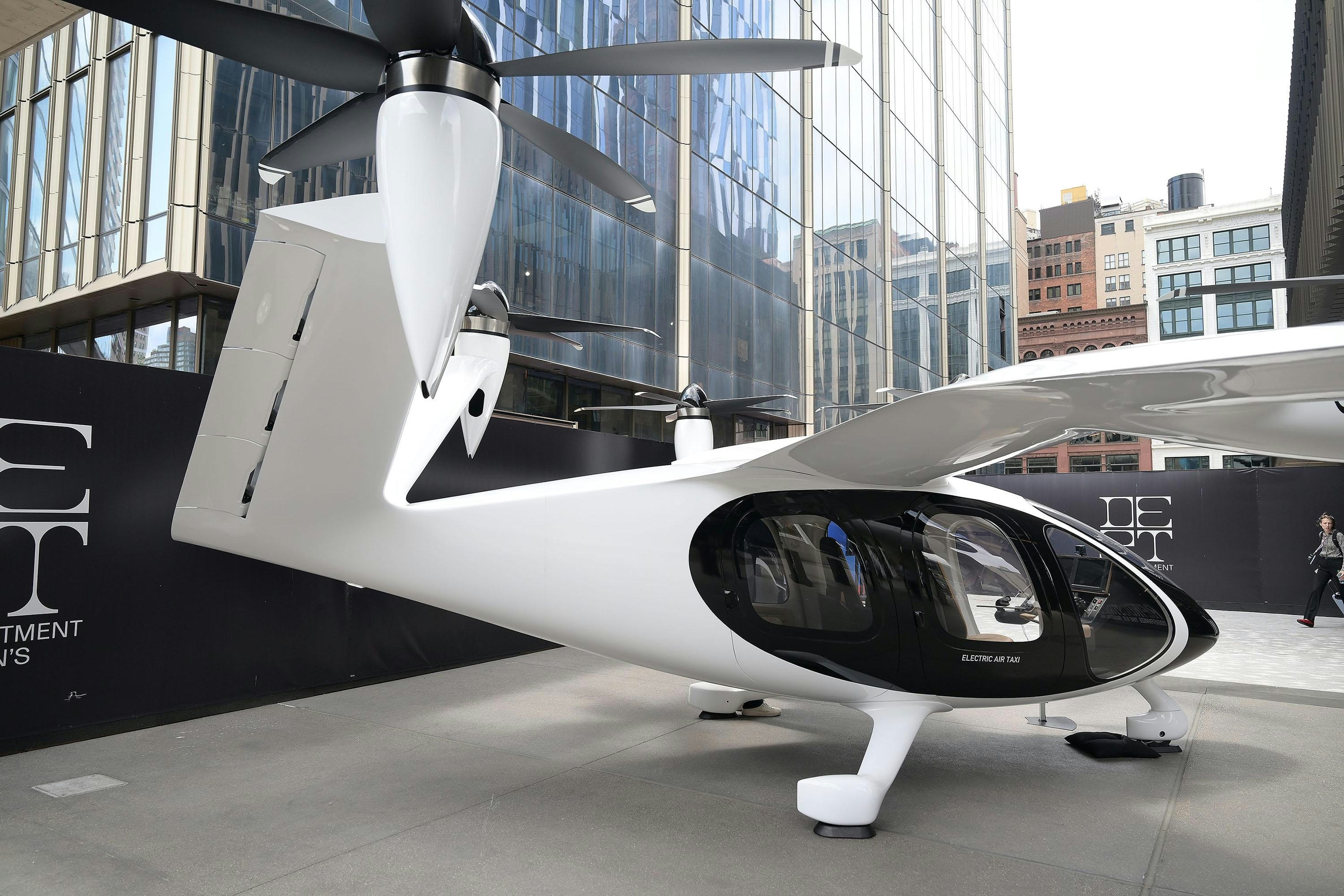
Joby Aviation Extends Autonomous Flight Capabilities with Cross-Country Tour
