
Orquesta conocimientos de IA para convertirlos en acción

Tendencias
Categories
Emirates Maintains Lead in Premium Aviation with A380 Strategy as Rivals Struggle to Compete
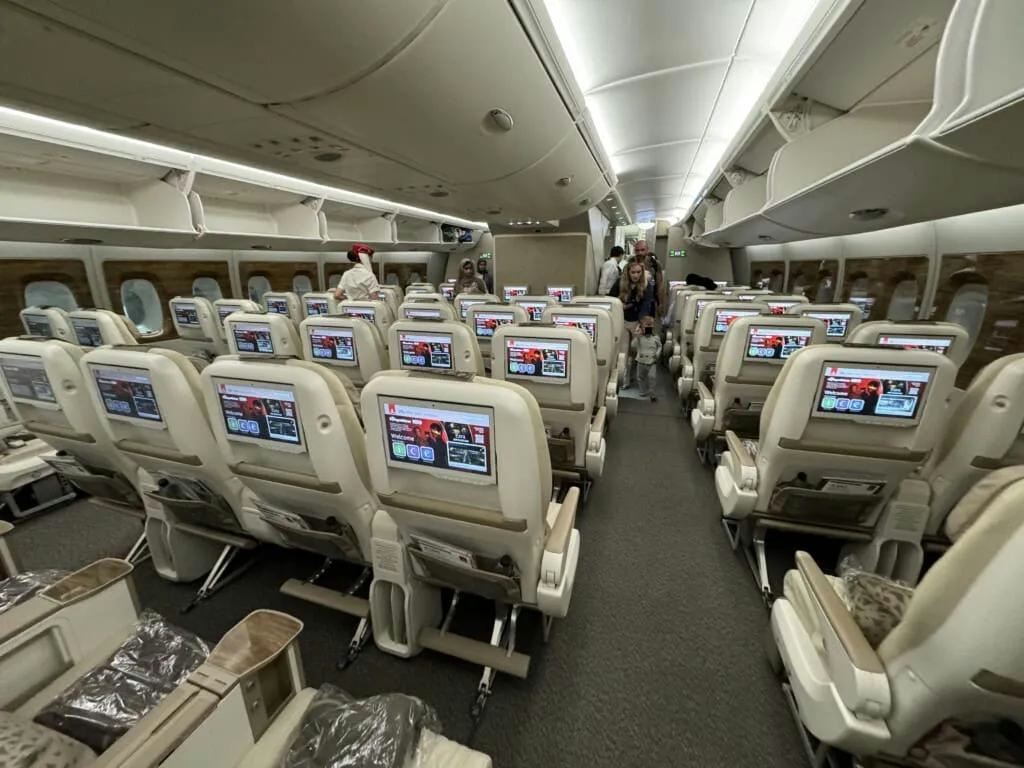
Emirates Maintains Lead in Premium Aviation with A380 Strategy as Rivals Struggle to Compete
Emirates continues to set the standard in premium long-haul aviation by leveraging its distinctive Airbus A380 strategy to maintain a commanding lead amid growing challenges faced by competitors. As the global aviation industry contends with rising operating costs, sustainability demands, and geopolitical uncertainties, Emirates’ unwavering commitment to scale, comfort, and luxury remains unparalleled.
The A380: Cornerstone of Emirates’ Dominance
Central to Emirates’ success is its early and decisive investment in the Airbus A380. While many airlines hesitated, Emirates built the world’s largest A380 fleet, transforming Dubai into a pivotal global hub that efficiently connects East and West. The airline’s network is strategically designed around high-density, long-haul traffic, with the A380 enabling optimized connections and premium offerings such as private suites and onboard lounges. This approach has not only redefined passenger expectations but also established a premium ecosystem that competitors have found difficult to replicate.
Challenges Facing Competitors
Rivals including Lufthansa, Air France-KLM, and Etihad Airways are confronting significant obstacles in today’s aviation market. Lufthansa is pursuing consolidation through acquisitions, while Etihad aims to expand its widebody fleet to stimulate growth. However, these strategies are constrained by industry-wide challenges such as the need for costly airport infrastructure upgrades, high maintenance expenses, and the absence of a direct successor to the A380. In contrast, Emirates continues to modernize its A380 interiors and extend the aircraft’s lifecycle, underscoring its long-term commitment to the superjumbo.
The cessation of A380 production by Airbus has further solidified Emirates’ advantage. As the largest operator of a now-scarce aircraft type, Emirates occupies a unique market position that is both operationally and strategically defensive. No manufacturer is currently developing a comparable high-capacity aircraft, and existing alternatives like the Boeing 777X and Airbus A350 prioritize fuel efficiency over capacity. Emirates itself is awaiting delayed deliveries of the Boeing 777X and faces ongoing issues with the Rolls-Royce engine for the Airbus A350-1000, which has postponed its orders. Despite these setbacks, the airline remains optimistic about future fleet expansion.
Structural Barriers to Replicating Emirates’ Model
Several factors prevent competitors from emulating Emirates’ A380-based strategy. The permanent closure of the A380 production line and the absence of a direct replacement in development create a significant barrier. Additionally, the substantial airport infrastructure requirements for superjumbo operations, coupled with high maintenance and retrofitting costs for premium cabin layouts, pose formidable challenges. These structural limitations mean that replicating Emirates’ model would require decades of coordinated investment—an undertaking few airlines are positioned to pursue.
Industry forecasts suggest that Emirates will continue operating its A380 fleet well into the 2040s, further cementing its leadership in premium aviation. As competitors adapt to a landscape increasingly defined by efficiency and consolidation, Emirates’ unique approach ensures its dominance remains unchallenged for the foreseeable future.

Hong Kong's Five-Year Plan Includes Andrew Fan's Aircraft Parts Processing Hub Proposal

ACIA Aero Leasing Delivers ATR72-600 to Air Nostrum

RTX Appoints Jill Albertelli as Head of Pratt & Whitney

TAT Technologies Joins Beyond Aero Hydrogen Aircraft Program

AURAK Study Highlights Barriers to Air Taxi Adoption in Emerging Economies

Xiamen Air Selects Altitude for 787 Maintenance at Heathrow

Etihad and Swissport Extend Global Partnership

Sepehran Airlines B737 Returns to Mashhad After Tyre and Engine Issues

Etihad Deploys Widebody Fleet to Meet Strong Demand

Korean Air Finalizes $36.2 Billion Deal with Boeing
