
Orquesta conocimientos de IA para convertirlos en acción

Tendencias
Categories
Five of the Most Powerful Fighter Jet Engines Ever Built
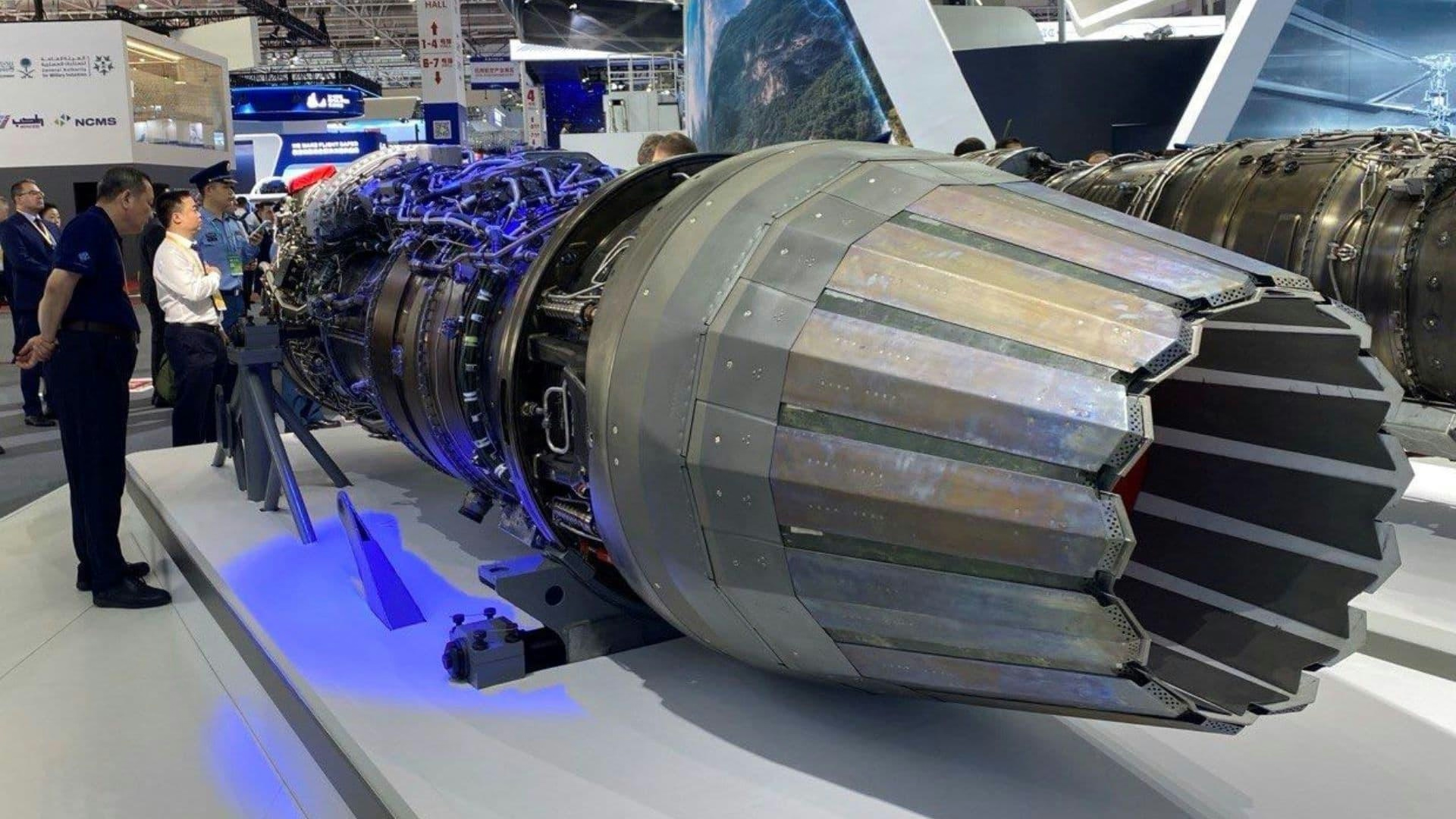
Five of the Most Powerful Fighter Jet Engines Ever Built
The F135: A Benchmark in Fighter Jet Propulsion
Pratt & Whitney openly proclaims the F135 engine as "the most powerful and most advanced fighter engine ever produced," emphasizing its reliability alongside its performance. This engine powers the F-35 Lightning II, delivering over 40,000 pounds of thrust—more than twenty times the output of the historic Me 262 engine used by the Luftwaffe during World War II. The F135 is often described as "the heartbeat of the F-35," a fitting metaphor for an engine that enables the aircraft to reach speeds of Mach 1.6 (approximately 1,200 mph), operate at altitudes exceeding 50,000 feet, and achieve a range of over 1,350 miles on internal fuel alone. The jet’s aerial refueling capability further extends its operational reach, enhancing its strategic flexibility.
Introduced as part of the 2001 Joint Strike Fighter program, the F135 was designed to replace legacy aircraft such as the F-16 Fighting Falcon. It is central to the F-35’s reputation as one of the most capable and versatile fighter jets currently in service. The engine incorporates advanced features including a reduced thermal signature to support stealth operations, real-time performance monitoring, and compatibility with sophisticated systems like the Electro-Optical Targeting System and a customizable weapons suite.
Challenges in Development and Global Competition
Despite its impressive capabilities, the development and deployment of the F135 and similar high-performance engines face significant challenges. The global expansion of the F-35 program, now involving orders from 20 countries with Saudi Arabia potentially joining, has placed considerable strain on supply chains. To address these logistical complexities, companies such as Salient Motion are exploring modular engine designs aimed at simplifying maintenance and production.
Maintenance and safety remain critical concerns within the industry. The Federal Aviation Administration’s recent proposal mandating the replacement of V2500 compressor blades, following incidents of blade failures, underscores the ongoing need for rigorous upkeep and reliability in high-performance engines. These measures highlight the delicate balance between pushing technological boundaries and ensuring operational safety.
International competition further shapes the landscape of fighter engine development. India is advancing its own propulsion technology for the forthcoming Advanced Medium Combat Aircraft (AMCA), while the United Kingdom, Italy, and Japan are collaborating on a sixth-generation fighter program. These initiatives reflect a broader global race to develop engines that optimize power, efficiency, and survivability in increasingly complex combat environments.
Operational Risks and the Future of Fighter Propulsion
Operational risks remain a persistent reality, as demonstrated by the recent crash of India’s Tejas fighter jet at the Dubai Air Show. Such incidents serve as stark reminders that even the most advanced engines and aircraft are vulnerable to technical and operational challenges.
Within this context, the F135 stands out not only for its raw power and technological sophistication but also for the intricate ecosystem required to support, maintain, and continuously enhance the world’s most advanced fighter jet engines. As global demand intensifies and competitors innovate, the future of fighter propulsion will depend as much on reliability and adaptability as on sheer performance.

Etihad Airways Suspends Airbus A380 Flights on Key Route

Aditya Birla Group Seeks Approval for Aircraft Leasing in GIFT City

Qatar Airways Highlights Innovation and Connectivity at Arabian Travel Market 2026

Hong Kong's Five-Year Plan Includes Andrew Fan's Aircraft Parts Processing Hub Proposal

ACIA Aero Leasing Delivers ATR72-600 to Air Nostrum

RTX Appoints Jill Albertelli as Head of Pratt & Whitney

TAT Technologies Joins Beyond Aero Hydrogen Aircraft Program

AURAK Study Highlights Barriers to Air Taxi Adoption in Emerging Economies

Xiamen Air Selects Altitude for 787 Maintenance at Heathrow

Etihad and Swissport Extend Global Partnership
