Imagen

Orquesta conocimientos de IA para convertirlos en acción

¡Únete hoy a la lista de espera de AeroGenie!

Tendencias

Categories

Fuel Efficiency Comparison: Airbus A380 and Boeing 747 Per Passenger
August 17, 2025By ePlane AI
Fuel Efficiency Comparison: Airbus A380 and Boeing 747 Per Passenger
0
0
Airbus A380
Boeing 747
Fuel Efficiency

Fuel Efficiency Comparison: Airbus A380 and Boeing 747 Per Passenger

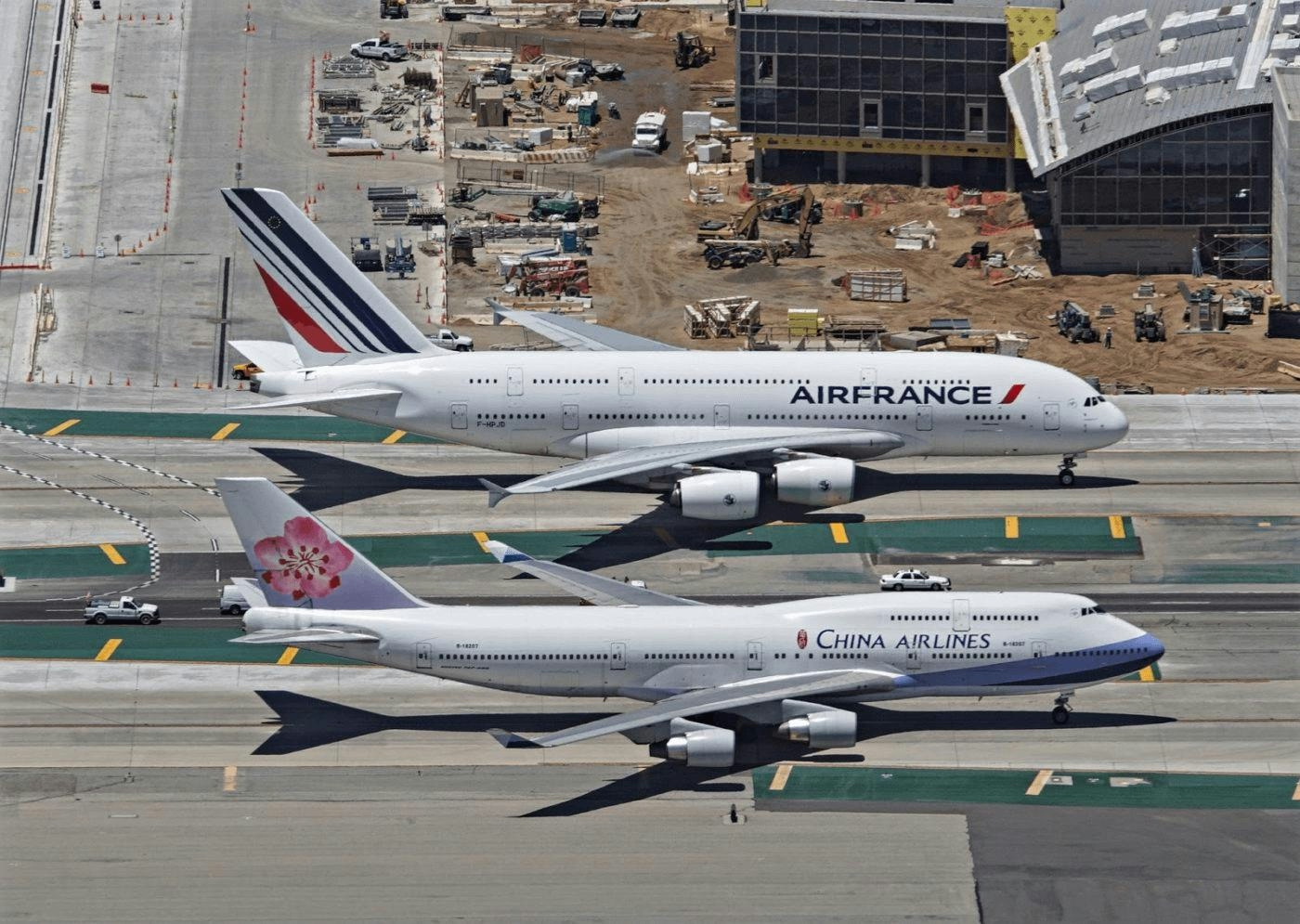
The Airbus A380 and Boeing 747 represent the largest commercial aircraft produced by their respective manufacturers, each featuring distinctive twin-deck designs and the capacity to carry hundreds of passengers on long-haul flights. Although their considerable size results in higher overall fuel consumption compared to smaller jets, their ability to transport large numbers of passengers can yield notable efficiencies when measured on a per-seat basis.

Fuel Efficiency Metrics and Aircraft Performance

Fuel efficiency per passenger is commonly assessed by the volume of jet fuel consumed, measured in liters, to transport one passenger over a distance of 100 kilometers. Industry data indicates that among these large aircraft, the Boeing 747-8 variant demonstrates superior fuel efficiency. The Airbus A380 and Boeing 747-400 exhibit similar fuel consumption rates per passenger, while the 747-8 benefits from advanced engine technology and aerodynamic refinements that reduce fuel use.

Specifically, the Airbus A380, configured to carry approximately 554 passengers over a range of 11,000 kilometers, consumes about 3.16 liters of fuel per 100 kilometers per passenger. The Boeing 747-400, with a capacity of 487 passengers and a range of 10,147 kilometers, matches this figure. In contrast, the Boeing 747-8, accommodating 467 passengers over 11,000 kilometers, achieves a lower consumption rate of 2.82 liters per 100 kilometers per passenger. This improvement is attributed to the 747-8’s extended fuselage, wider wingspan, and incorporation of modern engines, which collectively enhance aerodynamic efficiency and reduce fuel burn.

Market Dynamics and Industry Challenges

Assessing fuel efficiency between the Airbus A380 and Boeing 747 involves complexities beyond raw performance data. Regulatory frameworks continue to evolve, imposing stricter environmental standards that influence aircraft design and operation. Concurrently, rapid technological advancements and shifting market preferences have altered demand for very large aircraft. The traditional hub-and-spoke model, which favored super-jumbo jets, is increasingly supplanted by point-to-point travel, diminishing the appeal of such large-capacity aircraft.

The Boeing 747-8, despite its technological improvements, experienced limited commercial success, with only 155 orders placed globally, including 81 by Lufthansa. A significant portion of these aircraft has been allocated to freight operations rather than passenger service. Both Airbus and Boeing have responded to these market challenges by emphasizing continuous innovation, developing widebody aircraft that meet stringent efficiency requirements while addressing airline demands for operational flexibility and cost-effectiveness.

Aircraft Specifications and Industry Context

The Airbus A380 remains the largest commercial airliner in service, measuring 239 feet in length with a wingspan of 261.8 feet. Production of the A380 spanned from 2003 to 2021, resulting in 254 units built. In comparison, the Boeing 747 family is marginally smaller, with most variants measuring approximately 231 feet 10 inches in length and a wingspan of 195 feet 8 inches. Unlike the A380’s full-length double deck, the 747 features a partial upper deck.

Conclusion

While the Boeing 747-8 surpasses the Airbus A380 in fuel efficiency on a per-passenger basis, both aircraft exemplify the intricate balance between size, technological innovation, and evolving market conditions in contemporary aviation. As airlines and manufacturers navigate changing regulatory landscapes and passenger preferences, the pursuit of enhanced fuel efficiency and operational performance remains a central focus in the development of future widebody aircraft.

More news
Investigation Underway After Engine Fire Scare on Bengaluru-Delhi Air India Flight

Investigation Underway After Engine Fire Scare on Bengaluru-Delhi Air India Flight

Investigation Underway After Engine Fire Scare on Bengaluru-Delhi Air India Flight An Air India flight operating from Bengaluru to Delhi encountered a fire warning in one of its engines during the final approach to Delhi airport on Thursday, prompting an immediate emergency response and raising renewed concerns about the airline’s safety standards. Incident Details and Immediate Response Flight AI2802 reported a fire indication from an engine as it prepared to land on May 21, 2026. The cockpit crew promptly confirmed the warning and adhered to established safety protocols, successfully landing the aircraft without further incident. All passengers and crew disembarked safely. In an official statement, Air India acknowledged the incident, confirming the fire indication was genuine and emphasizing that a comprehensive investigation has been launched in coordination with relevant regulatory authorities. The airline assured the public that it remains committed to transparency and will provide verified updates as the inquiry progresses. Context and Industry Implications This event occurs amid heightened scrutiny of Air India’s operational practices, following a series of safety concerns and regulatory challenges in recent years. Aviation analysts suggest that such incidents risk undermining passenger confidence and could adversely affect the airline’s brand reputation, especially as competitors leverage their safety records and service quality to gain market advantage. The fire scare may also trigger intensified regulatory oversight, with potential repercussions for Air India’s operational and financial performance. Additional Incident at Bengaluru Airport Compounding the airline’s difficulties, an unrelated incident took place earlier the same day involving Flight AI2651, an Airbus A321 carrying 181 passengers from Delhi to Bengaluru. During its approach, the aircraft encountered wake turbulence, prompting the pilot to initiate a go-around maneuver. During this procedure, the aircraft’s tail made contact with the runway, resulting in a tail strike. The plane was immediately grounded for a thorough inspection, and the return flight AI2652 was cancelled, with alternative arrangements provided for affected passengers. Air India confirmed that this incident is also under investigation in line with regulatory protocols. Both events highlight the operational challenges confronting Air India as it seeks to restore its reputation under Tata Group ownership. The airline’s handling of these incidents and the findings of ongoing investigations will be closely monitored by regulators, passengers, and industry stakeholders.
Why Boeing’s Most-Tested Aircraft Is Seven Years Behind Schedule

Why Boeing’s Most-Tested Aircraft Is Seven Years Behind Schedule

Why Boeing’s Most-Tested Aircraft Is Seven Years Behind Schedule Prolonged Certification Amid Heightened Regulatory Scrutiny Boeing’s 777X program is entering a critical phase as the company advances toward certification after enduring years of delays and intensified regulatory oversight. The 777X flight test fleet has accumulated over 4,500 hours across 1,600 flights, a figure that far surpasses the scope of a typical certification campaign. This extensive testing regimen is largely a consequence of more stringent Federal Aviation Administration (FAA) requirements introduced in the wake of the 737 MAX groundings, which have fundamentally altered the evaluation process for Boeing’s new aircraft. The 777X stands as a pivotal element in Boeing’s commercial aircraft lineup and represents a substantial investment for major airline customers, including Lufthansa. Initially scheduled to enter service in 2020, the aircraft’s debut has been postponed to 2027. These delays have compelled Boeing to absorb billions of dollars in development costs as certification demands have escalated. Technical Complexity and Regulatory Challenges The expanded testing program reflects both the evolving regulatory landscape and the inherent technical complexity of the 777X. The aircraft incorporates an all-new composite wing with folding wingtips, updated avionics, and the GE9X engine—the largest commercial jet engine ever produced. During rigorous high-stress testing, structural issues and concerns over engine durability emerged, prompting the FAA to mandate significantly more operational data than Boeing had originally anticipated. Consequently, Boeing expanded its test fleet and extended flight hours to satisfy these enhanced certification standards. These setbacks have reverberated throughout the airline industry. Lufthansa, for instance, has been forced to retain older Airbus A340s and Boeing 747s in active service longer than planned due to the absence of replacement aircraft. Similarly, Qantas, citing uncertainty surrounding the 777X timeline, opted to select the Airbus A350 for its Project Sunrise, representing a notable competitive setback for Boeing. Broader Implications for Boeing’s Aircraft Programs The 777X is not the only Boeing program experiencing significant delays. The MQ-25 Stingray, an autonomous refueling drone and Boeing’s most-tested aircraft, is now seven years behind schedule. Despite this, Boeing recently completed the first test flight of an operationally configured MQ-25, indicating progress within the program. Meanwhile, Boeing’s commercial backlog surged in April, supported by robust orders for both the 787 and 777X models. In addition, Boeing is actively pursuing certification for the long-delayed 737 MAX 7 and MAX 10 variants, with certification expected this year and deliveries slated to begin in 2027. The company remains on course to deliver the 777-9 and new MAX models next year, despite ongoing challenges. The 777X certification campaign has become one of the most exhaustive in Boeing’s history, shaped by FAA special conditions that require direct validation of systems, structures, and flight performance. Unlike previous programs, the 777X is the first major Boeing widebody developed entirely under these more rigorous standards, transforming what began as a conventional development effort into a protracted and costly process. For Boeing, the extended testing and certification requirements have evolved beyond an engineering challenge into a significant financial and competitive concern, with enduring implications for its standing in the global widebody market.
Dubai Unveils Advanced AI and Robotics for Mega ATM 2026 Aviation Event

Dubai Unveils Advanced AI and Robotics for Mega ATM 2026 Aviation Event

Dubai Unveils Advanced AI and Robotics for Mega ATM 2026 Aviation Event Dubai is once again positioning itself at the forefront of global aviation and tourism innovation with the announcement of advanced artificial intelligence (AI) and robotics technologies to be showcased at the Arabian Travel Market (ATM) 2026. Scheduled to take place from September 14 to 17 at the Dubai World Trade Centre, the event represents a strategic realignment aimed at maximizing international participation and reinforcing Dubai’s reputation as a premier hub for innovation, hospitality, and commerce. The decision to shift ATM 2026 to the autumn season follows extensive consultations with key exhibitors, regional partners, and stakeholders across the international travel sector. Organizers from RX have emphasized that the revised timing is designed to optimize commercial opportunities and facilitate seamless global engagement, reflecting Dubai’s adaptability to the evolving demands of the industry. Pioneering AI and Robotics in Aviation A centerpiece of ATM 2026 will be the unveiling of state-of-the-art AI and robotics solutions intended to revolutionize aviation and smart mobility. These technologies are poised to enhance passenger experiences, streamline airport operations, and establish new standards for efficiency and safety. Dubai’s commitment to integrating these innovations highlights its ambition to function as a living laboratory for the future of travel, combining luxury hospitality with cutting-edge business infrastructure. Nonetheless, the rapid integration of AI and robotics presents significant challenges. Industry experts note the substantial costs associated with embedding these systems into existing aviation and hospitality frameworks. Additionally, there is a critical need for comprehensive staff training to effectively manage and maintain these technologies, alongside potential resistance from traditional sectors cautious of swift digital transformation. Despite these obstacles, market responses have been predominantly positive, with growing investor interest in AI-driven solutions—a trend supported by recent analyses from CNBC underscoring the increasing significance of AI expenditure in global markets. Competitive Landscape and Global Implications Dubai’s ambitious initiative is already eliciting reactions from competitors worldwide. Cities and countries are accelerating their own AI and robotics programs to sustain competitive advantages, exemplified by recent developments such as PAL Robotics’ new robotic arm platforms. The broader movement of AI transitioning from research environments to practical applications is reshaping the global travel and financial technology sectors. Shaping the Future of Travel Under the theme “Travel 2040 Visionary Framework,” ATM 2026 will concentrate on the long-term evolution of the industry, emphasizing digital transformation and sustainable tourism models. The event is expected to draw thousands of tourism professionals, hospitality brands, and major airlines, all eager to explore emerging trends and establish cross-border partnerships. As Dubai prepares to host global stakeholders this autumn, the city continues to solidify its status as a visionary destination where innovation, strategic foresight, and world-class infrastructure converge to influence the trajectory of international travel over the coming decade.
GE to Release Leap-1B Update This Year to Address Cabin Smoke Issue

GE to Release Leap-1B Update This Year to Address Cabin Smoke Issue

GE to Release Leap-1B Software Update This Year to Address 737 Max Cabin Smoke Issue Background and Cause of the Issue GE Aerospace is preparing to introduce a software update for the CFM International Leap-1B engines that power Boeing 737 Max aircraft, targeting a cabin smoke risk identified following two Southwest Airlines flights in 2025. These incidents involved bird strikes, where large birds were ingested into the engines, triggering the activation of the Leap-1B’s load reduction device (LRD). This safety mechanism is designed to prevent further engine damage by causing the engine fan to separate during severe imbalances. However, the activation of the LRD revealed a critical flaw. It could open a flange connected to an oil sump and dislodge oil supply tubes, allowing oil to enter the compressor section. When exposed to the high temperatures within the engine, this oil generated smoke that the aircraft’s environmental control system could circulate into the cabin or cockpit, depending on which engine was affected. Development and Certification of the Software Fix In response, GE, in collaboration with Safran Aircraft Engines through their CFM joint venture, developed a software solution intended to reduce smoke by accelerating the closure of a valve during such events. Carlos Perez, GE’s vice-president of product safety, quality, and engineering, confirmed on May 19 that the software is currently undergoing certification processes involving both the engine and aircraft. He indicated that the update is expected to enter service within the year. The certification process involves regulatory authorities including the Federal Aviation Administration (FAA), Boeing, and the European Union Aviation Safety Agency (EASA). While GE anticipates a prompt rollout following certification, the timeline for updating the global 737 Max fleet remains uncertain. A report from the U.S. Department of Transportation’s Office of Inspector General in April highlighted that the FAA and Boeing have agreed to complete fleet updates by 2026 but cautioned that this extended timeline could pose additional risks to public safety. GE has not provided a detailed schedule for the software’s in-service implementation, though Perez noted that software updates generally proceed more rapidly than hardware modifications. Regulatory and Industry Implications The National Transportation Safety Board (NTSB) has recommended enhanced cockpit smoke training for pilots and updated airline procedures to mitigate risks. The NTSB has also urged regulators—including the FAA, EASA, and China’s civil aviation authority—to evaluate whether similar risks exist in other Leap engine variants, such as the Leap-1A used on Airbus A320neo-family jets and the Leap-1C on the Comac C919, both of which incorporate the LRD system. This issue arises amid increased scrutiny of engine manufacturers. Market concerns have emerged regarding the safety of Leap-1B engines and the potential reputational impact on GE. Meanwhile, competitors such as Pratt & Whitney are addressing durability challenges with their PW1000G engines, and CFM International is striving to increase Leap engine production despite ongoing supply chain difficulties. As the certification process advances, industry stakeholders remain attentive to both the technical resolution and regulatory responses, given the significant implications for passenger safety and the broader commercial aviation sector.
Airbus Order Talks Highlight Ongoing Demand in Aerospace Sector

Airbus Order Talks Highlight Ongoing Demand in Aerospace Sector

Airbus Order Talks Highlight Ongoing Demand in Aerospace Sector Renewed speculation surrounding a significant Airbus order from Ethiopian Airlines has brought Boeing back into the spotlight, underscoring the persistent global demand for commercial aircraft. Recent discussions within the aviation industry emphasize that airline fleet expansion and replacement remain central to the outlook for major manufacturers such as Boeing and Airbus. Market Dynamics and Competitive Landscape Although Boeing shares have not reacted to any formal announcements, the broader context holds considerable importance for U.S. investors. Boeing and Airbus are direct competitors in securing global airline orders, particularly in the wide-body and single-aisle segments. These markets are characterized by long production cycles and substantial backlogs, which heavily influence expectations for future deliveries and cash flow. Even mere speculation about a new Airbus order—potentially involving the A350 and A220 models—can swiftly affect sentiment across the aerospace sector, as recent aviation media coverage has demonstrated. For Boeing, commercial airplanes remain the most visible revenue driver. The 787 and 777X wide-body aircraft are critical to meeting long-haul demand, while the 737 family dominates short- and medium-haul markets. Although Boeing’s defense, space, and services divisions provide a degree of balance, investor focus often centers on airline fleet plans and order developments from competitors. The company’s business model depends on long-term customer relationships and production visibility, making it highly sensitive to shifts in airline expansion strategies and rival activities. Airbus Challenges and Strategic Initiatives Airbus faces its own challenges despite strong sales in the narrow-body segment and a growing North American services market, which is projected to expand from $38 billion in 2025 to $54.4 billion by 2044. The European manufacturer is currently grappling with a delivery bottleneck, fulfilling only 70.4% of planned deliveries. This constraint contributed to a 7% year-on-year decline in first-quarter 2026 revenues, following the delivery of just 114 aircraft. In response, Airbus is advancing the development of the A350F freighter, with first deliveries expected in 2026, aiming to challenge Boeing’s dominance in the cargo aircraft segment. Implications for Investors and Industry Outlook Competitor responses continue to shape the aerospace market landscape. Boeing is focused on stabilizing production of its 737 MAX to capitalize on sustained demand for single-aisle jets. Meanwhile, Airbus’s order book and delivery performance remain closely monitored indicators of the sector’s overall health. For U.S. investors, Boeing’s exposure to both commercial aviation recovery and defense spending renders it particularly sensitive to changes in airline fleet strategies, supply chain execution, and government budgets. Market reactions tend to be swift when either manufacturer secures or discusses new large orders, as these developments signal active airline investment and fleet renewal—key indicators for industrial companies with a global footprint. Ongoing order discussions and delivery challenges at both Airbus and Boeing reflect a dynamic aerospace sector where fleet renewal and expansion continue to be top priorities for airlines worldwide.
Mid-Air AI Handoff: A New Era for Combat Aviation

Mid-Air AI Handoff: A New Era for Combat Aviation

Mid-Air AI Handoff: A New Era for Combat Aviation Advancing Flexibility in Autonomous Flight As autonomous aviation technology continues to evolve, achieving operational flexibility remains a critical challenge. Current systems predominantly rely on a single, tightly integrated artificial intelligence (AI) “brain” to control an aircraft. This approach limits adaptability, making it difficult to respond swiftly to new mission parameters, software updates, or shifting operational demands. Such rigidity can impede innovation and restrict the integration of specialized capabilities from diverse technology providers. Recent flight tests, however, suggest a transformative shift may be underway. Engineers utilizing a modified Model 437 Vanguard aircraft have successfully demonstrated that multiple AI systems can assume control of the same aircraft during flight without disrupting its operation. These trials confirmed that control could be transferred in real time between different autonomy software packages, with the aircraft maintaining stable and safe flight throughout the transitions. Modular Autonomy Architecture and Operational Benefits Central to this breakthrough is a modular autonomy architecture that divides missions into smaller functional elements, or “skills,” such as navigation, coordination, and specific mission actions. During testing, the aircraft initially operated under one autonomy system before seamlessly switching mid-flight to others, each assuming responsibility for selected functions. These transitions occurred without any instability, highlighting the robustness of the underlying framework. Beyond the handoff capability, the platform supports advanced features including real-time coordination between crewed and uncrewed assets, dynamic route adjustments, and safe operation within complex airspace environments. Employing a manned demonstrator as a testbed reduces both risk and cost, allowing developers to validate software under real flight conditions prior to deployment on fully autonomous platforms. The system’s plug-and-play design further facilitates the integration of third-party technologies, accelerating development cycles and fostering innovation. Strategic Implications and Emerging Challenges From a defense perspective, the implications of this technology are profound. Future operational environments are expected to feature a blend of crewed and autonomous systems working collaboratively under rapidly changing conditions. The ability to switch between different AI controllers mid-mission could enable military forces to adapt in real time, integrate new capabilities more rapidly, and maintain operational continuity even if one system fails or is compromised. Nonetheless, this technological advancement introduces new challenges. Experts such as David Petraeus and Isaac Flanagan have underscored the necessity for clear protocols governing the use, training, and maintenance of autonomous weapon systems to ensure their effectiveness and prevent unnecessary expenditures. The integration of conversational AI tools—such as the Maven Smart System and Palantir Artificial Intelligence Platform—within the U.S. Department of Defense and NATO is already accelerating battlefield decision-making, prompting market responses focused on enhancing operational readiness and training. Competitors in the defense sector are also responding to these developments, with other contractors expected to develop similar AI-driven coordination platforms to maintain their competitive edge in the rapidly evolving combat aviation landscape. The results of these recent tests point toward a more flexible and resilient model for autonomous aviation—one in which aircraft are no longer confined to a single control system but can dynamically evolve as mission requirements change.
Air Taxis Could Link Almaty, Konayev, and Alatau in Kazakhstan

Air Taxis Could Link Almaty, Konayev, and Alatau in Kazakhstan

Kazakhstan Advances Air Taxi Services Linking Almaty, Konayev, and Alatau Kazakhstan is moving forward with plans to introduce passenger and cargo air taxi services connecting the cities of Almaty, Konayev, and Alatau, with operations potentially commencing as early as 2027. Deputy Prime Minister Kanat Bozumbayev revealed that comprehensive aerotaxi testing is scheduled for 2026, following the Transport Ministry’s preparation of temporary regulations and the issuance of permits for trial flights, as reported by The Caspian Post via Kazinform. Route Planning and Safety Considerations Authorities and aviation experts are currently evaluating potential routes that would link key locations such as Almaty International Airport, the city’s railway station, Konayev, and the Kapshagai reservoir. Safety remains a paramount concern, with assessments focusing on factors including wind conditions, flight altitudes, terrain, aeromagnetic zones, and the proximity of high-voltage power lines. These evaluations aim to ensure the secure and efficient operation of air taxis within the region’s complex geographical and infrastructural landscape. Collaboration, Funding, and Challenges The project is being developed in partnership with leading aerotaxi companies and specialists from China and the United States, nations recognized for their advancements in urban air mobility. Notably, the initiative will be financed entirely through private investment and local companies, without reliance on state budget funds. Despite this promising collaboration, the rollout of air taxi services faces significant challenges. Regulatory hurdles, including the need to secure certifications from aviation authorities, must be addressed. Additionally, infrastructure development, such as the construction of vertiports for takeoff and landing, will be critical to the project’s success. Market reception may initially be cautious, as potential users weigh the novelty of air taxis against their potential to drastically reduce travel times. Furthermore, industry competitors may respond by developing similar services or lobbying for regulatory frameworks that favor established players. Context Within Global Urban Air Mobility Trends Kazakhstan’s initiative reflects broader global trends in urban air mobility. For instance, Joby Aviation is currently demonstrating its electric vertical takeoff and landing (eVTOL) air taxis in New York City, aiming to facilitate rapid urban commutes. These international efforts underscore common industry challenges, such as obtaining regulatory certification and securing public acceptance. The anticipated aerotaxi network in Kazakhstan is expected to transport both passengers and cargo, potentially transforming mobility and logistics in Almaty and its surrounding regions. This announcement follows Kazakhstan’s inaugural air taxi test flights, conducted in Alatau City on May 19, highlighting the country’s growing commitment to adopting advanced transportation technologies.
Widebody Conversions Surpass Narrowbodies for First Time in Over 15 Years

Widebody Conversions Surpass Narrowbodies for First Time in Over 15 Years

Widebody Freighter Conversions Outpace Narrowbodies for the First Time Since 2009 In a notable development within the air cargo sector, widebody freighter conversions surpassed narrowbody conversions in 2025, marking the first such occurrence since 2009. This shift, highlighted by aviation advisory firm IBA during its recent webinar, reflects changing dynamics in the cargo aircraft market, driven largely by a slowdown in narrowbody conversions amid an oversupplied market. John Whaley, senior aviation analyst at IBA, emphasized the significance of this trend, noting that fewer than 20 narrowbody conversions were completed in 2025, a steep decline from approximately 70 in 2024. This downturn follows a post-pandemic surge when many aircraft owners converted idle passenger jets to freighters to meet heightened cargo demand. The resulting oversupply has since curtailed activity in the narrowbody segment. Challenges and Market Dynamics in Widebody Conversions Despite widebody conversions outnumbering narrowbodies, the widebody sector itself experienced a year-on-year decline, with 30 conversions completed in 2025 compared to 40 in 2024. Whaley attributed this to limited availability of suitable aircraft, as many widebodies remain in passenger service due to their high residual value. “Widebody capacity is limited and it seems to be getting worse, not better,” he remarked. This evolving landscape is influencing broader industry strategies. Airlines such as Ethiopian Airlines are engaging with Airbus to acquire widebody models like the A350, signaling a strategic emphasis on expanding regional and long-haul operations. This trend is expected to heighten competition among carriers focusing on widebody fleets. Concurrently, robust engine maintenance activity reported by Safran, despite geopolitical tensions in the Middle East, underscores sustained demand for widebody engine services. GE Aerospace’s marked increase in Leap engine deliveries further illustrates the growing market for widebody aircraft engines, prompting manufacturers to consider scaling production and enhancing engine durability to maintain competitiveness. Outlook and Emerging Trends in Freighter Conversions Looking forward, IBA anticipates a gradual correction in the narrowbody oversupply, though not before 2028. Narrowbody conversions are projected to remain just above 20 in 2026, while widebody conversions are expected to rise slightly above 30. This growth is likely to be supported by new widebody conversion programs and improved feedstock availability as more aircraft retire from passenger service. Whaley noted that while 2025 was a relatively quiet year following record passenger-to-freighter conversions in 2023, overall conversion activity is expected to increase modestly in 2026. IBA forecasts a pickup in both widebody and narrowbody conversions between 2028 and 2030. The market is also witnessing the introduction of new conversion programs, particularly for the 777P2F. The operator base for this model is expanding, with recent deliveries including IAI’s first two 777-300ERSFs to Kalitta Air and the initial aircraft for Fly Meta. Additionally, Challenge Group added its first 777-300ERSF to its fleet in March, reflecting growing investment and interest in widebody freighter conversions as airlines and lessors adapt to shifting cargo and passenger market conditions.
Pegasus Airlines Uses Artificial Intelligence to Improve Passenger Experience in Europe and the Middle East

Pegasus Airlines Uses Artificial Intelligence to Improve Passenger Experience in Europe and the Middle East

Pegasus Airlines Leverages Artificial Intelligence to Enhance Passenger Experience in Europe and the Middle East Pegasus Airlines, Turkey’s foremost low-cost carrier, is advancing its digital transformation through a strategic partnership with Overwatch AI, a U.S.-based firm specializing in artificial intelligence solutions. This collaboration has led to the deployment of an AI-powered operations platform aimed at streamlining decision-making processes, increasing operational efficiency, and improving data accessibility across Pegasus’s extensive network spanning Europe, the Middle East, and North Africa. The platform equips pilots, cabin crew, and operations personnel with real-time information, enabling them to make informed decisions on critical issues such as weather disruptions, aircraft maintenance, regulatory compliance, and airport logistics. By utilizing natural language queries, staff can swiftly retrieve essential data, thereby reducing response times and facilitating smoother flight operations. Enhancing Operational Reliability and Efficiency Operating approximately 30,000 flights monthly, Pegasus Airlines serves a diverse clientele of leisure and business travelers across key destinations in Europe, the Middle East, and North Africa. The integration of Overwatch AI’s platform is anticipated to reduce delays, optimize route management, and improve coordination with airports. For passengers, these improvements promise more reliable schedules, punctual departures, and fewer disruptions—factors that are particularly important for those undertaking multi-destination journeys or attending time-sensitive engagements. The AI system’s capacity to centralize and analyze vast quantities of operational data enables Pegasus to respond promptly to unforeseen challenges such as severe weather or technical malfunctions. This responsiveness not only enhances the passenger experience but also supports the broader tourism ecosystem, benefiting hotels, cultural sites, and local businesses that depend on consistent travel flows. Addressing Industry Challenges and Market Dynamics While Pegasus Airlines’ adoption of AI represents a significant technological advancement, it also introduces new challenges. Maintaining passenger trust in AI-driven services remains paramount, especially as travelers become increasingly aware of the technology’s influence on their travel experience. The airline must carefully balance automation with human oversight to uphold safety and reliability standards. Furthermore, Pegasus operates within an industry marked by geopolitical tensions and fuel market volatility, factors that complicate long-term strategic planning. Competitors such as Ryanair have underscored the difficulties airlines face in managing fuel supply risks and adapting to rapidly shifting market conditions. As more carriers invest in AI to enhance their operations, Pegasus will need to continue innovating to sustain its competitive advantage. Industry Implications and Future Prospects The aviation sector is closely monitoring Pegasus Airlines and other carriers as they integrate AI into their operational frameworks. Increased scrutiny is expected regarding the dependability of AI systems and the necessity of maintaining human oversight in critical decision-making processes. For Pegasus, the successful implementation of AI technology could establish a new benchmark for operational resilience and passenger satisfaction within the region. As Pegasus Airlines expands its digital capabilities, travelers can anticipate more predictable and efficient journeys across Europe, Turkey, and beyond, contingent upon the airline’s ability to navigate the evolving challenges associated with technology adoption and a complex global environment.
Hawaiian Airlines Introduces Electric Aircraft on Runway

Hawaiian Airlines Introduces Electric Aircraft on Runway

Hawaiian Airlines Launches Electric Ground Fleet at Honolulu Airport Hawaiian Airlines has introduced a new fleet of electric ground support equipment at Honolulu International Airport, replacing 116 diesel and propane-powered vehicles in a significant stride toward sustainability. The lithium battery-powered fleet, which includes baggage tractors, belt loaders, and aircraft pushback tractors, now constitutes 73% of the airline’s ground support equipment at its Honolulu hub. Advancing Sustainability and Operational Efficiency This transition is expected to eliminate fossil fuel consumption for ground operations, substantially reducing greenhouse gas emissions, engine noise, fumes, and the risk of fuel spills. Hawaiian Airlines anticipates that the investment will also lower maintenance costs, enhance operational efficiency, and create a safer, more comfortable working environment for ramp personnel. The airline’s ground teams manage over 8,500 checked bags daily and support approximately 180 arrivals and departures each day at Honolulu. To support this shift, the Hawai‘i Department of Transportation (HDOT) has installed 30 charging stations with 60 charging ports across the airport, with an additional four stations and eight ports under construction, scheduled to open by late 2026. HDOT is providing Hawaiian Airlines and other carriers complimentary access to this charging infrastructure for two years, encouraging broader adoption of electric ground equipment. State officials have hailed the project as a critical step toward enhancing Hawai‘i’s long-term energy security and advancing its clean energy goals. The initiative forms part of Hawai‘i’s US$7 billion airport modernization program, which includes substantial investments in electrical infrastructure and cleaner energy solutions aimed at improving airport efficiency and reducing energy costs. Challenges and Industry Response While the introduction of electric ground equipment marks a major milestone, Hawaiian Airlines acknowledges several challenges ahead. The high initial costs, the need for extensive infrastructure, and the integration of new technology require significant investment in training and logistics. Moreover, the limited range and operational differences of electric vehicles compared to traditional equipment may present hurdles during the transition. Market reactions have been largely positive, with growing interest from environmentally conscious travelers. However, some traditional stakeholders remain cautious, expressing concerns about reliability and long-term costs. In response to evolving industry trends, competitors such as Alaska Air Group and Vertical Aerospace are accelerating their own development of electric and hybrid ground fleets. Hawaiian Airlines emphasizes that adopting electric ground support equipment reflects its commitment to sustainable airport operations and aligns with the state’s environmental and energy objectives. As the aviation sector faces increasing pressure to reduce its carbon footprint, the airline’s initiative positions it at the forefront of cleaner, more efficient airport operations in Hawai‘i.
line









