
Orquesta conocimientos de IA para convertirlos en acción

Tendencias
Categories
GE Aerospace Expands Engine Casting Capacity
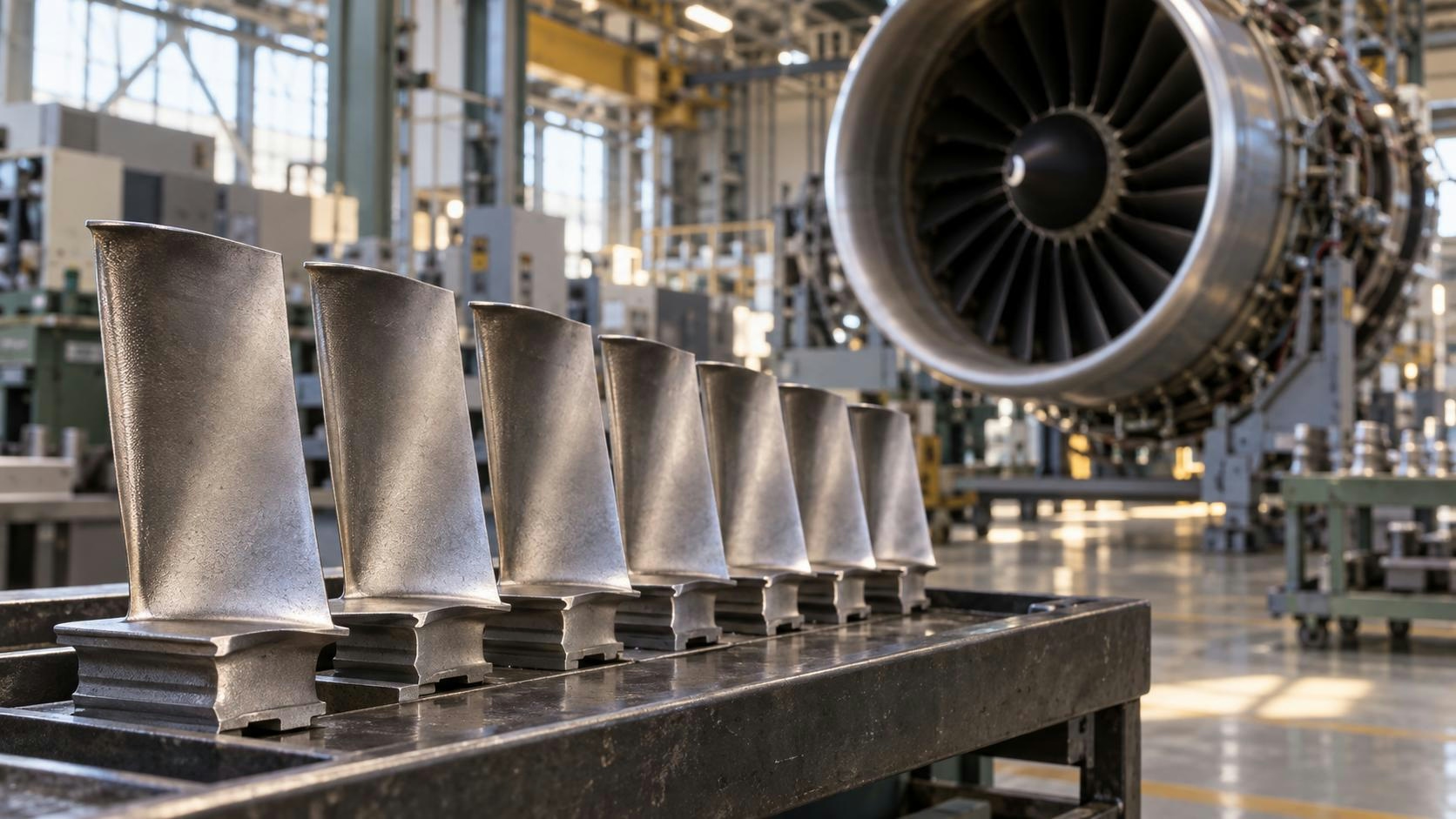
GE Aerospace Expands Engine Casting Capacity with Strategic Acquisition
GE Aerospace has announced its intention to acquire Consolidated Precision Products (CPP), a key Ohio-based supplier integral to its Leap and GEnx commercial aircraft engine programs, as well as several defense platforms. The transaction, valued at $11.75 billion, comprises $7 billion in cash with the remainder financed through debt. The deal, subject to regulatory approval, is expected to close in the second half of 2027. CPP is currently owned by private equity firms Warburg Pincus and Berkshire Partners.
Securing Supply Amid Rising Demand
This acquisition reflects GE Aerospace’s strategic effort to secure and expand its casting capacity in response to growing demand for new engines, aftermarket materials, and defense products. By fully integrating CPP, GE aims to enhance alignment between design and manufacturing processes and to meet the anticipated 30% increase in demand for airfoils—critical engine components such as turbine blades and vanes—by 2030. The move highlights the increasing importance of casting capabilities within the aerospace industry, where original equipment manufacturers (OEMs) are increasingly acquiring and consolidating key suppliers to strengthen their supply chains.
CPP is recognized as one of the world’s largest producers of investment and precision sand castings, specializing in complex super alloy, titanium, aluminum, magnesium, and steel castings. Its products serve a broad spectrum of commercial and military aircraft, weapon systems, jets, helicopters, and industrial gas turbines. GE Aerospace has maintained a customer relationship with CPP for over 15 years, underscoring the longstanding partnership between the two companies.
Market Reactions and Competitive Landscape
The announcement has prompted concerns regarding competition within the engine casting market. Shares of Howmet Aerospace, another major supplier, declined approximately 10% on September 8, erasing over $11 billion in market value. Howmet’s CEO, John Plant, acknowledged the competitive implications of GE’s acquisition but emphasized that the expansion remains manageable given the persistent capacity constraints in jet-engine castings.
Despite the acquisition, GE Aerospace plans for CPP to operate as a separate business unit, preserving its existing customer relationships. The company does not anticipate any spin-offs, although the final organizational structure will depend on regulatory outcomes. This approach is consistent with GE Aerospace’s management of other subsidiaries, including Unison Industries, Dowty Propellers, and Italy’s Avio Aero, which continue to serve a broad market that includes GE’s competitors.
GE Aerospace also reaffirmed its commitment to maintaining partnerships with other casting suppliers such as ATI and Howmet Aerospace, signaling that it will not rely exclusively on CPP for its casting needs.
Industry Context and Supply Chain Challenges
The acquisition occurs against a backdrop of ongoing supply shortages in engine manufacturing, a challenge that predates the Covid-19 pandemic but was exacerbated by the global disruptions it caused. Other industry players, including RTX and Safran, have similarly invested in expanding casting capacity to alleviate bottlenecks within the aerospace supply chain. GE Aerospace’s move to acquire CPP is part of a broader industry trend aimed at strengthening supply resilience and meeting the increasing demand for advanced aerospace components.

Etihad and Swissport Extend Global Partnership

Sepehran Airlines B737 Returns to Mashhad After Tyre and Engine Issues

Etihad Deploys Widebody Fleet to Meet Strong Demand

Korean Air Finalizes $36.2 Billion Deal with Boeing

Australia’s RFDS Queensland Section Orders Six King Air 260Cs

Korean Air Finalizes Order for 103 Boeing Jets and Engines

Embraer E195-E2 Features Distinctive Engine Placement Among Regional Jets

What Passengers Can Expect on Boeing’s New 777X Jet

How Ethiopian Airlines Became Africa’s Leading Carrier Amid Gulf Competition

Joby Aviation Extends Autonomous Flight Capabilities with Cross-Country Tour
