
Orquesta conocimientos de IA para convertirlos en acción

Tendencias
Categories
GE Expands Use of Automation and AI in MRO Operations
GE Expands Use of Automation and AI in MRO Operations
Advancing Engine Maintenance Through Digital Innovation
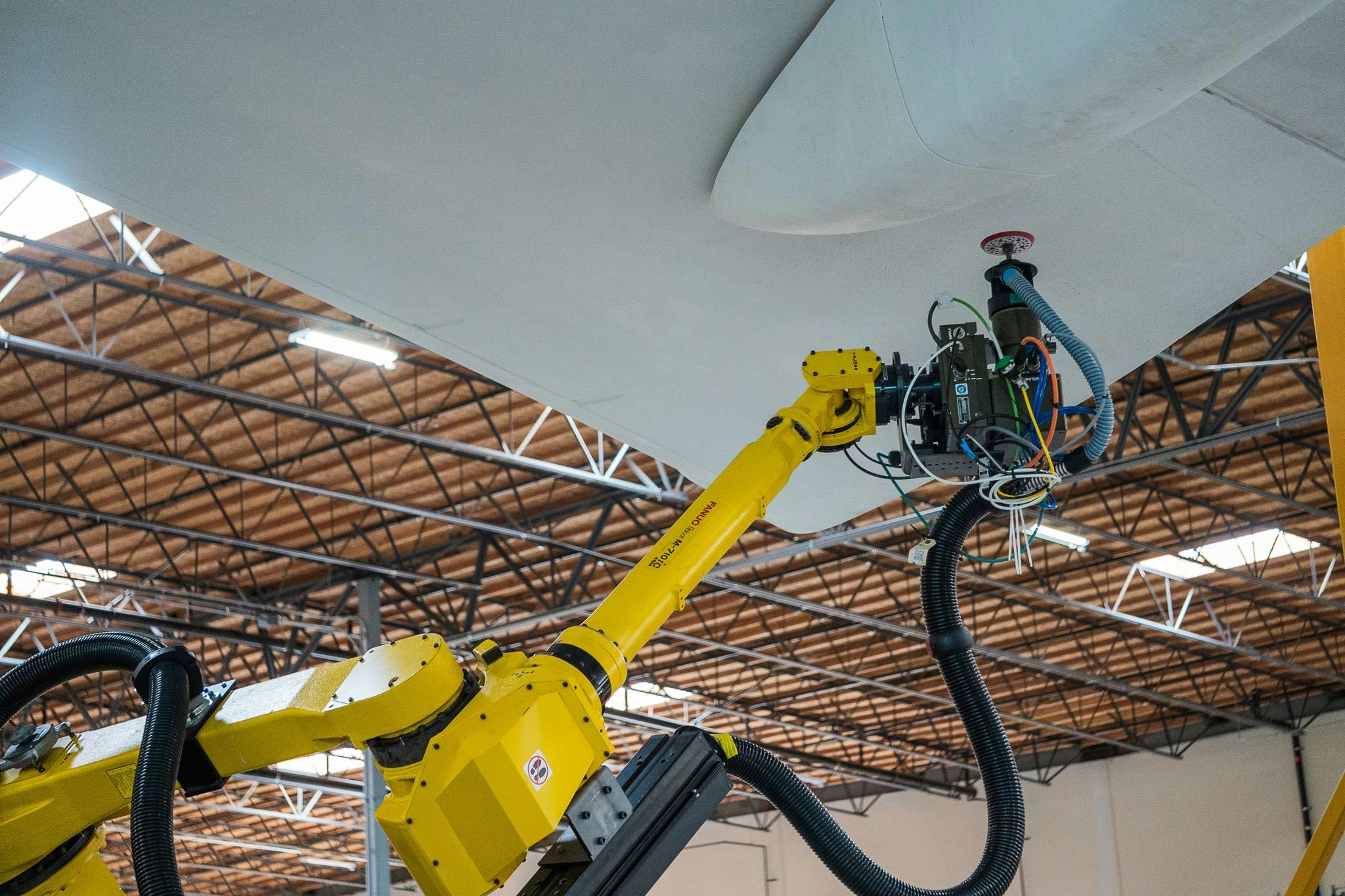
GE Aerospace is significantly enhancing its maintenance, repair, and overhaul (MRO) operations worldwide by integrating robotics, automation, and artificial intelligence (AI). Leveraging rare access to supercomputing resources, the company aims to improve engine maturity, reliability, and the development of new propulsion systems. These cutting-edge technologies are being applied not only in research and development but also in routine maintenance activities, including shop visits, on-wing engine inspections, and repair workflows. The objective is to increase efficiency, reduce turnaround times, and lower costs across its service network.
This digital transformation is particularly vital as GE continues to support a vast fleet of legacy engines such as the CFM56, GE90, and CF6, alongside the expanding deployment of the CFM LEAP engine. The CFM56 and LEAP models power the Boeing 737 and Airbus A320neo families, competing directly with the International Aero Engine V2500 and Pratt & Whitney’s geared turbofan (GTF) engines. Meanwhile, the CF6 remains in service on older widebody aircraft like the Boeing 767, and the GE90 continues to be the preferred engine for legacy Boeing 777 aircraft.
The GE9X and Industry Challenges
The upcoming GE9X engine, developed for Boeing’s next-generation 777X series, is also benefiting from these automation and AI initiatives. The GE9X program has experienced a prolonged six-year delay in certification and delivery, attributed in part to technical challenges uncovered during flight testing and the broader certification difficulties that emerged following the Boeing 737 MAX crisis in 2019. Initially scheduled for delivery in early 2019, the 777X is now anticipated to enter service next year. GE is prioritizing the maturation of the GE9X engine to ensure readiness for its commercial debut.
As GE accelerates the deployment of AI and automation, it confronts new challenges, particularly in cybersecurity. The integration of AI-driven workflows and industrial robotics heightens vulnerability to cyber threats, necessitating robust defense mechanisms. The aerospace manufacturing sector has witnessed a surge in AI applications for cybersecurity, reflecting the imperative to safeguard increasingly digitalized operations from sophisticated cyberattacks.
Market Implications and Industry Trends
The adoption of advanced digital technologies is reshaping market dynamics within the aerospace industry. While GE and other technology-focused manufacturers invest heavily in digital transformation, competitors such as Boeing—currently navigating financial difficulties—may be compelled to implement similar AI-driven processes to maintain competitiveness. The race to incorporate automation and AI is intensifying, with industry players recognizing that digital innovation is essential not only for operational efficiency but also for sustaining market position and resilience against cyber risks.
GE’s expansion of automation and AI in its MRO operations exemplifies a broader industry trend toward digitalization, highlighting both the opportunities and challenges that will define the future of aerospace manufacturing and maintenance.

Etihad Airways Suspends Airbus A380 Flights on Key Route

Aditya Birla Group Seeks Approval for Aircraft Leasing in GIFT City

Qatar Airways Highlights Innovation and Connectivity at Arabian Travel Market 2026

Hong Kong's Five-Year Plan Includes Andrew Fan's Aircraft Parts Processing Hub Proposal

ACIA Aero Leasing Delivers ATR72-600 to Air Nostrum

RTX Appoints Jill Albertelli as Head of Pratt & Whitney

TAT Technologies Joins Beyond Aero Hydrogen Aircraft Program

AURAK Study Highlights Barriers to Air Taxi Adoption in Emerging Economies

Xiamen Air Selects Altitude for 787 Maintenance at Heathrow

Etihad and Swissport Extend Global Partnership
