
Orquesta conocimientos de IA para convertirlos en acción

Tendencias
Categories
GKN Aerospace Advances Metal 3D Printing for Jet Engines
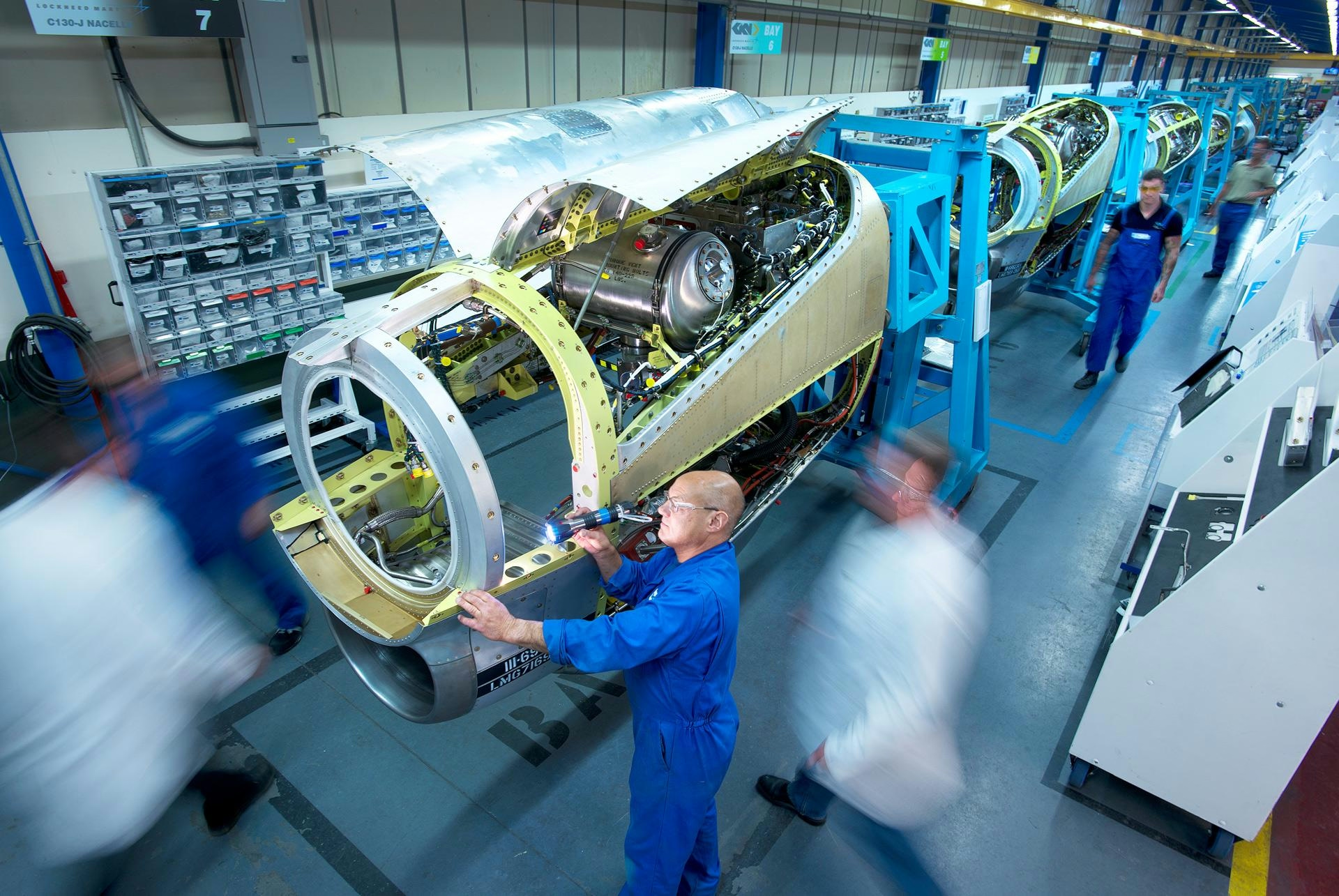
GKN Aerospace Advances Metal 3D Printing for Jet Engines
Strategic Transformation and Market Position
In May, GKN Aerospace held a pre-Farnborough Airshow briefing at the Royal Academy of Engineering in London, underscoring its ambition to solidify its status as a “Super” Tier 1 aerospace supplier. CEO Peter Dilnot emphasized the company’s design-led engineering philosophy, describing it as central to GKN’s operations. Since its acquisition by turnaround specialists Melrose in 2018 for £8.1 billion, GKN Aerospace (GKNA) has undergone a profound transformation. The company has streamlined its workforce from 58,000 employees across 19 countries to 16,000 staff in 12 countries, focusing exclusively on aerospace and defense sectors. This restructuring included reducing operational sites from 50 to 32, exiting non-core businesses, and intensifying investment in technology.
Today, GKNA stands as the world’s largest independent aerostructures business, a position reinforced by Spirit AeroSystems’ reintegration into Boeing in 2025. The company’s portfolio is divided between structural components—such as fuselages, wings, and doors, which constitute 60%—and load-bearing engine parts, including casings, turbine blades, and exhausts, making up the remaining 40%. GKN maintains a robust partnership with Airbus, attributed to Airbus’s collaborative approach to supplier involvement in design. Notably, GKNA is the sole partner on both the CFM Rise and Ultrafan next-generation engine programs, while also expanding its presence in defense-related structural components.
Market Dynamics and Defense Growth
Dilnot highlighted the current customer base split, with 30% defense and 70% civil, but anticipates a shift driven by increased European defense spending and a push for greater sovereign capability. He noted that raw defense expenditure has surged over the past 18 months, influenced by both European and US market dynamics. The ongoing Russia-Ukraine conflict has accelerated demand for uncrewed vehicles with shorter development cycles, a trend that GKNA is actively pursuing as part of its defense strategy.
Advancing Additive Fabrication in Aerospace
A cornerstone of GKNA’s future growth strategy is Additive Fabrication, commonly known as metal 3D printing. Dilnot described this technology as a “breakthrough” that enables the production of complex jet engine components with greater efficiency, aiming to reduce both production costs and material waste. Despite its promise, the adoption of metal 3D printing presents significant challenges, including high initial capital investment, the requirement for specialized skills, and the complexities of regulatory approval processes.
The aerospace industry at large is increasingly embracing additive manufacturing. Competitors are making substantial investments: Beehive Industries recently committed $50 million to expand 3D-printed jet engine production, while Divergent Technologies has introduced innovations promising to increase output eightfold. Lockheed Martin is also exploring large-format metal 3D printing, sourcing technology from Belgium, signaling a broader industry shift toward advanced manufacturing techniques.
As GKN Aerospace intensifies its focus on additive fabrication and advanced engineering, it navigates a landscape of both opportunity and competition. The company’s commitment to innovation and strategic restructuring positions it to maintain leadership amid the aerospace sector’s evolving manufacturing paradigms.

Etihad and Swissport Extend Global Partnership

Sepehran Airlines B737 Returns to Mashhad After Tyre and Engine Issues

Etihad Deploys Widebody Fleet to Meet Strong Demand

Korean Air Finalizes $36.2 Billion Deal with Boeing

Australia’s RFDS Queensland Section Orders Six King Air 260Cs
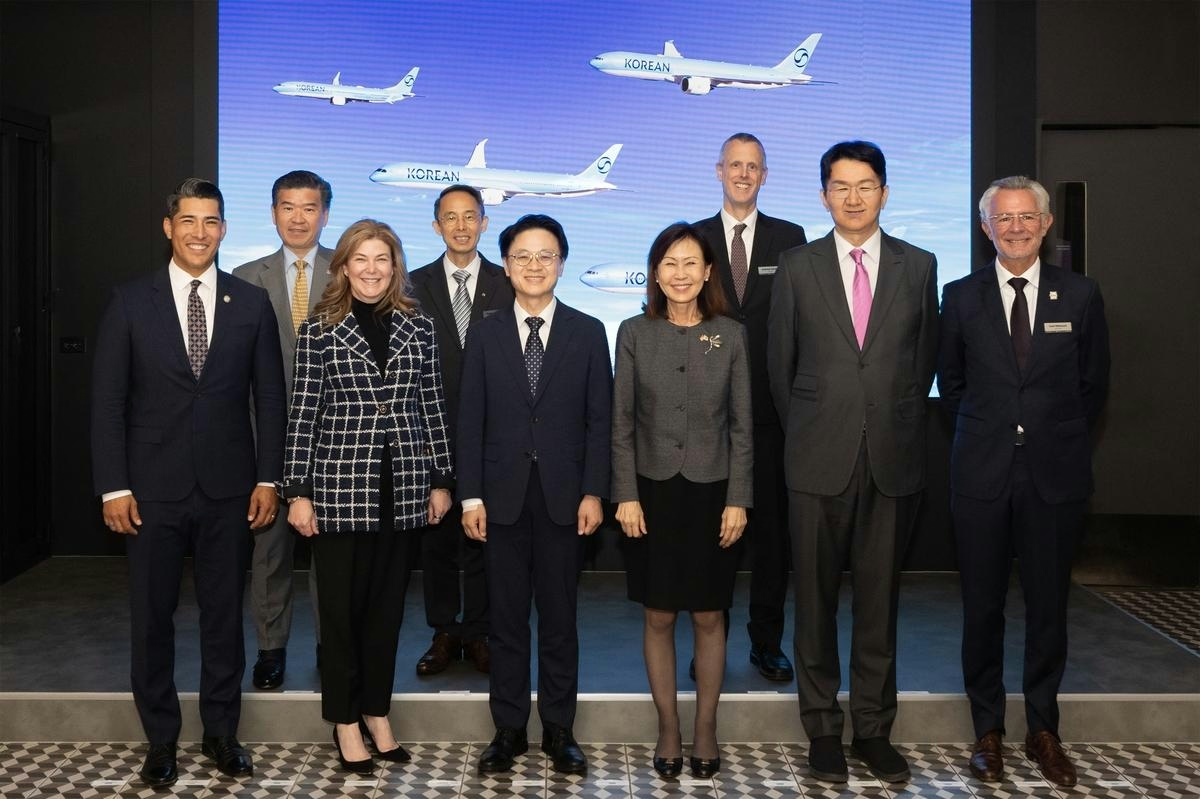
Korean Air Finalizes Order for 103 Boeing Jets and Engines
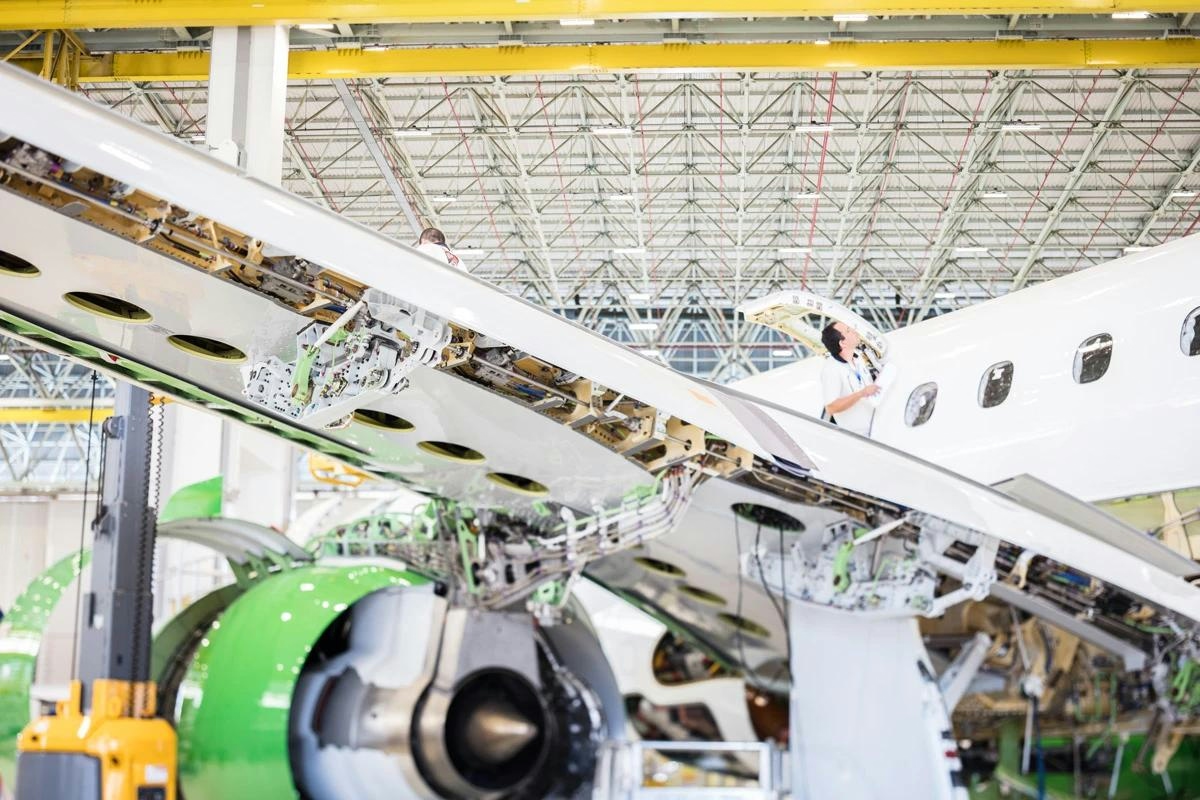
Embraer E195-E2 Features Distinctive Engine Placement Among Regional Jets
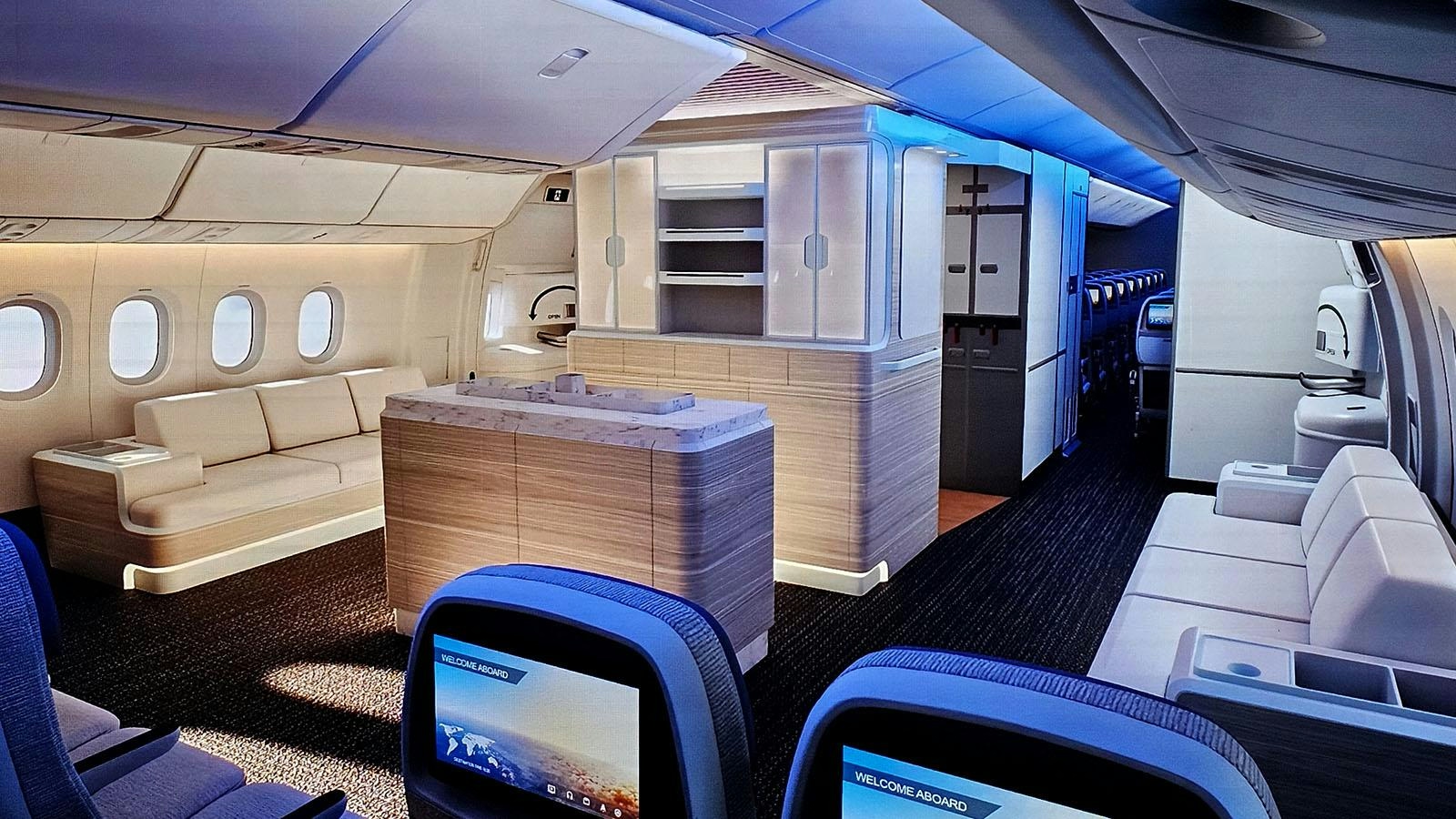
What Passengers Can Expect on Boeing’s New 777X Jet

How Ethiopian Airlines Became Africa’s Leading Carrier Amid Gulf Competition
Joby Aviation Extends Autonomous Flight Capabilities with Cross-Country Tour
