
Orquesta conocimientos de IA para convertirlos en acción

Tendencias
Categories
Hydrogen Aviation Startup ZeroAvia Withdraws from Seattle Amid Reduced Ambitions
Hydrogen Aviation Startup ZeroAvia Withdraws from Seattle Amid Reduced Ambitions
A Promising Start and Subsequent Retrenchment
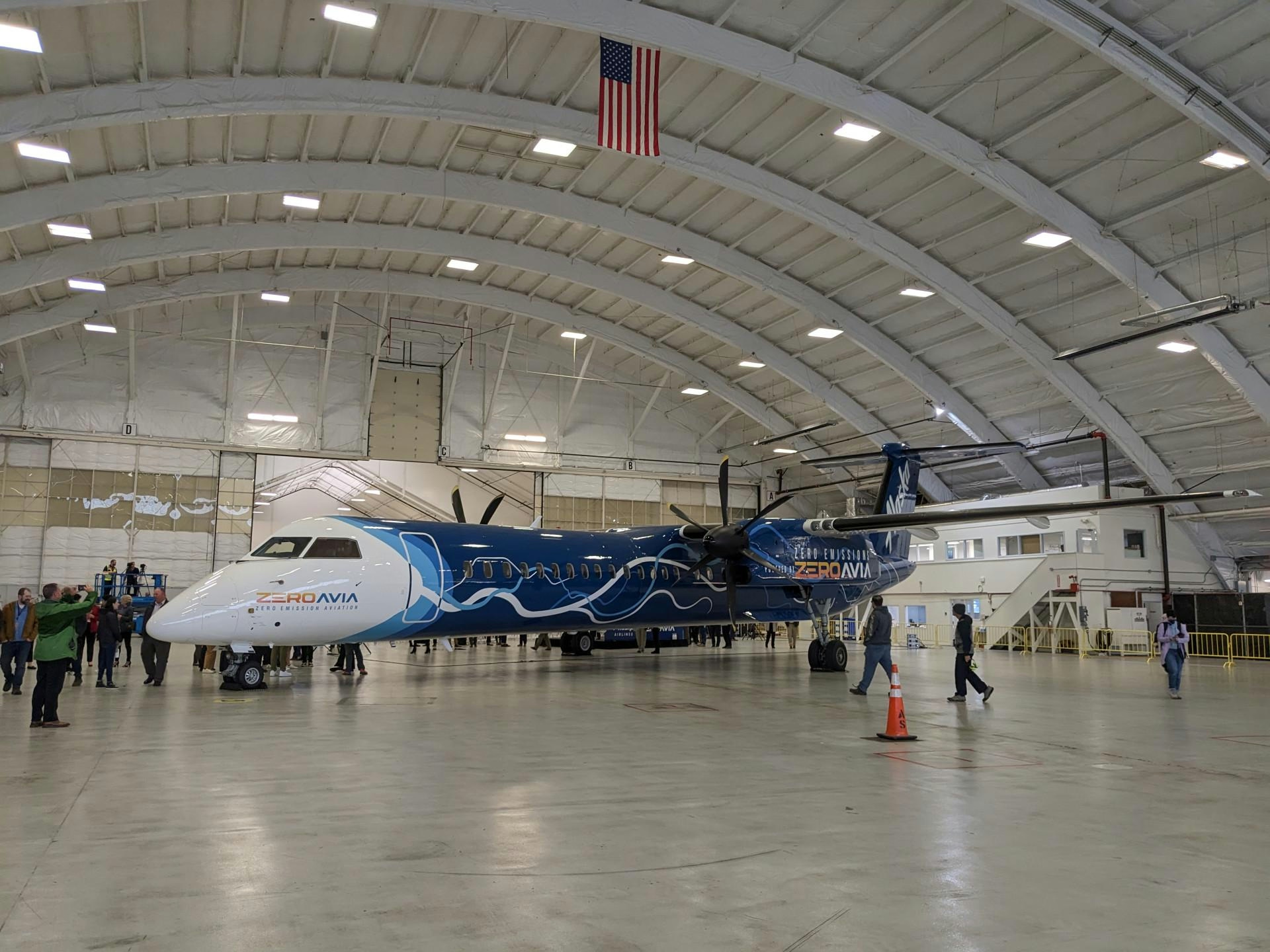
ZeroAvia, once heralded as a pioneering force in clean aviation, has significantly scaled back its operations and withdrawn from the Seattle area, underscoring the mounting challenges faced by green aviation startups. Founded in California in 2017, the company quickly garnered attention and substantial investment, including support from Bill Gates’ Breakthrough Energy Ventures and Amazon’s Climate Pledge Fund. ZeroAvia expanded its footprint to Washington state, establishing a 136,000-square-foot research and development facility in Everett, strategically located near Boeing’s operations. The company also forged a partnership with Alaska Airlines to retrofit a retired Q400 turboprop with its hydrogen-electric powertrain, a project that was celebrated in 2023 by then-Governor Jay Inslee as a significant milestone for sustainable aviation in the region.
However, three years on, ZeroAvia’s presence in Washington has diminished to a minimal sales team. The ambitious hydrogen retrofit of the Alaska Airlines aircraft never came to fruition, and the future of the Paine Field facility remains uncertain. Product development efforts have shifted overseas to the United Kingdom, and the company has completely exited California. These developments reflect a marked retreat from the company’s earlier expansive vision.
Leadership Changes and Sector-Wide Challenges
The company’s strategic pullback coincides with considerable internal upheaval. Founder and CEO Val Miftakhov recently resigned to pursue other opportunities, following a period characterized by staff reductions and financial constraints. At least three other senior executives have also departed, signaling a significant leadership transition. These internal challenges mirror broader difficulties within the green aviation sector, where startups contend with high risks, protracted development timelines, and uncertain financial returns. The recent bankruptcy of Maeve Aerospace further highlights the precarious funding environment confronting companies striving to achieve net-zero aviation.
Despite these setbacks, ZeroAvia insists that its fundamental mission remains intact. Chief Strategic Officer James McMicking emphasized that the company continues to prioritize hydrogen-electric powertrains aimed at decarbonization and cost reduction, though it must now adjust its pace and focus in response to evolving market conditions.
The Complex Path to Aviation Decarbonization
Aviation remains one of the most difficult industries to decarbonize due to the high energy density and widespread availability of traditional jet fuel, which pose significant barriers to the adoption of alternatives such as hydrogen, batteries, and sustainable aviation fuels. ZeroAvia’s original plan for its Everett facility involved developing a comprehensive suite of hydrogen fuel cells, power electronics, compressors, and advanced electric motors, offering both complete engines and individual components to customers.
Nevertheless, hydrogen adoption in the United States has lagged behind expectations. While the Biden administration initially fostered momentum for the sector, support diminished following the change in administration last year, complicating ZeroAvia’s efforts further. Snohomish County Executive Dave Somers expressed sympathy for the company’s difficulties, acknowledging the broader challenges faced by businesses operating in the emerging clean aviation industry.
ZeroAvia’s retrenchment highlights the formidable technological, financial, and policy obstacles confronting startups in the race to decarbonize aviation, as the industry continues to grapple with the complexities of transitioning to sustainable alternatives.

Etihad Airways Suspends Airbus A380 Flights on Key Route

Aditya Birla Group Seeks Approval for Aircraft Leasing in GIFT City

Qatar Airways Highlights Innovation and Connectivity at Arabian Travel Market 2026

Hong Kong's Five-Year Plan Includes Andrew Fan's Aircraft Parts Processing Hub Proposal

ACIA Aero Leasing Delivers ATR72-600 to Air Nostrum

RTX Appoints Jill Albertelli as Head of Pratt & Whitney

TAT Technologies Joins Beyond Aero Hydrogen Aircraft Program

AURAK Study Highlights Barriers to Air Taxi Adoption in Emerging Economies

Xiamen Air Selects Altitude for 787 Maintenance at Heathrow

Etihad and Swissport Extend Global Partnership
