
Orquesta conocimientos de IA para convertirlos en acción

Tendencias
Categories
Indian Air Force Advances Domestic Production of Aero Engines and Fighter Jets
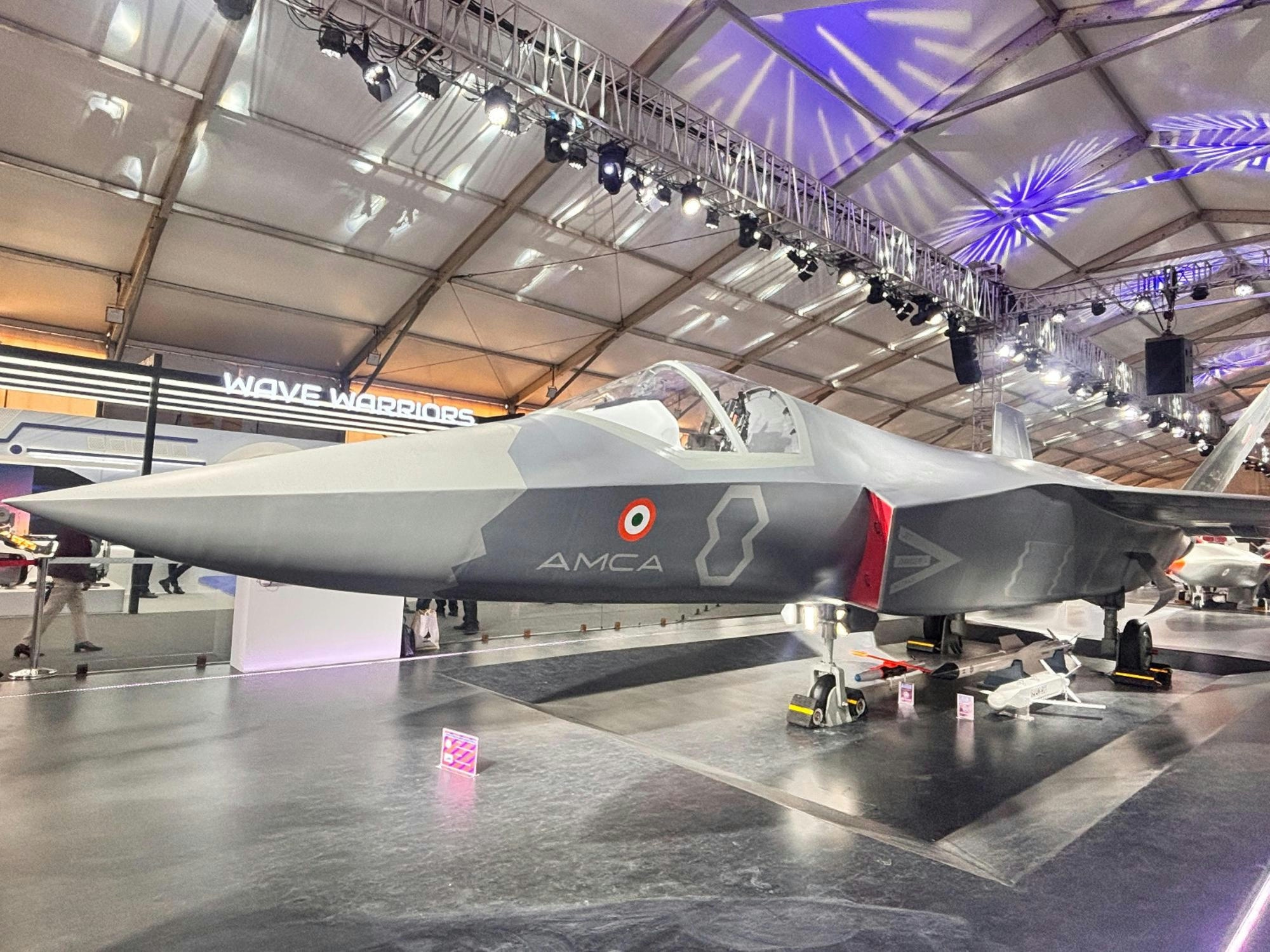
Indian Air Force Advances Domestic Production of Aero Engines and Fighter Jets
Addressing Capability Gaps Amidst Emerging Threats
India’s military leadership maintains a posture of readiness to confront evolving security challenges. However, a detailed assessment reveals persistent capability shortfalls within the Indian Air Force (IAF), particularly in the domains of indigenous aero engine and fighter aircraft production. This article, the concluding segment of a four-part series, examines the IAF’s ongoing efforts to develop and manufacture homegrown aero engines and combat jets—an essential initiative aimed at rectifying long-standing deficiencies.
Since the maiden flight of the Tejas light combat aircraft (LCA) in 2001, the IAF has procured only 40 units. With the imminent retirement of aging Russian-origin MiG-21 fighters, India’s defense establishment in Bengaluru is intensifying efforts to design and produce new indigenous fighter variants. This acceleration is critical as the IAF confronts a significant operational shortfall. Defense analysts estimate that the force requires approximately 42 combat squadrons—equivalent to around 900 fighters, bombers, electronic warfare, and command and control aircraft—to maintain strategic effectiveness. Currently, the IAF operates with a deficit of 10 to 12 squadrons, translating into a shortfall of 220 to 250 aircraft.
Historical Losses and Operational Challenges
A major factor contributing to this gap is the IAF’s historically high accident rate. Between 1952 and 2021, the force lost 2,374 aircraft due to crashes, including 1,126 fighters and 1,248 non-combat aircraft, alongside 229 trainers and 196 helicopters. These accidents resulted in the deaths of 1,305 highly trained pilots, each representing a substantial investment in human capital and resources. The cumulative loss of combat aircraft alone exceeds the equivalent of 50 squadrons, significantly undermining the IAF’s operational readiness.
India’s military engagements have further strained the air fleet. Conflicts with Pakistan in 1947-48, 1965, 1971, and the Kargil conflict in 1999 inflicted notable losses on the IAF. The 1965 war was particularly revealing, with 59 aircraft destroyed on the ground during pre-emptive strikes by the Pakistan Air Force. These losses exposed critical vulnerabilities in intelligence and preparedness. At that time, the IAF operated largely outdated aircraft, while its adversaries deployed more advanced U.S.-supplied fighters, underscoring the technological gap.
Challenges in Achieving Self-Reliance
India’s ambition to achieve self-reliance in defense technology faces formidable obstacles. The domestic production of advanced aero engines and fighter jets remains heavily dependent on foreign technology and expertise, which has frequently resulted in delays in development and manufacturing. This reliance raises significant questions about the feasibility of attaining true self-sufficiency in sophisticated military aviation capabilities.
Market responses to India’s indigenous production goals have been mixed, with skepticism persisting regarding the country’s ability to close the technological divide. Concurrently, foreign defense manufacturers are intensifying efforts to secure contracts, attracted by India’s substantial defense budget and ongoing modernization initiatives. This competitive environment is further complicated by geopolitical considerations, as India’s push for domestic production risks straining international defense partnerships and disrupting established supply chains.
Despite these challenges, the IAF’s commitment to advancing indigenous capabilities represents a pivotal shift in India’s defense strategy. The success of this endeavor will hinge on overcoming technological barriers, managing complex international relationships, and ensuring that the next generation of Indian-made fighters and aero engines can meet the rigorous demands of contemporary aerial warfare.

Etihad Airways Suspends Airbus A380 Flights on Key Route

Aditya Birla Group Seeks Approval for Aircraft Leasing in GIFT City

Qatar Airways Highlights Innovation and Connectivity at Arabian Travel Market 2026

Hong Kong's Five-Year Plan Includes Andrew Fan's Aircraft Parts Processing Hub Proposal

ACIA Aero Leasing Delivers ATR72-600 to Air Nostrum

RTX Appoints Jill Albertelli as Head of Pratt & Whitney

TAT Technologies Joins Beyond Aero Hydrogen Aircraft Program

AURAK Study Highlights Barriers to Air Taxi Adoption in Emerging Economies

Xiamen Air Selects Altitude for 787 Maintenance at Heathrow

Etihad and Swissport Extend Global Partnership
