Imagen

Orquesta conocimientos de IA para convertirlos en acción

¡Únete hoy a la lista de espera de AeroGenie!

Tendencias

Categories

IndiGo Plans New Bengaluru Maintenance Facility and Expands Fleet Ownership by 2030
August 21, 2025By ePlane AI
IndiGo Plans New Bengaluru Maintenance Facility and Expands Fleet Ownership by 2030
0
0
IndiGo Airlines
Bengaluru Maintenance Facility
Fleet Ownership Expansion

IndiGo Announces New Bengaluru Maintenance Facility and Fleet Ownership Expansion by 2030

IndiGo Airlines, India’s leading low-cost carrier, has unveiled a comprehensive growth strategy that includes the establishment of a cutting-edge maintenance, repair, and overhaul (MRO) facility in Bengaluru alongside a significant increase in its fleet ownership. The airline aims to own or finance between 30% and 40% of its aircraft by 2030, a substantial rise from the current 16.5%. This strategic initiative is intended to bolster IndiGo’s operational efficiency, reduce dependency on third-party providers, and solidify its leadership position in the competitive aviation market.

Centralizing Maintenance Operations in Bengaluru

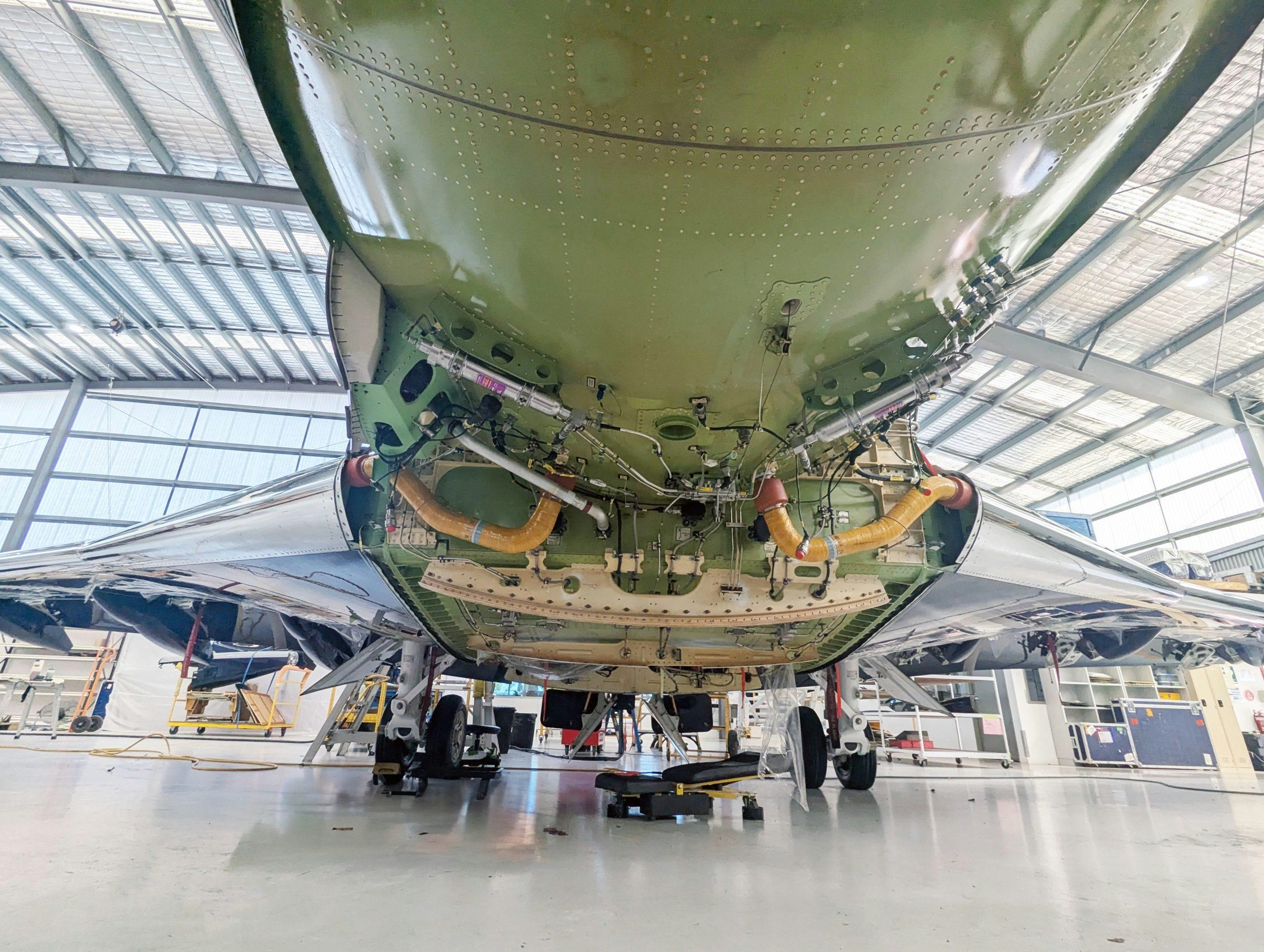
The forthcoming MRO campus in Bengaluru will serve as the central hub for IndiGo’s heavy maintenance activities. By internalizing these operations, the airline seeks to streamline processes, mitigate supply chain vulnerabilities, and exercise greater control over maintenance costs. This move is particularly significant given IndiGo’s rapid expansion and the increasing complexity of its fleet management. The new facility is expected to enhance operational reliability and support the airline’s long-term growth objectives.

Shifting Fleet Strategy Towards Greater Ownership

Alongside the maintenance facility, IndiGo is recalibrating its fleet strategy to increase the proportion of aircraft it owns or finances. Currently, the majority of its fleet is leased from third parties, but the airline plans to raise owned or finance-leased aircraft to 30-40% by 2030. This shift is anticipated to improve capital efficiency, reduce exposure to risks associated with lessors, and provide greater flexibility in adjusting capacity in response to evolving market demands. It also aligns with IndiGo’s broader ambitions to expand its domestic and international network more strategically.

IndiGo’s growth trajectory is further underscored by its order of 920 new aircraft, with a target fleet size of 600 planes by 2030. Increasing fleet ownership is expected to enhance the airline’s self-sufficiency and stability, moving away from the constraints imposed by traditional dry leasing arrangements.

Competitive Landscape and Market Perspectives

IndiGo’s expansion plans come amid intensifying competition within both the Indian and global aviation sectors. Established carriers such as Air India, British Airways, and Virgin Atlantic continue to compete for market share, while domestic rival Akasa Air is accelerating its growth with increased deliveries of Boeing aircraft. These competitive pressures may lead to adjustments in route networks and marketing strategies as airlines respond to IndiGo’s expanding footprint.

Market analysts remain divided on the long-term implications of IndiGo’s strategy. Some regard the expansion as a decisive step toward strengthening the airline’s global presence and operational resilience. Others caution that the financial commitments involved in developing a major maintenance facility and increasing fleet ownership could raise operational costs and introduce risks if market conditions deteriorate.

Despite these challenges, IndiGo remains committed to its vision of sustained growth. By investing in infrastructure and asset ownership, the airline aims to maintain its dominant position in the region’s aviation sector and capitalize on rising demand for domestic and international air travel.

More news
Malaysia Plans New Aviation Rules to Support Aerospace Growth, Says Loke

Malaysia Plans New Aviation Rules to Support Aerospace Growth, Says Loke

Malaysia to Introduce New Aviation Regulations to Propel Aerospace Industry Regulatory Framework to Support Low-Altitude Economy Malaysia is set to implement a new regulatory framework for the low-altitude economy by the end of this year, a move designed to accelerate the country’s ambitions of becoming a leading aerospace hub in the region. Transport Minister Anthony Loke announced the initiative during the groundbreaking ceremony for the Subang MRO Logistics Complex at Subang Aerotech Park. He revealed that the Civil Aviation Authority of Malaysia (CAAM) has been tasked with developing the framework following discussions at the recent Low Altitude Economy Forum. Loke emphasized that the forthcoming regulations will complement the Malaysia Aerospace Industry Blueprint 2030, facilitating the growth of emerging aviation technologies and industries. He underscored the significant potential within Malaysia’s aerospace sector, particularly in maintenance, repair, and overhaul (MRO) services, which continue to experience strong demand across the Asia-Pacific region. “There is no need to put a limit or cap on our target. The potential of Malaysia’s aerospace industry, especially in the MRO segment, is huge,” Loke stated, noting that the country must now fully leverage its strategic advantages. Expanding Aerospace Industry and Economic Impact Currently, Malaysia’s aerospace industry generates approximately RM32.5 billion in annual revenue and supports over 35,000 highly skilled jobs. The Asia-Pacific MRO market is projected to surpass US$60 billion by 2030, with Malaysia already ranked third in the region and fourth globally for business aviation MRO activities. Despite these achievements, Loke highlighted the necessity for ongoing investment in infrastructure, talent development, and technology to sustain and enhance the country’s competitive position. The new regulatory framework is expected to stimulate increased business for key industry players such as ExecuJet and Collins Aerospace, as demand for maintenance services grows. However, the sector faces challenges including the need for substantial investment in workforce training and infrastructure. Additionally, regional competitors are likely to respond by upgrading their own aviation facilities, intensifying competition within the industry. Loke also pointed to the rising importance of aviation to Malaysia’s broader economy, noting that the value of the country’s air trade reached RM644.08 billion in the first five months of 2026, surpassing sea freight, which stood at RM618.02 billion during the same period. International Collaboration and Sustainability Focus Sustainability remains a critical consideration as Malaysia seeks to align its aerospace growth with global decarbonization goals. Balancing industry expansion with environmental commitments presents ongoing challenges that will require careful management. On the international front, Loke expressed gratitude to the Japanese Embassy and Japanese corporations for their continued confidence in Malaysia’s aviation and logistics sectors. He highlighted the expanding collaboration with Japan’s Mitsui Fudosan Group, which now extends beyond the Subang MRO Logistics Complex to include the transformation of the Lalaport development into a transport-oriented city hub. “We have been working very closely with Japan, and I sincerely hope we can further strengthen this cooperation through projects like these to promote greater investment and growth in the aerospace sector,” Loke remarked. The Subang MRO Logistics Complex, a joint venture between Malaysia Airports and Mitsui Fudosan Group, is anticipated to enhance Malaysia’s aerospace ecosystem by improving logistics infrastructure, facilitating technology transfer, and expanding regional MRO capacity.
MTU Highlights CFM Partnership in Launch of Fort Worth Hub

MTU Highlights CFM Partnership in Launch of Fort Worth Hub

MTU Expands Fort Worth Facility to Strengthen CFM Partnership MTU Aero Engines, the German specialist in engine maintenance, repair, and overhaul (MRO), has officially inaugurated its expanded facility in Fort Worth, Texas, marking a pivotal development in its collaboration with CFM International. The launch was commemorated by the induction of the site’s first CFM Leap-1B engine, which is destined for GOL, a long-standing Brazilian airline customer. Strategic Shift Towards CFM Aftermarket Services Traditionally known for its close partnership with Pratt & Whitney—holding up to an 18% stake in the Geared Turbofan (GTF) program and managing critical components such as the low-pressure turbine and high-pressure compressor—MTU has recently redirected its focus toward the CFM aftermarket. This strategic realignment reflects the company’s intent to diversify beyond its established strengths and adapt to shifting market dynamics, particularly as more than two-thirds of its revenues now derive from MRO activities. The $120 million investment in the 43,000 square meter (463,000 square feet) Fort Worth hub underscores MTU’s ambition to expand its presence in North America. This facility now serves as the company’s flagship site in the region and is distinguished as the only MTU location worldwide to receive CFM’s “Premier” status, the highest level of approval granted by the engine manufacturer. This designation authorizes MTU to perform a comprehensive range of maintenance services—including complete overhauls and in-house repairs—on both Leap and CFM56 engines. MTU expects to induct its first Leap-1A engine, used on the Airbus A320neo family, at the Fort Worth site in the near future, although customer details remain undisclosed. The company projects that the global market for Leap engines will eventually triple the size of the CFM56 market, with annual shop visits anticipated to peak at approximately 8,000 by 2045. Looking further ahead, MTU plans to expand its authorizations at Fort Worth to include the GE Aerospace GEnx engine by 2029, thereby broadening its service portfolio. Challenges and Market Position Despite these advancements, MTU faces several challenges in leveraging its partnership with CFM. Competition from other CFM International partners and the necessity to balance workload value with GE Aerospace remain significant concerns. Moreover, MTU’s historical focus on high-end, durable engines may not fully align with the rapidly evolving requirements of collaborative combat aircraft and other next-generation platforms. These factors have generated some skepticism within the aviation community regarding MTU’s capacity to compete effectively in the CFM aftermarket. Concurrently, competitors such as CFM International and GE Aerospace are expected to intensify their aftermarket strategies in response. Nevertheless, MTU’s MRO segment continues to experience rapid growth. Currently, shop visits are divided roughly two-thirds in favor of V2500 and GTF engines, with the remaining one-third comprising CFM and GE engines. However, the value of work is more evenly distributed due to the complexity of repairs on GE engines, such as the GEnx turbine center frame. Operating across Germany, China, Serbia, Canada, and Poland, MTU positions itself as the world’s second-largest engine aftermarket service provider by shop visits, handling over 1,400 annually and holding more than 30 manufacturer authorizations. “As one of the world’s leading engine MRO providers, we are systematically expanding our global footprint,” said CEO Johannes Bussmann. “Fort Worth will be a cornerstone of our strategy to support next-generation engine programs at scale.”
IBS Group Launches Naviq Technology to Advance AI in Travel Industry

IBS Group Launches Naviq Technology to Advance AI in Travel Industry

IBS Group Launches Naviq Technology to Advance AI in Travel Industry IBS Group has introduced Naviq Technology, a new company dedicated to artificial intelligence-driven travel technology, with the goal of accelerating digital transformation throughout the global travel sector. This initiative positions IBS Group at the forefront of AI innovation, utilizing advanced automation and data analytics to support airlines, airports, hotels, and tourism companies in achieving enhanced operational efficiency and accelerated growth. Navigating AI-Driven Transformation in Travel Operating as an independent entity within the IBS Group ecosystem, Naviq Technology combines decades of travel industry expertise from IBS Software with state-of-the-art AI capabilities. The company is focused on addressing the complex operational challenges faced by travel businesses, including rising costs, shifting customer expectations, workforce constraints, and the pressing need for digital innovation. Naviq aims to deliver intelligent, industry-specific solutions tailored to these demands. The launch of Naviq coincides with a notable surge in AI adoption across the travel industry. Airlines, airports, cruise operators, and hospitality providers are increasingly investing in artificial intelligence to streamline operations, improve decision-making, and offer more personalized customer experiences. Recent trends indicate a growing use of AI in hotel sourcing, underscoring a receptive market for advanced solutions such as those Naviq proposes. Strategic Focus and Market Positioning Naviq’s strategy emphasizes large-scale AI integration, transformation of customer experiences, and data-driven operational management. The company seeks to assist travel organizations in embedding AI across diverse business functions, ranging from enhanced operational planning to personalized traveler engagement. By concentrating on measurable business outcomes, Naviq aims to unlock new commercial opportunities and foster more connected customer interactions. A distinctive feature of Naviq is its specialized delivery model, designed to expedite implementation and shorten the time required for clients to realize value from their technology investments. For existing IBS Software customers, Naviq will act as a preferred partner in AI-enabled transformation, guiding organizations through the transition to more intelligent and efficient operations. Despite these advantages, Naviq faces challenges in differentiating its offerings from existing AI solutions and ensuring seamless integration with clients’ current systems. Additionally, initial skepticism from corporate travel managers accustomed to traditional processes may slow adoption. Overcoming such resistance will necessitate clear demonstrations of efficiency improvements and compliance benefits facilitated by AI. Competitors within the travel technology sector are expected to respond by enhancing their own AI capabilities or pursuing strategic partnerships and acquisitions to maintain competitiveness. Naviq’s future success will depend on its ability to deliver tangible business value and adapt to the evolving needs of global travel companies. Naviq Technology plans to collaborate closely with leading stakeholders across the travel industry—including airlines, airports, cruise lines, and hospitality providers—to harness artificial intelligence as a catalyst for innovation and growth in an increasingly digital landscape.
Rise in AI and SpaceX Fortunes Fuels Private Jet Demand

Rise in AI and SpaceX Fortunes Fuels Private Jet Demand

Surge in AI and SpaceX Wealth Drives Private Jet Market Boom The rapid accumulation of wealth from artificial intelligence startups and SpaceX has ignited an unprecedented surge in demand for private jets, significantly impacting the luxury travel and real estate sectors. Amanda Applegate, an aviation attorney at Soar Aviation Law in Cleveland, reports a 25% increase in business activity during the first months of 2026. This growth is largely attributed to a wave of liquidity events in the technology sector, most notably SpaceX’s landmark initial public offering (IPO) valued at $85.7 billion. The IPO has generated substantial wealth for the company’s founder, employees, and early investors, fueling a rush among tech investors to acquire private aircraft. Expanding Influence of AI and Tech Wealth The influence of SpaceX’s success extends beyond the company itself. AI firms such as Anthropic and OpenAI are widely anticipated to pursue large IPOs, which would further enlarge the pool of affluent buyers entering the private aviation market. Venture capitalists, board members, early employees, and bankers involved in these offerings are increasingly channeling their newfound fortunes into private jet ownership. This trend positions private aviation as one of the earliest beneficiaries of the ongoing AI-driven economic expansion. Luxury travel providers are adapting to this shift by focusing their marketing efforts on technology founders and executives, anticipating a fresh wave of billionaires. Companies like BlackJet have expanded their jet card programs to accommodate the preferences of high-net-worth individuals, while Flexjet, a leader in fractional jet ownership and membership plans, has observed a demographic shift toward younger, self-made clients. D.J. Hanlon, Flexjet’s executive vice president of sales, notes that the influx of first-generation wealth from tech IPOs is reshaping the customer base. Data from aviation intelligence firm Jetnet corroborates this trend, revealing an 11.8% increase in global flights through shared-ownership programs and a 13.4% rise in flights by private jet owners during the first five months of 2026 compared to the same period in 2025. In North America, the largest market for private aviation, this growth reflects both increased flight frequency among existing owners and a surge of new buyers, many of whom initially engage with fractional ownership or membership models before progressing to full aircraft ownership. Broader Impacts on Luxury Markets and Real Estate This pattern of wealth-driven expansion in private aviation echoes previous surges, such as the 24% increase in business jet deliveries during the dot-com boom. Today, the excitement surrounding SpaceX—now valued at approximately $2 trillion—and the anticipation of major AI IPOs are driving a comparable upswing in demand. The private space industry is also influencing adjacent luxury markets. Companies like SpaceX and Blue Origin have triggered a “hotel land grab” for oceanfront properties in Florida, as investors anticipate growing demand for upscale accommodations linked to space launches and tourism. This phenomenon has sparked a wave of commercial real estate investment tied to the burgeoning private space sector. Looking ahead, SpaceX’s potential expansion into new markets, including prototype AI devices and wireless services, could further alter market dynamics and provoke competitive responses across various industries. As dissatisfaction with commercial air travel intensifies and technology-driven wealth continues to accelerate, private aviation and related luxury sectors appear poised for sustained growth.
AJet to Add Five A321neos to Fleet

AJet to Add Five A321neos to Fleet

AJet to Expand Fleet with Five Airbus A321neos AJet is poised to enhance and modernise its fleet through a new lease agreement with BOC Aviation, acquiring five Airbus A321neo aircraft. These next-generation jets, powered by Pratt & Whitney GTF engines, are slated for delivery in 2028. The addition is intended to support the Turkish low-cost carrier’s expansion across Europe, North Africa, and the Middle East, reinforcing its growth strategy in these key regions. Strategic Partnership and Fleet Renewal This agreement marks the commencement of a partnership between AJet and BOC Aviation, aligning with the airline’s broader fleet renewal objectives. AJet’s Chief Executive, Kerem Sarp, emphasised the significance of the A321neos in the company’s growth plans, highlighting their role in expanding the route network while simultaneously improving operational efficiency and passenger experience. The integration of these aircraft is expected to advance both the airline’s sustainability goals and its competitive positioning. Operational Considerations and Industry Context As AJet prepares to incorporate the A321neos, it will need to address operational challenges such as comprehensive crew training and maintaining rigorous maintenance standards. Effective management of these factors will be critical to realising the anticipated gains in efficiency and environmental performance. The fleet upgrade is anticipated to be well received by the market, particularly by passengers who stand to benefit from enhanced comfort and reliability. This move reflects a wider industry trend, with airlines increasingly investing in modern, fuel-efficient aircraft to support new route development and replace ageing fleets. Competitors like AirAsia are similarly prioritising fleet renewal, while Azerbaijan Airlines continues its own modernisation efforts. BOC Aviation has noted that the introduction of the A321neos will complement AJet’s existing fleet and underpin its long-term growth as it expands its footprint in strategic regional markets. The partnership is viewed as a strategic initiative for both companies, positioning AJet to compete more effectively in an evolving and competitive aviation environment.
AeroDirect Expands CFM56 Engine Offerings

AeroDirect Expands CFM56 Engine Offerings

AeroDirect Expands CFM56 Engine Offerings Amid Industry Supply Chain Challenges AeroDirect has recently acquired two CFM56-7B26/3 engines formerly operated by US-Bangla Airlines, enhancing its portfolio of high-demand narrow-body engine assets. These engines are currently undergoing heavy maintenance at Precise Aviation, an affiliate of AeroDirect, and will soon be made available for a variety of aftermarket services, including leasing, sale, exchange, and repair management. Strategic Growth in a Challenging Market This acquisition aligns with AeroDirect’s broader strategy to expand its inventory of sought-after engines and provide flexible support to airlines, lessors, maintenance providers, and other aftermarket customers. The company continues to build its CFM56 portfolio in response to strong market demand, focusing on assets that deliver significant operational value. AeroDirect is also utilizing its proprietary ADREAM artificial intelligence platform to improve asset evaluation, anticipate customer requirements, and optimize aftermarket solutions. Industry-Wide Supply Chain Disruptions AeroDirect’s expansion occurs amid persistent supply chain disruptions affecting the aviation sector. Industry leaders, including IATA Director General Willie Walsh, have underscored ongoing challenges that have increased costs for airlines, particularly due to prolonged engine turnaround times and component shortages. United Airlines CEO Scott Kirby has expressed frustration over engine delays, reflecting widespread concerns among carriers regarding the reliability and availability of critical engine parts. Market Implications and Future Outlook In this context, AeroDirect’s efforts to grow its CFM56 engine offerings will be closely monitored by the market. While the company aims to address the urgent needs of airlines and maintenance providers, its success will depend on navigating these industry-wide constraints and delivering timely, dependable solutions. Competitors are expected to respond as the sector continues to focus on resolving supply chain and engine reliability challenges. As AeroDirect advances its expansion, its capacity to adapt to these headwinds and provide effective aftermarket support will be crucial in meeting customer expectations and sustaining its competitive position.
The Five Stages of Airport Intelligence: A Roadmap to 2040

The Five Stages of Airport Intelligence: A Roadmap to 2040

The Five Stages of Airport Intelligence: A Roadmap to 2040 Airport digital transformation initiatives frequently begin with a focus on specific technologies such as artificial intelligence, digital twins, autonomous vehicles, or computer vision. However, this technology-first approach often results in a fragmented collection of isolated solutions that yield only incremental improvements without significantly enhancing overall airport performance. In contrast, a maturity-based strategy prioritizes defining the operational capabilities an airport requires and then incrementally building toward those objectives, using technology as a means rather than an end. The Airport Intelligence Maturity Framework provides a structured five-stage progression, ranging from basic connectivity to fully agentic operations. This framework equips airport leaders with a common language to sequence transformation efforts and measure progress effectively. Its importance is growing as airports prepare to accommodate up to 20 billion annual passengers by 2040, even as infrastructure expansion struggles to keep pace with demand. The Importance of Sequencing in Digital Transformation A persistent challenge within the aviation industry is the premature investment in advanced capabilities before establishing the foundational elements necessary for their success. For instance, predictive analytics tools are sometimes deployed before reliable, integrated operational data is available. Similarly, AI-driven resource optimization systems may be introduced without the collaborative governance structures required to implement their recommendations effectively. Digital twins, often heralded as transformative, can be built on data models that fail to accurately represent real-world airport operations. This misalignment leads to what experts describe as the "pilot trap": impressive technology demonstrations that do not scale operationally, fostering skepticism about the true value of digital investments. Leading industry organizations—including the Airports Council International (ACI), the International Civil Aviation Organization (ICAO), SESAR, and EUROCONTROL—concur that sustainable transformation depends on the concurrent maturation of governance, operational processes, collaboration mechanisms, and digital capabilities. These elements must evolve in tandem to realize meaningful progress. Level 1 — Connected Airport: Establishing the Foundation The initial stage of the maturity framework centers on achieving operational visibility by integrating core systems and data sources. Information that was previously siloed—such as flight data, stand allocations, security queue measurements, and baggage tracking—is consolidated through shared platforms and dashboards. This integration provides stakeholders with a comprehensive, real-time view of airport operations. The primary objective at this stage is to develop a reliable operational picture. Although decision-making remains largely manual, the quality of those decisions improves significantly when based on consistent, timely data rather than fragmented information and informal communication channels. While this stage may lack the allure of artificial intelligence or autonomous systems, it is an indispensable prerequisite. Advanced analytics and automation rely on trustworthy, integrated data; bypassing this foundational step often results in unreliable outputs and undermines stakeholder confidence in digital initiatives. Navigating Challenges and Industry Responses Implementing the five-stage roadmap presents considerable challenges. Achieving comprehensive data integration across diverse systems is a complex undertaking, and ensuring that intelligence remains actionable and timely requires continuous adaptation to evolving aviation regulations and technological advancements. The industry’s turbulent history has also engendered skepticism regarding the feasibility of such ambitious transformation plans. Market reactions to the roadmap vary, ranging from cautious optimism to doubt, particularly concerning its scalability and practical implementation. Competitors may respond by adopting similar frameworks or developing proprietary technologies to secure a competitive advantage, thereby intensifying the race toward smarter, more resilient airports. Ultimately, the discipline to adhere to the maturity framework sequentially—building robust foundations before layering advanced capabilities—is critical. As airports look ahead to 2040, this structured approach offers the most viable path to sustainable and scalable intelligence in an increasingly complex operational environment.
Collins Advances Electric Aircraft Technology

Collins Advances Electric Aircraft Technology

Collins Advances Electric Aircraft Technology Collins Aerospace has officially opened its fully operational Engineering Center of Excellence in Wolverhampton, marking a pivotal advancement in the development and testing of next-generation electric thrust reverser actuation systems (elecTRAS) for commercial aviation. This new UK facility is equipped with a modular and scalable test centre designed to support every stage of aircraft actuation system development, from initial design and validation through to final certification. Enhancing Development Through Advanced Testing The state-of-the-art testing environment enables engineers to rigorously evaluate individual components, actuators, subsystems, and fully integrated systems under realistic operating conditions. This comprehensive capability facilitates the early detection and resolution of potential design issues, which is anticipated to reduce programme delays, lower development costs, and offer greater flexibility for future aircraft applications. By consolidating expertise in electric thrust reverser systems and nacelle actuation design, the centre fosters closer collaboration throughout the product development cycle, accelerating innovation in electric systems, motor control technologies, and intelligent control algorithms. The modular design of the facility allows testing equipment to be reconfigured for various aircraft programmes and system variants, enhancing scalability and shortening development timelines for upcoming products. This adaptability is crucial as the aerospace industry increasingly embraces more-electric aircraft technologies aimed at improving efficiency and reducing operating costs. The Shift to More-Electric Aircraft and Industry Implications Collins’ elecTRAS system replaces traditional hydraulic actuation with an all-electric solution, eliminating the need for hydraulic fluids and simplifying system architecture. At the aircraft level, this transition can reduce nacelle actuation weight by 15 to 20 percent, contributing to lower fuel consumption, enhanced operational performance, and decreased maintenance requirements. The company’s investment in the Wolverhampton centre underscores the broader industry trend toward electrification as manufacturers seek to optimize aircraft efficiency and sustainability. Despite these advancements, the shift to more-electric aircraft presents significant challenges. The integration of advanced battery technologies, such as solid-state batteries, promises improved safety and higher energy density compared to conventional lithium-ion batteries. However, technical hurdles remain, including issues of system compatibility and cost. Market responses to these developments are mixed; while some stakeholders express optimism about the potential for extended range and faster charging capabilities, others remain cautious due to the complexities and expenses associated with adopting new battery systems. Competitors are closely observing Collins’ progress. Some may intensify their own research and development efforts to remain competitive or surpass these innovations, while others might adopt a more measured approach, awaiting clearer evidence of commercial viability before committing substantial resources. Operational Success and Future Prospects Collins’ elecTRAS technology is already proven in commercial service, notably on the Airbus A350 family. By 2025, the system had accumulated over 15 million flight hours and 2.2 million flight cycles across a fleet exceeding 700 aircraft. The extensive operational experience gained is informing the development of the next generation of electric actuation systems, supporting ongoing improvements in efficiency, reliability, and overall aircraft performance. These advancements align with the aviation sector’s broader goals of reducing operating costs and minimizing environmental impact.
Rolls-Royce Adopts XWB-84 EP Engine as Standard for Future Models

Rolls-Royce Adopts XWB-84 EP Engine as Standard for Future Models

Rolls-Royce Adopts XWB-84 Enhanced Performance Engine as Standard for Future Models Rolls-Royce has confirmed that its Enhanced Performance (EP) variant of the Trent XWB-84 engine will become the standard powerplant for all future Airbus A350-900 aircraft, effectively replacing the baseline model in new sales. This decision follows the successful entry into service of the EP engine with Delta Air Lines in May last year, where it demonstrated an average fuel-burn reduction of approximately 1.8%, exceeding the initial target of 1%. Technical Advancements and Operational Benefits The XWB-84 EP engine, which delivers 84,000 pounds-force (375 kN) of thrust, is the exclusive engine option for the A350-900. Rolls-Royce’s move to standardize the EP variant reflects its commitment to providing customers with enhanced value and improved operational performance. The company emphasized that demand for the upgrade remains strong among operators whose engines have yet to enter production. To achieve the improved efficiency, Rolls-Royce introduced a range of technical enhancements, including optimized airflow dynamics, modifications to the fan design, refined cruise performance, and better cooling air distribution within the engine core. However, the differences between the baseline and EP variants are substantial enough to preclude in-service upgrades. Consequently, Rolls-Royce will continue manufacturing both versions concurrently to meet existing contractual obligations but anticipates that all forthcoming orders will specify the EP model. Market Reception and Competitive Implications The market response to the EP engine has been largely favorable, with airlines attracted by the prospect of significant cost savings. Rob Watson, president of Rolls-Royce’s civil aerospace division, highlighted that a 1% improvement in fuel efficiency can translate into approximately $500,000 in annual savings per aircraft. For operators managing fleets of around 20 aircraft, this could amount to $9–10 million in yearly cost reductions. Watson underscored the importance of the EP engine in delivering tangible benefits to customers. Despite these gains, challenges remain, particularly in ensuring the engine’s durability and reliability under demanding conditions such as those found in the Gulf region. Emirates has expressed concerns regarding the EP variant’s performance in hot and sandy environments, indicating a potential opening for competitors to target this market segment. The adoption of the EP engine also intensifies competitive pressure on rival manufacturers like Pratt & Whitney and General Electric, who may need to accelerate enhancements to their own engine offerings to remain competitive. Production and Future Outlook Currently, the XWB-84 is assembled at Rolls-Royce’s primary production facility in Derby, United Kingdom. To accommodate increasing demand, the company plans to expand production capacity at its Dahlewitz plant near Berlin by the end of the decade. By establishing the XWB-84 EP as the standard engine for the A350-900, Rolls-Royce aims to deliver greater efficiency and value to its airline customers while addressing the challenges posed by diverse operating environments and a dynamic competitive landscape.
Why the Boeing 777X Folds Its Wings to Access Gates in Sydney

Why the Boeing 777X Folds Its Wings to Access Gates in Sydney

Why the Boeing 777X Folds Its Wings to Access Gates in Sydney The Boeing 777X represents a significant advancement in commercial aviation, distinguished by its innovative wing design aimed at enhancing fuel efficiency. To achieve this, Boeing equipped the aircraft with an exceptionally large carbon-fiber wing, whose span exceeds the standard dimensions accommodated by most international airports. Rather than reduce the wing size and compromise performance, Boeing introduced a pioneering folding wingtip mechanism. This feature enables the 777X to access airports with constrained gate layouts, such as Sydney Kingsford Smith Airport, without sacrificing its aerodynamic advantages. Addressing Airport Infrastructure Constraints Airports like Sydney are carefully engineered environments where taxiways and gates are designed with precise spatial limitations. Many facilities lack the capacity to handle aircraft with wingspans that extend beyond conventional parameters. The 777X’s folding wingtip system, developed in collaboration with Liebherr, allows the outer 11 feet 6 inches (3.51 meters) of each wingtip to pivot upward while the aircraft is on the ground. This reduces the wingspan from 235 feet 5 inches (71.75 meters), which classifies the aircraft in the International Civil Aviation Organization’s (ICAO) largest Code F category, to 212 feet 9 inches (64.85 meters), fitting within the more common Code E classification. This reduction is critical because remaining in the Code F category would impose significant operational and financial burdens on airlines. Most international gates are designed for smaller aircraft, and accommodating a Code F aircraft would necessitate costly and disruptive infrastructure upgrades, including pavement widening and jetway repositioning. For airports like Sydney, which already experience high slot utilization and limited gate flexibility, such modifications are particularly challenging. By enabling the 777X to effectively “shrink” its wingspan on the ground, Boeing avoids these expensive alterations, enhancing the aircraft’s appeal to airlines seeking increased capacity and range without the logistical complications. This folding wing design also draws on lessons from the Airbus A380, which encountered operational difficulties due to its size and the requirement for specialized airport infrastructure. Regulatory and Market Considerations Incorporating a movable wing component into routine operations demanded not only engineering innovation but also regulatory adaptation. International aviation safety standards had to be revised to accommodate the folding wingtips and their impact on taxiway separation requirements. Traditionally, wide safety margins are mandated between Code F aircraft wingtips and other objects or aircraft. Boeing collaborated with regulators to ensure the 777X could operate within existing Code E parameters, thereby avoiding the need for bespoke clearances that could disrupt airport operations. Market responses to the 777X’s folding wing innovation have been varied. Emirates, a key customer, remains optimistic about the aircraft despite ongoing delays. Meanwhile, competitors have concentrated on their own technological developments without directly addressing Boeing’s folding wing design. As the 777X approaches entry into service, its ability to adapt to existing airport infrastructure stands as a pragmatic solution to the spatial challenges faced by busy airports like Sydney. This adaptability may prove as consequential as the aircraft’s advancements in fuel efficiency and operational range.
line









