
Orquesta conocimientos de IA para convertirlos en acción

Tendencias
Categories
Japan Airlines to Upgrade Business Class on Boeing 787-9
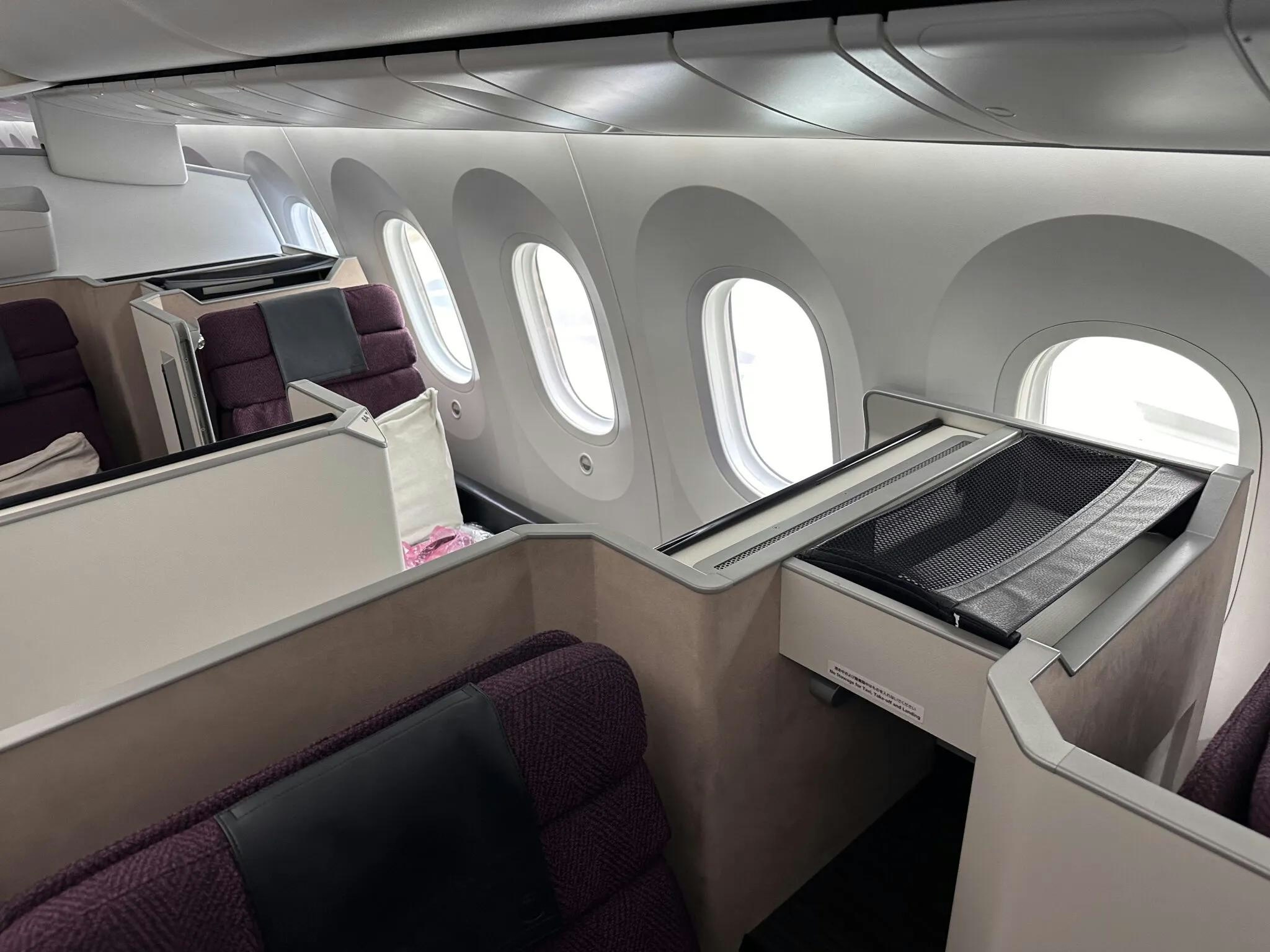
Japan Airlines to Upgrade Business Class on Boeing 787-9 Fleet
Comprehensive Retrofit to Standardize Premium Experience
Japan Airlines (JAL) has announced a significant upgrade to the business class cabins across its Boeing 787-9 fleet, encompassing both the 11 aircraft currently in service and 10 additional 787-9s on order. This initiative aims to standardize the interiors and introduce a new business class seat, ensuring a consistent and enhanced premium experience for passengers. The rollout will be anchored at Tokyo Haneda Airport (HND), the airline’s primary international hub for its 787 operations.
This upgrade forms part of JAL’s broader strategy to remain competitive amid intensifying rivalry from carriers such as Cathay Pacific and American Airlines, which have recently unveiled next-generation premium cabins. The move is expected to heighten competition in the premium travel segment, potentially triggering price adjustments and increased marketing efforts. However, the airline must navigate industry-wide challenges, including anticipated aircraft delivery delays and production rate fluctuations projected for 2026, which may affect the timing and execution of the retrofit program.
Fleet Strategy and Cabin Configuration
Japan Airlines currently operates a total of 55 Boeing 787 aircraft, consisting of 23 787-8s and 22 787-9s. The retrofit will focus exclusively on the 787-9 fleet, with no planned changes to the 787-8s. The upgrade will align the interiors of the existing 787-9s with the configuration planned for the new deliveries, standardizing cabin layout, materials, and onboard technology.
As part of its long-term fleet management, JAL intends to transfer approximately half of its 787-9 aircraft to its low-cost subsidiary, ZIPAIR, as new planes enter service. This strategy will ensure that all 787-9s retained by Japan Airlines feature the updated cabin standard, supporting brand consistency while enabling efficient fleet segmentation between full-service and low-cost operations.
Current Business Class Variations and Future Prospects
At present, Japan Airlines operates two distinct business class products on its 787-9s. Roughly half the fleet is fitted with Apex Suites (Sky Suite II) arranged in a 2-2-2 configuration, prized for their spaciousness and privacy. The remaining aircraft feature Safran Aries seats (Sky Suite III) in a 1-2-1 reverse herringbone layout, which, despite offering direct aisle access, are narrower and generally regarded as less comfortable. This disparity has resulted in an inconsistent premium experience across different routes.
JAL has not yet disclosed which business class seat will be installed in the upgraded 787-9 cabins, stating only that the aircraft will receive its “latest cabin interior design.” The airline’s newest business class concept, currently deployed on its Airbus A350-1000 fleet, utilizes the Safran Unity seat, prompting speculation that a similar product may be selected for the 787-9 retrofit.
As the global aviation industry confronts evolving challenges and intensifying competition in the premium travel market, Japan Airlines’ business class upgrade highlights its commitment to delivering a uniform, high-quality experience for international passengers.

Etihad Airways Suspends Airbus A380 Flights on Key Route

Aditya Birla Group Seeks Approval for Aircraft Leasing in GIFT City

Qatar Airways Highlights Innovation and Connectivity at Arabian Travel Market 2026

Hong Kong's Five-Year Plan Includes Andrew Fan's Aircraft Parts Processing Hub Proposal

ACIA Aero Leasing Delivers ATR72-600 to Air Nostrum

RTX Appoints Jill Albertelli as Head of Pratt & Whitney

TAT Technologies Joins Beyond Aero Hydrogen Aircraft Program

AURAK Study Highlights Barriers to Air Taxi Adoption in Emerging Economies

Xiamen Air Selects Altitude for 787 Maintenance at Heathrow

Etihad and Swissport Extend Global Partnership
