Imagen

AeroGenie — Tu copiloto inteligente.

Pregunta cualquier cosa. Analiza todo. Actúa al instante.

Tendencias

Categories

Korean Air Orders 103 Boeing Aircraft Including 777-8 Freighters
August 26, 2025By ePlane AI
Korean Air Orders 103 Boeing Aircraft Including 777-8 Freighters
0
0
Korean Air
Boeing 777-8 Freighter
Aircraft Orders

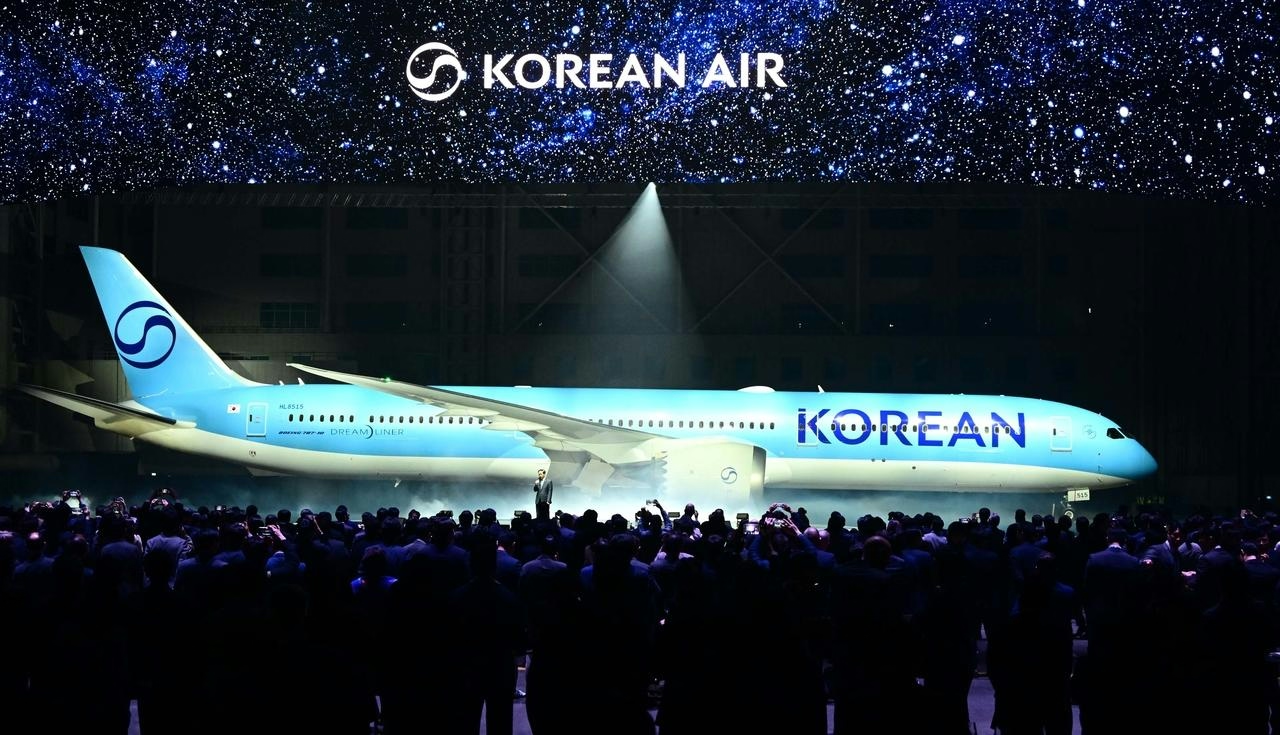
Korean Air Places Record Order for 103 Boeing Aircraft, Including 777-8 Freighters

Korean Air has announced a historic order for 103 Boeing aircraft, representing the largest single purchase by an Asian carrier in Boeing’s history. The agreement was revealed during South Korean President Lee Jae Myung’s visit to the United States and marks Korean Air’s first commitment to the new-generation Boeing 777-8 Freighter. The order also includes a mix of widebody and narrowbody jets, reflecting the airline’s strategic focus on fleet modernization and expansion.

Expanding Cargo and Passenger Fleet

The deal encompasses eight Boeing 777-8F freighters, which will significantly enhance Korean Air’s cargo capabilities. This addition expands the airline’s existing freighter fleet, which currently consists of four 747-400ERFs, seven 747-8Fs, and twelve 777-200Fs. The move comes as Korean Air aims to strengthen its cargo operations following the exit of its subsidiary Asiana Airlines from the dedicated freighter market after selling its cargo business to AirZeta.

In addition to the freighters, Korean Air has ordered 20 more 777-9 aircraft, doubling its previous commitment for this model made in March 2025. The airline has also increased its order for the 787-10, adding 25 more to supplement existing unfilled orders for six 787-9s and 27 787-10s. Furthermore, the order includes 50 additional 737-10s, complementing an outstanding order for 19 737 MAX aircraft. Notably, Korean Air recently converted 12 of its 737-8 orders to the larger 737-10 variant.

All aircraft are scheduled for delivery by the end of 2030, which will raise Korean Air’s Boeing orderbook from 72 to 175 unfilled commitments. The agreement also includes the purchase of 11 spare engines from General Electric and eight from CFM International, intended to support the growing fleet and potentially optimize operational and maintenance costs.

Industry Implications and Market Response

This substantial order signals Korean Air’s confidence in future growth and its commitment to fleet modernization. However, industry analysts caution that large-scale aircraft orders often face challenges such as delivery delays, particularly amid ongoing supply chain disruptions. Market volatility could also affect long-term demand for new aircraft, while competitors may respond by accelerating their own fleet renewal programs or exploring alternative manufacturers to secure more favorable terms.

The market reaction to Korean Air’s announcement has been predominantly positive, with investors viewing the deal as a significant boost for Boeing. Nevertheless, the scale of the order may prompt rival airlines in the region to reassess their strategies in light of Korean Air’s expanded capacity and renewed emphasis on operational efficiency.

Korean Air’s current Boeing fleet includes a diverse mix of 737s, 747s, 777s, and 787s, alongside government aircraft. Meanwhile, Asiana Airlines, now focused on passenger services, operates nine 777-200ERs, and low-cost subsidiary Jin Air maintains a fleet comprising various 737s and 777-200ERs.

With deliveries extending through the end of the decade, Korean Air’s record-breaking order underscores its ambition to maintain a leading position in both passenger and cargo aviation across Asia and the global market.

More news
Thunder Bay Company Receives $1.5 Million for Aviation Hangar

Thunder Bay Company Receives $1.5 Million for Aviation Hangar

Thunder Bay Company Receives $1.5 Million for Aviation Hangar Levaero Aviation, a prominent aircraft maintenance firm based in Thunder Bay, has significantly expanded its operations following a federal investment exceeding $1.5 million. The $1,503,787 funding, announced by FedNor Minister Patty Hajdu on February 20, facilitated the construction of Hangar 97, a 500-square-metre facility dedicated to the disassembly and reassembly of aircraft components. This new infrastructure enables Levaero to house advanced equipment and accommodate additional staff, thereby enhancing its maintenance and refurbishment capabilities in a competitive aviation sector. Federal Support and Strategic Investment Minister Hajdu, who also represents Thunder Bay–Superior North in Parliament, positioned the funding within the broader context of the federal government’s Buy Canadian plan. This $6.6-billion initiative is designed to prioritize domestic military equipment production, increase defence contracts awarded to Canadian firms, and generate up to 125,000 jobs over the next decade. In her statement, Hajdu emphasized the importance of supporting Canadian industries to strengthen the nation’s defence sector and regional economies. “By supporting domestic efforts to grow our armed forces through the Buy Canada plan for supplying the military, we are investing in Canada and in Northern Ontario. This will create real opportunities for businesses and workers, here at home,” she said. The funding was allocated through FedNor’s Regional Economic Growth Through Innovation Fund, which aims to assist Northern Ontario businesses in expanding into new markets and adopting advanced technologies. Levaero’s Growth and Industry Context Levaero Aviation has been operating for over two decades, offering maintenance, repair, and overhaul (MRO) services for a diverse range of aircraft. The company also functions as a sales and brokerage centre for both new and used planes. Notably, Levaero is the exclusive Canadian distributor for the Swiss-made Pilatus PC-12 and PC-24 aircraft, and it provides specialized services including aircraft acquisition, parts supply, charter, and management. In 2022, the company further expanded by opening an 18,000-square-foot hangar in Collingwood to support its maintenance and sales operations. Robert Arnone, Levaero’s President and CEO, credited the FedNor funding with enabling the company to increase productivity, expand its workforce, and enhance the aviation capacity of the region. “Levaero is always working to meet the ever-growing demands of our customers and the global marketplace,” Arnone remarked. “We are proud of the nearly three decades of service we have provided the region, and we thank FedNor for their partnership.” Levaero’s expansion occurs amid a dynamic period for the aviation industry, which faces both opportunities and challenges. Globally, significant investments such as RTX’s recent $139 million commitment to aircraft maintenance in Singapore are reshaping market dynamics and intensifying competition. Concurrently, regulatory scrutiny, exemplified by fines imposed on El Al for alleged hangar market exploitation, underscores the need for fair competition. Furthermore, a recent survey by the Aircraft Owners and Pilots Association highlights a scarcity of hangar space, indicating that companies like Levaero must strategically manage growing demand to maintain their competitive advantage.
Malaysia Airlines Introduces AI Assistant ‘Mavis’ to Enhance Passenger Support

Malaysia Airlines Introduces AI Assistant ‘Mavis’ to Enhance Passenger Support

Malaysia Airlines Introduces AI Assistant ‘Mavis’ to Enhance Passenger Support Malaysia Airlines has launched “Mavis,” an artificial intelligence-powered virtual assistant designed to improve passenger support throughout the entire travel experience. Developed in partnership with Ada, a leading provider of AI-native customer experience solutions, Mavis is now accessible via the airline’s website, mobile application, and email channels. This initiative represents a significant milestone in Malaysia Airlines’ ongoing digital transformation efforts. Enhancing Passenger Experience Through AI Mavis is engineered to meet the growing demand for instant, round-the-clock customer service by addressing a wide range of traveler needs. The AI assistant can provide information on flight schedules, real-time status updates, booking and itinerary details, online check-in, boarding gate confirmations, and fare options. Additionally, it facilitates seat upgrades and other high-demand services. By autonomously resolving many routine inquiries through advanced automation and contextual understanding, Mavis streamlines the customer service process. For more complex issues requiring human intervention, the system smoothly transfers passengers to live agents, ensuring a balance between efficiency and personalized assistance. Language accessibility is a core component of Mavis’s deployment. Currently supporting both English and Malay, the assistant caters to Malaysia Airlines’ diverse passenger base. The airline plans to expand its multilingual capabilities to better serve its extensive network across Asia, Europe, Australia, and other regions, recognizing the importance of language inclusivity in enhancing the overall customer experience. Strategic Integration and Future Prospects The introduction of Mavis aligns with Malaysia Airlines’ broader omnichannel strategy, which seeks to create a seamless and connected digital ecosystem. Passengers can transition effortlessly between platforms without losing context, as Mavis currently supports interactions on web, mobile, and email channels. The airline intends to extend AI-driven support to additional digital and voice platforms in the future, further integrating the technology into its customer service framework. Despite the promising benefits, the integration of AI assistants like Mavis presents challenges. Ensuring compatibility with existing systems, maintaining a consistent customer experience, and addressing privacy concerns remain critical considerations as the airline advances its digital initiatives. This development occurs amid intensifying competition within the aviation industry, where rival carriers are also accelerating investments in AI technologies to enhance their market positions. The broader adoption of AI in customer engagement is reflected in market projections estimating the AI patient engagement sector alone could reach $33.68 billion by 2032. This underscores the significant advancements and investments in AI across various industries, including aviation. With the deployment of Mavis, Malaysia Airlines aims to establish a new benchmark for digital passenger support by combining automation with human interaction to meet the evolving expectations of travelers worldwide.
FAI Aviation Group Overview

FAI Aviation Group Overview

FAI Aviation Group: A Pillar of European Business Aviation FAI Aviation Group is recognized as one of Europe’s leading aviation providers, operating Germany’s largest fleet of Bombardier business jets, comprising 15 aircraft. The company is headquartered at Albrecht Dürer International Airport in Nuremberg and employs over 300 professionals. Its global footprint extends through offices in Dubai and Bahrain, enabling it to serve clients across the Middle East and North Africa. The group’s core operations encompass VIP charter services, aircraft management, and air ambulance missions, all supported by its in-house maintenance, repair, and overhaul (MRO) subsidiary, FAI Technik. This subsidiary delivers comprehensive aircraft maintenance and cabin refurbishment, ensuring the fleet remains in optimal condition. Barbara Baumgartner, Managing Director of FAI Aviation Services, highlights the company’s fully integrated operating model as a key differentiator. Unlike many competitors, FAI owns its entire fleet and does not depend on owner approvals for charter operations, providing a significant competitive advantage. The company’s carbon-neutral fixed-base operation (FBO) in Germany, fully supported by FAI Technik, allows all maintenance, repair, overhaul, and refurbishment work to be conducted internally. This integrated structure grants FAI complete operational control, fostering reliability, safety, and consistency throughout every phase of the flight experience. Baumgartner emphasizes the rarity of such a turnkey setup, noting that it enables efficient and intelligent operations. The exclusive use of Bombardier aircraft, supported by a robust technical infrastructure, results in a streamlined, high-performance operation grounded in quality. Founded in 1987, FAI has developed a broad international client base in both VIP charter and air ambulance sectors. Notably, FAI Air Ambulance is the world’s largest provider in its sector by flight hours and revenue. Baumgartner explains that the company combines scale with precision, optimizing logistics to offer competitive pricing and sustainability. FAI operates significantly fewer empty leg flights than many competitors, enhancing value for clients while reducing environmental impact. Navigating Market Dynamics and Operational Challenges FAI balances its considerable scale and infrastructure with a commitment to highly bespoke service. Baumgartner notes that the company is large enough to provide global reach yet small enough to maintain a personal touch. VIP charter clients benefit from dedicated contacts throughout their journey, personalized catering options, and Ultra Ku-band Wi-Fi for seamless connectivity. The business aviation landscape is undergoing rapid evolution, presenting both challenges and opportunities for FAI. The company faces intensified competition from major industry players such as Airbus and Boeing, with Airbus dominating single-aisle sales and Boeing focusing on widebody aircraft. Embraer’s strategic pivot toward E2 sales may further reshape market dynamics. Additionally, the Asia Pacific region is emerging as a significant market for long-haul business jets, increasing competition and potential growth avenues for FAI. On the technical front, predictive maintenance is gaining widespread adoption in business aviation, despite ongoing concerns regarding privacy and security. This trend is likely to influence FAI Technik’s maintenance services, necessitating continued innovation to sustain a competitive edge. Global supply-chain disruptions, particularly affecting aircraft parts and maintenance, have posed significant challenges for operators worldwide. FAI has adopted an unconventional approach to mitigate these issues by acquiring entire aircraft specifically for spare parts. Baumgartner explains that the company operates six Global Express aircraft and owns one dedicated solely to spares, in addition to two Challenger aircraft reserved for parts. This strategy ensures operational continuity and minimizes downtime. FAI Aviation Group’s integrated business model, technical expertise, and dedication to personalized service position it strongly within a competitive and evolving global market, delivering reliability and value to its diverse clientele.
Azul Emerges from Chapter 11 Following Restructuring

Azul Emerges from Chapter 11 Following Restructuring

Azul Emerges from Chapter 11 Following Restructuring Azul S.A. has officially emerged from Chapter 11 bankruptcy proceedings after successfully completing a voluntary financial restructuring under the supervision of the U.S. Bankruptcy Court for the Southern District of New York. This milestone follows the full repayment of the airline’s debtor-in-possession (DIP) financing and the settlement of its previously announced exit offering. All conditions stipulated in Azul’s court-approved reorganisation plan, which was sanctioned on December 19, 2025, have been either satisfied or waived, rendering the plan effective and substantially consummated. Restructuring Process and Financial Impact The restructuring process, completed in a notably swift nine months, was described by CEO John Rodgerson as being achieved in “record” time. As a result, Azul now operates with a leaner balance sheet, reduced fleet obligations, and enhanced liquidity. The company’s share capital currently stands at R$21.76 billion, divided into 54.73 trillion registered common shares with no par value, following a share consolidation approved on February 12, 2026. If all three series of subscription bonuses, approved on February 19, 2026, are fully exercised, the total number of shares would increase to 62.18 trillion. The restructuring was executed through agreements with key creditors, including bondholders, AerCap—Azul’s largest aircraft lessor—and strategic investors United Airlines and American Airlines. This process has significantly reduced the airline’s indebtedness and strengthened its capital structure, positioning Azul for improved operational sustainability and long-term growth. Context Within Brazil’s Aviation Sector Azul’s renewed financial footing arrives at a critical juncture for Brazil’s aviation industry, which continues to recover from the profound impacts of the Covid-19 pandemic. Its main competitors, LATAM Airlines Group and Gol, have also undergone financial restructuring in recent years as the sector adapts to ongoing challenges. To support its future trajectory, Azul has appointed industry veteran John Slattery to its strategy committee, where he will provide guidance on the airline’s next phase of development. With a restructured balance sheet and strategic advisory in place, Azul is now better positioned to compete within the Brazilian market. Nonetheless, the broader aviation industry continues to face significant headwinds as it navigates the complexities of post-pandemic recovery.
LS Technics Becomes Poland’s First A220-Certified MRO

LS Technics Becomes Poland’s First A220-Certified MRO

LS Technics Becomes Poland’s First A220-Certified MRO Expanding Maintenance Capabilities in Central Europe LS Technics has achieved a significant milestone by becoming the first Polish organization to receive technical approval for maintenance of the Airbus A220 family. The company’s updated Part-145 certificate, issued by the Polish Civil Aviation Authority, now authorizes both line maintenance and engine interventions for the Airbus A220 (BD-500) equipped with Pratt & Whitney PW1500G engines. Additionally, the certification covers PW1900G engines, which power the Embraer E-Jet E2 family. This development positions LS Technics as a crucial maintenance provider for the latest generation of single-aisle aircraft in Central and Eastern Europe. This expansion arrives amid ongoing industry scrutiny of Geared Turbofan (GTF) engines such as the PW1500G and PW1900G. While these engines offer improved fuel efficiency through advanced gearing systems, they have also presented global logistical challenges, including the need for increased preventive inspections. Recent incidents, notably the Air France A220 power bank fire, have intensified focus on safety protocols and maintenance standards, underscoring the importance of certified local expertise. Strategic Impact on Regional Aviation By offering A220 and GTF engine maintenance domestically, LS Technics reduces the dependence of local and regional operators on workshops in Western Europe. This shift is expected to shorten aircraft downtimes and enhance availability, providing a competitive advantage to airlines operating within the region. Furthermore, the certification strengthens Poland’s position within the “Aviation Valley” aerospace cluster, which seeks to attract additional European contracts and investment. The company’s entry into the A220 maintenance market also introduces new competitive dynamics. Established global MRO leaders such as Boeing and Airbus may respond with intensified marketing efforts and improved service offerings to maintain their market share. Airlines are likely to reassess their maintenance partnerships, balancing considerations of reliability, cost efficiency, and safety—particularly in light of recent technical incidents. Experience and Future Prospects With over 30 years of experience, LS Technics operates across eight Polish airports and employs more than 1,000 professionals. The company provides worldwide Aircraft on Ground (AOG) services, delivering immediate technical support for grounded aircraft. Prior to this certification, LS Technics specialized in maintenance for the Airbus A320 family and Embraer 170/190, as well as Quick Engine Change (QEC) services for V2500 and PW1100G engines. Dariusz Maruszczyk, board member for Finance and Economics at LS Technics, highlighted that the new approvals reinforce the company’s role as a key partner for carriers operating Airbus fleets and affirm its pioneering status within the Polish maintenance sector. He noted that this advancement directly addresses the growing demands of the Eastern European aviation market. As LS Technics embraces increased competition and heightened safety expectations, its certification marks a pivotal development for Poland’s aviation industry, promising enhanced self-sufficiency and improved service options for regional airlines.
Oneworld Names Ole Orvér as CEO

Oneworld Names Ole Orvér as CEO

Oneworld Appoints Ole Orvér as Chief Executive Officer Oneworld has announced the appointment of Ole Orvér as its new Chief Executive Officer, effective April 1, 2026. A Swedish aviation veteran with over twenty years of experience, Orvér assumes leadership at a critical juncture for the global airline alliance, which is confronting intensifying competition and shifting partnership dynamics within the industry. Extensive Industry Experience and Leadership Prior to his appointment, Orvér served as Chief Commercial Officer at Finnair, a member airline of oneworld, where he led a comprehensive transformation of the carrier’s commercial and network strategies. His tenure was marked by the introduction of significant revenue growth initiatives and enhancements to customer loyalty programs. Orvér’s career also includes senior leadership roles such as Senior Vice President of Network Management at Qatar Airways, another oneworld member, as well as executive positions at Air Berlin, LOT Polish Airlines, and SAS Scandinavian Airlines. Orvér holds a degree in Economics from Mid Sweden University and has completed the Strategic Thinking and Leadership Growth Program at the Wharton School of the University of Pennsylvania, underscoring his strong academic foundation in business and leadership. Strategic Priorities Amid Rising Competition Orvér succeeds Nathaniel Pieper, who has transitioned to the role of Chief Commercial Officer at American Airlines. The oneworld Governing Board, composed of chief executives from member airlines, expressed appreciation for Pieper’s leadership and contributions during his tenure. As CEO, Orvér will focus on deepening integration among oneworld’s member airlines, fostering collaboration on technological innovation, and enhancing customer benefits. These objectives are particularly urgent as the alliance faces mounting pressure from rival groups SkyTeam and Star Alliance, both of which are expected to intensify efforts to counter oneworld’s initiatives and expand their memberships. Industry analysts will be closely monitoring how Orvér leverages his extensive alliance experience to shape oneworld’s commercial strategy and technological development. His leadership will be pivotal in maintaining the alliance’s relevance and competitive position in an evolving global aviation landscape. Reporting directly to the oneworld Governing Board, Orvér will guide the alliance through this pivotal period of transformation and competition.
ABL Delivers Second 737 MAX 8 to TUI

ABL Delivers Second 737 MAX 8 to TUI

ABL Delivers Second 737 MAX 8 to TUI, Marking a Key Milestone ABL Aviation has completed the delivery of its second Boeing 737 MAX 8 aircraft to TUI Airline, fulfilling a two-aircraft agreement that reflects a shared commitment to fleet modernization. The initial aircraft was delivered in December 2025, marking the beginning of a partnership focused on advancing TUI’s strategy to operate a younger, more fuel-efficient fleet. Both aircraft are equipped with CFM LEAP-1B27 engines, aligning with TUI’s objectives to reduce emissions and enhance operational efficiency while ensuring passenger comfort. This latest delivery represents TUI Airline’s 50th and 55th 737 MAX 8 aircraft, a significant milestone as the airline continues to invest in modernizing its fleet. Additionally, TUI is expanding its fleet strategy by incorporating the 737-10 model, signaling sustained confidence in the long-term prospects of the 737 MAX family. Industry Context and Strategic Implications Ali Ben Lmadani, Founder and CEO of ABL Aviation, emphasized that the transaction underscores the company’s strong execution capabilities and its relationship-driven approach to asset management. TUI Airline CEO Marco Ciomperlik described the deliveries as reinforcing the airline’s dedication to eco-efficiency, customer comfort, and operational reliability. The broader market environment presents a complex mix of opportunities and challenges. As Boeing increases production of the 737 MAX 8, lessors such as ABL must navigate ongoing supply chain pressures to maintain delivery schedules. While TUI’s fleet expansion reflects optimism about the aircraft’s future, other carriers have encountered difficulties. For instance, Allegiant Air reported a full-year capacity decline attributed to delays in receiving 737 MAX 8 deliveries from Boeing. Competition within the commercial aircraft market remains intense. Airbus continues to lead in total aircraft deliveries, exerting pressure on Boeing and its partners. This evolving landscape highlights the critical importance of strategic fleet decisions for both airlines and lessors. Despite these industry dynamics, the successful completion of ABL’s agreement with TUI demonstrates the resilience and adaptability of both companies as they operate within a rapidly changing aviation sector.
How Operational Pressure Drives Airlines to Adopt Agentic AI

How Operational Pressure Drives Airlines to Adopt Agentic AI

How Operational Pressure Drives Airlines to Adopt Agentic AI Airlines today face escalating operational pressures, including rising costs, geopolitical instability, shortages of aircraft and parts, and increasingly stringent safety and regulatory requirements. These challenges continuously test the resilience of the industry, where disruptions such as aircraft on ground (AOG) events can immediately halt revenue streams while fixed costs persist. In such scenarios, teams must urgently source parts, validate suppliers, ensure airworthiness, and coordinate logistics under severe time constraints. With the International Air Transport Association (IATA) projecting global net margins at a mere 6.6% in 2025, even minor operational shocks risk eroding profitability and damaging reputations through network disruptions and diminished passenger confidence. Despite aviation’s foundation in advanced engineering, many supply chain workflows remain entrenched in outdated methods, relying heavily on email threads, spreadsheets, and sequential approvals. This cautious approach stems from the industry’s safety-critical nature and a fragmented data ecosystem that spans airlines, maintenance, repair and overhaul providers (MROs), original equipment manufacturers (OEMs), brokers, and logistics companies. Nevertheless, the imperative to modernize is intensifying. IATA forecasts the delivery of only 1,254 aircraft in 2024 against a record backlog of 17,000, with supply chain challenges expected to cost airlines over $11 billion in 2025. The Emergence of Agentic AI in Aviation In response to these pressures, airlines are increasingly adopting agentic artificial intelligence (AI) systems—advanced technologies capable of reasoning, planning, and autonomously executing compliant actions across complex workflows. Unlike traditional automation, which primarily analyzes data and offers recommendations, agentic AI operates within defined guardrails, logs its decisions, and escalates to human operators when uncertainty or risk arises. This evolution is driven not only by the pursuit of efficiency but also by the necessity to maintain competitiveness. Leading carriers such as Delta, United, and Southwest have publicly acknowledged their use of AI in areas including baggage handling, marketing, and operational optimization. Meanwhile, travel platforms like Expedia recognize AI agents as a significant competitive threat. Platforms exemplifying this new paradigm, such as OrbitronAI’s NovaOS, integrate deterministic controls with adaptive intelligence to unify commercial strategy, compliance, maintenance, and logistics. The objective is not to supplant human expertise but to augment it, enabling supply chain professionals to coordinate outcomes across fragmented, multi-party environments with enhanced speed and consistency. Transforming Compliance and Sourcing with AI Supplier compliance remains a critical bottleneck in airline procurement. Traditional Know Your Customer (KYC) processes depend on static, point-in-time document reviews that often fail to capture changes in supplier status or jurisdictional risk. This results in delays across maintenance, IT, ground handling, and catering as teams navigate extensive paperwork and approvals. Agentic AI transforms compliance into a continuous, agent-managed process by monitoring supplier risk in real time through analysis of jurisdictional exposure, trading history, and behavioral signals. This approach reduces last-minute escalations, accelerates routine checks, and improves overall risk visibility. Similarly, sourcing spare parts and maintenance services continues to be a fragmented and time-consuming process. Requests for quotations (RFQs) circulate via email and portals, with responses arriving inconsistently. Specialists spend considerable time reconciling availability, lead times, pricing, and supplier legitimacy. Agentic AI compresses these cycles by automating routine tasks and enabling faster, more reliable sourcing decisions. Challenges and Strategic Implications The rapid adoption of agentic AI introduces new challenges, particularly in cybersecurity and reputational risk. Airlines must ensure that AI integration adheres to ethical standards and regulatory compliance. Market reactions to AI adoption have been mixed, with some sectors experiencing volatility while logistics and software industries demonstrate resilience. Competitors are responding by developing advanced natural language booking tools and securing AI capabilities to drive growth, underscoring the strategic importance of agentic AI in the future of aviation. In an industry where operational disruptions can swiftly impact financial performance, agentic AI is emerging as a vital tool. It enables airlines to navigate complexity, maintain compliance, and sustain competitiveness in an increasingly dynamic and challenging environment.
Bentley Uses Sustainable Aviation Fuel for Luxury Car Deliveries

Bentley Uses Sustainable Aviation Fuel for Luxury Car Deliveries

Bentley Integrates Sustainable Aviation Fuel in Luxury Vehicle Deliveries Bentley Motors has taken a decisive step toward reducing its environmental impact by adopting sustainable aviation fuel (SAF) for all customer vehicle deliveries transported by air. This initiative targets one of the most carbon-intensive segments of the company’s logistics operations. While airfreight constitutes a relatively small portion of Bentley’s overall distribution network, it remains indispensable for urgent shipments and regions where alternative transport methods such as sea or land are impractical. Addressing Aviation Emissions in Automotive Logistics The aviation sector’s significant carbon footprint has long presented a challenge for automakers committed to credible climate goals, especially when compared to the comparatively lower emissions associated with maritime shipping. Bentley’s transition to certified SAF for its airfreight operations is designed to achieve meaningful reductions in lifecycle emissions without compromising the premium delivery standards expected by its clientele. Aimee Kelly, Bentley’s Head of Sustainability, emphasized that this move represents a measurable and evidence-based effort to reduce emissions in areas of the logistics network where air transport remains essential. Industry Challenges and Broader Implications Bentley’s adoption of SAF occurs amid ongoing industry challenges, including the relatively high cost of sustainable aviation fuel compared to conventional jet fuel and the limited availability of production facilities. These factors may affect the scalability and long-term sustainability of such initiatives. Furthermore, the company is likely to face heightened scrutiny from environmental advocates and discerning customers who will evaluate Bentley’s overall sustainability strategy beyond this prominent development. The luxury automotive sector is closely monitoring Bentley’s approach, as competitors may accelerate their own environmental initiatives to maintain competitive positioning. The sustainable aviation fuel market is anticipated to expand significantly in the coming years, potentially improving accessibility and cost-effectiveness. By incorporating SAF into its airfreight logistics, Bentley not only addresses immediate emissions concerns but also underscores its broader commitment to sustainable innovation within the luxury automotive industry.
Understanding FSC 55: Lumber, Millwork, Plywood, and Veneer in Aerospace Supply Chains

Understanding FSC 55: Lumber, Millwork, Plywood, and Veneer in Aerospace Supply Chains

Understanding FSC 55: Lumber, Millwork, Plywood, and Veneer in Aerospace Supply Chains In the complex world of aerospace logistics, every supply category, including seemingly modest materials, plays a crucial role in supporting aviation manufacturing and maintenance. While metals and advanced composites often dominate industry discussions, non-metallic materials such as wood products are systematically categorized within the Federal Supply Classification (FSC) system. This system remains a foundational element of defense and aerospace inventory management, ensuring standardized procurement and distribution across allied operations. Defining FSC 55 FSC 55 specifically covers lumber, millwork, plywood, and veneer materials. This classification includes a range of products such as lumber items, precision millwork components, plywood sheets, veneer materials, and structural wooden supports. These materials are cataloged under the broader NATO supply classification framework, which harmonizes inventory references among allied nations. Although aerospace engineering is typically associated with advanced alloys and high-strength fasteners, wood-based materials continue to fulfill essential operational requirements within the sector. The Role of FSC 55 Materials in Aerospace Operations Wood-based materials under FSC 55 serve multiple practical functions throughout aerospace supply chains. In hangar and facility construction, these materials are employed for interior partitions, storage panels, and temporary structural setups. Airports and maintenance centers rely on FSC 55 products for workshop barriers, maintenance area flooring bases, and structural framework supports, where durability and adherence to safety standards are critical. In addition, FSC 55 materials are integral to packaging and logistics protection. The transportation of high-value aviation components demands secure packaging solutions. Custom plywood crates and other wood-based packaging provide necessary shock absorption and mechanical protection, ensuring that sensitive equipment arrives intact and operational. Furthermore, during manufacturing and testing phases, wood materials are utilized for low-cost mockups, temporary alignment jigs, and ergonomic workspace configurations. While metals predominate in aircraft manufacturing, the use of hybrid materials, including wood, is common in early design and testing stages to facilitate flexibility and cost efficiency. Supply Chain Challenges and Industry Responses The aerospace supply chain faces numerous challenges, including tariffs, trade uncertainties, labor shortages, rising material costs, and freight market volatility. These factors have intensified scrutiny on material sourcing and cost management strategies. In response, aerospace companies are increasingly adopting advanced artificial intelligence technologies to bolster supply chain resilience and improve operational efficiency. Industry leaders such as Incora are at the forefront of leveraging these innovations to mitigate risks and streamline logistics processes. Simultaneously, the aerospace sector is experiencing a wave of mergers and acquisitions, particularly within parts and components manufacturing. This strategic consolidation aims to secure critical supply chains and optimize production capabilities amid a rapidly evolving market environment. FSC 55 Within the Aviation Supply Ecosystem Although FSC 55 is generally regarded as a supportive infrastructure classification rather than a core flight-critical category, its role remains indispensable. Core aviation material groups typically include fastening devices, structural components, and electronic systems. However, the reliability and performance of these primary systems often depend on the seamless integration and timely delivery of auxiliary materials such as those encompassed by FSC 55. Further Resources Professionals seeking a deeper understanding of FSC 55 and its place within aerospace supply chains can benefit from engaging with community forums, defense logistics groups, and technical procurement networks. Exploring defense inventory standards and NATO supply classification systems provides valuable insight into the complexities of aerospace logistics. For additional information on global supply classification, the NATO Stock Number Wikipedia page offers a comprehensive overview.
line










