Imagen

Orquesta conocimientos de IA para convertirlos en acción

¡Únete hoy a la lista de espera de AeroGenie!

Tendencias

Categories

Linear Air Updates Membership Program
February 19, 2026By ePlane AI
Linear Air Updates Membership Program
0
0
Linear Air
Private Charter Membership
Air Taxi Services

Linear Air Revamps Membership Program Amid Intensifying Competition

Boston-based Linear Air, a broker specializing in regional private charter flights, has relaunched and rebranded its membership program to better address the evolving needs of frequent flyers. This strategic update follows the return of Justin Nihon as CEO six months ago and underscores the company’s commitment to refining its service offerings in a competitive market.

Membership Structure and Fleet Composition

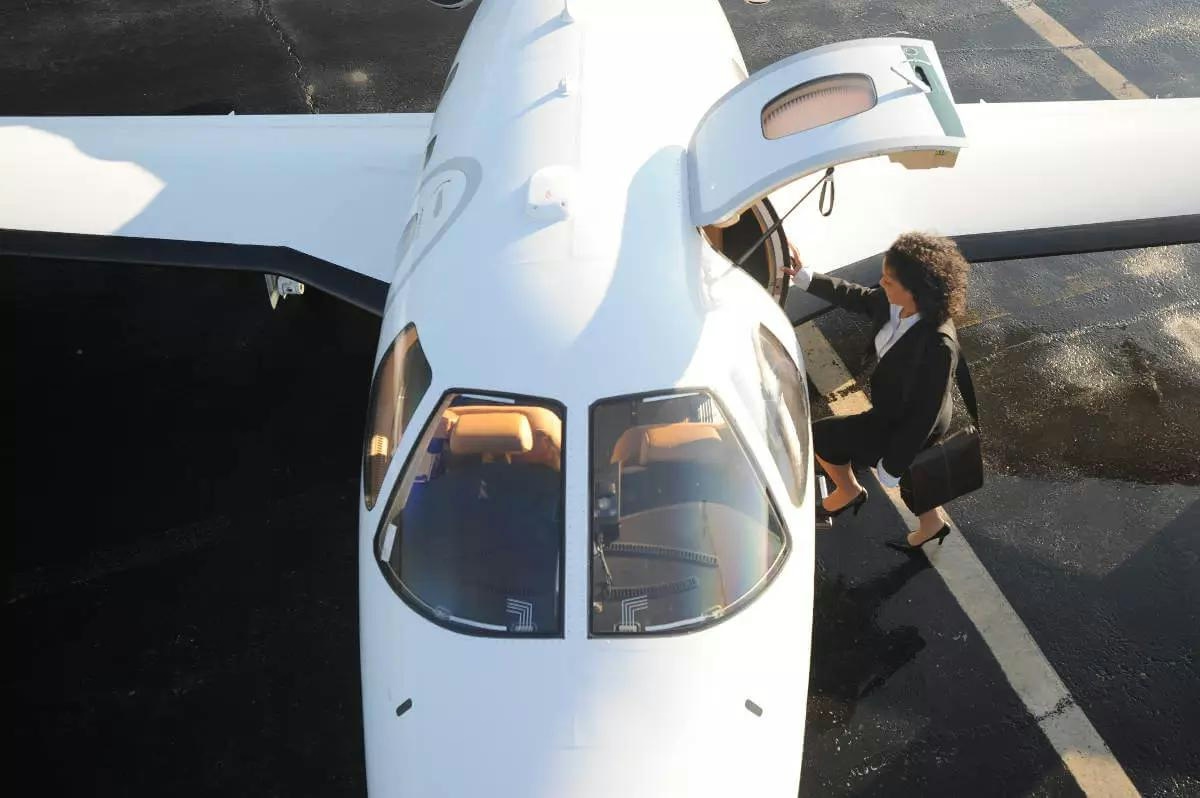
Linear Air operates a significant portion of its flights using air taxis, which it categorizes into five distinct classes: Air Taxi, Premium Air Taxi, Midsize Air Taxi, Large Air Taxi, and Executive Air Taxi. The Executive Air Taxi category includes turboprop aircraft such as the King Air and Pilatus PC-12, accommodating up to eight passengers. The remaining categories primarily feature single- and twin-engine piston aircraft, including models like the Cirrus SR-22 and Cessna 172 Skyhawk, typically seating between two and six passengers.

The company’s revamped membership program, branded as the Arrow Club, introduces two principal tiers. The Core membership requires a $24,000 upfront payment or $2,000 monthly installments, offering members a 5% discount on flight costs and guaranteed availability when booking at least 72 hours in advance, excluding weekends and holidays. The Premium tier, priced at $48,000 upfront or $4,000 per month, increases the discount to 10% and reduces the booking window to 48 hours. Premium members also benefit from coordinated ground transportation and catering services provided at cost. Additionally, a bespoke tier is available to accommodate corporate clients.

All membership levels incorporate dynamic pricing and permit penalty-free cancellations up to 48 hours before departure, although more stringent terms may apply for turboprop and jet charters. The program primarily targets the piston aircraft segment, which Nihon identifies as a key growth area, particularly for travelers seeking efficient alternatives to lengthy drives or commercial flights on short regional routes.

Digital Innovation and Market Differentiation

Linear Air distinguishes itself through its instant online booking platform, enabling customers to secure next-day flights with ease. Approximately half of all bookings are now completed digitally. When a preferred aircraft category is unavailable, the company offers alternative options at adjusted rates, enhancing flexibility for members. Nihon highlights that frequent flyers increasingly value the convenience and immediacy of online booking.

The company’s focus on air taxis sets it apart from many brokers and fixed-rate programs that predominantly emphasize jet charters. Linear Air anticipates growing demand as high-net-worth individuals prioritize time efficiency and experiential travel, such as making multiple same-day stops or returning home for family commitments following business engagements.

Competitive Landscape and Market Challenges

The overhaul of Linear Air’s membership program occurs amid intensifying competition from established operators like Wheels Up, which has recently announced ambitious expansion plans. Industry analysts suggest that competitors may initially adopt a cautious stance but could respond by enhancing their own membership offerings or adjusting pricing strategies to protect market share.

Moreover, broader economic and geopolitical uncertainties—including fluctuating interest rates and inflationary pressures—pose potential challenges to consumer behavior and the private aviation sector at large. As Linear Air seeks to solidify its position within the charter market, its ability to navigate competitive pressures and adapt to shifting market dynamics will be critical to its future success.

More news
Airbus Order Talks Highlight Ongoing Demand in Aerospace Sector

Airbus Order Talks Highlight Ongoing Demand in Aerospace Sector

Airbus Order Talks Highlight Ongoing Demand in Aerospace Sector Renewed speculation surrounding a significant Airbus order from Ethiopian Airlines has brought Boeing back into the spotlight, underscoring the persistent global demand for commercial aircraft. Recent discussions within the aviation industry emphasize that airline fleet expansion and replacement remain central to the outlook for major manufacturers such as Boeing and Airbus. Market Dynamics and Competitive Landscape Although Boeing shares have not reacted to any formal announcements, the broader context holds considerable importance for U.S. investors. Boeing and Airbus are direct competitors in securing global airline orders, particularly in the wide-body and single-aisle segments. These markets are characterized by long production cycles and substantial backlogs, which heavily influence expectations for future deliveries and cash flow. Even mere speculation about a new Airbus order—potentially involving the A350 and A220 models—can swiftly affect sentiment across the aerospace sector, as recent aviation media coverage has demonstrated. For Boeing, commercial airplanes remain the most visible revenue driver. The 787 and 777X wide-body aircraft are critical to meeting long-haul demand, while the 737 family dominates short- and medium-haul markets. Although Boeing’s defense, space, and services divisions provide a degree of balance, investor focus often centers on airline fleet plans and order developments from competitors. The company’s business model depends on long-term customer relationships and production visibility, making it highly sensitive to shifts in airline expansion strategies and rival activities. Airbus Challenges and Strategic Initiatives Airbus faces its own challenges despite strong sales in the narrow-body segment and a growing North American services market, which is projected to expand from $38 billion in 2025 to $54.4 billion by 2044. The European manufacturer is currently grappling with a delivery bottleneck, fulfilling only 70.4% of planned deliveries. This constraint contributed to a 7% year-on-year decline in first-quarter 2026 revenues, following the delivery of just 114 aircraft. In response, Airbus is advancing the development of the A350F freighter, with first deliveries expected in 2026, aiming to challenge Boeing’s dominance in the cargo aircraft segment. Implications for Investors and Industry Outlook Competitor responses continue to shape the aerospace market landscape. Boeing is focused on stabilizing production of its 737 MAX to capitalize on sustained demand for single-aisle jets. Meanwhile, Airbus’s order book and delivery performance remain closely monitored indicators of the sector’s overall health. For U.S. investors, Boeing’s exposure to both commercial aviation recovery and defense spending renders it particularly sensitive to changes in airline fleet strategies, supply chain execution, and government budgets. Market reactions tend to be swift when either manufacturer secures or discusses new large orders, as these developments signal active airline investment and fleet renewal—key indicators for industrial companies with a global footprint. Ongoing order discussions and delivery challenges at both Airbus and Boeing reflect a dynamic aerospace sector where fleet renewal and expansion continue to be top priorities for airlines worldwide.
Mid-Air AI Handoff: A New Era for Combat Aviation

Mid-Air AI Handoff: A New Era for Combat Aviation

Mid-Air AI Handoff: A New Era for Combat Aviation Advancing Flexibility in Autonomous Flight As autonomous aviation technology continues to evolve, achieving operational flexibility remains a critical challenge. Current systems predominantly rely on a single, tightly integrated artificial intelligence (AI) “brain” to control an aircraft. This approach limits adaptability, making it difficult to respond swiftly to new mission parameters, software updates, or shifting operational demands. Such rigidity can impede innovation and restrict the integration of specialized capabilities from diverse technology providers. Recent flight tests, however, suggest a transformative shift may be underway. Engineers utilizing a modified Model 437 Vanguard aircraft have successfully demonstrated that multiple AI systems can assume control of the same aircraft during flight without disrupting its operation. These trials confirmed that control could be transferred in real time between different autonomy software packages, with the aircraft maintaining stable and safe flight throughout the transitions. Modular Autonomy Architecture and Operational Benefits Central to this breakthrough is a modular autonomy architecture that divides missions into smaller functional elements, or “skills,” such as navigation, coordination, and specific mission actions. During testing, the aircraft initially operated under one autonomy system before seamlessly switching mid-flight to others, each assuming responsibility for selected functions. These transitions occurred without any instability, highlighting the robustness of the underlying framework. Beyond the handoff capability, the platform supports advanced features including real-time coordination between crewed and uncrewed assets, dynamic route adjustments, and safe operation within complex airspace environments. Employing a manned demonstrator as a testbed reduces both risk and cost, allowing developers to validate software under real flight conditions prior to deployment on fully autonomous platforms. The system’s plug-and-play design further facilitates the integration of third-party technologies, accelerating development cycles and fostering innovation. Strategic Implications and Emerging Challenges From a defense perspective, the implications of this technology are profound. Future operational environments are expected to feature a blend of crewed and autonomous systems working collaboratively under rapidly changing conditions. The ability to switch between different AI controllers mid-mission could enable military forces to adapt in real time, integrate new capabilities more rapidly, and maintain operational continuity even if one system fails or is compromised. Nonetheless, this technological advancement introduces new challenges. Experts such as David Petraeus and Isaac Flanagan have underscored the necessity for clear protocols governing the use, training, and maintenance of autonomous weapon systems to ensure their effectiveness and prevent unnecessary expenditures. The integration of conversational AI tools—such as the Maven Smart System and Palantir Artificial Intelligence Platform—within the U.S. Department of Defense and NATO is already accelerating battlefield decision-making, prompting market responses focused on enhancing operational readiness and training. Competitors in the defense sector are also responding to these developments, with other contractors expected to develop similar AI-driven coordination platforms to maintain their competitive edge in the rapidly evolving combat aviation landscape. The results of these recent tests point toward a more flexible and resilient model for autonomous aviation—one in which aircraft are no longer confined to a single control system but can dynamically evolve as mission requirements change.
Air Taxis Could Link Almaty, Konayev, and Alatau in Kazakhstan

Air Taxis Could Link Almaty, Konayev, and Alatau in Kazakhstan

Kazakhstan Advances Air Taxi Services Linking Almaty, Konayev, and Alatau Kazakhstan is moving forward with plans to introduce passenger and cargo air taxi services connecting the cities of Almaty, Konayev, and Alatau, with operations potentially commencing as early as 2027. Deputy Prime Minister Kanat Bozumbayev revealed that comprehensive aerotaxi testing is scheduled for 2026, following the Transport Ministry’s preparation of temporary regulations and the issuance of permits for trial flights, as reported by The Caspian Post via Kazinform. Route Planning and Safety Considerations Authorities and aviation experts are currently evaluating potential routes that would link key locations such as Almaty International Airport, the city’s railway station, Konayev, and the Kapshagai reservoir. Safety remains a paramount concern, with assessments focusing on factors including wind conditions, flight altitudes, terrain, aeromagnetic zones, and the proximity of high-voltage power lines. These evaluations aim to ensure the secure and efficient operation of air taxis within the region’s complex geographical and infrastructural landscape. Collaboration, Funding, and Challenges The project is being developed in partnership with leading aerotaxi companies and specialists from China and the United States, nations recognized for their advancements in urban air mobility. Notably, the initiative will be financed entirely through private investment and local companies, without reliance on state budget funds. Despite this promising collaboration, the rollout of air taxi services faces significant challenges. Regulatory hurdles, including the need to secure certifications from aviation authorities, must be addressed. Additionally, infrastructure development, such as the construction of vertiports for takeoff and landing, will be critical to the project’s success. Market reception may initially be cautious, as potential users weigh the novelty of air taxis against their potential to drastically reduce travel times. Furthermore, industry competitors may respond by developing similar services or lobbying for regulatory frameworks that favor established players. Context Within Global Urban Air Mobility Trends Kazakhstan’s initiative reflects broader global trends in urban air mobility. For instance, Joby Aviation is currently demonstrating its electric vertical takeoff and landing (eVTOL) air taxis in New York City, aiming to facilitate rapid urban commutes. These international efforts underscore common industry challenges, such as obtaining regulatory certification and securing public acceptance. The anticipated aerotaxi network in Kazakhstan is expected to transport both passengers and cargo, potentially transforming mobility and logistics in Almaty and its surrounding regions. This announcement follows Kazakhstan’s inaugural air taxi test flights, conducted in Alatau City on May 19, highlighting the country’s growing commitment to adopting advanced transportation technologies.
Widebody Conversions Surpass Narrowbodies for First Time in Over 15 Years

Widebody Conversions Surpass Narrowbodies for First Time in Over 15 Years

Widebody Freighter Conversions Outpace Narrowbodies for the First Time Since 2009 In a notable development within the air cargo sector, widebody freighter conversions surpassed narrowbody conversions in 2025, marking the first such occurrence since 2009. This shift, highlighted by aviation advisory firm IBA during its recent webinar, reflects changing dynamics in the cargo aircraft market, driven largely by a slowdown in narrowbody conversions amid an oversupplied market. John Whaley, senior aviation analyst at IBA, emphasized the significance of this trend, noting that fewer than 20 narrowbody conversions were completed in 2025, a steep decline from approximately 70 in 2024. This downturn follows a post-pandemic surge when many aircraft owners converted idle passenger jets to freighters to meet heightened cargo demand. The resulting oversupply has since curtailed activity in the narrowbody segment. Challenges and Market Dynamics in Widebody Conversions Despite widebody conversions outnumbering narrowbodies, the widebody sector itself experienced a year-on-year decline, with 30 conversions completed in 2025 compared to 40 in 2024. Whaley attributed this to limited availability of suitable aircraft, as many widebodies remain in passenger service due to their high residual value. “Widebody capacity is limited and it seems to be getting worse, not better,” he remarked. This evolving landscape is influencing broader industry strategies. Airlines such as Ethiopian Airlines are engaging with Airbus to acquire widebody models like the A350, signaling a strategic emphasis on expanding regional and long-haul operations. This trend is expected to heighten competition among carriers focusing on widebody fleets. Concurrently, robust engine maintenance activity reported by Safran, despite geopolitical tensions in the Middle East, underscores sustained demand for widebody engine services. GE Aerospace’s marked increase in Leap engine deliveries further illustrates the growing market for widebody aircraft engines, prompting manufacturers to consider scaling production and enhancing engine durability to maintain competitiveness. Outlook and Emerging Trends in Freighter Conversions Looking forward, IBA anticipates a gradual correction in the narrowbody oversupply, though not before 2028. Narrowbody conversions are projected to remain just above 20 in 2026, while widebody conversions are expected to rise slightly above 30. This growth is likely to be supported by new widebody conversion programs and improved feedstock availability as more aircraft retire from passenger service. Whaley noted that while 2025 was a relatively quiet year following record passenger-to-freighter conversions in 2023, overall conversion activity is expected to increase modestly in 2026. IBA forecasts a pickup in both widebody and narrowbody conversions between 2028 and 2030. The market is also witnessing the introduction of new conversion programs, particularly for the 777P2F. The operator base for this model is expanding, with recent deliveries including IAI’s first two 777-300ERSFs to Kalitta Air and the initial aircraft for Fly Meta. Additionally, Challenge Group added its first 777-300ERSF to its fleet in March, reflecting growing investment and interest in widebody freighter conversions as airlines and lessors adapt to shifting cargo and passenger market conditions.
Pegasus Airlines Uses Artificial Intelligence to Improve Passenger Experience in Europe and the Middle East

Pegasus Airlines Uses Artificial Intelligence to Improve Passenger Experience in Europe and the Middle East

Pegasus Airlines Leverages Artificial Intelligence to Enhance Passenger Experience in Europe and the Middle East Pegasus Airlines, Turkey’s foremost low-cost carrier, is advancing its digital transformation through a strategic partnership with Overwatch AI, a U.S.-based firm specializing in artificial intelligence solutions. This collaboration has led to the deployment of an AI-powered operations platform aimed at streamlining decision-making processes, increasing operational efficiency, and improving data accessibility across Pegasus’s extensive network spanning Europe, the Middle East, and North Africa. The platform equips pilots, cabin crew, and operations personnel with real-time information, enabling them to make informed decisions on critical issues such as weather disruptions, aircraft maintenance, regulatory compliance, and airport logistics. By utilizing natural language queries, staff can swiftly retrieve essential data, thereby reducing response times and facilitating smoother flight operations. Enhancing Operational Reliability and Efficiency Operating approximately 30,000 flights monthly, Pegasus Airlines serves a diverse clientele of leisure and business travelers across key destinations in Europe, the Middle East, and North Africa. The integration of Overwatch AI’s platform is anticipated to reduce delays, optimize route management, and improve coordination with airports. For passengers, these improvements promise more reliable schedules, punctual departures, and fewer disruptions—factors that are particularly important for those undertaking multi-destination journeys or attending time-sensitive engagements. The AI system’s capacity to centralize and analyze vast quantities of operational data enables Pegasus to respond promptly to unforeseen challenges such as severe weather or technical malfunctions. This responsiveness not only enhances the passenger experience but also supports the broader tourism ecosystem, benefiting hotels, cultural sites, and local businesses that depend on consistent travel flows. Addressing Industry Challenges and Market Dynamics While Pegasus Airlines’ adoption of AI represents a significant technological advancement, it also introduces new challenges. Maintaining passenger trust in AI-driven services remains paramount, especially as travelers become increasingly aware of the technology’s influence on their travel experience. The airline must carefully balance automation with human oversight to uphold safety and reliability standards. Furthermore, Pegasus operates within an industry marked by geopolitical tensions and fuel market volatility, factors that complicate long-term strategic planning. Competitors such as Ryanair have underscored the difficulties airlines face in managing fuel supply risks and adapting to rapidly shifting market conditions. As more carriers invest in AI to enhance their operations, Pegasus will need to continue innovating to sustain its competitive advantage. Industry Implications and Future Prospects The aviation sector is closely monitoring Pegasus Airlines and other carriers as they integrate AI into their operational frameworks. Increased scrutiny is expected regarding the dependability of AI systems and the necessity of maintaining human oversight in critical decision-making processes. For Pegasus, the successful implementation of AI technology could establish a new benchmark for operational resilience and passenger satisfaction within the region. As Pegasus Airlines expands its digital capabilities, travelers can anticipate more predictable and efficient journeys across Europe, Turkey, and beyond, contingent upon the airline’s ability to navigate the evolving challenges associated with technology adoption and a complex global environment.
Dubai’s Museum of the Future Unveils Air Taxi Exhibit

Dubai’s Museum of the Future Unveils Air Taxi Exhibit

Dubai’s Museum of the Future Unveils Air Taxi Exhibit Dubai’s Museum of the Future has introduced an innovative exhibit featuring a full-scale electric air taxi, offering visitors an unprecedented glimpse into the city’s forthcoming transformation in urban mobility. This aircraft, designed to carry four passengers including a pilot, is expected to become operational later this year as part of Dubai’s plan to launch a fully electric air taxi network. Capable of reaching speeds up to 320 km/h, the vehicle promises to reduce travel times across the city from an hour to mere minutes, marking a significant advancement in transportation efficiency. Vision and Development of the Air Taxi Project Ahmed Bahrozyan, CEO of the Public Transport Agency at Dubai’s Roads and Transport Authority (RTA), highlighted that the air taxi initiative began in 2017 as a strategic component of Dubai’s broader vision to anticipate and shape the future of mobility. He emphasized that the project aligns with the government’s commitment to exploring innovative transportation solutions and advancing the UAE’s leadership in sustainable urban transit. The air taxi is designed to operate similarly to a conventional taxi but benefits from vertical take-off and landing capabilities. As a fully electric vehicle, it supports Dubai’s environmental objectives by significantly reducing emissions compared to traditional transport modes. Bahrozyan noted the substantial impact the service will have on both travel time and distance within the city. The initial phase of the air taxi network will include five strategically located stations across Dubai, such as near Dubai International Airport, Dubai Mall, Palm Jumeirah, and Sheikh Zayed Road adjacent to the American University in Dubai. The first station, already completed near Dubai International Airport, is a four-storey facility covering 3,100 square metres. It features a two-level car park, two take-off and landing pads, dedicated charging infrastructure, and climate-controlled passenger amenities. This station is projected to accommodate up to 170,000 passengers annually. Challenges and Global Context While the exhibit underscores Dubai’s ambition to lead in futuristic transportation, the deployment of air taxis faces several significant challenges. Regulatory approval remains a critical hurdle, with certification required from authorities such as the Federal Aviation Administration. Additionally, the establishment of comprehensive charging infrastructure is essential to support widespread adoption of the technology. On a global scale, the emerging air taxi market is marked by intense competition and ongoing legal disputes. For instance, Joby Aviation’s partnership with Delta Air Lines is currently under investigation by the US Trade Commission over alleged patent infringement claims by rival Archer Aviation. Such legal conflicts have the potential to influence the pace and direction of air taxi development worldwide. Market reception to air taxis has been mixed. While there is enthusiasm about the prospect of drastically reduced travel times, concerns persist regarding the high cost of air taxi services, which may limit accessibility for the general public. Despite these obstacles, the Museum of the Future’s air taxi exhibit provides a tangible vision of how urban travel in Dubai could evolve. The display not only reflects the city’s commitment to pioneering new transportation possibilities but also invites the public to engage with the future of mobility firsthand.
Inside Turkish Airlines’ vision for contextual, AI-ready retailing: Rethinking how offers are created, priced and managed end-to-end

Inside Turkish Airlines’ vision for contextual, AI-ready retailing: Rethinking how offers are created, priced and managed end-to-end

Inside Turkish Airlines’ Vision for Contextual, AI-Ready Retailing Airline retailing is experiencing a profound transformation, with Turkish Airlines emerging as a key innovator in this evolving landscape. Historically, airline products have been defined indirectly through fares, booking classes, and rigid rules, which constrained flexibility and differentiation. The advent of new offer and order models now allows airlines to explicitly define and manage prices and offers in real time, tailoring them to the specific context of each customer interaction. Yılmaz Goralı, Vice President of Airline Retailing – Product Development at Turkish Airlines, will elaborate on this evolution at the forthcoming APEX FTE EMEA and APEX FTE Ancillary & Retailing events in Dublin. Goralı underscores that Turkish Airlines, through its technology-focused subsidiary Turkish Technology, approaches this shift not as a mere upgrade but as a fundamental structural overhaul. He explains, “We operate a large technology landscape across the group, from passenger systems to cargo, MRO, and ground operations. When we talk about retailing, we are looking at it as a system-level question. We are building a Modern Airline Retailing platform that moves decision-making closer to the customer.” This platform, while currently being refined within Turkish Airlines, is conceived with broader industry ambitions. The objective is to “productise” these capabilities for the wider aviation sector, enabling airlines to respond more dynamically to customer needs and preferences. The Shift Toward Modular, Contextual Retailing Ancillary revenue, once considered a supplementary income stream, has evolved into a core growth driver for airlines. However, as Goralı notes, the effort to sell differentiated services has revealed the limitations of legacy systems. Traditional fare construction logic, inventory controls, and distribution standards were not designed for a marketplace where products vary depending on who is buying, when, and through which channel. This has prompted a shift toward modular product design, contextual pricing, and continuous engagement beyond the initial booking. Goralı emphasizes that “the interaction does not end at purchase—it continues through the journey, at check-in, at the airport, and inflight. Each of these becomes a retailing opportunity.” Despite the promise of this new approach, Turkish Airlines’ vision for contextual, AI-ready retailing faces significant challenges. Elevated fuel costs and geopolitical disruptions in the Middle East have dampened growth prospects across the industry. At the same time, competition is intensifying as travel technology companies such as Amadeus expand their offerings into retailing, biometric identity, artificial intelligence, hospitality, and payments. These competitors increasingly leverage AI for smarter e-commerce pricing and dynamic revenue management, seeking to mitigate the impact of rising operating costs. Adoption of AI within the travel and retail sectors remains limited. Research from the Global Business Travel Association (GBTA) reveals that 58% of corporate travel buyers report minimal impact from AI on their programs, underscoring the nascent stage of industry-wide transformation. As Turkish Airlines advances its retailing capabilities by structuring offers based on passenger profiles, travel segments, and service context, it exemplifies a broader industry shift from traditional fare construction to offer construction. In this emerging paradigm, the fundamental unit of commerce is no longer a fare alone but a tailored offer, managed end-to-end and primed for AI-driven personalization.
GE Confident Leap Turbofans Can Match CFM56 Durability

GE Confident Leap Turbofans Can Match CFM56 Durability

GE Confident Leap Turbofans Can Match CFM56 Durability Design Enhancements Target Durability Challenges GE Aerospace has expressed strong confidence that its Leap turbofan engines will ultimately achieve the long-term durability standards set by the widely respected CFM56 engines. This assurance follows a series of design improvements and component upgrades aimed at addressing heat-related durability issues. GE, which co-owns CFM International with Safran Aircraft Engines, is currently implementing high-pressure turbine (HPT) updates for the Leap-1A model, which powers the Airbus A320neo family, and is preparing similar enhancements for the Leap-1B, the exclusive engine for the Boeing 737 Max. These updates respond to operational challenges, particularly in hot and dusty environments such as the Middle East, where operators have had to overhaul Leap engines sooner than expected. In 2024, GE introduced a durability improvement package for the Leap-1A, which the company claims will double the time between required overhauls. Despite these initial hurdles, GE delivered 640 Leap engines in the first quarter of 2026, marking a 50% increase year-on-year. CFM International anticipates delivering over 2,000 Leap engines throughout 2026, even as it contends with rising raw material costs and ongoing supply chain pressures. Addressing Technical and Operational Concerns Mohamed Ali, GE’s commercial engines and services chief executive, highlighted the evolutionary nature of engine development during a recent briefing at GE’s Evendale, Ohio facility. He noted that the CFM56 itself underwent multiple generations before reaching its current level of reliability and expressed no doubt that the Leap will follow a similar trajectory. This milestone is particularly important as operators have raised concerns about the reliability of new-generation engines, including both the Leap and Pratt & Whitney’s competing PW1000G geared turbofans. Some industry observers have speculated that the higher core temperatures in these modern engines could limit their longevity compared to established models like the CFM56. Carlos Perez, GE vice-president of product safety, quality, and engineering, elaborated on the technical challenges involved. The high-pressure turbine, a critical component, is exposed to air temperatures reaching approximately 1,650°C (3,000°F), several hundred degrees hotter than in previous engine models. While advanced cooling systems protect metallic parts, the complex geometry of the air paths—with tolerances as fine as a human hair—makes achieving consistent durability difficult. Perez explained that unexpectedly high temperatures in the field can cause a phenomenon known as creep, a form of plastic deformation in turbine blades that can eventually lead to blade loss. Ali further emphasized that improvements in engine durability are typically realized over time. He cited the GE90 engines, which initially faced skepticism but now maintain on-wing times of 5,000 to 6,000 cycles. Similarly, the GEnx engines used on the Boeing 787 and 747-8 experienced significant durability gains following early operational setbacks. Market Outlook and Regulatory Scrutiny Despite these technical advancements, concerns persist regarding regulatory responses to recent Leap engine smoke incidents. A Department of Transportation inspector has called for more decisive action from the Federal Aviation Administration (FAA) in addressing these issues. Meanwhile, Safran remains optimistic about the commercial aviation market, reporting a high volume of shop visits in the first quarter of 2026. With ongoing technical refinements and a strong delivery pipeline, GE and Safran are confident that the Leap engine will ultimately match the CFM56’s longstanding reputation for durability and reliability.
HJS Increases Parts Inventory

HJS Increases Parts Inventory

HJS Expands Parts Inventory Amid Industry Challenges HJS Aftermarket Aircraft Components (HJS) has accelerated its global expansion by acquiring four additional aircraft, which are currently being dismantled to enhance its inventory of high-quality aftermarket components. The recent acquisitions—a King Air 350ER, Falcon 50, Hawker 4000, and Challenger 300—are undergoing disassembly at multiple locations. Each airframe was meticulously sourced, fully vetted, and confirmed to be free of incidents or accidents, with strong operational histories, according to the company. Rigorous Quality Control and Broad Inventory Support All recovered parts are subjected to HJS’s stringent quality-control procedures, including thorough documentation review, detailed inspections, and preservation protocols to ensure traceability and reliability before being added to stock. As an AS9120B-certified supplier, HJS specializes in providing fully traceable aftermarket aircraft parts, complex airframe systems, and engines tailored for business aviation operators, owners, and maintenance, repair, and overhaul (MRO) providers. The company’s inventory supports a wide range of aircraft models, including Bombardier Global Express, Challenger, Falcon, Hawker, Learjet, and HondaJet Elite. Navigating Supply Chain Disruptions and Market Dynamics HJS’s inventory expansion occurs amid significant industry challenges. Ongoing international conflicts, particularly in the Middle East, have disrupted global supply chains, affecting the availability of production materials and driving up costs. These factors may influence the pace and efficiency of inventory growth for HJS and its competitors. The aftermarket component market is also experiencing increased demand, prompting rival firms to expand their inventories and adjust pricing strategies to maintain market share in volatile conditions. While acquisitions offer growth opportunities, they may also introduce unforeseen integration challenges and additional costs for HJS and others in the sector. Despite these headwinds, HJS underscores its commitment to providing a carefully vetted inventory, responsive customer support, and streamlined sourcing through its HJS Parts Search portal. The company remains focused on upholding high standards of quality and reliability as it adapts to a rapidly evolving marketplace.
Airbus Announces Further Delays in A350 Deliveries

Airbus Announces Further Delays in A350 Deliveries

Airbus Announces Further Delays in A350 Deliveries Airbus has notified several airline customers of additional delays in the delivery of its A350 aircraft, attributing the setbacks to persistent supply chain disruptions at former Spirit AeroSystems facilities now under Airbus’s management. The European aerospace manufacturer recently communicated that ongoing operational challenges at the Kinston, North Carolina plant—acquired from Spirit AeroSystems following Boeing’s reacquisition of its former division—are impeding the production and delivery of key A350 fuselage sections. Operational Challenges at Kinston Facility Industry insiders reveal that staffing shortages and transition-related difficulties at the Kinston site have significantly hindered Airbus’s efforts to stabilize production. A number of employees have reportedly returned to Boeing-affiliated Spirit operations amid the restructuring, further complicating Airbus’s plans to ramp up output. These issues arise as Airbus targets the delivery of 870 aircraft this year, with a substantial portion of this volume expected from its narrowbody aircraft lines. The A350 program, however, faces distinct challenges. Early 2024 deliveries were notably slow, with only one A350-900 delivered in January, two in February, and a modest increase to eight in March. Despite these production hurdles, demand for the widebody aircraft remains strong, evidenced by 35 new orders in the first quarter, including 15 A350-900s and 30 A350 freighters (A350Fs). During the company’s first-quarter earnings call in April, CEO Guillaume Faury reiterated Airbus’s commitment to increasing A350 production to 12 aircraft per month by 2028. Broader Production and Market Impacts The delays affecting the A350 are part of a wider set of challenges for Airbus. The company has also encountered a panel quality issue impacting A320neo-family production, alongside an administrative delay that postponed the transfer of nearly 20 aircraft to China. These setbacks have heightened concerns among airlines already enduring extended wait times for widebody aircraft, as both Airbus and Boeing grapple with certification processes and production stability. Airbus has announced plans to realign production and delivery schedules by the end of June to mitigate these issues. The market has responded to the news with Airbus shares declining 2.9% in early European trading, while aerospace peers such as Safran and BAE Systems experienced gains. Impact on the A350 Freighter Variant The production delays have also affected the new freighter variant, the Airbus A350F. Supply chain disruptions at the Spirit facilities have pushed the A350F’s entry into service back by two years from the original 2025 target. In 2023, Airbus postponed the program to 2026, and early last year, the timeline slipped further to the second half of 2027 due to ongoing supply chain challenges, including those at the Kinston plant. Despite these setbacks, Airbus maintains that the A350F’s first flight and delivery remain on track for 2027. With revenue closely linked to aircraft deliveries, these ongoing production difficulties continue to exert pressure on Airbus’s financial performance. The company’s ability to stabilize its supply chain and meet delivery commitments will be closely monitored by customers and investors in the coming months.
line









