
Orquesta conocimientos de IA para convertirlos en acción

Tendencias
Categories
Malaysia Aviation Group Weighs COMAC C919 Amid Delivery Delays
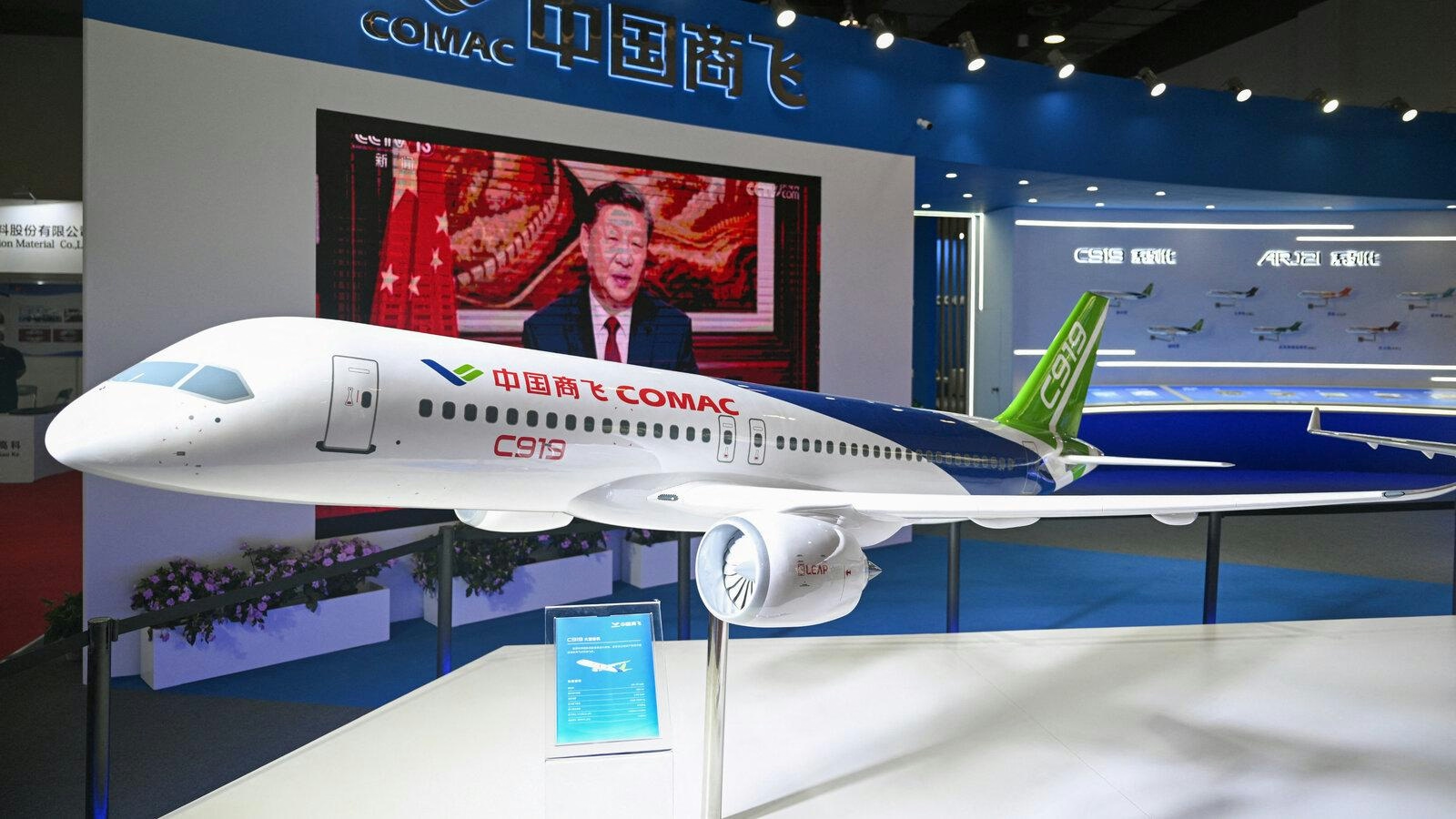
Malaysia Aviation Group Evaluates COMAC C919 Amid Industry-Wide Delivery Delays
Malaysia Aviation Group (MAG), the parent company of Malaysia Airlines, is actively assessing aircraft from the Commercial Aircraft Corporation of China (COMAC), including the C919, as part of its long-term fleet renewal strategy extending to 2040. Group CEO Datuk Captain Izham Ismail revealed in an interview with Yicai that this evaluation is driven by persistent global delivery delays affecting all aircraft models, which have placed considerable strain on MAG’s operational planning.
Izham highlighted that MAG is currently facing delivery delays ranging from three to six months across its fleet orders, a challenge that mirrors difficulties encountered by airlines worldwide. Initial engagement with COMAC began last year and intensified in the second quarter of 2025, with the group focusing primarily on the C919, COMAC’s largest narrow-body model. However, Izham stressed a cautious and methodical approach, emphasizing the importance of thoroughly assessing the aircraft’s innovation, safety standards, airworthiness certification, operational feasibility, and commercial viability before making any firm commitments.
Challenges Surrounding the COMAC C919 and Competitive Pressures
MAG’s interest in the C919 coincides with ongoing challenges faced by the aircraft. Recent operational setbacks, such as Vietjet’s suspension of routes operated with COMAC C919s, have raised concerns about the aircraft’s reliability and readiness for widespread commercial deployment. Although regulatory progress has been made—COMAC jets have recently secured clearance from Brunei’s aviation authorities—skepticism persists regarding the C919’s ability to meet stringent international standards and adhere to delivery schedules.
Meanwhile, competitors are closely monitoring MAG’s deliberations. Airlines such as Abra, which recently placed orders for 50 Airbus A320neos and expanded its A330neo fleet, may seek to leverage any hesitation by MAG to promote more established and reliable aircraft options. This competitive dynamic adds complexity to MAG’s fleet renewal decisions, as the group balances innovation with proven dependability.
Operational Context and Future Prospects
Currently, Malaysia Airlines operates at approximately 70% of its pre-pandemic capacity. Despite this reduced scale, demand remains strong on select routes, with business class cabins to Australia frequently reaching full occupancy. Additionally, bookings from China surged by 41% during the recent Golden Week holiday. Reflecting its commitment to growth in key Asian markets, MAG plans to inaugurate a new route to Chengdu in January 2026 and is considering Shenzhen as a potential future destination.
Izham indicated that any decision regarding the integration of COMAC aircraft into the fleet is unlikely to occur in the near term, projecting a possible timeframe of three to five years. “We take this evaluation very seriously,” he stated, underscoring the group’s focus on securing long-term value amid ongoing supply chain disruptions and a gradual recovery in international travel demand.
As MAG continues to weigh its options, the ultimate decision will depend on the C919’s ability to resolve reliability issues, achieve broader regulatory acceptance, and meet the group’s requirements for timely and commercially viable fleet solutions.

Etihad Airways Suspends Airbus A380 Flights on Key Route

Aditya Birla Group Seeks Approval for Aircraft Leasing in GIFT City

Qatar Airways Highlights Innovation and Connectivity at Arabian Travel Market 2026

Hong Kong's Five-Year Plan Includes Andrew Fan's Aircraft Parts Processing Hub Proposal

ACIA Aero Leasing Delivers ATR72-600 to Air Nostrum

RTX Appoints Jill Albertelli as Head of Pratt & Whitney

TAT Technologies Joins Beyond Aero Hydrogen Aircraft Program

AURAK Study Highlights Barriers to Air Taxi Adoption in Emerging Economies

Xiamen Air Selects Altitude for 787 Maintenance at Heathrow

Etihad and Swissport Extend Global Partnership
