
Orquesta conocimientos de IA para convertirlos en acción

Tendencias
Categories
Najaf College Hosts Iraq’s Sole Aviation Engineering Program
Najaf College Hosts Iraq’s Sole Aviation Engineering Program
Legal Import of Training Aircraft Clarifies Rumors
In May, the discovery of a disassembled aircraft inside a shipping container at Umm Qasr port sparked widespread speculation across social media and local news outlets in Iraq. Initial theories ranged from forgotten cargo to illicit smuggling operations. However, officials soon clarified that the twin-engine Piper Aztec PA-23-250, bearing serial number 27-3498 and registration N171WM, had been legally imported by Al-Furat Al-Awsat Technical University. The aircraft is intended as a teaching aid for the Engineering Technical College in Najaf.
Procurement documents reviewed by 964media confirmed the aircraft’s legitimate status. Hassanein Ghani, dean of the college, explained that the plane was a gift from the Najaf Reconstruction Authority, arriving in late 2025. Administrative delays in approvals resulted in the aircraft remaining in storage for several months, which contributed to the rumors surrounding its presence at the port.
A Unique Program with Hands-On Training
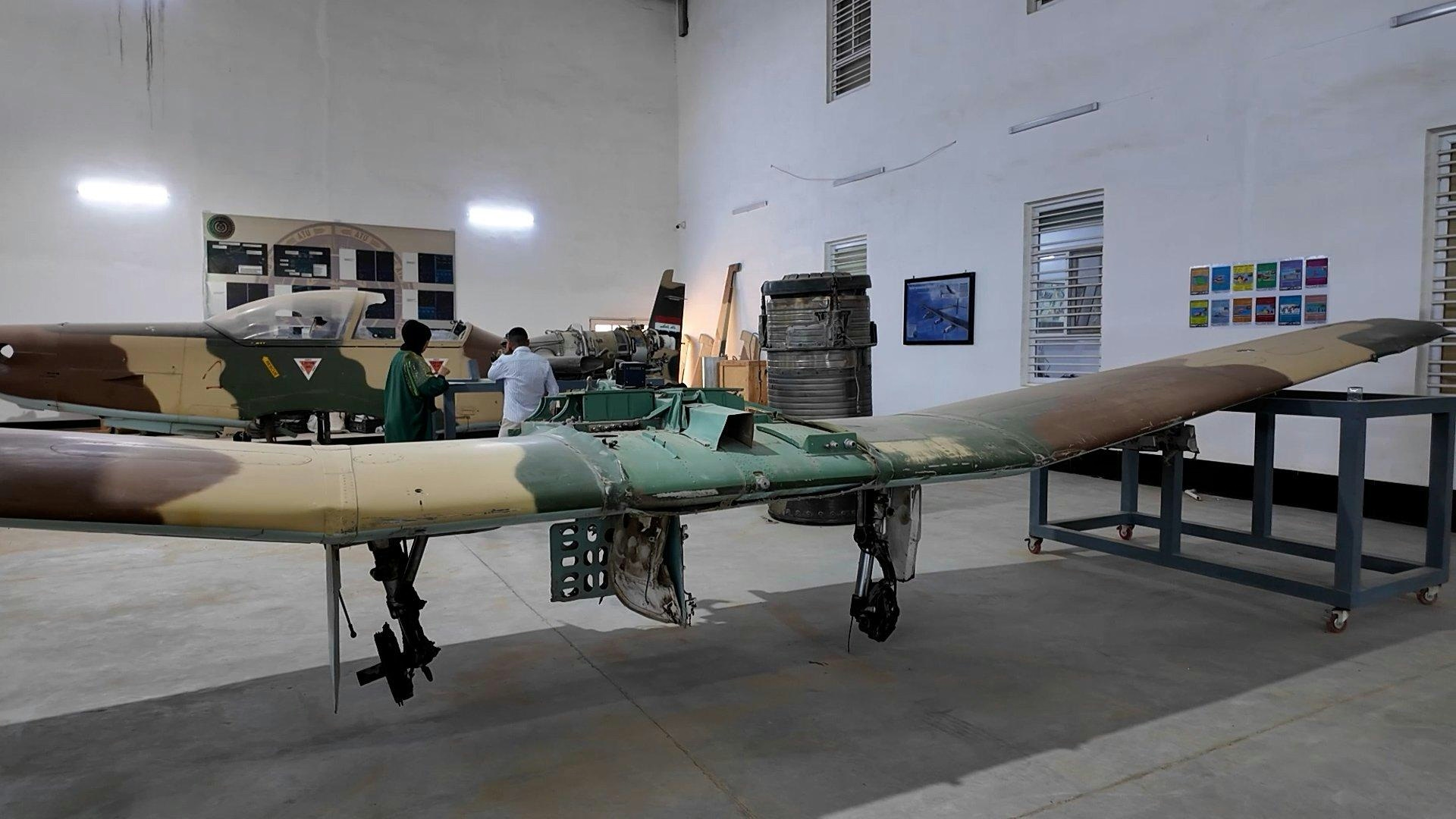
The aircraft plays a central role in what college officials describe as Iraq’s only aviation engineering program. During a recent visit to the college’s workshops and laboratories, staff emphasized the importance of practical training with real aircraft, helicopters, and engines. Many of these assets have been donated by the Ministry of Defense and the Iraqi Air Force. Shakir, a department representative, noted the presence of numerous aircraft engines, including those from military aircraft, as part of the training resources. The program also benefits from a PC-9 fuselage and an Mi-8 helicopter, the latter donated by the Ministry of Agriculture.
The department has invested years in aligning its curriculum with the standards of the Iraqi Civil Aviation Authority and the European Union Aviation Safety Agency. Recently, it introduced courses on artificial intelligence applications in aviation. Complementing this program, the Najaf Technical Institute offers a parallel course focused on drone technologies, which played a significant role in Iraq’s early domestic drone development during the conflict with the Islamic State. University president Hassan Latif al-Zubaidi highlighted the collaboration with the Defense Ministry that resulted in the production of nearly 20 Iraqi drones.
Students enrolled in the drone program utilize simulation software, 3D printers, and digital systems to design and operate unmanned aircraft. The use of 3D printing has notably reduced production costs. Graduates have secured employment at both civilian and military airports throughout Iraq, with some continuing their studies in the department’s master’s program. The university also participates in the federal “Study in Iraq” initiative, attracting international students. Alumni working in the aviation sector have contributed to curriculum development and equipment donations, further strengthening the program.
Challenges Amid Regional Competition
Despite its unique position, Najaf’s aviation engineering program faces growing challenges. Regional competition is intensifying, particularly with new entrants such as Riyadh Air, which recently received approval from the US Department of Transportation to operate direct flights to major US cities. These developments have heightened efforts to attract students and resources within the region.
While some stakeholders regard Najaf’s program as a vital asset for Iraq’s aviation sector, others question its ability to compete with more established programs in neighboring countries. In response, regional competitors may enhance their educational offerings or pursue partnerships to attract a larger student base. The recent Gulf peace deal could also invigorate Iran’s civil aviation sector, further altering the competitive landscape.
As Iraq’s sole aviation engineering program, Najaf College finds itself at a critical juncture, balancing its pioneering role in domestic aviation education with the pressures of a rapidly evolving regional environment.

Etihad and Swissport Extend Global Partnership

Sepehran Airlines B737 Returns to Mashhad After Tyre and Engine Issues

Etihad Deploys Widebody Fleet to Meet Strong Demand

Korean Air Finalizes $36.2 Billion Deal with Boeing

Australia’s RFDS Queensland Section Orders Six King Air 260Cs

Korean Air Finalizes Order for 103 Boeing Jets and Engines

Embraer E195-E2 Features Distinctive Engine Placement Among Regional Jets

What Passengers Can Expect on Boeing’s New 777X Jet

How Ethiopian Airlines Became Africa’s Leading Carrier Amid Gulf Competition

Joby Aviation Extends Autonomous Flight Capabilities with Cross-Country Tour
