
Orquesta conocimientos de IA para convertirlos en acción

Tendencias
Categories
NASA Marks 10 Years of University Collaboration in Aeronautics
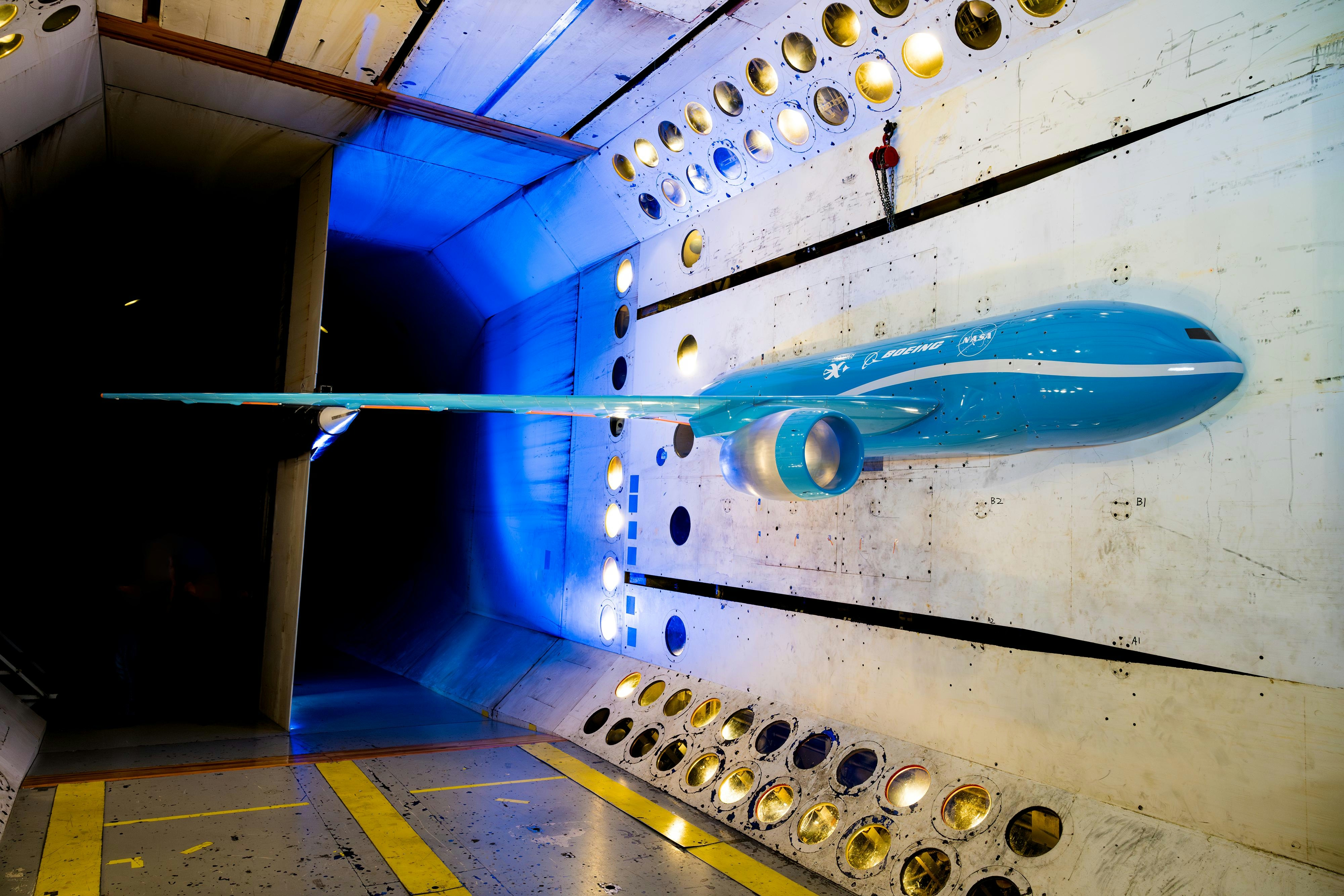
NASA Marks a Decade of University Collaboration in Aeronautics
For the past ten years, NASA’s University Leadership Initiative (ULI) has been instrumental in driving innovation within the field of aeronautics while nurturing the next generation of aviation professionals. As the program celebrates its 10th anniversary, it continues to advance groundbreaking research, awarding new projects that hold the potential to redefine air travel in the 21st century.
Advancing Aeronautical Innovation Through Academic Partnership
Since its launch, ULI has supported over 1,100 students from more than 100 universities, empowering them to address critical challenges facing U.S. aviation. The initiative focuses on key areas such as high-speed flight, advanced air mobility, future airspace management and safety, and electrified propulsion systems. Many participants have leveraged their experience within ULI to establish careers in aviation, while their research—ranging from efficient wing designs to shape-shifting supersonic aircraft—has garnered significant industry attention and, in some cases, direct adoption.
What distinguishes ULI from other NASA research programs is its collaborative framework. Rather than NASA dictating the research agenda, the initiative invites universities to propose projects aligned with NASA’s strategic goals. This approach fosters creativity and grants students and faculty a direct role in shaping the future of aeronautics. John Cavolowsky, director of NASA’s Transformative Aeronautics Concepts Program, emphasized the value of this model, stating, “There are no better ways in my mind to help develop that talent within the students than to engage them in identifying big problems and then give them the resources they need to use their creativity to solve them.”
Building on a Legacy of Academic Collaboration
NASA’s partnership with academia is deeply rooted, tracing back to its origins as the National Advisory Committee for Aeronautics in 1958. Cavolowsky highlighted this longstanding relationship, noting, “For more than a century we have leaned on the brilliance and the capabilities of universities to help us think. With ULI, we can ensure they continue to bring their fresh ideas and young energy to the work we do at NASA Aeronautics.”
ULI evolved from the earlier Leading Edge Aeronautics Research for NASA (LEARN) project, which in 2015 selected teams to explore unconventional concepts, such as whether airliners could reduce fuel consumption by flying in a ‘V’ formation inspired by migrating birds. While not all ideas reached implementation, the initiative underscored the value of academic ingenuity in pushing the boundaries of aeronautical research.
Looking ahead, NASA plans to build on ULI’s success with new awards scheduled for 2026 and beyond. The program faces challenges in maintaining momentum and securing sustained funding as it moves beyond its initial phase. Nevertheless, growing interest from universities and students suggests the potential for expanded partnerships and further innovations. Concurrently, other aerospace organizations and academic institutions may develop competing initiatives to capture a share of the next wave of aeronautical breakthroughs.
As NASA continues to invest in university collaboration, ULI stands as a testament to the enduring power of academic partnerships in shaping the future of flight.

Etihad Airways Suspends Airbus A380 Flights on Key Route

Aditya Birla Group Seeks Approval for Aircraft Leasing in GIFT City

Qatar Airways Highlights Innovation and Connectivity at Arabian Travel Market 2026

Hong Kong's Five-Year Plan Includes Andrew Fan's Aircraft Parts Processing Hub Proposal

ACIA Aero Leasing Delivers ATR72-600 to Air Nostrum

RTX Appoints Jill Albertelli as Head of Pratt & Whitney

TAT Technologies Joins Beyond Aero Hydrogen Aircraft Program

AURAK Study Highlights Barriers to Air Taxi Adoption in Emerging Economies

Xiamen Air Selects Altitude for 787 Maintenance at Heathrow

Etihad and Swissport Extend Global Partnership
