
Orquesta conocimientos de IA para convertirlos en acción

Tendencias
Categories
Passengers Respond Positively to Airline’s AI Flight Attendant
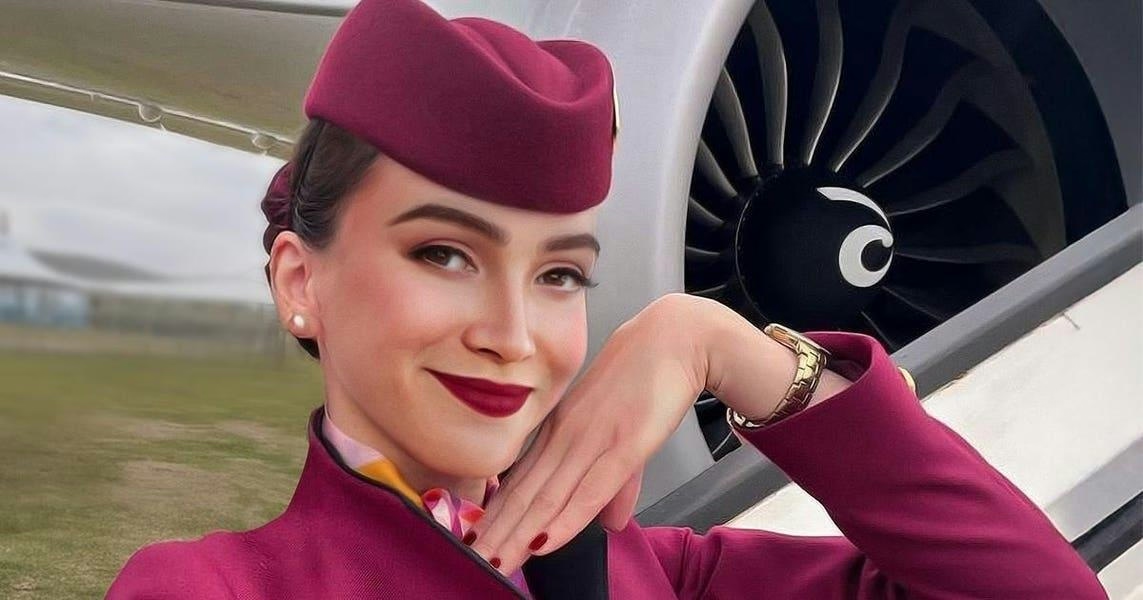
Passengers Respond Positively to Airline’s AI Flight Attendant
A Virtual Ambassador Captivates Audiences
Qatar Airways’ launch of Sama, an AI-generated virtual flight attendant, has garnered widespread acclaim from passengers and social media users since her debut in January. Designed to function as both a marketing ambassador and a digital reservations assistant, Sama promotes destinations and events through her Instagram account. Despite existing solely in the digital realm, her hyper-realistic images and videos have attracted over 300,000 followers, many of whom admire her lifelike appearance and engaging online persona.
Sama’s Instagram feed is replete with enthusiastic comments praising her AI-crafted beauty, often accompanied by heart and fire emojis. Followers frequently compliment her smile and elegance, with remarks such as “You have a beautiful smile that makes you even more beautiful” and “Your face looking like a queen.” Even everyday moments, like Sama resting aboard a Qatar Airways aircraft, elicit warm responses, underscoring the strong connection she has forged with her audience.
Blurring the Lines Between AI and Reality
Beyond her visual appeal, Sama’s posts are characterized by a personable and casual tone that blurs the distinction between artificial intelligence and human presence. This has led some followers to inquire about her background, with playful exchanges such as a Valentine’s Day comment questioning her nationality and a witty reply dubbing her “AIsian.” Although Qatar Airways clearly identifies Sama as “Virtual Cabin Crew” in her profile, the authenticity of her content often convinces followers that she is a real flight attendant enjoying an idealized version of the profession—free from the fatigue, difficult passengers, and emergencies that human crew members routinely face.
Industry Implications and Future Prospects
Sama’s popularity highlights broader questions about the integration of AI in customer-facing roles within the aviation industry. While many passengers have embraced this innovation, uncertainty remains regarding how AI’s expanding role will be received in the long term. Resistance from airline staff and the need for transparency about AI applications are critical factors in maintaining customer trust. Market reactions are expected to vary, with some consumers welcoming the technological advancement and others expressing skepticism or discomfort.
Competitors are closely monitoring Qatar Airways’ experiment, with some airlines exploring similar AI technologies to remain competitive. However, the emergence of virtual flight attendants coincides with ongoing challenges in the industry, such as managing disruptive passenger behavior. The capacity of AI to effectively address such real-world issues remains unproven and may influence the pace at which virtual crew members are adopted more broadly.
In addition to her role as a social media influencer, Sama is integrated into Qatar Airways’ booking system, assisting customers with reservations. Although she has never physically boarded an aircraft, her digital presence is reshaping the way airlines engage with passengers, presenting both opportunities and challenges as the industry navigates the evolving landscape of AI-driven service.

Etihad Airways Suspends Airbus A380 Flights on Key Route

Aditya Birla Group Seeks Approval for Aircraft Leasing in GIFT City

Qatar Airways Highlights Innovation and Connectivity at Arabian Travel Market 2026

Hong Kong's Five-Year Plan Includes Andrew Fan's Aircraft Parts Processing Hub Proposal

ACIA Aero Leasing Delivers ATR72-600 to Air Nostrum

RTX Appoints Jill Albertelli as Head of Pratt & Whitney

TAT Technologies Joins Beyond Aero Hydrogen Aircraft Program

AURAK Study Highlights Barriers to Air Taxi Adoption in Emerging Economies

Xiamen Air Selects Altitude for 787 Maintenance at Heathrow

Etihad and Swissport Extend Global Partnership
