Imagen

AeroGenie — Tu copiloto inteligente.

Pregunta cualquier cosa. Analiza todo. Actúa al instante.

Tendencias

Categories

Pem-Air Expands V2500 Maintenance Capabilities
April 21, 2026By ePlane AI
Pem-Air Expands V2500 Maintenance Capabilities
0
0
Pem-Air
V2500 Engine
Engine Maintenance

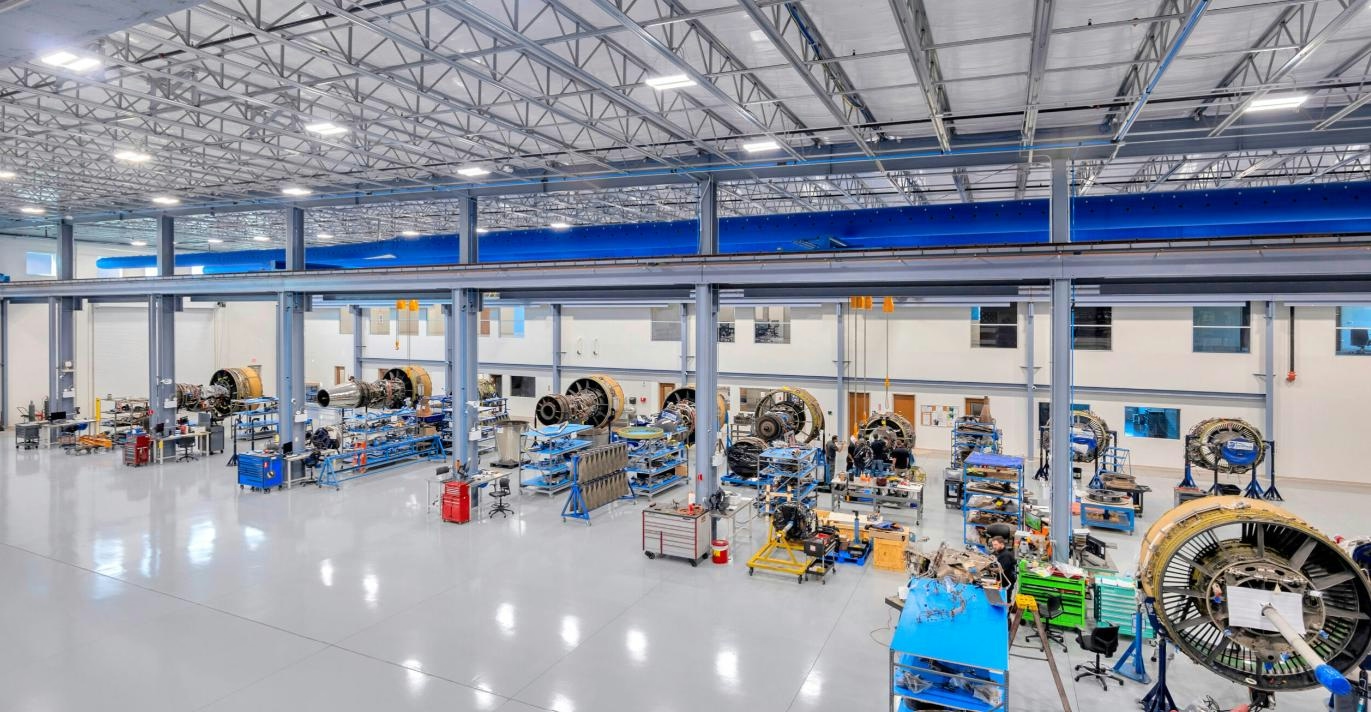
Pem-Air Expands V2500 Maintenance Capabilities Amid Industry Shifts

Pem-Air Turbine Engine Services (Pem-Air) has announced a significant expansion of its maintenance, repair, and overhaul (MRO) portfolio to include comprehensive services for the IAE V2500 engine family. This strategic development enables Pem-Air to provide end-to-end support across all V2500 variants, which power widely used aircraft such as the Airbus A320ceo, MD-90, and Embraer C-390.

Meeting Growing Demand for V2500 Support

The V2500 engine remains one of the most prevalent powerplants in commercial aviation, with thousands of units actively operating worldwide. The sustained demand for these engines has intensified the need for reliable and cost-effective aftermarket support. Pem-Air’s expanded capabilities are designed to assist operators, lessors, and other aviation stakeholders in managing engine lifecycles more efficiently, reducing downtime, and preserving long-term asset value.

The enhanced service offering encompasses full performance restoration and overhaul, module-level repair and refurbishment, advanced inspection and diagnostic services, and lifecycle-focused maintenance planning aimed at optimizing cost and reliability. Additionally, Pem-Air provides on-wing and field service support to ensure rapid response during aircraft-on-ground (AOG) events.

Strategic Positioning and Industry Challenges

This expansion aligns with Pem-Air’s broader strategy to scale its capacity across high-demand engine platforms and reflects a wider industry trend toward regional growth and diversification in aviation maintenance services. However, the company faces several challenges as it broadens its V2500 maintenance capabilities. Regulatory compliance remains a critical hurdle, requiring strict adherence to aviation standards. Furthermore, Pem-Air must navigate competition from established MRO providers such as Piedmont Propulsion and Duncan Aviation, who may respond by enhancing their own service offerings or expanding their geographic reach.

The industry-wide shortage of skilled technicians also presents a significant challenge, as advanced engine technologies demand specialized expertise. Despite these obstacles, market reactions to Pem-Air’s expansion are expected to be positive, with increased demand anticipated from airlines and lessors seeking dependable and economically viable maintenance solutions amid ageing fleets and evolving operational pressures.

By investing in full-scope V2500 support, Pem-Air strengthens its position as a trusted maintenance partner in a competitive and rapidly evolving sector. The company aims to deliver comprehensive, lifecycle-focused solutions that address the evolving needs of its global customer base.

More news
BeauTech Expands GTF Presence with PW1500G Contract

BeauTech Expands GTF Presence with PW1500G Contract

BeauTech Expands GTF Presence with PW1500G Contract BeauTech Power Systems has announced the acquisition of five Pratt & Whitney PW1500G geared turbofan (GTF) engines, purchased directly from Pratt & Whitney, a subsidiary of RTX. These engines will be leased to a major customer to support the expansion of an Airbus A220 fleet. This acquisition follows BeauTech’s initial foray into the GTF market in late 2025, when it invested in PW1900G engines, marking a significant step in broadening its portfolio of next-generation engine assets. Strategic Expansion in Engine Leasing The addition of the PW1500G engines, specifically designed for the Airbus A220, reinforces BeauTech’s position as a flexible leasing partner for both regional and narrowbody aircraft operators. This move diversifies the company’s coverage across a range of legacy and current-generation engine types, enhancing its capacity to meet evolving customer demands. BeauTech’s strategic focus on modern, fuel-efficient platforms aligns with industry trends favoring advanced engine technologies that improve operational efficiency and reduce environmental impact. Navigating Industry Challenges BeauTech’s expansion occurs amid ongoing challenges within the aviation sector related to Pratt & Whitney’s manufacturing difficulties, which have resulted in the grounding of over a thousand aircraft worldwide. These issues have attracted increased scrutiny from aviation regulators and may cause delays in engine deliveries. Consequently, BeauTech faces operational risks and uncertainties concerning engine availability and regulatory compliance. The competitive landscape may also intensify as rivals seek alternative engine options or attempt to leverage any disruptions affecting BeauTech’s operations. Tobias Konrad, Chief Operating Officer of BeauTech, described the acquisition as a natural progression in the company’s GTF strategy, building on its initial entry into the segment last year. He reaffirmed BeauTech’s commitment to providing customers with advanced engine solutions despite current market headwinds. The investment underscores the company’s ambition to scale its presence in the competitive GTF market, where demand for efficient, next-generation engines remains robust. By aligning its portfolio with high-demand assets, BeauTech aims to offer operators reliable leasing options that facilitate fleet growth and enhance operational efficiency. This transaction exemplifies BeauTech’s ongoing strategy to expand its asset base, strengthen customer partnerships, and establish itself as a key player in the evolving aircraft engine leasing sector, even as it contends with the complexities of today’s market environment.
CTS Engines Secures Long-Term CF6 Overhaul Contract with San Francisco Airlines

CTS Engines Secures Long-Term CF6 Overhaul Contract with San Francisco Airlines

CTS Engines Secures Long-Term CF6 Overhaul Contract with San Francisco Airlines Strategic Partnership to Support CF6-80C2 Engine Maintenance CTS Engines (CTS), a specialist in jet engine maintenance, repair, and overhaul (MRO), has entered into a multi-year agreement with S.F. Airlines, one of China’s foremost cargo carriers, to provide comprehensive overhaul and repair services for its CF6-80C2 engines. These engines power S.F. Airlines’ Boeing 767 and 747 fleets, and the contract reinforces a strategic partnership centered on enhancing reliability, operational efficiency, and continuity. This collaboration reflects a mutual commitment to sustaining the performance and longevity of S.F. Airlines’ widebody aircraft. The agreement capitalizes on CTS’s recent certification from the Civil Aviation Administration of China (CAAC), authorizing the company to deliver approved maintenance services tailored to the airline’s specific operational requirements. All maintenance activities will be conducted at CTS’s newly established, purpose-built facility in Coral Springs, Florida. Designed specifically for mature engine platforms such as the CF6 series, this facility aims to ensure rapid turnaround times and minimize aircraft downtime, thereby supporting uninterrupted cargo operations. Expertise and Market Challenges CTS was selected for this contract due to its extensive technical expertise with the CF6-80C2 engine, operational flexibility, and demonstrated long-term commitment to customer support. The company’s specialization in legacy engines enables it to provide in-depth knowledge and consistent performance, a critical advantage for airlines operating established aircraft types. CTS leadership emphasized that the agreement not only strengthens an existing relationship with S.F. Airlines but also underscores a shared dedication to maintaining the long-term viability of the airline’s fleet. As S.F. Airlines continues to invest in its Boeing 767 operations, CTS is positioned as a key partner in ensuring engine reliability and extending asset life, thereby supporting efficient global cargo transport. Nonetheless, CTS faces potential challenges amid a broader trend of consolidation within the U.S. MRO sector, driven largely by private equity investment. This consolidation could alter competitive dynamics, potentially impacting CTS’s market position and operational flexibility. Furthermore, the sustained high demand for aerospace engine overhaul services is likely to provoke intensified competition, placing additional pressure on market participants. Compounding these challenges is the increasing power demand from AI data centers, which is exerting strain on aircraft engine manufacturers. This surge may affect the availability and pricing of CF6 engines, factors that could influence CTS’s capacity to meet its contractual obligations and maintain its competitive advantage in a rapidly evolving market. Despite these headwinds, CTS’s focused approach and regulatory compliance position the company to deliver significant value to S.F. Airlines. The new agreement highlights both organizations’ commitment to operational excellence and the long-term sustainability of the airline’s fleet, even as the aftermarket environment continues to transform.
Aviation Authority to Investigate Drone Noise Complaints in Cork

Aviation Authority to Investigate Drone Noise Complaints in Cork

Aviation Authority to Investigate Drone Noise Complaints in Cork The Irish Aviation Authority (IAA) has announced an investigation into rising concerns over noise generated by delivery drones operating in Cork city. This follows a series of complaints from residents living beneath frequent drone flight paths. While some locals appreciate the convenience offered by airborne delivery services, others—particularly those residing near the Marina base—have expressed frustration over the persistent drone noise disrupting their daily lives. Controversy Surrounding Drone Operations and Airspace Regulation The introduction of Manna’s delivery drones in Cork quickly sparked controversy, especially after the IAA designated the city’s airspace as a ‘no-fly zone’ for all but approved drone operators. This restriction requires any other drone operators to submit flight applications at least two days in advance. The decision, made by the Dublin-based authority, drew criticism from Cork residents and officials who lamented the absence of local consultation prior to the designation. At a recent meeting of Cork City Council’s Roads and Transportation Strategic Policy Committee, councillors engaged in a notably robust exchange with IAA representatives. Former Lord Mayor Kieran McCarthy reported that local officials conveyed firsthand accounts of the disruption and noise experienced by residents. In response, Manna emphasized that its drone operations adhere to strict guidelines intended to minimize disturbance to the community. Regulatory Challenges and Future Policy Developments The IAA clarified that its current mandate focuses primarily on the safety of drone operations. However, it is in the process of establishing a national working group to address broader concerns, including noise pollution and privacy issues related to commercial drone activity. This group is expected to inform forthcoming government policy, with new legislation anticipated later this year. Councillor McCarthy highlighted that while drone deliveries remain a relatively new phenomenon, they are poised to become a more significant issue as their use expands throughout Cork and across Ireland. The increase in drone activity presents complex challenges for both regulators and the community. Ensuring compliance with aviation regulations becomes more difficult as drone numbers grow, while safety risks and public complaints about noise pollution continue to mount. These developments have intensified calls for clearer regulatory frameworks and stronger oversight mechanisms. Market responses to the controversy include heightened scrutiny of drone operations and anticipation of regulatory changes that may affect the industry. Competitors in the drone delivery sector are likely to pursue innovations aimed at reducing noise and interference, as well as enhancing security measures to better protect controlled airspace. Despite ongoing concerns, drone deliveries in Cork will continue for the time being. Local councillors have committed to advocating for legislation that empowers local authorities to manage this evolving technology effectively, seeking to balance technological innovation with the well-being and interests of residents.
Coforge Launches AI Platforms to Enhance Airline Customer Experience and Disruption Management

Coforge Launches AI Platforms to Enhance Airline Customer Experience and Disruption Management

Coforge Launches AI Platforms to Enhance Airline Customer Experience and Disruption Management Coforge, a mid-tier IT services company, has introduced two AI-native platforms—Voyager.AI and FlightFlex.AI—designed to assist global airlines in navigating operational complexities and elevating customer engagement through real-time, data-driven insights. This development arrives as airlines confront increasing pressure to satisfy rising customer expectations while managing frequent operational disruptions, prompting the industry to adopt artificial intelligence as a strategic advantage. Personalization and Customer Engagement with Voyager.AI Voyager.AI functions as a sophisticated personalization engine, enabling airlines to deliver customized offers and experiences throughout the entire customer journey. By consolidating booking data, loyalty program information, and behavioral signals into unified, real-time traveler profiles, the platform moves beyond traditional static segmentation. Utilizing AI-driven identity stitching and predictive modeling, Voyager.AI identifies the most relevant offers or messages for each traveler, facilitating proactive engagement across digital channels. This capability is intended to boost ancillary revenue streams and reinforce customer loyalty by transforming every interaction into a targeted commercial opportunity. Enhancing Operational Resilience through FlightFlex.AI FlightFlex.AI addresses one of the aviation sector’s most persistent challenges: managing large-scale flight disruptions. Such disruptions—stemming from weather conditions, air traffic congestion, crew shortages, or technical faults—often cause cascading effects across airline networks, increasing operational costs and diminishing passenger satisfaction. FlightFlex.AI integrates real-time decision-making, automated recovery workflows, and proactive passenger communication to oversee the entire disruption lifecycle. The platform supports complex recovery operations including schedule adjustments, crew re-rostering, aircraft reassignment, and mass passenger rebooking, all while keeping passengers informed in real time to reduce dissatisfaction. Erika Moore, Chief Officer of Strategy & Growth for Travel, Transportation, and Hospitality at Coforge, highlighted the company’s deep sector expertise. She stated, “With Voyager.AI and FlightFlex.AI, we are enabling airlines to make decisions in real time. We understand the criticality of engaging at the right time and in the right way.” Moore further explained that these platforms are designed to help airlines transition toward a more retail-like traveler experience, integrating seamlessly with core operational systems and digital channels. Industry Context and Competitive Landscape The launch of these platforms occurs amid broader industry skepticism regarding the measurable return on investment from AI initiatives. Recent examples, such as Microsoft’s Copilot facing criticism over low ROI, underscore the challenges technology providers encounter in demonstrating clear business value. Competitors may respond by adopting more advanced AI models; for instance, Anthropic’s Claude is gaining recognition for handling high-end tasks, while market leaders like Meta are embedding AI tools directly into business platforms to encourage adoption among small enterprises. Coforge’s emphasis on disruption management reflects the increasing importance of operational visibility and rapid response within the travel sector. Both Voyager.AI and FlightFlex.AI are engineered to function across complex airline environments—including multi-hub, multi-fleet, and multi-regulatory frameworks—making them scalable solutions for global carriers. As domain-specific, AI-native platforms emerge as critical differentiators in aviation and IT services, Coforge positions itself as a trusted partner for airlines seeking to modernize and transform their operations.
Incheon Airport Passenger Traffic Increases 7% in First Quarter; Aviation MRO Hub Planned by 2032

Incheon Airport Passenger Traffic Increases 7% in First Quarter; Aviation MRO Hub Planned by 2032

Incheon Airport Passenger Traffic Increases 7% in First Quarter Incheon International Airport has reported a 7% increase in international passenger traffic during the first quarter of the year, reaching 19.78 million travelers. This growth, announced by Incheon International Airport Corporation at its first-half media briefing, reflects a steady recovery in air travel demand following the disruptions caused by the COVID-19 pandemic. Revenue for the period rose by 5.4% year-on-year to 706.8 billion won ($515 million), while operating profit increased by 1.9% to 230.2 billion won ($168 million). Flight operations and cargo volumes also saw modest gains of 2.5% and 2.4%, respectively. The surge in passenger numbers has been largely driven by sustained demand for travel to Japan and a rebound in inbound visitors from China, supported by the extension of visa exemptions for Chinese group tourists. Conversely, routes to Southeast Asia and the Middle East experienced declines of 4.7% and 16%, respectively, attributed to security concerns and reduced flight schedules. Looking forward, Incheon Airport anticipates continued passenger growth, though at a slower pace. Rising oil prices, influenced by the ongoing U.S.-Iran conflict, have led some low-cost carriers to reduce their route offerings, potentially dampening future demand. The airport projects total passenger traffic to reach approximately 75.07 million this year, representing a 2% increase over 2023. Strategic Development of an Aviation MRO Hub by 2032 Incheon Airport is advancing plans to establish a comprehensive aviation maintenance, repair, and overhaul (MRO) hub as part of its long-term growth strategy. The proposed Advanced Aviation Complex will cover 710,000 pyeong (2.35 million square meters) within the airport grounds and is expected to be operational by 2032. This facility aims to provide a full range of MRO services, including aircraft conversion, heavy maintenance, and parts and engine servicing, positioning Incheon as a key player in the global aviation services market. Despite these ambitions, the airport faces several challenges. A potential merger within South Korea’s airport sector has raised concerns regarding operational stability and market competition. Additionally, questions remain about whether existing infrastructure can adequately support the anticipated increase in passenger volumes. Regional competition is intensifying, with Chinese airports projected to climb global rankings by 2025, threatening Incheon’s regional dominance. In response, airlines are investing in premium passenger amenities, exemplified by the recent opening of a new Korean Air first-class lounge at Incheon, designed to enhance the traveler experience. Incheon International Airport remains committed to expanding its role as a leading global aviation hub by capitalizing on passenger growth and diversifying its business through ventures such as the MRO complex.
Jet Fuel Shortages Raise Concerns Over Flight Disruptions in Europe

Jet Fuel Shortages Raise Concerns Over Flight Disruptions in Europe

Jet Fuel Shortages Raise Concerns Over Flight Disruptions in Europe Growing Supply Constraints Amid Rising Travel Demand Jet fuel supplies are tightening across multiple regions, raising significant concerns within the aviation sector as airlines prepare for potential disruptions and operational challenges in Europe. With travel demand surging ahead of the peak summer season, industry leaders are closely monitoring the situation, wary that limited fuel availability could affect flight schedules, route capacity, and the overall stability of airline networks. Recent analyses from the International Energy Agency (IEA) indicate that several European countries may face jet fuel shortages within the next six weeks if ongoing disruptions to fuel supplies from the Middle East continue. Although the issue is global in nature, early signs of strain have already appeared in parts of Asia, where restricted fuel access has led to flight cancellations and operational adjustments. These developments are being viewed as potential harbingers of broader instability in global aviation fuel markets. Implications for European Airlines and Operational Responses The timing of these supply constraints is particularly critical for Europe, as airlines prepare for one of the busiest travel periods of the year. Strong passenger volumes are expected on both short-haul and long-haul routes, and any reduction in fuel availability during this period could immediately disrupt airline schedules. Potential consequences include delays, reduced flight frequencies, and network restructuring. Furthermore, the prospect of jet fuel shortages is likely to increase operational costs for carriers, costs that may ultimately be passed on to passengers through higher airfares. In response, airlines and fuel suppliers are actively seeking to secure more resilient supply arrangements. Efforts are underway to identify alternative sourcing options and to strengthen logistical pathways to maintain operational continuity. However, the complexity of global fuel distribution networks means that rapid adjustments may prove difficult if supply constraints deepen or spread across multiple regions. Market reactions are already emerging, with airlines potentially forced to adjust schedules, seek alternative fuel sources, or raise ticket prices to offset rising fuel costs. The risk of flight cancellations and broader travel disruptions is especially acute during the summer vacation season, when demand peaks and operational flexibility is limited. Calls for Coordinated Industry and Government Action Industry stakeholders are urging aviation authorities and governments to develop coordinated contingency strategies to manage the evolving crisis. Such plans would need to address allocation priorities, communication protocols, and decision-making frameworks across airports and airlines to efficiently handle disruptions should shortages escalate. A key concern is the possibility of fuel rationing in severe scenarios, which could compel authorities to allocate fuel selectively to specific routes or categories of flights. This would force airlines to make difficult decisions regarding which services to maintain and which to suspend temporarily. Effective coordination and clear communication between airlines, airports, and regulators will be essential to prevent confusion and ensure orderly operational adjustments. Without such collaboration, even limited supply constraints could trigger widespread disruptions across interconnected flight networks. Additionally, airport slot management has become a significant issue. Airlines are generally required to operate a minimum proportion of their allocated slots to retain them for future scheduling periods. In the event of fuel shortages, strict enforcement of these rules could place further pressure on carriers already struggling to maintain normal operations, prompting calls for temporary adjustments or slot relief measures. As the situation continues to develop, the aviation industry faces a critical test of its resilience and adaptability amid tightening jet fuel supplies and mounting travel demand.
From Innovation to Industrialization

From Innovation to Industrialization

From Innovation to Industrialization The Clean Aviation Annual Forum, held in Brussels on 17-18 March 2026, convened global delegates to deliberate on the future trajectory of European aerospace. Central to the discussions was the framework known as the ‘Magic Three’: Competitiveness, Sustainability, and Technological Sovereignty. European Commissioner for Sustainable Transport and Tourism Apostolos Tzitzikostas proposed expanding this framework to a ‘Magic Four’ by incorporating Safety as an indispensable pillar. Emphasizing the sector’s unwavering commitment, he stated, “Safety must never be compromised in aviation,” highlighting its foundational role alongside innovation and sustainability. Accelerating the Transition from Innovation to Industrialization Amid displays of research achievements, a pressing question dominated the forum: how can Europe expedite the transition from innovation to full-scale industrialization? Hugo Espírito Santo, Portugal’s Secretary of State for Infrastructure, advocated for the establishment of an “execution machine” — a decisive shift from prolonged deliberation to swift, effective action. While acknowledging Clean Aviation’s success in fostering a shared vision, Espírito Santo underscored the critical need to move beyond conceptual discussions toward tangible implementation. This sense of urgency reflects broader economic challenges confronting multiple industries. As major industrial sectors prepare for a looming multi-billion dollar tariff cliff, aerospace is not isolated in facing economic headwinds. The agriculture sector, for instance, anticipates $1.2 billion in tariff-related costs but lacks the high-growth buffers present in industries such as heavy machinery. Companies like Caterpillar are leveraging sustained demand for AI data centers and North American infrastructure projects to stabilize profit margins. Across sectors, competitors increasingly rely on artificial intelligence and infrastructure booms to mitigate tariff impacts—strategies that may offer valuable insights for aerospace as it strives to bridge the gap between research and market-ready products. Bridging the Funding Gap in Aerospace Innovation A significant focus of the forum was the persistent funding gap known as the ‘valley of death’—the critical phase between Technology Readiness Level (TRL) 6 and commercial product deployment. Christian Ehler, Member of the European Parliament, argued that this gap remains a formidable barrier to industrialization. Traditionally defined as TRL 4-6, Ehler contended that halting support at TRL 6 leaves promising innovations stranded before reaching the marketplace. To address this challenge, both the United Kingdom and the European Union have developed funding mechanisms targeting the mid-TRL gap. The UK’s Aerospace Technology Institute (ATI) and the EU’s Clean Sky and Clean Aviation Joint Undertakings represent distinct approaches. The EU’s model employs targeted calls on specific topics, creating a structured pipeline where technologies are refined and selectively advanced. This approach facilitates continued support beyond TRL 6, easing the path toward production. Henri Werij, Dean of Aerospace Engineering at TU Delft, encapsulated this perspective by stating, “Research is of little value if it is not applied.” In contrast, the ATI’s open calls, aligned with its broader Technology Strategy, are designed to uncover unexpected breakthroughs but lack a formalized commitment to shepherding technologies through to full industrialization. This structural difference raises questions about the UK’s political resolve to sustain industrialization efforts at scale and, consequently, its future competitiveness in the aerospace sector. Innovation Beyond Aerospace While aerospace grapples with these challenges, innovation continues to reshape other industries. In consumer technology, Apple’s recent entry into the foldable smartphone market with the iPhone Fold aims to challenge Samsung’s Galaxy Z Fold series. This move signals a new phase in mobile device evolution and elevates consumer expectations, illustrating the dynamic nature of technological advancement across sectors. The Clean Aviation Forum underscored the complexity of advancing from innovation to industrialization, a journey fraught with economic, political, and technological obstacles. Nonetheless, with coordinated strategies and a resolute focus on execution, Europe’s aerospace industry aspires to maintain its leadership in global competitiveness, sustainability, and technological sovereignty.
Boeing Faces Delays as $175 Million Machine Won't Be Ready Until 2029

Boeing Faces Delays as $175 Million Machine Won't Be Ready Until 2029

Boeing Faces Significant Delays as $175 Million Hydraulic Press Won’t Be Operational Until 2029 The postponement of Safran’s $175 million hydraulic press, now expected to become operational only by 2029, highlights the growing pressures within the global aircraft engine manufacturing sector. In an industry where precision and timing are critical, a nearly five-year wait for a single piece of industrial equipment underscores the severity of current supply chain disruptions. For Boeing, this delay represents more than a technical hurdle; it directly affects the company’s capacity to stabilize production schedules, meet increasing airline demand, and rebuild confidence following years of operational challenges. Strategic Investment in Engine Component Production Safran’s acquisition of a 33,000-ton (30,000-metric-ton) hydraulic press is a calculated response to a pressing bottleneck: the scarcity of high-quality forged engine components. Once fully operational, the press is projected to manufacture up to 14,000 precision-forged parts annually, which are vital for both next-generation commercial and military engines. These components require advanced metallurgical processes, extreme pressure, and precise temperature control to satisfy the stringent standards of modern high-bypass turbofan engines, making them difficult to source from alternative suppliers. The complexity and scale of the press mean it cannot be rapidly procured or installed. Its construction demands specialized engineering, integration with existing manufacturing systems, and extensive testing to ensure it meets the exacting tolerances necessary for engine parts. The extended timeline to 2029 reflects not only technical challenges but also the absence of surplus capacity within the global supply chain. Implications for Boeing and the Wider Aerospace Industry Boeing’s reliance on engine manufacturers to maintain its assembly lines means the delay introduces a significant production lag that cannot be mitigated through short-term measures. This challenge is compounded by geopolitical tensions, particularly between the United States and China, which threaten to disrupt delivery schedules and impact Boeing’s order book in the strategically important Asia-Pacific region. In response, competitors may seek to reinforce domestic markets or forge new partnerships to counterbalance potential losses. The market’s reaction to the delay is also a critical concern. Investors may interpret the prolonged timeline for integrating this advanced technology as a risk factor, potentially influencing Boeing’s stock performance and broader industry sentiment. Forgings: A Critical Supply Chain Bottleneck While supply chain issues in aviation are often discussed broadly, the shortage of castings and forgings remains particularly acute. Forged components are fundamental to engine manufacturing, and their production depends on rare and costly equipment such as Safran’s hydraulic press. Unlike other segments of the supply chain, forging capacity expands in large, infrequent increments, making rapid scaling difficult. Despite these challenges, Boeing has demonstrated resilience in its delivery performance. In the first quarter of 2026, the company delivered more commercial aircraft than in any comparable period since 2019, reflecting robust demand and operational momentum amid ongoing supply constraints. As the industry awaits the commissioning of Safran’s press, this episode underscores how narrow the margins for error have become and how a single piece of machinery can significantly influence the pace of global aircraft production.
Marine Corps Develops AI Tools for Aviation Supply and Maintenance

Marine Corps Develops AI Tools for Aviation Supply and Maintenance

Marine Corps Develops AI Tools for Aviation Supply and Maintenance Modernizing Aviation Sustainment Through Artificial Intelligence The United States Marine Corps is undertaking a significant effort to modernize its aviation supply and maintenance operations by developing advanced artificial intelligence (AI) tools. These innovations aim to transform the Corps’ traditionally “outdated” inventory and maintenance processes, enabling more efficient identification and ordering of aircraft parts while forecasting maintenance needs with greater accuracy. The initiative is part of a broader modernization strategy designed to keep the Marine aviation fleet mission-ready amid evolving operational demands. Set to launch this summer, the AI system will leverage historical performance data to predict when aircraft components require replacement, allowing maintenance teams to address issues proactively. Lt. Gen. William Swan, deputy commandant for aviation, emphasized the importance of this approach during a panel at the Sea-Air-Space conference, stating, “Let’s change it before it needs to be in the air, declare an emergency, land in some place we don’t want it to land, etc. That’s the whole idea: supply first, then maintenance, and then the operational stuff pulls together.” Addressing Persistent Challenges in Aircraft Maintenance Aircraft maintenance continues to be a costly and complex challenge for the military, exacerbated by aging platforms, personnel shortages, and strained supply chains. According to Swan, the Marine Corps’ aviation units maintain an average mission capability rate of approximately 62 to 64 percent, with training squadrons performing below this threshold. The Corps’ annual aviation plan, released in February, places AI at the core of efforts to improve sustainment by fostering a “data-enabled culture” and shifting toward predictive, rather than reactive, maintenance practices. This AI initiative is embedded within Project Eagle, the strategic blueprint guiding the Aviation Combat Element’s balance between crisis response and modernization. The latest plan marks a notable shift by prioritizing AI and machine learning in aviation sustainment—areas previously regarded as “isolated and underfunded.” Officials now identify this effort as a top priority for the Corps. Challenges and Progress in AI Integration Despite the promise of AI, integrating these new tools with existing legacy systems presents significant challenges. Ensuring data accessibility and consistency, as well as cultivating a data-driven mindset among maintenance personnel, remain critical hurdles. Additionally, the initiative may encounter skepticism from traditional maintenance providers, while competitors in the aviation maintenance, repair, and overhaul (MRO) sector could accelerate their own AI developments in response. The foundation for this transformation was laid several years ago. In 2022, the Marine Corps began cataloging repair parts and consumables for the F-35 Lightning II after recognizing the limitations of its existing maintenance and resupply methods. Col. Robert Petersen, head of the Corps’ aviation sustainment branch, described the data as “siloed, sitting there, really unavailable for us to harvest and use in any meaningful way” for the fighter jet. Given the global nature of the F-35 supply chain and the competitive environment involving allies and partners, the F-35 was a logical starting point for the AI-driven overhaul. Since then, the Corps has cataloged every consumable part for the F-35 and developed two prototype parts packages using the new AI tools. Data collection efforts have also commenced for the KC-130J aircraft to integrate into the system. Lt. Gen. Swan acknowledged the novelty and complexity of this undertaking, stating, “This is new to us,” underscoring both the potential benefits and the challenges of embedding AI into military aviation sustainment. As the Marine Corps advances this AI-driven approach, its success will depend not only on technological innovation but also on overcoming institutional resistance and ensuring seamless integration with existing systems.
Acorn Capital Management and MTI Aviation Form Strategic Partnership

Acorn Capital Management and MTI Aviation Form Strategic Partnership

Acorn Capital Management Acquires Majority Stake in MTI Aviation Acorn Capital Management, a private equity firm specializing in aerospace, defense, intelligence, and space sectors, has announced a strategic partnership with MTI Aviation through the acquisition of a majority interest in the company. MTI Aviation is a prominent provider of repair, overhaul, and parts distribution services, focusing on electro-mechanical, hydraulics, pneumatics, and power generation components. Its global clientele includes commercial airlines, maintenance, repair, and overhaul (MRO) providers, and aviation parts distributors. The transaction, expected to close in the coming weeks, represents the first platform investment for Acorn’s Fund VI. Jorge Mejia, MTI’s founder and CEO, will retain a significant ownership stake and continue to lead the company. Greg Agnew, Partner at Acorn Capital Management, emphasized the strategic fit of MTI within Acorn’s portfolio, highlighting the company’s strong market position, technical expertise, and established customer relationships. He expressed optimism about collaborating with Mejia and the MTI team to support the company’s next phase of growth. Strategic Growth and Industry Context The partnership aims to provide MTI with enhanced resources and capital to accelerate expansion through both organic growth and targeted acquisitions. Mejia described the alliance as an exciting new chapter for MTI, noting that Acorn’s deep industry knowledge and shared vision for growth position the company well to build on its solid foundation and continue delivering high-quality solutions worldwide. Rick Nagel, Managing Partner at Acorn, added that MTI’s high-quality operations and strong corporate culture make it an ideal investment to complement Acorn’s existing portfolio companies focused on parts. This development occurs amid a period of volatility in the aviation sector. Fluctuating aviation fuel prices, which surged sharply in March according to iFlightPlanner, continue to present operational challenges. The deal also comes at a time of increased scrutiny within the industry, as stakeholders evaluate the financial implications of partnerships following significant funding rounds, such as Vertical Aerospace’s recent capital raise for electric vertical takeoff and landing (eVTOL) aircraft. Competitive pressures are expected to intensify, with companies like Air Elite Network expanding their footprint in the business aviation market. Furthermore, geopolitical instability, underscored by recent warnings from industry leaders, may pose additional risks to the long-term success of the partnership. Terms of the transaction have not been disclosed. Company Profiles Acorn Capital Management is a middle-market private equity firm exclusively focused on aerospace, defense, space, and intelligence sectors. The firm is known for its deep industry expertise and collaborative approach with management teams to build market-leading companies. MTI Aviation specializes in component repair and parts sales for electro-mechanical, hydraulics, pneumatics, and power generation components, serving a diverse global customer base.
line










