
Orquesta conocimientos de IA para convertirlos en acción

Tendencias
Categories
Pierce Aerospace to Develop Remote ID Network for NASA in Bay Area
Pierce Aerospace to Develop Remote ID Network for NASA in Bay Area
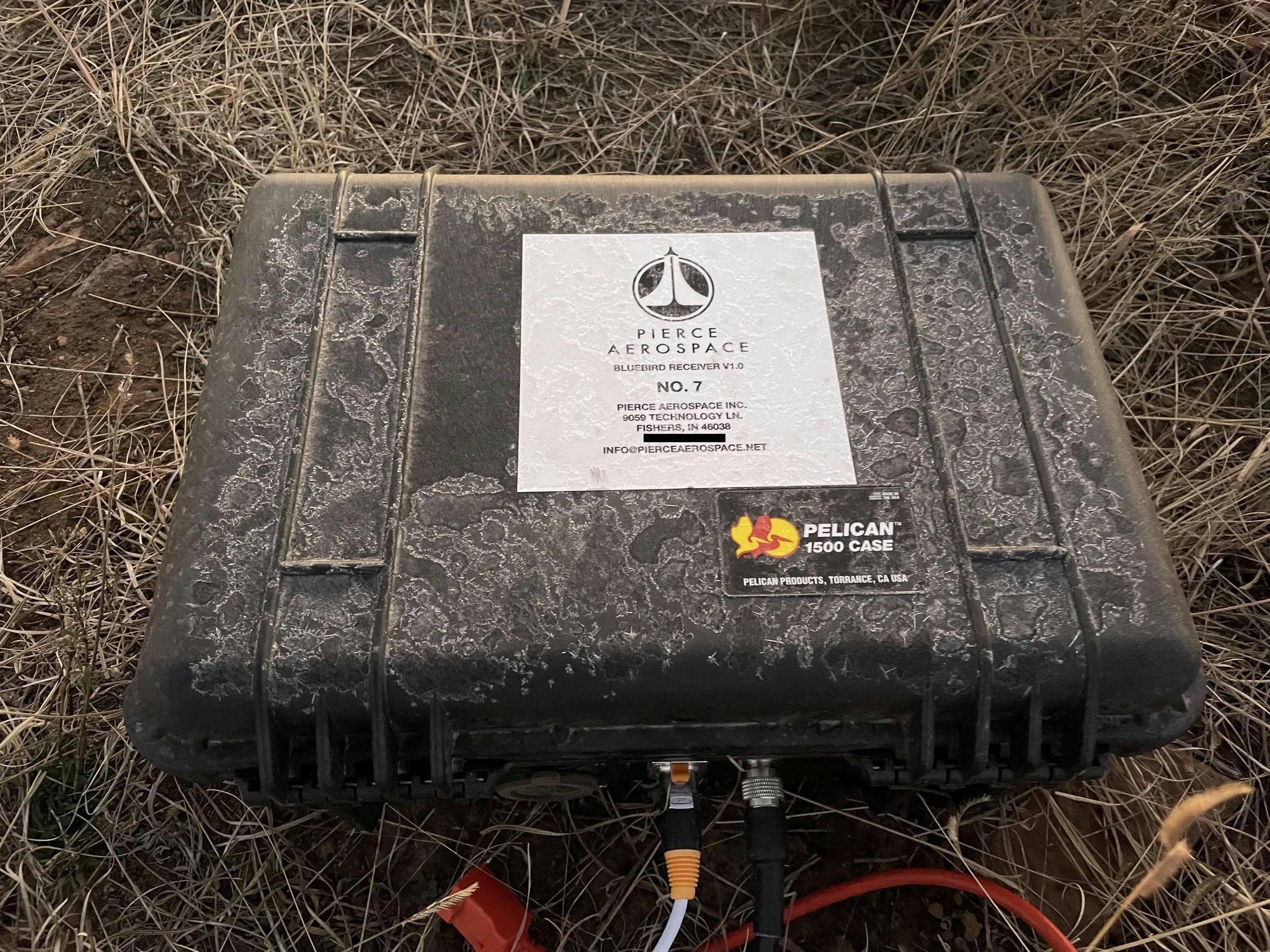
Pierce Aerospace, a prominent developer of Remote ID technologies, has been selected by Metis Technology Solutions to deploy an extensive network of Remote ID sensors throughout Silicon Valley and the San Francisco Bay Area. This initiative forms part of NASA’s Aerospace Research Technology and Simulation (ARTS) contract, which seeks to advance air traffic management and safety research at NASA’s Ames Research Center in California.
Deployment and Technological Integration
Under this multi-year agreement, Pierce Aerospace will install its YR1 and YR2S Remote ID sensors in a layered, networked configuration designed to provide comprehensive regional coverage. The deployment aims to support NASA’s missions over several years, facilitating the integration of emerging aviation technologies such as drones and air taxis into the National Airspace System (NAS). Remote ID, mandated by the Federal Aviation Administration (FAA), requires drones to broadcast a “digital license plate” containing telemetry data, enabling the detection, tracking, and identification of uncrewed aircraft. Pierce Aerospace has been developing Remote ID solutions since 2017, initially deploying them through the U.S. Air Force’s AFWERX Small Business Innovation Research (SBIR) program.
Aaron Pierce, CEO and co-founder of Pierce Aerospace, emphasized the significance of the project, stating, “It is an honor to support NASA’s cutting-edge research at the forefront of evolving air traffic management and emerging aviation technologies. Beyond NASA, this sensor network can also enhance airspace awareness for commercial and public sector stakeholders.”
Supporting NASA’s Air Traffic Management Initiatives
The Remote ID sensor network will underpin several key NASA initiatives within the Air Traffic Management and Safety (ATMS) project, part of the broader Airspace Operations and Safety Program. This program is focused on transforming the NAS to safely accommodate new entrants such as drones, electric vertical takeoff and landing (EVTOL) air taxis, and supersonic transports. Pierce Aerospace’s sensors and data feeds will contribute to the development of the digital infrastructure necessary for future airspace, enabling safe integration of diverse vehicles through automation.
Additionally, the network will support the Advanced Air Mobility Pathfinder (AAMP) initiative, which researches EVTOL air taxis, Beyond-Visual-Line-of-Sight (BVLOS) operations, and emergency response capabilities to establish operational standards for drone delivery and public safety. The project will also bolster Smart Mobility efforts, facilitating small unmanned aircraft system operations at NASA sites including Moffett Field.
Sig Lokensgard, ARTS Program Manager at Metis Technology Solutions, highlighted the partnership’s importance: “Metis Technology Solutions is proud to partner with Pierce Aerospace through a Phase III SBIR subcontract, delivering a Remote ID sensor network that will accelerate NASA’s airspace safety and research mission across Silicon Valley, the Bay Area, and the Hollister Airspace Ecosystem.”
Challenges and Industry Implications
The development of this Remote ID network presents several challenges. Pierce Aerospace must navigate complex regulatory requirements, ensure seamless integration with existing air traffic systems, and implement robust cybersecurity measures to protect sensitive data. Given the project’s high profile, it is expected to generate increased interest in aerospace technology partnerships, potentially fostering collaborations with other firms in the region. Competitors may respond by intensifying efforts to secure similar contracts with NASA and other government agencies, leveraging their technological capabilities and market presence.
As NASA and its partners advance the integration of uncrewed aircraft into national airspace, the Bay Area’s new Remote ID network is poised to play a pivotal role in enhancing airspace safety and operational insight for emerging aviation technologies.

Etihad Airways Suspends Airbus A380 Flights on Key Route

Aditya Birla Group Seeks Approval for Aircraft Leasing in GIFT City

Qatar Airways Highlights Innovation and Connectivity at Arabian Travel Market 2026

Hong Kong's Five-Year Plan Includes Andrew Fan's Aircraft Parts Processing Hub Proposal

ACIA Aero Leasing Delivers ATR72-600 to Air Nostrum

RTX Appoints Jill Albertelli as Head of Pratt & Whitney

TAT Technologies Joins Beyond Aero Hydrogen Aircraft Program

AURAK Study Highlights Barriers to Air Taxi Adoption in Emerging Economies

Xiamen Air Selects Altitude for 787 Maintenance at Heathrow

Etihad and Swissport Extend Global Partnership
