image

AeroGenie: Su copiloto inteligente.

Pregunta cualquier cosa. Analiza todo. Actúa al instante.

Tendencias

Categories

Qatar Completes First Autonomous eVTOL Urban Flight Trial
November 16, 2025By ePlane AI
Qatar Completes First Autonomous eVTOL Urban Flight Trial
0
0
Qatar Ministry Of Transport
Autonomous eVTOL
Urban Air Mobility

Qatar Completes First Autonomous eVTOL Urban Flight Trial

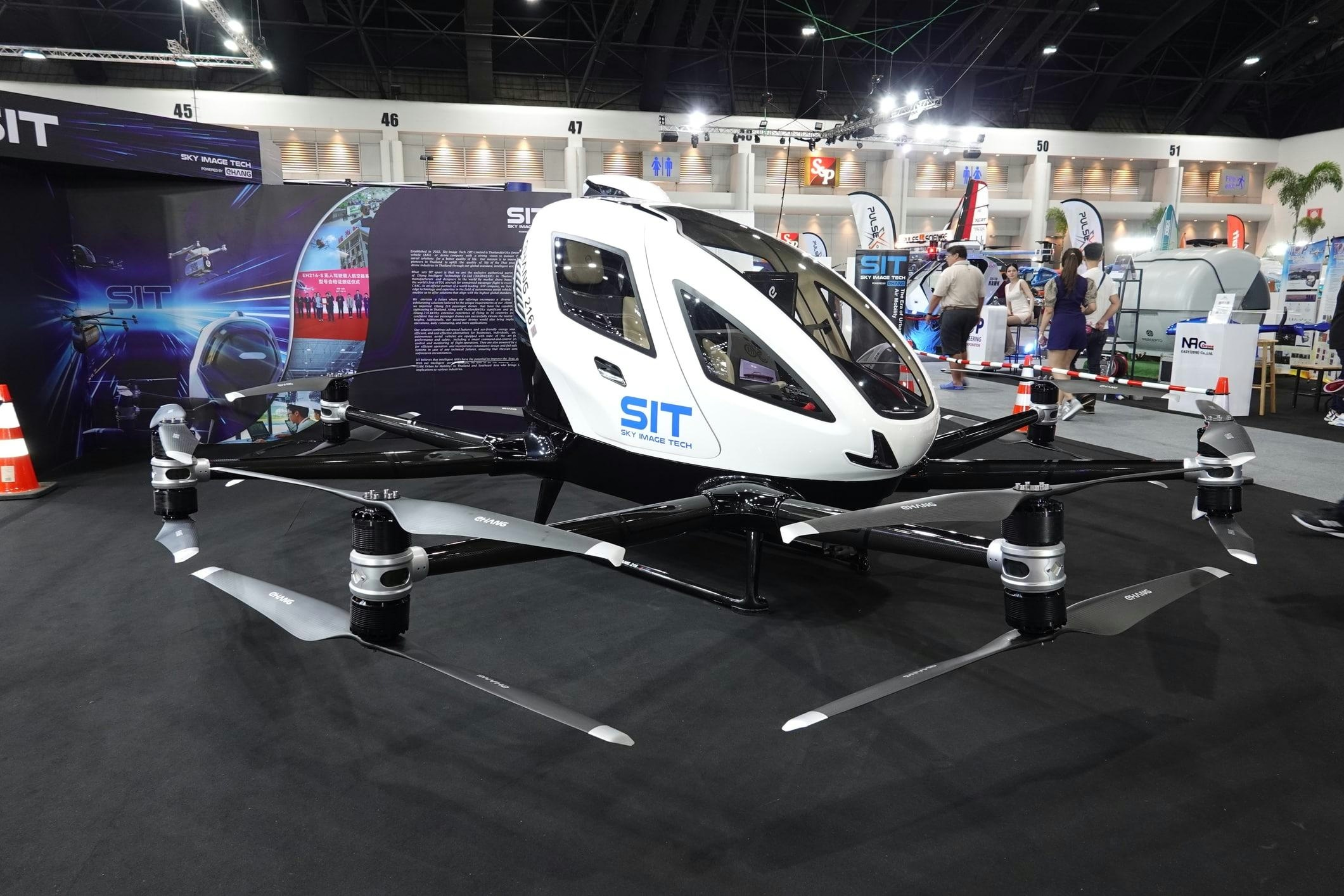
Qatar has achieved a landmark advancement in urban transportation with the successful trial of its first fully autonomous electric vertical takeoff and landing (eVTOL) air taxi. The Ministry of Transport (MoT), under the leadership of HE Sheikh Mohammed bin Abdulla bin Mohammed Al Thani, conducted the nation’s inaugural unmanned eVTOL flight on Saturday. This event marks a significant step toward the realization of smart and sustainable urban mobility in Qatar.

The Trial and Its Significance

The autonomous eVTOL aircraft operated without human intervention, flying between Old Doha Port and Katara Cultural Village. Equipped with advanced artificial intelligence, air navigation, and self-control systems, the vehicle demonstrated efficient use of airspace while maintaining stringent safety standards. This trial is part of a comprehensive series of evaluations by the MoT aimed at assessing the technical and operational viability of integrating autonomous air taxis into Qatar’s urban environment.

Strategic Vision and National Objectives

This initiative is closely aligned with the MoT Strategy 2025-2030 and supports Qatar’s broader National Development Strategy 3 (NDS3) as well as the Qatar National Vision 2030 (QNV 2030). Central to these frameworks is the commitment to reducing carbon emissions and improving the quality of life for residents. The Ministry emphasized that the trial establishes a foundation for a smart and resilient transportation system designed to foster seamless integration across various modes of transport, enhance sustainability and innovation, increase the efficiency of national transportation networks, alleviate traffic congestion, and provide effective alternatives for citizens, residents, and visitors alike.

HE Minister Sheikh Mohammed described the trial as a pivotal milestone in Qatar’s pursuit of advanced mobility solutions, underscoring its potential to position the country as a regional and global leader in emerging transportation technologies.

Challenges and the Competitive Landscape

Despite the successful demonstration, Qatar faces several challenges on the path to commercial deployment of autonomous eVTOLs. Key issues include securing regulatory approval, ensuring comprehensive safety measures, and integrating these new vehicles within existing urban infrastructure. The MoT intends to leverage insights gained from the trial to develop regulatory and technical frameworks that adhere to international best practices, thereby facilitating the safe and effective incorporation of eVTOLs into Qatar’s broader mobility network.

Globally, the eVTOL sector is rapidly evolving, with companies such as Archer Aviation and Joby Aviation advancing their own urban air mobility projects. Archer recently completed flight tests in the United Arab Emirates, while Joby has flown its first hybrid-electric demonstrator, highlighting the competitive and innovative nature of this emerging industry.

Future Prospects

The pilotless air taxi is envisioned as a safe, rapid, and environmentally friendly solution for urban transportation. The Ministry of Transport will continue to collaborate with international partners to develop the necessary infrastructure to support advanced transport modes. As Qatar progresses through successive phases of testing and regulatory development, it aims to strengthen its smart mobility ecosystem and offer transformative transportation alternatives for the future.

More news
DGCA Questions AI System Over Dreamliner Operations Amid Technical Issues

DGCA Questions AI System Over Dreamliner Operations Amid Technical Issues

DGCA Questions Air India Over Dreamliner Operations Amid Technical and AI System Concerns India’s Directorate General of Civil Aviation (DGCA) has issued a show-cause notice to Air India following the operation of a Boeing 787-8 Dreamliner despite persistent technical issues. The notice, sent this week, specifically addresses concerns related to aircraft VT-ANI and highlights non-compliance with the Minimum Equipment List (MEL) during a flight conducted on June 28. Investigation into AI System and Safety Protocols The DGCA’s inquiry extends beyond mechanical faults to scrutinize the role of an artificial intelligence (AI) system employed in Dreamliner operations. The regulator is investigating whether reliance on AI may have contributed to lapses in safety protocols and operational efficiency. Key issues under review include aircraft dispatch safety, adherence to MEL requirements, and flight crew decision-making during flights AI 258 and AI 357 on the Delhi-Tokyo route. Sources indicate that the aircraft was operated despite prior awareness of recurring technical faults and ongoing system degradations. Industry Reactions and Broader Regulatory Context The DGCA’s actions have elicited mixed reactions within the aviation market. Some investors have expressed concerns about the potential impact on Air India’s profitability, while others view the scrutiny as a catalyst for technological advancement in the sector. Competitor airlines are reportedly reassessing their own AI systems to ensure compliance with safety standards amid the regulator’s intensified focus. This development occurs against a backdrop of heightened regulatory oversight in India’s aviation industry. Recently, IndiGo, the country’s largest airline, experienced significant operational disruptions, canceling over 300 flights within two days due to a combination of operational challenges, adverse weather, and new crew rostering rules. The DGCA has launched an investigation into these disruptions and is collaborating with IndiGo to resolve the issues. The stock exchange has also sought clarifications from IndiGo following a decline in its share price. Air India has yet to comment on the DGCA’s notice, and the current operational status of Dreamliner VT-ANI remains unclear. The regulator’s intervention underscores a broader commitment to ensuring that both traditional and AI-driven aviation systems adhere to rigorous safety and compliance standards.
The New Aircraft Poised to Replace a Leading Narrowbody Model

The New Aircraft Poised to Replace a Leading Narrowbody Model

The New Aircraft Poised to Replace a Leading Narrowbody Model When Boeing ceased production of the 757 in 2004, it marked the end of an era for a uniquely versatile aircraft. Known as the “flying pencil” due to its long and slender fuselage, the 757 established a distinctive role in commercial aviation. It was capable of operating from short, hot runways at full capacity, crossing the Atlantic with the range and comfort typically associated with smaller widebody aircraft, and efficiently serving busy domestic routes. For carriers such as United, Delta, and Icelandair, the 757 was the preferred solution for challenging routes that demanded capabilities beyond those of a standard narrowbody. Two decades on, the aging 757 fleet faces increasing operational challenges. Stricter noise and environmental regulations, alongside rising fuel costs, have reshaped airline requirements. Boeing never introduced a direct successor to the 757, leaving a gap that competitors have sought to fill. Airbus has advanced its A320 family with the introduction of the long-range A321XLR, a model designed to cover many of the 757’s traditional routes while offering significantly improved fuel efficiency. The industry’s current focus has shifted from replicating the 757’s unique characteristics to assessing whether the A321XLR can quietly assume much of its demanding workload. Meanwhile, emerging competitors such as Natilus are developing the Horizon, an aircraft promising 25% lower fuel burn and 40% more cabin space, potentially setting new standards for efficiency and passenger comfort. These developments come amid fluctuating market dynamics: Boeing’s stock has surged following a 2026 cash-flow pledge, while Airbus has reduced its delivery targets due to recent technical issues. Both manufacturers are contending with regulatory changes, production pressures, and certification timelines, as industry observers closely monitor how established players and new entrants will respond. The Boeing 757’s Enduring Legacy The 757-200 was a product of its time, designed when powerful engines were essential to meet performance demands. Sharing a cockpit design with the Boeing 767 but tailored for different missions, the 757-200 was equipped with robust Rolls-Royce RB211-535 or Pratt & Whitney PW2000 engines, each producing approximately 43,500 pounds of thrust. This gave the aircraft a thrust-to-weight ratio more comparable to a military jet than a typical commercial narrowbody. For airlines, the 757-200 was a versatile workhorse. It could operate short flights, such as New York LaGuardia to Boston in the morning, and then undertake a six-hour transcontinental journey later the same day. It excelled at “hot and high” airports like Denver and Mexico City, where thin air presents significant challenges to aircraft performance. Crucially, it could perform these missions fully loaded, whereas other narrowbodies often had to reduce passenger or cargo loads. The 757-200’s combination of range, climb performance, and payload capacity made it a formidable aircraft to replace. Any successor must match its operational reach and runway capabilities while delivering improved fuel efficiency and reduced emissions to meet contemporary economic and environmental standards. As the last 757s continue to operate on demanding long-haul narrowbody routes, the competition to replace them is intensifying. With new models like the A321XLR and innovative challengers such as Natilus’ Horizon entering the market, the next chapter in narrowbody aviation is unfolding—one defined by efficiency, adaptability, and heightened competition.
The Future of Travel, According to the CEO of Europe’s Busiest Airport

The Future of Travel, According to the CEO of Europe’s Busiest Airport

The Future of Travel, According to the CEO of Europe’s Busiest Airport Istanbul Airport has rapidly emerged as a dominant force in global aviation, now serving over 80 million passengers annually. A November report by the European Air Traffic Safety Organization (EUROCONTROL) identified it as Europe’s busiest airport by average daily flights. Furthermore, Airports Council International (ACI) Europe recognized Istanbul Airport as the world’s most connected airport in its 2025 analysis, with direct flights to approximately 340 destinations worldwide. Pioneering Automation and Passenger Experience Beyond its impressive scale and connectivity, Istanbul Airport is positioning itself as a model for the future of air travel through advanced automation. CEO Selahattin Bilgen emphasized that the airport’s greatest achievement lies in its seamless, largely automated operations. He described an intricate ecosystem where over 100 integrated systems enable the airport to manage nearly 300,000 passengers and close to 2,000 air traffic movements daily with minimal human intervention. “We turn that operation on automatically, without human touch,” Bilgen explained, highlighting the airport’s sophisticated technological infrastructure. Automation also enhances the passenger experience. The airport employs an AI-powered indoor navigation system designed to assist travelers, including those with disabilities, in efficiently navigating the terminal, locating amenities, and reaching their gates. This integration of technology aims to streamline travel and reduce stress for passengers. Commitment to Sustainability and Industry Challenges Istanbul Airport is also setting new standards in sustainability. It has become the world’s first major airport to fulfill all its electricity needs through solar power. The airport’s Eskişehir Solar Power Plant, covering approximately three million square meters, is projected to generate 340 million kilowatt-hours of solar energy annually—sufficient to power a mid-sized city. Bilgen noted, “Currently, Istanbul Airport is the first major airport that is capable of producing its own electricity from solar power plants.” This initiative forms part of a broader strategy to achieve net-zero emissions, encompassing not only the airport itself but also all companies operating within its ecosystem. In 2024, the airport reported greenhouse gas emissions 1.4 percent lower than the previous year and 10.5 percent below earlier benchmarks. Despite these advancements, the future of travel faces significant challenges. Olivier Jankovec, Director General of ACI Europe, has drawn attention to rising operational pressures and capacity constraints across European airports. Only 53 percent of airports on the continent have returned to pre-pandemic traffic levels, exposing ongoing performance gaps. Concurrently, airports confront structural revenue declines and escalating costs, necessitating a reassessment of performance management strategies. In response to these pressures, the aviation industry is witnessing a shift toward premium travel products, with premium airline traffic growth consistently outpacing economy travel since the pandemic. Major airline mergers involving carriers such as Air France-KLM, Lufthansa Group, Korean Air, and Alaska Airlines are expected to reshape the competitive landscape. Airports are also investing in enhanced facilities to improve passenger experience and increasingly leveraging data analytics to optimize business travel. As Istanbul Airport continues to innovate in automation and sustainability, it exemplifies how major hubs can adapt to evolving industry challenges while setting new benchmarks for operational efficiency and environmental responsibility.
Airbus Accelerates Year-End Deliveries to Meet Targets

Airbus Accelerates Year-End Deliveries to Meet Targets

Airbus Accelerates Year-End Deliveries to Meet Targets Intensified Delivery Efforts Amid Production Challenges Airbus is intensifying its aircraft delivery schedule in the final weeks of the year to meet its revised annual target, according to sources familiar with the matter. The European manufacturer delivered approximately 90 commercial jets in December and anticipates handing over an additional 35 aircraft before year-end, following customer acceptance flights. Official figures for December orders and deliveries are expected early next month, alongside an updated annual delivery target. This accelerated push follows Airbus’s decision earlier this month to lower its delivery goal, citing production difficulties with its A320 family, the company’s best-selling aircraft. These challenges include a large-scale recall for a software update affecting around 6,000 A320-family jets, as well as the discovery of fuselage panels that failed to meet quality specifications, necessitating further inspections. The fuselage panel issue contributed to particularly weak deliveries in November. CEO Guillaume Faury acknowledged that this problem has introduced “another challenge” to an already demanding year-end delivery schedule. The software recall also triggered a notable decline in Airbus shares, raising concerns about the company’s ability to meet its ambitious 2025 targets. Under the revised guidance, Airbus now aims to deliver approximately 790 aircraft in 2025, a reduction of 30 units from its original target. Achieving this goal requires delivering around 133 aircraft in December alone—nearly double the number delivered in November. While Airbus typically increases output toward the end of the year, sources familiar with operations indicate that this year’s effort is more intense than usual, as the company strives to overcome persistent supply chain constraints, particularly involving cabin interiors and engines. These bottlenecks have frequently resulted in completed aircraft remaining undelivered. Industry Context and Trade Concerns Aircraft deliveries remain a critical performance metric for both Airbus and its main competitor, Boeing, as they directly impact cash flow and reflect the stability of supply chains. While Airbus contends with ongoing quality and software issues, Boeing has begun to stabilize after a prolonged crisis that disrupted its production and deliveries. The US manufacturer has increased monthly output and secured new orders, aided in part by political support from former President Donald Trump, who promoted Boeing as part of broader economic diplomacy. As Airbus works to close out the year, investors and airline customers are closely monitoring whether the company can maintain its delivery pace while managing the ongoing quality inspections related to the A320 program. The outcome will significantly influence Airbus’s liquidity and shape expectations for future delivery targets, especially given the uncertainty created by recent setbacks despite strong demand and a record order backlog. Separately, Airbus has raised concerns about US tariffs on aviation components imported from Mexico and Canada, warning that these measures threaten the competitiveness of its US-based assembly lines. In comments submitted to the Office of the US Trade Representative, Airbus Americas stated that the tariffs could increase production and delivery costs in the United States, undermining the company’s investments in domestic manufacturing. “Current US tariffs on aviation parts and components from Canada and Mexico put domestic commercial aircraft production at risk and will reduce the competitiveness of US manufacturing lines,” the company said. Airbus’s ability to navigate these challenges in the coming weeks will be critical for its financial outlook and industry standing as it approaches 2025.
Airbus Warns Tariffs Could Disrupt U.S. Aircraft Production

Airbus Warns Tariffs Could Disrupt U.S. Aircraft Production

Airbus Warns Tariffs Could Disrupt U.S. Aircraft Production Airbus Americas has issued a stark warning regarding the potential impact of newly imposed U.S. tariffs on aircraft parts imported from Mexico and Canada. In a letter addressed to the Office of the U.S. Trade Representative, Airbus Americas CEO Robin Hayes highlighted that these tariffs could severely disrupt the integrated North American aerospace supply chain, which has been meticulously developed over several decades. The company cautioned that such measures risk increasing manufacturing and delivery costs across the U.S. aviation industry, threatening the viability of domestic aircraft production. Impact on Production and Industry Growth This warning arrives at a pivotal moment for the global aviation sector, which is experiencing a sustained rise in demand for new aircraft. Airbus forecasts a need for 43,420 new planes over the next two decades, prompting both Airbus and Boeing to accelerate production rates. Airbus has strategically expanded its Mobile, Alabama facility, aiming to establish it as the world’s fourth-largest commercial aircraft manufacturing site. However, Hayes stressed that this ambitious growth trajectory depends heavily on maintaining tariff-free treatment for aerospace imports, underscoring the fragility of the current supply chain framework. The introduction of tariffs threatens to undermine these plans by increasing costs and complicating logistics. Industry observers note that such disruptions could force manufacturers to reevaluate their supply chains and potentially relocate production, a trend already visible in other sectors. For instance, IKEA has shifted more manufacturing to the United States to circumvent tariffs and enhance supply chain resilience. In aerospace, similar adjustments could erode the free trade system that has historically supported a significant U.S. export surplus. Broader Market Concerns and Corporate Responses Airbus is contending with additional challenges beyond tariffs. The company’s stock has suffered notable declines amid reports of quality control issues and safety concerns, particularly involving its A320 family jets. These developments have intensified investor apprehension about Airbus’s capacity to meet its ambitious production targets amid growing operational disruptions. Airbus CEO Guillaume Faury has previously indicated that if tariffs lead to increased costs for American customers, the company may prioritize deliveries to clients outside the U.S. This potential shift highlights the broader risk that tariffs could not only inflate costs but also alter the global distribution of aircraft deliveries. Industry analysts estimate that tariffs on aviation components could add millions of dollars to the cost of a single airliner. As the sector grapples with rising demand, supply chain pressures, and regulatory uncertainties, Airbus and its competitors face mounting challenges in sustaining production momentum and ensuring market stability.
Turboprop Flight Experiences Double Engine Failure

Turboprop Flight Experiences Double Engine Failure

Turboprop Flight Experiences Double Engine Failure Near-Disaster on Routine Cargo Flight A routine cargo flight between Atlanta and Charlotte narrowly avoided catastrophe when a twin-engine turboprop suffered a double engine failure, forcing the pilot to glide toward Atlanta’s airport amid deteriorating weather conditions. The incident took place on the evening of November 20, 1983, during the pilot’s first solo flight as pilot-in-command in the AC680W Turbo Commander. Having recently been upgraded from flying Beech Barons, the pilot had completed a week of training flights before being cleared to operate the aircraft alone. Accompanied by a company mechanic who was troubleshooting a heater issue, the pilot departed Charlotte with full fuel tanks, fully aware of the poor weather forecast in Atlanta and the possibility of diverting to Tallahassee. The return flight initially proceeded without incident, cruising smoothly at 16,000 feet. However, as the aircraft approached Atlanta, the pilot observed a low fuel indicator light despite the fuel gauges showing adequate levels. Attempts to communicate this concern to air traffic control were hindered by heavy radio traffic. Suddenly, the right engine failed, followed swiftly by the left engine, leaving the aircraft powerless and silently gliding. Emergency Response and Investigation With the distance to Atlanta uncertain due to an inoperative Distance Measuring Equipment (DME), the pilot maintained the best glide speed while the mechanic confirmed a total fuel loss, stating, “We have zero fuel pressure!” Efforts to restart the engines were unsuccessful. Meanwhile, dense fog rapidly enveloped Atlanta’s airport, eliminating any possibility of a go-around. After several tense moments, the pilot declared a mayday and requested clearance to land at the nearest suitable airport, Hartsfield-Jackson International (KATL), which was just below their position. Both the pilot and mechanic escaped the incident unharmed. The event has prompted heightened scrutiny from aviation authorities. The Federal Aviation Administration (FAA) has launched an investigation into the circumstances surrounding the fuel loss and emergency landing. Industry experts warn that such high-profile incidents can increase passenger anxiety and may temporarily affect the reputation and stock prices of airlines operating similar aircraft. Competitors often capitalize on these moments to highlight their own safety records. Aviation insurers are also closely monitoring the situation, with expectations that insurance premiums could rise across the industry by 2026 as a consequence of such emergencies. The combination of regulatory review and market reaction underscores the gravity with which the aviation sector regards double engine failures, even when no injuries occur. This incident serves as a stark reminder of the inherent challenges and risks in aviation, particularly when mechanical issues coincide with adverse weather. The ongoing investigation is expected to influence future training protocols, operational procedures, and insurance practices throughout the industry.
Aviation Regulator Issues Notice to Air India Over Repeated Aircraft Malfunctions

Aviation Regulator Issues Notice to Air India Over Repeated Aircraft Malfunctions

Aviation Regulator Issues Notice to Air India Over Repeated Aircraft Malfunctions DGCA Raises Concerns Over Operational Safety India’s Directorate General of Civil Aviation (DGCA) has formally issued a show-cause notice to Air India following the operation of flights AI-358 and AI-357 between Delhi and Tokyo despite prior knowledge of persistent technical malfunctions and ongoing system degradation. The notice, dated December 29, criticizes the operating crew for accepting the aircraft “without adequate understanding of MEL (minimum equipment list) limitations and system interdependencies,” a requirement mandated under the Civil Aviation Requirements (CARs). The DGCA’s investigation revealed that repetitive faults involving the same systems had been recorded on five previous sectors, indicating a sustained pattern of system degradation. The regulator emphasized that, despite this history, the pilots of the two flights proceeded with operations while fully aware of the repeated snags and existing system issues. A specific violation was noted on June 28, 2025, when flight AI-358 failed to comply with MEL “O” conditions concerning the lower right recirculation fan. The DGCA highlighted that the crew did not adequately assess the combined operational and safety risks posed by multiple inoperative systems, contravening CAR regulations. Air India and the pilots involved have been given a 14-day window to respond to the notice. The DGCA is considering enforcement actions under the relevant provisions of the Aircraft Rules and CAR in light of these violations. Context of Regulatory Scrutiny Amidst Safety Concerns This regulatory action comes amid heightened scrutiny of Air India’s safety practices following the tragic crash of flight AI171, a Boeing 787, in Ahmedabad on June 12, which claimed 260 lives. The incident has intensified examination of the airline’s operational culture and adherence to safety protocols. Amit Singh, an aviation safety expert and founder of the Safety Matters Foundation, remarked that the issues identified reflect a broader systemic problem within Air India. He pointed to a pattern of dispatching aircraft despite known technical degradations, normalizing defects, and prioritizing procedural compliance over genuine safety. Singh noted on social media that repeated malfunctions, including smoke smells and MEL juggling on Boeing 787s, continue to be overlooked until pilots are held accountable, resulting in a cycle of regulatory notices without substantive change. The ongoing malfunctions and regulatory interventions present significant challenges for Air India, with potential consequences including increased regulatory scrutiny, financial penalties, and damage to the airline’s reputation. These developments may erode passenger confidence and impact share prices, while competitors could leverage Air India’s difficulties to attract customers. Broader Industry Challenges in India’s Aviation Sector Air India’s troubles are not isolated within the Indian aviation industry. IndiGo, another leading carrier, has also faced operational disruptions and regulatory challenges, highlighting the broader difficulties in maintaining reliability and compliance amid rapid sector growth. As Indian airlines navigate complex technical and regulatory demands, the industry faces mounting pressure to enhance safety standards and rebuild public trust.
Dhruv-NG Civilian Helicopter Completes First Flight in Bengaluru

Dhruv-NG Civilian Helicopter Completes First Flight in Bengaluru

Dhruv-NG Civilian Helicopter Completes Maiden Flight in Bengaluru Hindustan Aeronautics Limited (HAL) marked a significant achievement on Tuesday with the successful first flight of its Advanced Light Helicopter Dhruv–New Generation (NG) in Bengaluru. This milestone represents a crucial phase in HAL’s efforts to reposition the Dhruv platform for civilian and export markets amid intensifying global competition in advanced rotorcraft technology. Enhancing India’s Civil Aviation Manufacturing Ecosystem Civil Aviation Minister K Ram Mohan Naidu lauded the accomplishment as a landmark for India’s civil aviation manufacturing sector. He highlighted the increasing collaboration between manufacturers and regulatory bodies, which is anticipated to streamline certification procedures and shorten the timelines for introducing indigenous technologies to the market. This synergy is expected to bolster India’s self-reliance in aerospace manufacturing and enhance the country’s global standing. Technical Advancements and Indigenous Innovation The Dhruv-NG is a 5.5-tonne, twin-engine, multi-role helicopter that builds upon the legacy of the original Dhruv platform. It incorporates significant upgrades aimed at improving safety, performance, ride quality, and passenger comfort. Notably, the helicopter maintains its renowned hot-and-high operational capability, making it particularly suited for India’s challenging terrains. A defining feature of the Dhruv-NG is its twin indigenous Shakti 1H1C engines, developed by the Aeronautical Development Establishment and HAL in Bengaluru. These engines, recently certified by the Directorate General of Civil Aviation (DGCA), deliver a maximum continuous shaft power of 568 kW. The certification of the Shakti 1H1C, India’s first civil turboshaft engine, underscores the nation’s growing expertise in aerospace engineering. HAL emphasized that these engines provide higher power ratings, enable in-country maintenance and support, and are expected to reduce long-term operating and lifecycle costs, thereby enhancing self-reliance. HAL Chairman and Managing Director DK Sunil noted that approximately 130 flights will be conducted over the coming months using two prototypes as part of the ongoing certification and validation process. This rigorous testing phase is critical to ensuring the helicopter meets stringent safety and performance standards. Positioning in a Competitive Global Market The debut of the Dhruv-NG occurs amid rapid technological advancements and heightened competition in the global civilian helicopter market. Recent showcases at the Dubai Airshow, including the Leonardo Next-gen Civil Tiltrotor and the Russian Kamov Ka-52, illustrate the competitive environment HAL faces as it seeks to expand its international presence. Furthermore, the successful first flight of Wisk’s Gen 6 Autonomous eVTOL highlights growing market interest in next-generation civilian rotorcraft technologies. Industry analysts suggest that HAL’s progress with the Dhruv-NG may prompt competitors to accelerate their own technological enhancements, reflecting the dynamic evolution of commercial rotorcraft. The maiden flight of the Dhruv-NG not only reinforces India’s position in the global aerospace sector but also signals a new phase of innovation and competition within the civilian helicopter market.
4-H Member Earns Private Pilot Certificate Through New Program

4-H Member Earns Private Pilot Certificate Through New Program

4-H Member Earns Private Pilot Certificate Through Innovative Aviation Program The 4-H Youth Development Program, traditionally associated with agriculture and farm life, is charting new territory by embracing aviation education. In northeast Clark County, Nevada, the University of Nevada, Reno Extension’s 4-H program in Moapa Valley has launched a pioneering youth aviation pilot initiative. Established last fall, the program aims to inspire local students to explore flight and provides a structured pathway toward obtaining a private pilot certificate. Less than a year after its inception, the program celebrates a significant milestone: 19-year-old Talon Newsom has become the first 4-H member in the club to earn a private pilot certificate. This accomplishment coincides with the program’s expansion through strategic partnerships, increased community engagement, and a growing cohort of young aspiring pilots eager to follow Newsom’s example. From Aspiration to Achievement The aviation program’s origins trace back to a conversation during a hike, when Talon Newsom, a member of the 4-H Teen Leadership Corps, expressed his ambition to become a pilot to Dianna Walker, the Extension 4-H program officer. Recognizing both Newsom’s determination and the national pilot shortage, Walker sought ways to support his goal. Around the same time, local pilot and community leader Tim DeBarardinis approached the Extension office with a proposal to start a youth aviation initiative. This convergence of interests provided the perfect opportunity to integrate 4-H’s emphasis on leadership, civic engagement, and STEM education with practical flight training. The collaboration quickly expanded to include the Experimental Aircraft Association (EAA), the Perkins Field Flying Club, and Moapa Valley High School, culminating in the formation of the 4-H Youth Aviation Club. Developing the Program Amid Challenges What began as a modest club has grown into a comprehensive program featuring ground school instruction, flight simulators, and in-flight training. Volunteer pilots from the local community contribute their expertise by mentoring students, providing access to aircraft, and teaching foundational aviation skills. Greg Witter, president of the local EAA chapter, underscored the importance of this partnership, stating, “I don’t see us having the success that we have without EAA or without the 4-H component. Without EAA, 4-H wouldn’t have the flying aspect, curriculum, or airplanes. Without 4-H, we wouldn’t have access to the kids, the simulators, and the support in the community.” Retired pilot and instructor Charles “Chuck” Crickmer has also been instrumental, generously donating the use of his Cessna 152 to help youth accumulate flight hours essential for certification. Despite its achievements, the program contends with challenges common to youth aviation initiatives, including securing sustainable funding, integrating aviation into the broader 4-H curriculum, and competing with other organizations offering similar opportunities. The increasing interest from the aviation education sector and potential collaborations with flight schools indicate a positive reception, yet also prompt competing organizations to enhance their aviation programs to maintain relevance. While recent USDA investments, such as the $700 million regenerative agriculture program, do not directly affect youth aviation, they reflect a wider trend of expanding educational initiatives within 4-H and comparable organizations. As National 4-H Week approaches, Newsom’s accomplishment exemplifies the evolving mission of 4-H: empowering young people to pursue their ambitions, whether rooted in traditional fields or soaring through the skies.
Airbus and Boeing Order Totals for 2025 Compared

Airbus and Boeing Order Totals for 2025 Compared

Airbus and Boeing Order Totals for 2025 Compared The longstanding rivalry between Boeing and Airbus continues to be one of the most significant in the global aerospace industry. Since its establishment in 1970, Airbus has steadily narrowed the gap with its American counterpart, frequently surpassing Boeing in market share and financial performance. Both companies now offer highly competitive product portfolios, particularly in the single-aisle and widebody aircraft segments. Narrowbody Market: A220 and A320neo Versus 737 MAX In the narrowbody sector, Airbus competes with its A220 series (A220-100 and A220-300) and the A320neo family (A319neo, A320neo, A321neo), while Boeing counters with the 737 MAX series (MAX 7, 8, 9, and 10). The A220, originally developed by Bombardier as the C Series before its acquisition by Airbus in 2018, has encountered challenges in 2025. Production cost concerns and persistent reliability issues with its Pratt & Whitney GTF engines have led to several groundings and retirements, which have overshadowed new sales. Despite these difficulties, Airbus secured a notable order in June when LOT Polish Airlines placed its first-ever order with the manufacturer, acquiring 20 A220-100s and 20 A220-300s, with options for an additional 44 aircraft. This 40-aircraft deal was the only A220 order recorded in 2025 and represented a significant victory for Airbus, as LOT’s A220s will replace older Embraer E-Jets. Nevertheless, the Embraer E2 family outpaced the A220 in new orders during the year. Boeing does not offer a direct competitor to the A220, with its smallest 737 MAX 7 more closely aligned with the A319neo. Consequently, Airbus leads the small narrowbody category with 40 new orders, while Boeing recorded none. Large Narrowbodies: A320neo Family and 737 MAX The A320neo family remains a strong performer for Airbus, securing 504 new orders in 2025, including 402 for the A321neo from 11 disclosed customers. This sustained demand has helped Airbus maintain a competitive position in the large narrowbody market. However, November 2025 witnessed a shift in momentum. Boeing secured 149 firm orders, surpassing Airbus’s 75 for the month and signaling a robust market position as the year draws to a close. This surge was driven by strong demand for the 787 Dreamliner and the strategic timing of orders, influenced in part by ongoing trade negotiations. Boeing’s stock reflected this positive trend, rising 1.2% for the week ending December 12, buoyed by its integration with Spirit AeroSystems and increased FAA scrutiny over the 737 MAX 10. Widebody Market and Year-End Outlook In the widebody segment, Airbus offers the A330neo and A350 XWB families, while Boeing’s lineup includes the 777X, 777F, and 787 Dreamliner. Both manufacturers have experienced steady demand, with Boeing’s 787 standing out as a particular highlight in 2025. Despite Airbus’s strong performance throughout the year, Airbus CEO Guillaume Faury acknowledged that Boeing may ultimately lead the annual order race for 2025, owing to the late-year surge in orders and favorable market dynamics.
Ask AeroGenie










