
Orquesta conocimientos de IA para convertirlos en acción

Tendencias
Categories
Rolls-Royce Tests Full Takeoff Power on Hydrogen-Powered Jet Engine
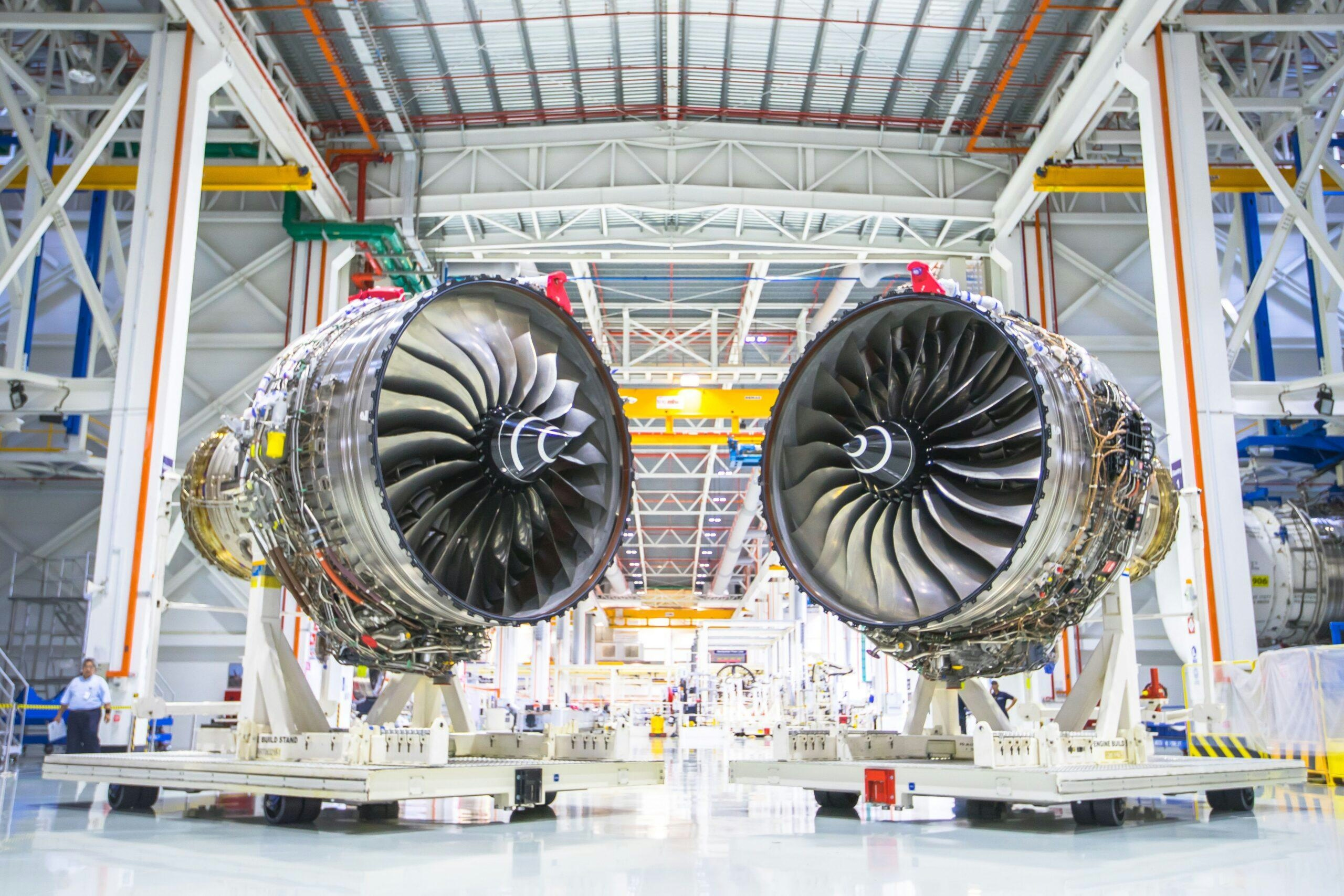
Rolls-Royce Tests Full Takeoff Power on Hydrogen-Powered Jet Engine
A Milestone in Sustainable Aviation
Rolls-Royce has reached a significant milestone by successfully operating a certified jet engine at full takeoff power using pure hydrogen fuel, completing a full simulated flight cycle from startup to landing. This achievement, conducted in collaboration with easyJet at NASA’s Stennis Space Center in Mississippi, challenges prevailing assumptions about the future role of combustion engines in an era focused on decarbonization.
For years, the aviation industry narrative has largely favored battery-electric and fuel cell technologies as the successors to traditional hydrocarbon combustion engines. Regulatory bodies in Europe and the United States have introduced policies aimed at phasing out fossil fuel-powered engines due to environmental concerns. However, Rolls-Royce’s demonstration with a modified Pearl 15 engine—commonly used in Bombardier’s Global 5500 and 6500 business jets—suggests that combustion engines may still have a viable future if powered by clean fuels such as hydrogen.
Engineering Challenges and Industry Implications
The test was far from a controlled laboratory exercise or a mere publicity event. Over a four-year period, engineers extensively modified the Pearl 15 engine to operate exclusively on hydrogen. The engine, designated GH2, was then subjected to the most demanding phase of flight: full takeoff thrust. This marked the first occasion a modern, certified engine of this size has achieved such performance using hydrogen alone.
Importantly, the testing included deliberate fault induction to evaluate the engine’s response and the effectiveness of its safety systems under stress. These fault scenarios are critical for regulatory approval and ensuring operational reliability, aspects often overlooked in public discourse but essential for commercial viability.
Despite this breakthrough, significant technical and operational challenges remain. Optimizing combustion processes for hydrogen and ensuring seamless integration with existing aircraft systems present complex engineering hurdles. The traditionally conservative aviation sector may approach these developments with caution, given the extensive infrastructure and certification changes required to support hydrogen propulsion.
Competitive Landscape and Industry Context
Rolls-Royce is not alone in pursuing hydrogen-powered engines. Competitors such as General Electric and China’s Aero Engine Corporation are reportedly advancing their own projects, indicating a rapidly evolving competitive environment. Meanwhile, broader industry challenges persist. United Airlines’ CEO recently emphasized ongoing engine shortages as a critical bottleneck, highlighting the urgent need for reliable and scalable power sources as the sector strives to reduce its carbon footprint.
While Rolls-Royce’s hydrogen-powered engine does not negate the potential of battery-electric or fuel cell technologies, it broadens the scope of viable options for sustainable aviation. Hydrogen combustion now emerges as a credible alternative, potentially extending the relevance of gas turbine technology in a decarbonizing world. This test represents a pivotal moment that could influence the future trajectory of aviation’s energy transition.

Etihad Airways Suspends Airbus A380 Flights on Key Route

Aditya Birla Group Seeks Approval for Aircraft Leasing in GIFT City

Qatar Airways Highlights Innovation and Connectivity at Arabian Travel Market 2026

Hong Kong's Five-Year Plan Includes Andrew Fan's Aircraft Parts Processing Hub Proposal

ACIA Aero Leasing Delivers ATR72-600 to Air Nostrum

RTX Appoints Jill Albertelli as Head of Pratt & Whitney

TAT Technologies Joins Beyond Aero Hydrogen Aircraft Program

AURAK Study Highlights Barriers to Air Taxi Adoption in Emerging Economies

Xiamen Air Selects Altitude for 787 Maintenance at Heathrow

Etihad and Swissport Extend Global Partnership
