
Orquesta conocimientos de IA para convertirlos en acción

Tendencias
Categories
Safran Secures New Engine Deal with Air India
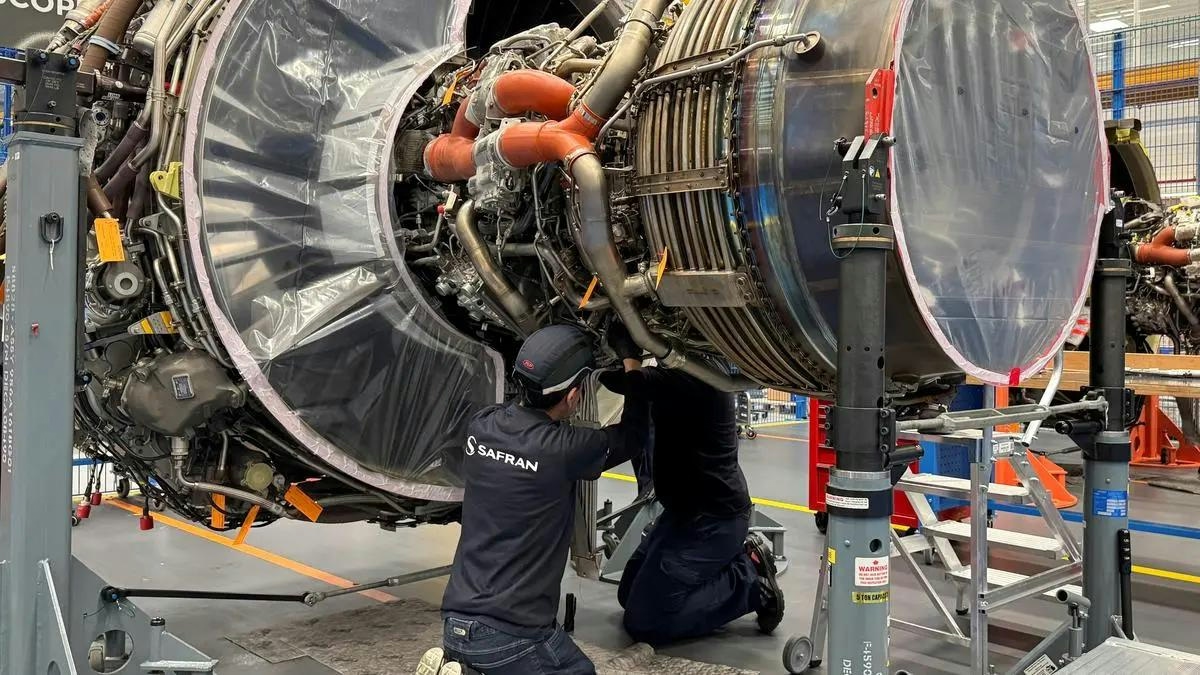
Safran Secures New Engine Deal with Air India Amid Geopolitical Challenges
Safran S.A. has secured a significant new contract with Air India for CFM International LEAP engines, accompanied by long-term service agreements. Announced jointly by Safran and GE Aerospace, the co-owners of CFM International, in April 2026, the deal will support Air India’s expanding narrowbody fleet. This agreement not only strengthens Safran’s order backlog but also underscores its growing influence in the global aerospace sector.
Safran’s Business Model and Market Position
Headquartered near Paris, Safran is a leading international high-technology group specializing in aerospace, defense, and space industries. Its core operations encompass the design and manufacture of aircraft engines, landing gear, avionics, and cabin interiors. A substantial portion of Safran’s revenue derives from high-margin maintenance and service contracts, leveraging its extensive installed base of equipment and engines.
A key element of Safran’s engine business is its 50/50 joint venture with GE Aerospace, CFM International, which produces the LEAP engine family. These engines power popular aircraft models such as the Airbus A320neo and Boeing 737 MAX. Safran consolidates its share of the joint venture’s results, benefiting from the growing installed base of LEAP engines. As this installed base expands, recurring revenues from maintenance, spare parts, and service contracts are expected to increase, according to Safran’s 2024 universal registration document.
Beyond propulsion systems, Safran’s equipment divisions supply major aircraft manufacturers with landing and braking systems, electrical and power systems, avionics, and flight controls. These segments contribute to steady aftermarket sales as airlines replace parts throughout an aircraft’s lifecycle. The interiors business, while more cyclical, provides exposure to trends in cabin upgrades and airline differentiation strategies.
Revenue Drivers and Market Outlook
Safran’s civil aircraft engine business remains its primary revenue driver, particularly the transition from the legacy CFM56 platform to the newer LEAP engines. As more LEAP-powered aircraft enter service, the aftermarket—comprising maintenance, spares, and services—will become an increasingly important source of revenue.
However, Safran faces several challenges in the current environment. The ongoing conflict in the Middle East, including the war involving Iran, has introduced significant uncertainty into the commercial aviation sector. Disruptions to supply chains and fluctuating market demand could affect Safran’s ability to fulfill new contracts and sustain its growth trajectory. These geopolitical risks have elicited mixed reactions from investors, with some expressing concern over potential headwinds, while others remain optimistic about Safran’s strong engine delivery performance and long-term service revenues.
Competition in the civil aviation engine market is also intensifying. Rivals such as MTU Aero Engines, active in both military and commercial engine projects, may adopt aggressive strategies to capture market share, further complicating the competitive landscape.
Strategic Implications
Despite these challenges, the Air India deal highlights Safran’s resilience and its capacity to secure major contracts in a volatile market. The agreement not only bolsters Safran’s backlog but also enhances its visibility in the aftermarket, positioning the group for continued growth as global air travel recovers and airlines modernize their fleets.
Safran, listed on Euronext Paris (ticker: SAF), continues to focus on expanding its global footprint across commercial aviation, regional and business jets, and defense sectors, while navigating the complexities of a rapidly evolving geopolitical and competitive environment.

Etihad Airways Suspends Airbus A380 Flights on Key Route

Aditya Birla Group Seeks Approval for Aircraft Leasing in GIFT City

Qatar Airways Highlights Innovation and Connectivity at Arabian Travel Market 2026

Hong Kong's Five-Year Plan Includes Andrew Fan's Aircraft Parts Processing Hub Proposal

ACIA Aero Leasing Delivers ATR72-600 to Air Nostrum

RTX Appoints Jill Albertelli as Head of Pratt & Whitney

TAT Technologies Joins Beyond Aero Hydrogen Aircraft Program

AURAK Study Highlights Barriers to Air Taxi Adoption in Emerging Economies

Xiamen Air Selects Altitude for 787 Maintenance at Heathrow

Etihad and Swissport Extend Global Partnership
