
Orquesta conocimientos de IA para convertirlos en acción

Tendencias
Categories
San Antonio Officials Aim to Advance Flying Taxi Development
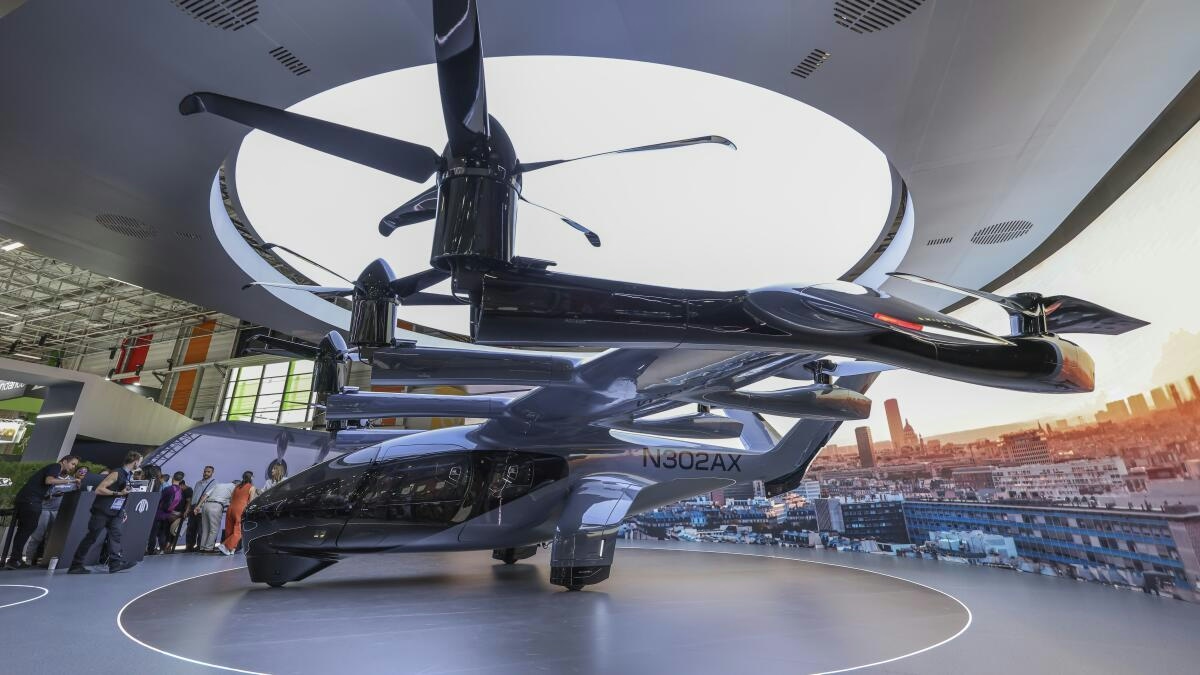
San Antonio Advances Efforts in Flying Taxi Development Amid Industry Challenges
Strategic Investments and Regional Collaboration
At the 2026 State of Aviation event held at the Boeing Center at Tech Port on San Antonio’s Southwest Side, city and state officials, alongside industry leaders, convened to discuss the future of advanced air mobility. Hosted by the San Antonio Mobility Coalition, the annual luncheon highlighted the potential of electric vertical takeoff and landing aircraft (eVTOLs)—small, automated, often electric vehicles designed to transport people and goods rapidly. While these next-generation aircraft remain under development and await regulatory approval, local and state authorities are already investing heavily in infrastructure and planning for their integration into existing airspace systems.
Dan Harmon, director of TxDOT’s aviation division, underscored the inevitability of advanced air mobility, stating, “The question is not whether advanced air mobility is going to happen. It’s happening now.” He emphasized that the critical considerations revolve around where, when, and how these vehicles will integrate into the National Airspace System, as well as who will lead this transformation.
Port San Antonio has emerged as a key player in this emerging sector, committing $42 million toward airfield and airport upgrades to establish the region’s first vertiport. The port has also partnered with SkyGrid LLC, a subsidiary of Boeing’s Wisk Aero, to accelerate development efforts. Harmon described Kelly Field and Port San Antonio as “fundamental pieces to the solution that allow Texas to support early and intermediate integration of advanced air mobility.” Additionally, San Antonio is actively involved in a statewide initiative to develop flight paths connecting major Texas cities such as Austin, Dallas-Fort Worth, and Houston. This effort forms part of the U.S. Department of Transportation’s eVTOL Integration Pilot Program, which spans 25 states.
Industry Challenges and Market Dynamics
Despite the optimism surrounding San Antonio’s ambitions, the city faces considerable challenges in establishing itself within the competitive flying taxi market. The sector is dominated by established companies like Joby Aviation and Archer Aviation, both currently engaged in legal disputes over trade secrets and business relationships. These high-profile conflicts highlight the rapidly evolving and fiercely contested nature of the industry.
Market sentiment remains cautious, with concerns centering on the substantial costs associated with development, regulatory hurdles including FAA certification, and the necessity for reliable charging infrastructure. Furthermore, operational challenges are exemplified by recent setbacks experienced by Waymo, a leading autonomous transportation company, which faced disruptions in San Antonio due to flooding. Such incidents underscore the logistical and environmental obstacles confronting all participants in the advanced air mobility arena.
Nevertheless, Texas officials maintain a confident outlook. Harmon asserted, “Texas is uniquely positioned to lead this charge and bring advanced air mobility into the national focus. We may not be the first, but we are going to be the biggest, and we are going to be the best.” In line with this vision, San Antonio International Airport is preparing to accommodate eVTOL aircraft, reinforcing the city’s commitment to securing a prominent role in the future of urban air transportation.

Etihad Airways Suspends Airbus A380 Flights on Key Route

Aditya Birla Group Seeks Approval for Aircraft Leasing in GIFT City

Qatar Airways Highlights Innovation and Connectivity at Arabian Travel Market 2026

Hong Kong's Five-Year Plan Includes Andrew Fan's Aircraft Parts Processing Hub Proposal

ACIA Aero Leasing Delivers ATR72-600 to Air Nostrum

RTX Appoints Jill Albertelli as Head of Pratt & Whitney

TAT Technologies Joins Beyond Aero Hydrogen Aircraft Program

AURAK Study Highlights Barriers to Air Taxi Adoption in Emerging Economies

Xiamen Air Selects Altitude for 787 Maintenance at Heathrow

Etihad and Swissport Extend Global Partnership
