
Orquesta conocimientos de IA para convertirlos en acción

Tendencias
Categories
Singapore Airlines Cuts Widebody Fleet for First Time in Six Years as Boeing 777-9 Delivery Is Delayed
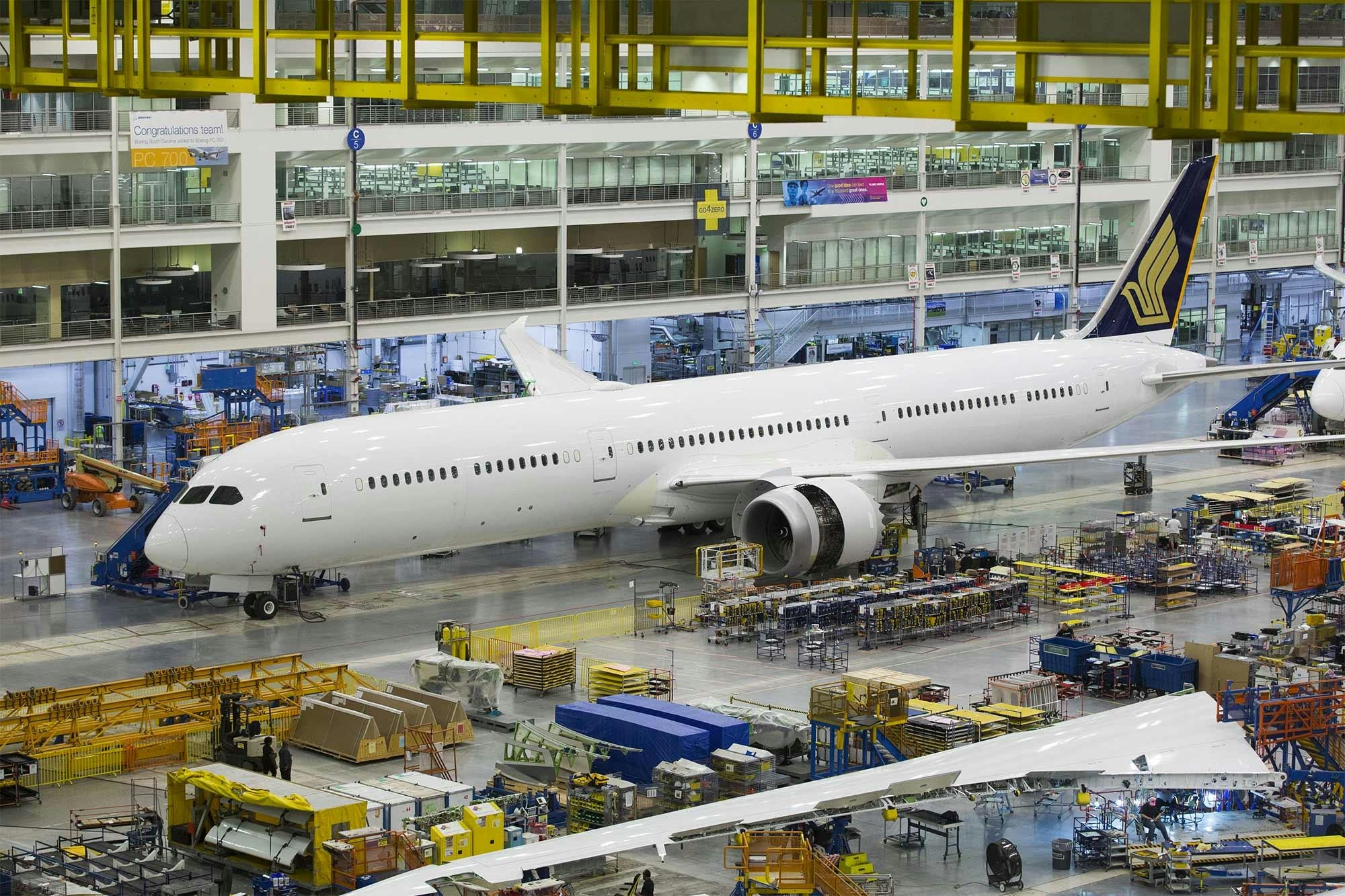
Singapore Airlines Reduces Widebody Fleet Amid Boeing 777-9 Delivery Delays
Singapore Airlines is set to reduce its widebody aircraft fleet for the first time in nearly six years, a direct consequence of ongoing delays in the Boeing 777-9 program. The carrier, headquartered at Singapore Changi Airport, will retire one Boeing 777-300ER while expanding its narrowbody fleet with the addition of five Boeing 737-8 MAX jets. The delivery of the long-awaited 777-9, initially expected earlier, has now been postponed to 2027, prompting a strategic reassessment of the airline’s fleet composition.
Strategic Fleet Adjustments and Market Focus
Although the long-haul widebody fleet will contract slightly, Singapore Airlines’ overall mainline passenger fleet is projected to grow from 148 to 152 aircraft by March 2027. This growth is driven by the integration of the 737-8 MAX aircraft, which will enhance the airline’s regional and medium-haul capabilities, particularly across Southeast Asia and Australia. The retirement of a single 777-300ER reduces the long-haul fleet from 75 to 74 aircraft, which currently includes 34 Airbus A350 long-haul (LH) models, 7 A350 ultra-long-range (ULR) variants, 12 Airbus A380-800s, and 22 Boeing 777-300ERs.
This shift highlights Singapore Airlines’ strategic emphasis on flexibility and regional market expansion amid uncertainties in the long-haul segment. The delay of the 777-9, a cornerstone of the airline’s future long-haul fleet, has necessitated operational adjustments that may temporarily constrain capacity on key international routes to destinations such as Germany, Australia, and the United Arab Emirates.
Operational Challenges and Competitive Pressures
The retirement of the 777-300ER marks the sixth aircraft of this type withdrawn since 2023, completing a planned fleet reduction. However, this move presents challenges, notably the loss of 48 Business Class seats and four First Class suites, which could restrict premium cabin availability on high-demand international routes until the 777-9 enters service.
Singapore Airlines’ dependence on the delayed 777-9 for its long-haul operations raises concerns about potential operational disruptions and increased costs as the airline adapts its network and scheduling. The market has responded with heightened scrutiny from investors and analysts regarding the financial implications of the delay and the airline’s strategic response. Meanwhile, competitors such as United Airlines, which is expanding its long-haul fleet with new Boeing 787 aircraft, may capitalize on this period to attract premium customers seeking more reliable service. Similarly, carriers like All Nippon Airways, currently renewing their fleets, could exploit the temporary reduction in Singapore Airlines’ long-haul capacity.
Additional Capacity Constraints from A350 Cabin Retrofits
Compounding these challenges, Singapore Airlines plans to retrofit its 34 Airbus A350 LH and 7 A350 ULR aircraft with updated First and Business Class cabins beginning in late 2026. Each aircraft will be out of service for several weeks during the refurbishment, effectively reducing available long-haul capacity by two to three aircraft below the official fleet count during this period. This temporary reduction may further limit seat availability on critical international routes until the modernization program concludes in early 2027.
Outlook Amid Transition
As Singapore Airlines navigates this transitional phase, its ability to manage fleet adjustments while maintaining customer confidence will be crucial. The airline’s strategic focus on regional growth and cabin enhancements aims to mitigate the impact of the 777-9 delay. However, the coming years will present significant tests of resilience amid intensifying competition and shifting market dynamics.

Etihad Airways Suspends Airbus A380 Flights on Key Route

Aditya Birla Group Seeks Approval for Aircraft Leasing in GIFT City

Qatar Airways Highlights Innovation and Connectivity at Arabian Travel Market 2026

Hong Kong's Five-Year Plan Includes Andrew Fan's Aircraft Parts Processing Hub Proposal

ACIA Aero Leasing Delivers ATR72-600 to Air Nostrum

RTX Appoints Jill Albertelli as Head of Pratt & Whitney

TAT Technologies Joins Beyond Aero Hydrogen Aircraft Program

AURAK Study Highlights Barriers to Air Taxi Adoption in Emerging Economies

Xiamen Air Selects Altitude for 787 Maintenance at Heathrow

Etihad and Swissport Extend Global Partnership
