
Orquesta conocimientos de IA para convertirlos en acción

Tendencias
Categories
Singapore Unveils Scaled Prototype of Domestic eVTOL Aircraft
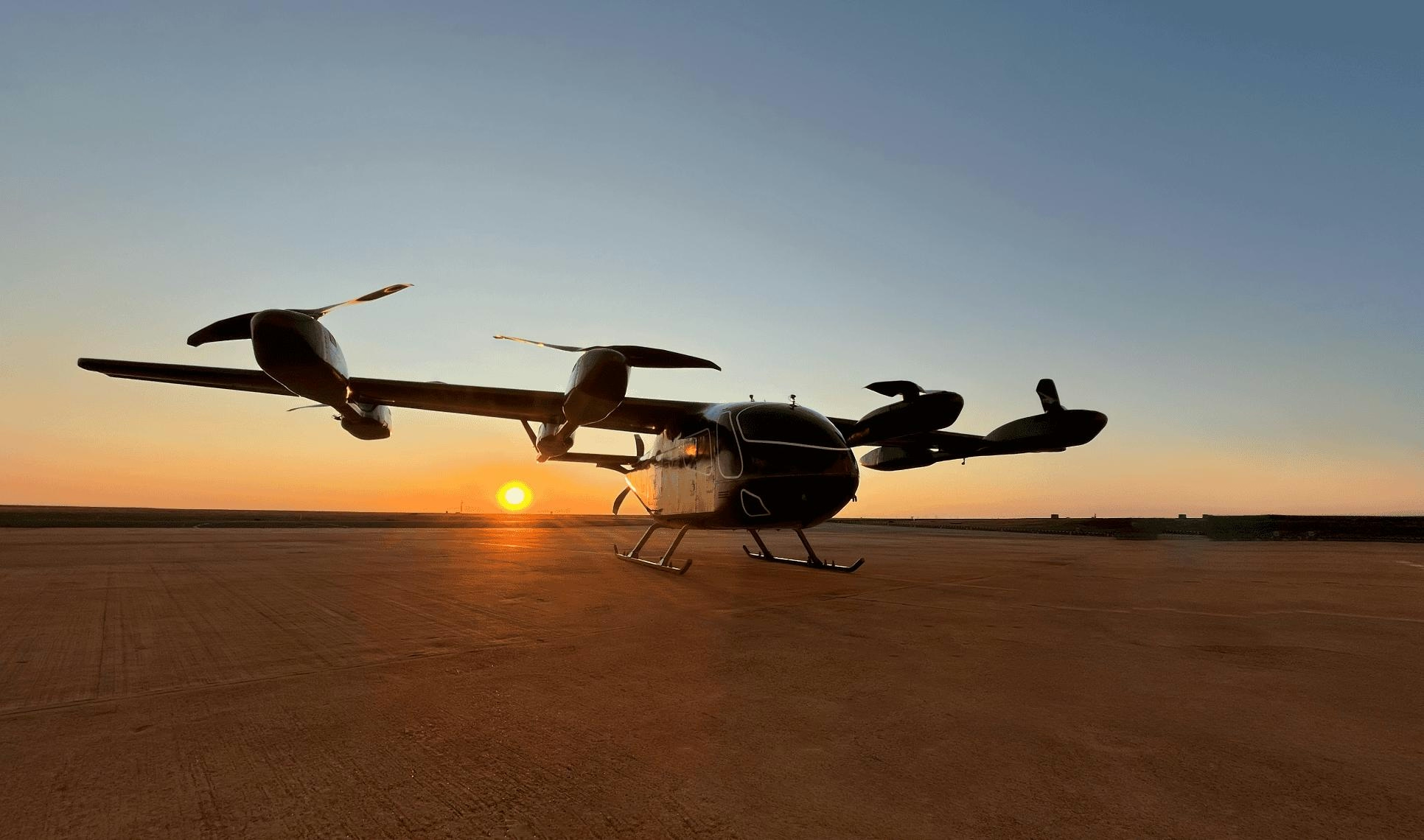
Singapore Unveils Scaled Prototype of Domestic eVTOL Aircraft
A Milestone in Urban Air Mobility Development
Singapore has marked a significant advancement in the urban air mobility (UAM) sector with the unveiling of its first domestically developed electric vertical take-off and landing (eVTOL) aircraft prototype. The initiative is spearheaded by Professor James Wang, a distinguished aerospace engineer credited with coining the term "eVTOL" and formerly the research and development chief at AgustaWestland. Over the past three years, Wang and his 30-member team at Nanyang Technological University have been developing the prototype under a government-funded program that has been closely guarded in secrecy.
The scaled model features an 8-meter wingspan, equipped with eight wing-mounted rotors designed for vertical lift, complemented by a larger pusher-propeller intended for forward flight. Professor Wang has indicated that the production version will expand to a 14-meter wingspan. The prototype successfully completed a series of short, tethered flights in September of the previous year and is now preparing for further flight testing at the German Aerospace Center (DLR). The team is actively seeking additional funding from Singaporean authorities to progress toward certification and eventual production. Wang emphasized the national ambition, stating, “Our goal is for an eVTOL aircraft that is designed, engineered, and built in Singapore.”
Expertise and Challenges in a Competitive Market
Professor Wang brings extensive expertise to the project, having previously worked with Sikorsky and led the AgustaWestland (now Leonardo Helicopters) Project Zero—one of the earliest eVTOL concepts unveiled at the 2013 Paris Air Show. Since then, he has advised numerous eVTOL startups before being recruited to lead Singapore’s entry into the UAM sector.
Despite this strong leadership, Singapore faces considerable challenges as it enters a market where countries such as Japan and South Korea have already established themselves as front-runners in eVTOL development. The global eVTOL industry is becoming increasingly crowded, with established players in the Asia-Pacific region intensifying competition and raising barriers to entry. Market analysts have expressed skepticism regarding Singapore’s relatively late entry, noting that most major eVTOL developers began their projects nearly a decade ago.
Nonetheless, Wang remains optimistic about Singapore’s potential in this emerging field. He acknowledges the competitive landscape and the financial difficulties that have affected some high-profile eVTOL ventures but maintains that the sector’s long-term prospects are robust. “It will take until 2035, but UAM will take off,” he predicts. “There will be room for lots of manufacturers.” Wang believes that Singapore’s strategic timing and determination could enable the nation to secure a foothold in the evolving market. “This is the right time to get in,” he asserts. “This is something Singapore is determined to make happen.”
As the prototype advances into its next phase of testing, Singapore’s ambitions in the eVTOL arena will be closely observed by industry competitors and analysts alike, who will assess the nation’s capacity to overcome the challenges of a late but resolute entry into the global UAM race.

Etihad Airways Suspends Airbus A380 Flights on Key Route

Aditya Birla Group Seeks Approval for Aircraft Leasing in GIFT City

Qatar Airways Highlights Innovation and Connectivity at Arabian Travel Market 2026

Hong Kong's Five-Year Plan Includes Andrew Fan's Aircraft Parts Processing Hub Proposal

ACIA Aero Leasing Delivers ATR72-600 to Air Nostrum

RTX Appoints Jill Albertelli as Head of Pratt & Whitney

TAT Technologies Joins Beyond Aero Hydrogen Aircraft Program

AURAK Study Highlights Barriers to Air Taxi Adoption in Emerging Economies

Xiamen Air Selects Altitude for 787 Maintenance at Heathrow

Etihad and Swissport Extend Global Partnership
