
Orquesta conocimientos de IA para convertirlos en acción

Tendencias
Categories
Six Lesser-Known Features of the Airbus A380 Cabin
Six Lesser-Known Features of the Airbus A380 Cabin
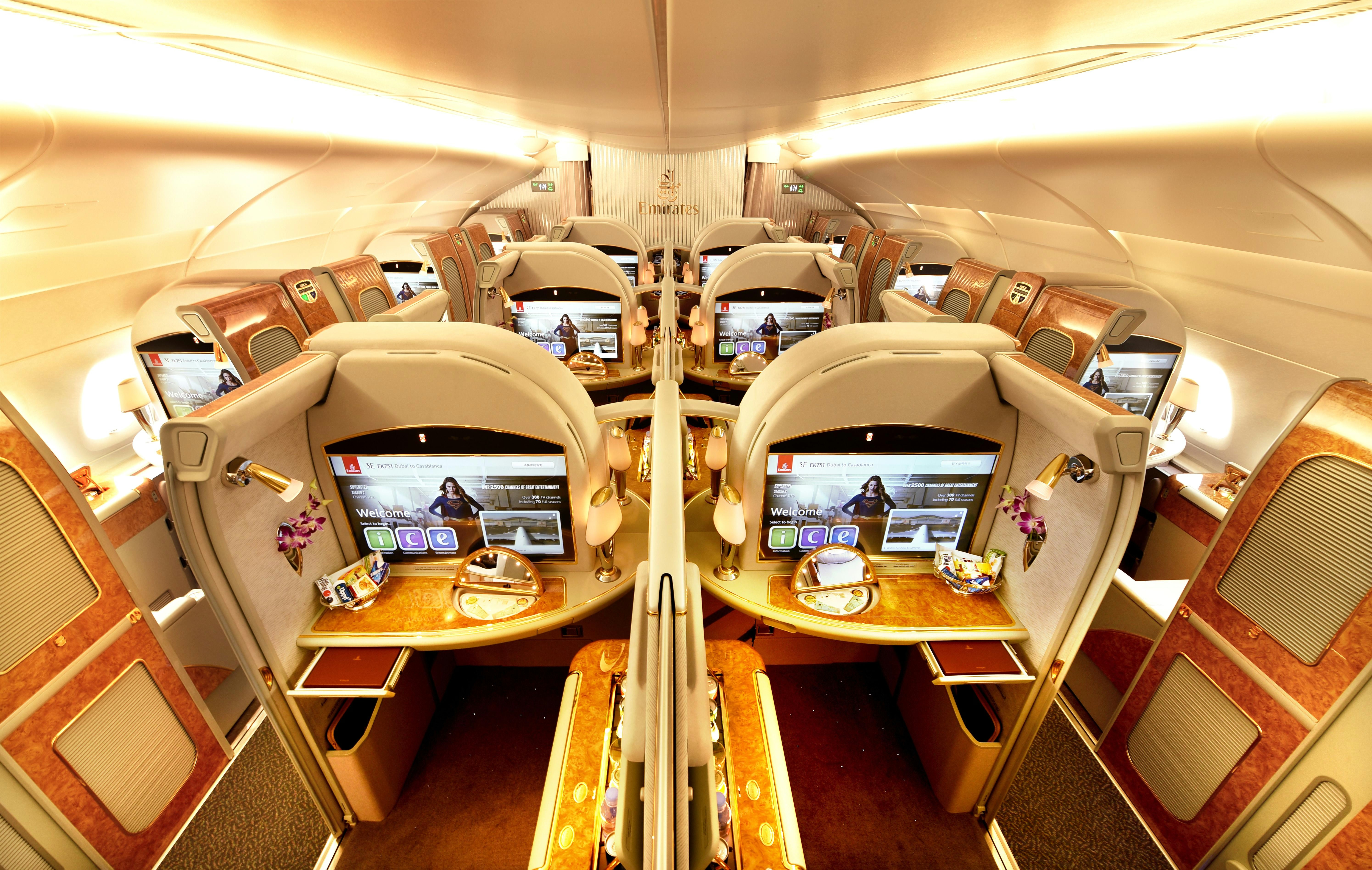
The Airbus A380 has long been celebrated for its luxurious bars, private suites, onboard showers, and expansive cabin space. However, the aircraft’s true innovation extends beyond these visible luxuries into more subtle design elements. Unlike most airliners, which are primarily defined by their passenger cabins, the A380’s interior architecture is distinguished by a meticulous division of space that balances passenger experience, crew workflow, operational control, and fatigue management.
This multi-layered approach continues to captivate aviation experts and enthusiasts alike, even years after the end of the A380’s production. With its two full-length passenger decks and unparalleled floor area, the A380 remains unique among commercial jets. This extraordinary scale has enabled Airbus and airline designers to incorporate hidden thresholds, sealed-off workspaces, and cleverly segmented zones—features that typically go unnoticed by passengers but are vital to the aircraft’s smooth operation.
Luxury and logistics are inextricably linked on the A380. The calm and effortless atmosphere enjoyed by passengers in premium seats is supported by a parallel, unseen world of operational complexity. As airlines and manufacturers adapt to evolving inflight entertainment and connectivity systems, uphold sustainability standards, and respond to changing passenger expectations regarding wellbeing and comfort, these lesser-known cabin features face new challenges. Airlines must carefully assess the costs and benefits of maintaining such innovations, while competitors seek to develop comparable solutions to remain competitive.
The “Harry Potter” Cupboard: A Hidden Command Center
Among the A380’s most intriguing secrets is a small compartment located beneath the forward staircase on certain aircraft, notably those operated by Emirates. Known among crew members as the “Harry Potter cupboard,” this space appears to passengers as unused storage but actually functions as a purser’s office. It serves as a private workstation where the senior cabin crew member manages paperwork, coordinates cabin operations, and in some cases, controls aspects of the inflight entertainment system.
This concealed office is more than a charming curiosity; it exemplifies the complexity involved in managing a flying hotel with multiple cabins, large crews, and intricate service routines. In contrast to many modern aircraft, where dedicated crew workspaces have been sacrificed to increase seating capacity, the A380’s vast volume allows for operational niches that seem almost anachronistic in today’s density-driven aviation market. The cupboard beneath the stairs stands as a testament to the A380’s original vision—not merely as a passenger transport platform but as a sophisticated, layered workspace.
As airlines continue to evaluate the relevance of such features amid shifting market demands and technological progress, the A380’s hidden design elements serve as a reminder of an era when cabin innovation prioritized both passenger comfort and crew efficiency. In an industry increasingly focused on maximizing space and minimizing costs, the superjumbo’s secret spaces remain a distinctive legacy of thoughtful aircraft design.
Comments

Etihad Airways Suspends Airbus A380 Flights on Key Route

Aditya Birla Group Seeks Approval for Aircraft Leasing in GIFT City

Qatar Airways Highlights Innovation and Connectivity at Arabian Travel Market 2026

Hong Kong's Five-Year Plan Includes Andrew Fan's Aircraft Parts Processing Hub Proposal

ACIA Aero Leasing Delivers ATR72-600 to Air Nostrum

RTX Appoints Jill Albertelli as Head of Pratt & Whitney

TAT Technologies Joins Beyond Aero Hydrogen Aircraft Program

AURAK Study Highlights Barriers to Air Taxi Adoption in Emerging Economies

Xiamen Air Selects Altitude for 787 Maintenance at Heathrow

Etihad and Swissport Extend Global Partnership
