
Orquesta conocimientos de IA para convertirlos en acción

Tendencias
Categories
Smart Catering Uses AI to Reduce Airline Food Waste
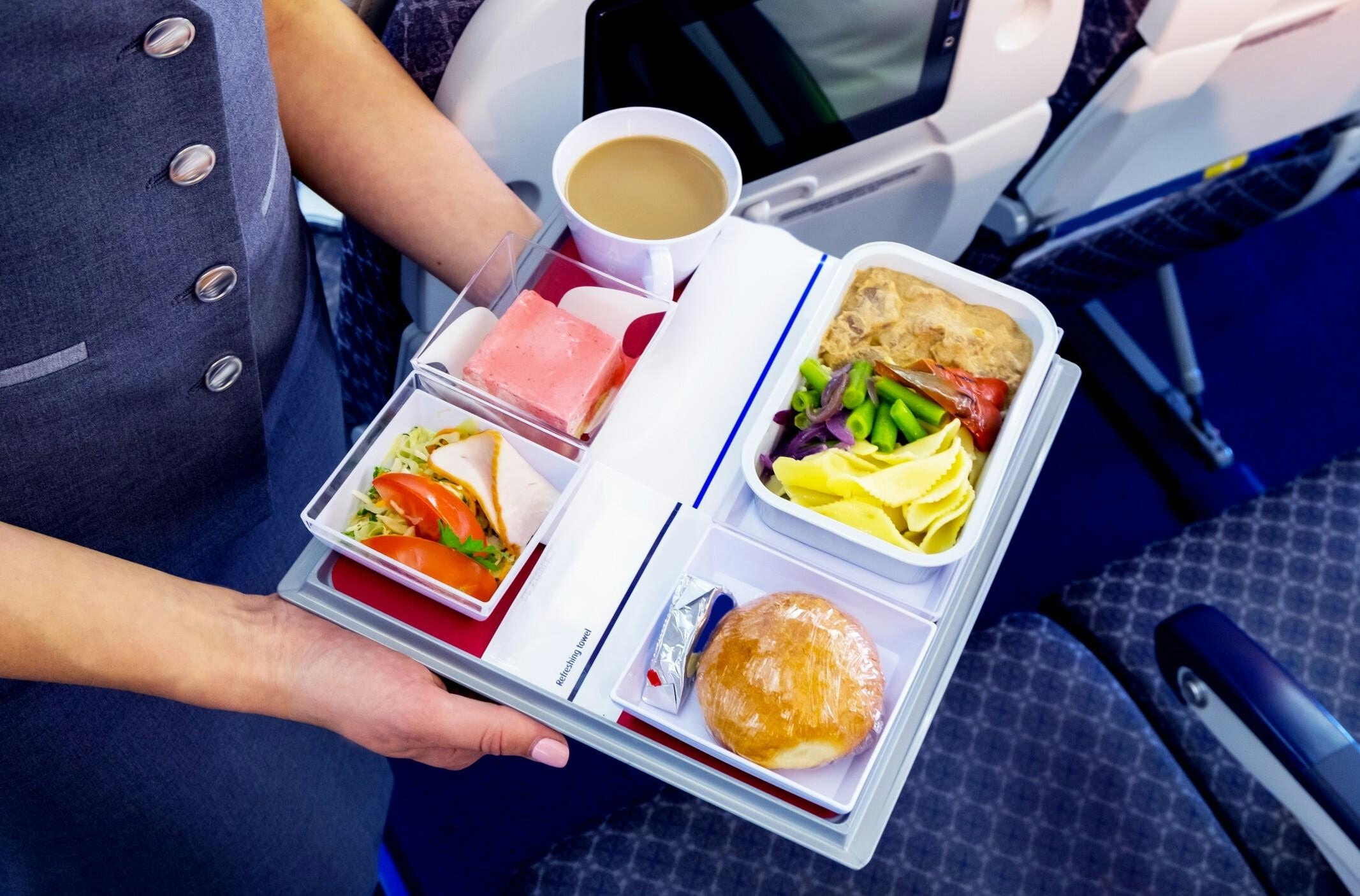
Smart Catering Uses AI to Reduce Airline Food Waste
Airlines around the world are increasingly adopting artificial intelligence (AI) to address a significant environmental challenge: the vast quantities of cabin and catering waste produced annually. According to the International Air Transport Association (IATA) and the Aviation Sustainability Forum (ASF), this waste amounts to approximately 3.6 million tonnes each year and is expected to rise to four million tonnes by late 2025. Experts warn that without substantial intervention, airline food waste could potentially double by 2040, driven by growing passenger numbers and outdated operational practices.
The Scale of the Problem
Cabin food waste encompasses untouched meals, partially consumed items, and discarded packaging, collectively rivaling the annual garbage output of mid-sized cities. Airlines frequently over-cater due to conservative meal planning, last-minute passenger changes, dietary restrictions, and regulatory mandates requiring the disposal of opened food, even if it remains uneaten. This issue is particularly pronounced on long-haul flights, where multiple meal services increase the likelihood of surplus food.
Industry analysts caution that if left unaddressed, food waste could become as critical a sustainability concern as aviation emissions. In response, IATA’s commitment to achieving net-zero carbon emissions by 2050 now explicitly includes waste reduction as a core objective. Organizations such as ASF have begun publishing benchmarking data to encourage the modernization of catering practices across the sector.
How AI-Powered Catering Works
AI-driven smart catering systems are revolutionizing the management of in-flight meals. These platforms employ machine learning algorithms to analyze a wide range of data, including historical consumption patterns, real-time booking information, passenger demographics, route preferences, and seasonal trends. By incorporating variables such as cabin class, special meal requests, weather conditions, and crew preferences, the systems can forecast meal requirements with unprecedented precision and continuously refine their predictions.
Integration with inventory management systems allows for real-time adjustments to production schedules, while predictive alerts enable kitchen managers to respond swiftly to unexpected changes in demand. Some solutions utilize Internet of Things (IoT) sensors installed in galley waste bins to measure actual discard volumes, creating immediate feedback loops that further optimize catering operations.
Leading technology providers, including CHOOOSE and specialized aviation tech firms, are developing tailored AI solutions that synchronize with crew management, ground handling, and passenger data systems. Airlines that have implemented these platforms report waste reductions ranging from 15 to 35 percent within the first year of adoption.
Challenges and Industry Response
Despite the promising potential of AI, several challenges remain. Established catering companies may resist changes that disrupt traditional workflows, and integrating new AI systems with existing airline infrastructure can be complex and resource-intensive. Effective waste reduction also depends on comprehensive data collection and analysis, which requires significant investment.
Some airlines have expressed skepticism about AI’s capacity to manage waste in real time, prompting competitors to develop their own AI solutions or enhance existing waste reduction strategies to maintain a competitive advantage. Pilot programs, such as one conducted by Nestlé, have demonstrated AI’s ability to significantly reduce food waste but also underscore risks, including potential digital system failures that could disrupt food supply chains.
Looking Ahead
As the aviation industry pursues ambitious sustainability targets, AI-powered smart catering is emerging as a vital tool in reducing food waste. While challenges persist, the integration of advanced analytics and real-time data offers the prospect of minimizing waste, lowering costs, and reducing the environmental footprint of airline operations.

Etihad Airways Suspends Airbus A380 Flights on Key Route

Aditya Birla Group Seeks Approval for Aircraft Leasing in GIFT City

Qatar Airways Highlights Innovation and Connectivity at Arabian Travel Market 2026

Hong Kong's Five-Year Plan Includes Andrew Fan's Aircraft Parts Processing Hub Proposal

ACIA Aero Leasing Delivers ATR72-600 to Air Nostrum

RTX Appoints Jill Albertelli as Head of Pratt & Whitney

TAT Technologies Joins Beyond Aero Hydrogen Aircraft Program

AURAK Study Highlights Barriers to Air Taxi Adoption in Emerging Economies

Xiamen Air Selects Altitude for 787 Maintenance at Heathrow

Etihad and Swissport Extend Global Partnership
