
Orquesta conocimientos de IA para convertirlos en acción

Tendencias
Categories
Syrian President Plans to Order Eight Airbus Aircraft
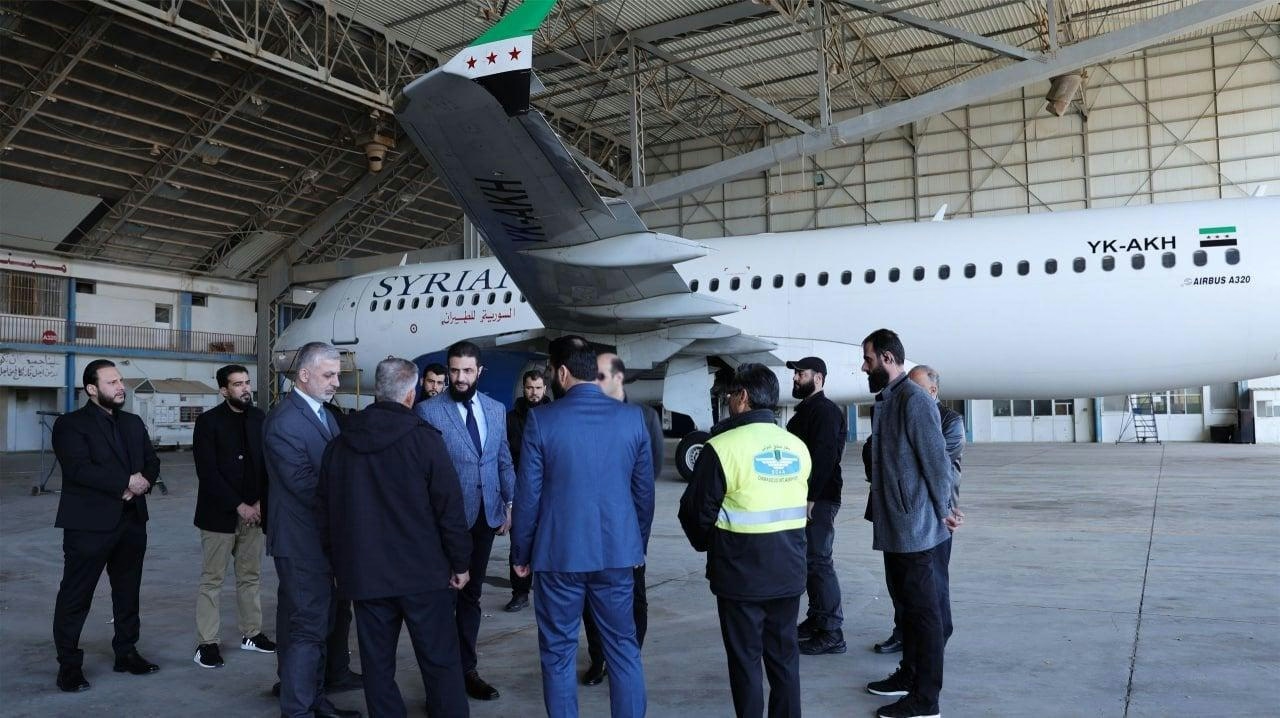
Syrian President Announces Plans to Acquire Eight Airbus Aircraft Amid Reconstruction
Syrian President Ahmad al-Sharaa has revealed intentions to order eight Airbus aircraft as part of the nation’s broader strategy to rebuild its infrastructure following years of civil conflict. The announcement was made during a visit by French President Emmanuel Macron, who led a delegation of investors and business representatives to Damascus, signaling renewed international engagement with Syria.
Aviation Sector Revival and International Partnerships
In an interview with French news channel BFMTV on July 6, 2026, President al-Sharaa emphasized the rapid delivery timeline for the aircraft, though he did not disclose specific models. He highlighted the government’s efforts to reconstruct state institutions and foster partnerships across multiple sectors, including aviation, tourism, agriculture, and industry. Al-Sharaa underscored France’s significant role in supporting Syria’s infrastructure development, industrial growth, financial sector reforms, and institutional restructuring.
The planned acquisition aligns with Syria’s ambition to revitalize its aviation industry. The state-owned Syrian Airlines, known as SyriaAir, is poised to benefit from Qatari investments aimed at expanding its operations. Since resuming flights from Damascus International Airport in December 2024, following the removal of former President Bashar al-Assad, Syria has seen the return of major carriers such as Qatar Airways, Turkish Airlines, Emirates, Etihad, and flynas. According to the Qatari Civil Aviation Authority, Damascus International Airport handled over 148,000 passengers in May 2026, with 12 airlines currently operating routes to and from the country.
Challenges Amid Sanctions and International Uncertainty
Despite these developments, the proposed Airbus order faces significant challenges. Syria remains subject to a range of international economic and political sanctions that could complicate procurement and provoke diplomatic tensions. Although the European Union suspended several restrictive measures in February 2025—facilitating Airbus contracts and renewed flight operations to Europe—uncertainty persists regarding the broader international community’s stance. The EU described its suspension of sanctions as an effort to “facilitate engagement with Syria, its people, and businesses, in key areas of energy and transport.”
Market responses to the announcement have been subdued. Airbus has not reported any cancellations of jet orders despite global pressures such as rising fuel prices. Meanwhile, competitors in the aviation sector, including American Airlines and Ethiopian Airlines, are reportedly considering substantial aircraft purchases from Airbus and Boeing to strengthen their market positions.
As Syria advances its reconstruction agenda, the proposed Airbus order exemplifies both the opportunities and obstacles the country faces in reintegrating into the international aviation network and rebuilding its economy.

Etihad and Swissport Extend Global Partnership

Sepehran Airlines B737 Returns to Mashhad After Tyre and Engine Issues

Etihad Deploys Widebody Fleet to Meet Strong Demand

Korean Air Finalizes $36.2 Billion Deal with Boeing

Australia’s RFDS Queensland Section Orders Six King Air 260Cs

Korean Air Finalizes Order for 103 Boeing Jets and Engines

Embraer E195-E2 Features Distinctive Engine Placement Among Regional Jets

What Passengers Can Expect on Boeing’s New 777X Jet

How Ethiopian Airlines Became Africa’s Leading Carrier Amid Gulf Competition

Joby Aviation Extends Autonomous Flight Capabilities with Cross-Country Tour
