image

AeroGenie: Su copiloto inteligente.

Pregunta cualquier cosa. Analiza todo. Actúa al instante.

Tendencias

Categories

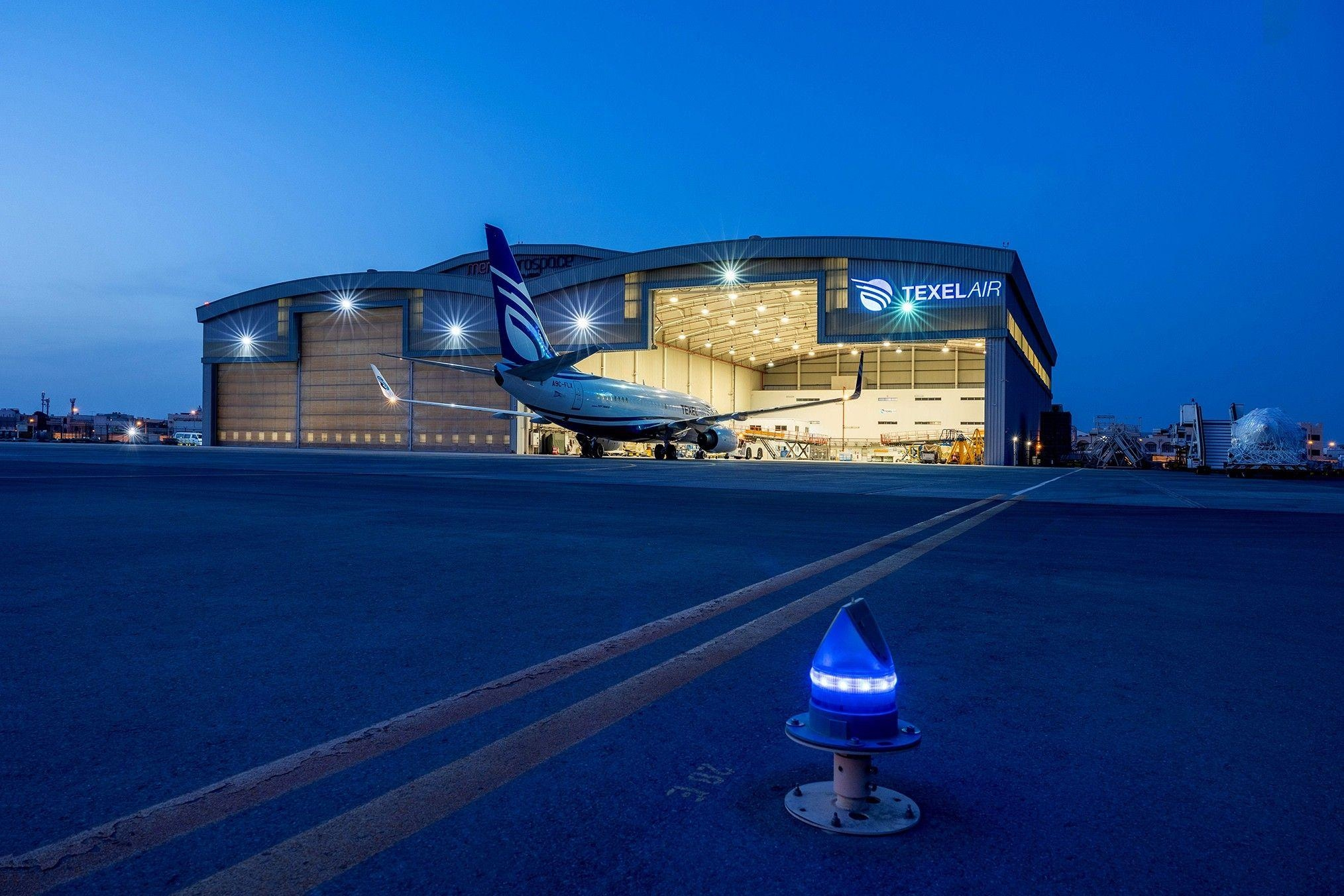
Texel to Expand Aircraft MRO Hangars at Bahrain Airport
June 16, 2025By ePlane AI
Texel to Expand Aircraft MRO Hangars at Bahrain Airport
0
0
Texel Air
Aircraft MRO
Bahrain International Airport

Texel Air to Expand Aircraft MRO Facilities at Bahrain International Airport

Bahrain Airport Company (BAC), the operator of Bahrain International Airport (BIA), has entered into a memorandum of understanding (MoU) with Texel Air to significantly enhance the airport’s aircraft maintenance, repair, and overhaul (MRO) capabilities. Signed during the Paris Air Show, the agreement outlines plans for Texel Air to develop a new 7,000 square meter hangar designed for Code C aircraft, alongside an additional 10,000 square meters of apron, maneuvering, and taxiway space at BIA.

Enhancing Infrastructure for Advanced Aviation Services

The forthcoming facility will be capable of accommodating up to three Code C aircraft simultaneously or multiple ultra long-range business jets within a climate-controlled environment. This expansion aims to provide specialized parking and maintenance services tailored to high-value private and corporate aviation clients. BAC has emphasized that this substantial infrastructure investment will not only increase the airport’s operational capacity but also strengthen Bahrain International Airport’s position as a premier regional aviation hub.

The MoU was signed by Jeffrey Goh, CEO of Gulf Air Group representing BAC, and George Chisholm, Executive Board Member of Texel Air, in the presence of Dr. Shaikh Abdullah bin Ahmed Al Khalifa, Bahrain’s Minister of Transportation and Telecommunications. Dr. Shaikh Abdullah underscored Bahrain’s dedication to advancing its civil aviation sector and infrastructure in accordance with international standards. He identified MRO development as a fundamental pillar of the kingdom’s aviation strategy, highlighting its significant investment potential and its critical role in supporting the broader aviation ecosystem.

Navigating Industry Challenges and Regional Competition

Texel Air’s expansion occurs amid a challenging environment for the MRO industry. Increasing demand for maintenance services, driven by longer aircraft lifespans and the rise of advanced air mobility, is placing considerable pressure on providers to enhance both capacity and technological sophistication. The sector faces growing requirements for larger hangar spaces, updated charging systems, and stringent safety protocols, particularly as it adapts to accommodate next-generation aircraft.

This development is likely to intensify competition among regional MRO providers. Companies such as Joramco and Gulfstream Aerospace are also expanding their operations, prompting a race to invest in cutting-edge technology and infrastructure to maintain high standards of service quality and operational efficiency. The challenge of accommodating larger and more technologically advanced aircraft within limited hangar space remains a pressing concern across the industry.

Dr. Shaikh Abdullah highlighted that expanding advanced maintenance services at BIA will bolster Bahrain’s ability to attract high-quality investments and support the nation’s economic diversification agenda. He described the partnership with Texel Air as an exemplary model of public-private collaboration, reinforcing Bahrain’s reputation as a flexible and efficient regional logistics hub.

Gulf Air Group Chairman Khalid Hussain Taqi remarked that the MoU aligns with the Group’s long-term vision to foster sustainable opportunities for private sector partners and investors. He stated, “This initiative will contribute to the national economy through strategic investment in aviation infrastructure. Our partnership with Texel Air exemplifies effective collaboration.”

Jeffrey Goh further emphasized BAC’s commitment to supporting investors at Bahrain International Airport and facilitating their commercial growth. He noted, “Enhancing private aviation operations is central to our strategy. Supporting the logistics sector is essential for diversifying airport services and solidifying Bahrain’s position as a regional aviation hub.”

Texel Air’s expansion at Bahrain International Airport is poised to play a crucial role in addressing the evolving needs of the regional aviation sector, even as the industry confronts increasing operational and technological challenges.

More news
Adani–Embraer deal could bring commercial aircraft assembly to India

Adani–Embraer deal could bring commercial aircraft assembly to India

Adani–Embraer Deal Could Establish Commercial Aircraft Assembly in India India is on the cusp of becoming a significant player in the global commercial aircraft manufacturing landscape through a strategic partnership between the Adani Group and Brazil’s Embraer. Following a memorandum of understanding signed last month between Adani Aerospace and Embraer in Brazil, the collaboration aims to establish a local assembly line for Embraer’s regional passenger jets. This initiative could mark India’s first final assembly line for commercial aircraft, representing a major advancement for the country’s aviation sector. Although the full details of the project remain undisclosed, sources suggest the agreement involves assembling Embraer’s regional jet family, which typically serves short- to medium-haul routes and accommodates between 70 and 146 passengers. An Embraer spokesperson declined to comment on the matter, stating the company was “not commenting on the report at this stage.” Should the project come to fruition, India would join an exclusive group of nations—including the United States, Brazil, Canada, France, and China—that operate commercial aircraft assembly lines. Historically, India’s aerospace industry has concentrated on defense programs, component manufacturing, and systems integration rather than full-scale commercial aircraft assembly. Strategic Implications for Adani and Indian Aviation The proposed assembly line aligns closely with the Adani Group’s expansive aviation ambitions. The conglomerate has committed to investing INR 1 trillion (approximately $11.1 billion) in its airports business over the next five years and has diversified into related sectors such as maintenance, repair and overhaul (MRO), and flight simulation training. Jeet Adani, Director at Adani Airport Holdings Ltd, recently highlighted the group’s strategy of separating airport infrastructure from aircraft-related services, consolidating MRO capabilities through entities like Indamer and Air Works into a unified platform. Integrating an Embraer assembly line would further embed manufacturing within Adani’s aviation ecosystem, potentially creating a comprehensive pipeline that spans assembly, maintenance, training, and lifecycle support. This integrated model is characteristic of more mature aviation markets and could enhance operational efficiencies and service offerings within India’s aviation industry. Market Context, Government Support, and Industry Challenges The timing of the Adani–Embraer partnership is particularly significant given India’s status as the world’s fastest-growing aviation market. With over 1,800 aircraft on order from major carriers such as Air India, IndiGo, and Akasa Air, the demand for new aircraft is substantial. However, delivery slots for single-aisle aircraft from Airbus and Boeing are largely booked well into the next decade. In response, the Indian government has actively encouraged global manufacturers to establish final assembly lines domestically to bolster industrial capabilities and reduce import dependence. Officials have indicated the possibility of fiscal incentives for airlines ordering aircraft assembled in India, with such benefits potentially diminishing as order volumes increase. Investor sentiment toward the deal has been positive, reflecting interest in scalable platforms and consolidation opportunities within the commercial aerospace parts sector. Embraer’s strong delivery performance in 2025, which exceeded its annual forecast, further underscores a favorable market environment for the partnership’s success. Nonetheless, the venture faces several challenges, including regulatory complexities, supply chain management, and competition from established aerospace giants such as Boeing and Airbus. These competitors may respond by increasing investments in local manufacturing and forging new strategic partnerships to protect their market positions. Embraer, which currently operates nearly 50 aircraft in India across commercial, defense, and business aviation segments, views the regional jet market as a significant growth opportunity. The collaboration with Adani could prove transformative for India’s aviation industry, positioning the country as an emerging hub for commercial aircraft assembly.
Digital Aerospace MRO Market Forecast: AI, IoT, Blockchain, and Cloud Technologies Through 2035

Digital Aerospace MRO Market Forecast: AI, IoT, Blockchain, and Cloud Technologies Through 2035

Digital Aerospace MRO Market Set for Robust Growth Through 2035 The global digital aerospace Maintenance, Repair, and Overhaul (MRO) market is projected to experience substantial growth over the coming decade, according to the "Digital Aerospace MRO Market Report 2026" published by ResearchAndMarkets.com. The market is expected to expand from $1.02 billion in 2025 to $1.88 billion by 2030, representing a compound annual growth rate (CAGR) of 12.8%. This growth trajectory is anticipated to continue through 2035, driven by rapid technological advancements and the aviation industry's increasing reliance on efficient, data-driven maintenance solutions. Technological Innovations Driving Market Expansion The integration of advanced technologies such as artificial intelligence (AI), the Internet of Things (IoT), blockchain, and cloud-native platforms is revolutionizing aerospace MRO operations. These technologies facilitate predictive maintenance, enhance traceability, and streamline workflows, thereby reducing aircraft downtime. Blockchain technology, for example, is improving supply chain transparency, while AI and advanced analytics optimize maintenance scheduling and resource allocation. The surge in global air travel further intensifies the demand for digital MRO solutions. In 2023, the European Union alone recorded 973 million air passengers, highlighting the critical need for advanced maintenance capabilities to ensure aircraft safety and reliability. Industry leaders are actively adopting digital platforms to meet these demands. Companies such as Revima Group and AAR have made strategic moves, including launching digital component exchange platforms and acquiring technology providers, to bolster their digital service offerings. These initiatives underscore the sector’s commitment to leveraging innovation for enhanced operational efficiency. Competitive Landscape and Strategic Developments North America currently dominates the digital aerospace MRO market, with significant growth expected in other regions. Key players include International Business Machines Corporation (IBM), The Boeing Company, Honeywell International Inc., Microsoft Corporation, and General Electric Company. As digital technology adoption intensifies, competition within the market is becoming increasingly fierce. Leading companies are responding through strategic partnerships, acquisitions, and continuous integration of advanced digital solutions to maintain their competitive advantage. Firms such as Siemens, Emerson Electric, and General Electric are anticipated to strengthen their market positions by investing heavily in next-generation digital capabilities. Challenges and Emerging Opportunities Despite the positive outlook, the market faces several challenges. The high initial capital expenditure required for implementing AI, IoT, blockchain, and cloud infrastructure can pose barriers for some organizations. Additionally, global trade relations and tariffs are influencing market dynamics, particularly within IoT and predictive maintenance segments. While these factors contribute to increased costs, they also encourage local innovation and resilience. Cybersecurity remains a critical concern amid accelerating digitalization. The growing dependence on interconnected systems and cloud platforms elevates the risk of cyber threats, prompting increased demand for AI-powered threat detection and robust cybersecurity measures to protect vital industrial networks. Market Segmentation and Future Outlook The report highlights a diverse range of technologies and applications shaping the market. Predictive maintenance, encompassing condition-based monitoring and data analytics, is a key focus area. Augmented and virtual reality (AR/VR) technologies are being employed for maintenance and training simulations, while 3D printing supports additive manufacturing and prototyping. AI, IoT, and robotics contribute to maintenance optimization, connected systems, and automation. Additional technologies such as digital twins, blockchain for supply chain management, and cybersecurity solutions are also integral to the evolving landscape. End-users include original equipment manufacturers (OEMs), airlines, and independent MRO providers. The market is expected to witness ongoing innovation and strategic activity through 2035 as the aerospace sector continues its digital transformation. Emphasis remains on harnessing cutting-edge technologies to improve operational efficiency, safety, and sustainability, positioning the digital aerospace MRO market for sustained growth in the years ahead.
Safran S.A.: The Quiet Powerhouse Behind the Next Era of Aviation and Defense

Safran S.A.: The Quiet Powerhouse Behind the Next Era of Aviation and Defense

Safran S.A.: The Quiet Powerhouse Behind the Next Era of Aviation and Defense Safran S.A. is steadily transforming the global aviation and defense sectors by providing the high-bypass engines, avionics, and propulsion systems that support both commercial airlines and military fleets worldwide. Although the company’s name rarely appears to the traveling public, its technology forms the essential foundation of modern flight, operating as an invisible yet indispensable force beneath the wings and fuselages of aircraft. The Industrial Engine Behind Aviation Unlike consumer-facing brands, Safran functions as a critical infrastructure provider within the aerospace industry. Its extensive portfolio encompasses commercial jet engines, aircraft interiors, avionics, landing systems, military propulsion, and initiatives aimed at sustainable aviation. The company’s influence extends across multiple dimensions: enabling airlines to reduce fuel consumption, assisting air forces in modernizing their fleets, and supporting Europe’s strategic pursuit of aerospace autonomy. Safran confronts a complex array of challenges, including the urgent need for aviation to decarbonize, reduce operating costs, and reinforce supply chains amid geopolitical uncertainties. Concurrently, defense clients demand enhanced range, stealth capabilities, and independence from foreign technologies. Positioned at the nexus of these pressures, Safran leverages its deep expertise in propulsion and avionics to reshape both the economics and capabilities of flight. Propulsion at the Core Central to Safran’s integrated portfolio is its propulsion and systems business, which serves both commercial and military aircraft. This ecosystem is anchored by several key pillars. At the forefront of Safran’s commercial strategy is its 50/50 joint venture with GE Aerospace, CFM International, which produces the CFM LEAP engine family. These engines power prominent aircraft models such as the Airbus A320neo, Boeing 737 MAX, and COMAC C919. Safran supplies critical components including high-pressure turbines and advanced composite materials. The LEAP engine achieves significant fuel-burn reductions compared to its predecessors, driven by innovations such as advanced composite fan blades and cases that reduce weight and enhance efficiency, 3D-woven composite materials that improve hot-section durability, and a high-bypass architecture that enables quieter and more efficient operation. These technological advances directly contribute to lowering airline fuel costs and carbon dioxide emissions, positioning Safran at the forefront of aviation’s decarbonization efforts. Looking to the future, Safran is co-developing the CFM RISE (Revolutionary Innovation for Sustainable Engines) program, which introduces an open-fan propulsion concept designed to deliver up to 20% additional fuel savings. The RISE engine features an unducted open-fan design that achieves ultra-high bypass ratios, hybrid-electric capabilities that anticipate evolving power grids and airframe technologies, and full compatibility with 100% sustainable aviation fuel (SAF) from the outset. Navigating a Competitive Landscape Safran’s leadership in aerospace innovation faces mounting challenges. The civil engine market is expected to become increasingly competitive, with 2026 potentially marking the beginning of a new “engine war” as rivals accelerate their technological advancements. In response, Safran has undertaken strategic initiatives such as divesting its in-flight entertainment and connectivity (IFEC) unit to Kingswood and integrating Skyted’s silent call technology into its passenger connectivity systems. These moves reflect the company’s efforts to sharpen its focus and maintain a competitive edge. At the same time, competitors are advancing rapidly. Saab is developing software-defined fuselage technology, while Gogo’s Galileo system is poised to enter the inflight connectivity market, intensifying the race for technological supremacy. As the aviation and defense industries confront increasing demands for efficiency, sustainability, and resilience, Safran S.A. remains a pivotal, though often unseen, force shaping the future of flight. Its capacity to innovate across propulsion, systems, and connectivity will influence not only its own trajectory but also the broader evolution of the aerospace sector.
Singapore Airlines Partners with OpenAI to Enhance Customer Experience and Operations

Singapore Airlines Partners with OpenAI to Enhance Customer Experience and Operations

Singapore Airlines Partners with OpenAI to Enhance Customer Experience and Operations Singapore Airlines has announced a strategic partnership with OpenAI to integrate advanced artificial intelligence technologies into its customer service and operational frameworks. This collaboration has already resulted in significant enhancements to the airline’s virtual assistant, accessible via both its website and mobile application. The upgraded assistant offers travellers personalised, conversational support, assisting with destination discovery, flight comparisons, and booking management. Advancing Operational Efficiency Through AI In addition to customer-facing improvements, Singapore Airlines has implemented AI-driven tools to support its workforce. These tools enable employees to extract insights from historical cases, automate routine tasks, and access comprehensive data sets to inform critical decisions, particularly in areas such as crew scheduling. The airline emphasized that these capabilities are designed to simplify travel planning, assist staff in their daily responsibilities, and ultimately provide a more seamless end-to-end experience for passengers. Established in 2025, the partnership reflects Singapore Airlines’ ongoing commitment to innovation and digital transformation. By leveraging generative AI solutions, the airline aims to enhance both customer experience and operational efficiency across its entire organisation. Industry Context and Market Challenges The announcement comes amid heightened scrutiny of the artificial intelligence sector’s long-term viability. The technology initial public offering (IPO) market in 2026 has sparked concerns about a potential AI bubble, with skepticism surrounding the elevated valuations of companies such as OpenAI. This market uncertainty poses risks to investor confidence and may affect future funding for AI-driven projects. Singapore Airlines could face increased pressure to demonstrate clear returns on its AI investments, especially as expectations remain high for leading AI firms including SpaceX, OpenAI, and Anthropic. The competitive landscape within the aviation industry is also evolving rapidly. Other airlines are expected to adopt similar AI technologies to maintain competitive advantage, potentially catalysing a broader shift toward advanced digital solutions across the sector. The performance of AI companies following recent IPOs will be closely monitored, influencing future partnerships and investment decisions related to artificial intelligence in aviation. Despite these challenges, Singapore Airlines remains resolute in its focus on harnessing AI to deliver a more efficient and personalised travel experience, positioning itself at the forefront of digital transformation within the industry.
Amadeus Partners with ICAO to Advance Biometrics and Digital Identity in Aviation

Amadeus Partners with ICAO to Advance Biometrics and Digital Identity in Aviation

Amadeus Partners with ICAO to Advance Biometrics and Digital Identity in Aviation Amadeus, a leading travel technology provider, has formalized a strategic partnership with the International Civil Aviation Organization (ICAO) to accelerate the digital transformation of global aviation. This collaboration, established through a Memorandum of Understanding (MoU), supports ICAO’s “No Country Left Behind” (NCLB) initiative, which seeks to assist all nations—regardless of their technological development—in modernizing their air transport systems through advanced digital solutions. Driving Digital Transformation in Aviation Central to this partnership is a shared commitment to equip ICAO Member States with state-of-the-art technologies that enhance efficiency, safety, and sustainability in air travel. Drawing on Amadeus’ expertise in digital identity, biometrics, and data management, the initiative aims to provide countries with the necessary tools and knowledge to upgrade their aviation infrastructure in accordance with international standards. The collaboration aligns closely with ICAO’s Traveller Identification Programme (TRIP) framework and Doc 9303 specifications, which establish global guidelines for travel document systems. Together, Amadeus and ICAO intend to foster a seamless, secure, and interoperable travel experience across borders, marking a significant advancement for the aviation industry. Focus Areas of the Partnership The partnership will emphasize several critical areas. Amadeus will offer technical support and capacity building to ICAO Member States, particularly those with less developed aviation infrastructure, facilitating efficient and scalable modernization efforts. Biometric interoperability will be a priority, ensuring that biometric systems operate seamlessly across different countries to streamline border control, reduce passenger wait times, and bolster global security. Additionally, Amadeus will deliver training programs addressing the technical and regulatory aspects of digital identity and biometrics, equipping aviation authorities with the skills required to manage and operate advanced digital systems and thereby accelerating global adoption. Challenges and Market Dynamics Despite the promising benefits, the partnership must navigate challenges including regulatory compliance, integration with existing legacy systems, and the imperative to maintain robust data security and privacy protections. Successfully addressing these issues will be essential for the widespread deployment of digital identity and biometric solutions. The market has responded positively to the increasing focus on digital identity, with growing investments in biometric technologies and digital identity platforms. Competitors within the travel technology sector are expected to pursue similar partnerships or acquisitions to enhance their offerings. The self-sovereign identity market, in particular, is projected to experience substantial growth, underscoring both the opportunity and competitive advantage for early adopters such as Amadeus. Looking Ahead The partnership between Amadeus and ICAO represents a pivotal development for the aviation industry, laying the groundwork for a more connected, efficient, and secure future. By advancing digital identity and biometric interoperability, the collaboration not only reinforces ICAO’s global standards but also positions the sector to meet evolving passenger expectations and regulatory requirements in an increasingly digital landscape.
Expert Predicts Thousands of Passenger and Cargo Drones in Hong Kong Skies Within a Decade

Expert Predicts Thousands of Passenger and Cargo Drones in Hong Kong Skies Within a Decade

Expert Predicts Thousands of Passenger and Cargo Drones in Hong Kong Skies Within a Decade Ambitious Expansion Plans by AutoFlight AutoFlight, one of mainland China’s largest manufacturers of electric vertical take-off and landing (eVTOL) aircraft, has announced plans to significantly expand its presence in Hong Kong. Backed by battery giant CATL, the Shanghai-based company aims to establish its international headquarters in the city, positioning Hong Kong as a central hub in its global growth strategy. Kellen Tse, AutoFlight’s senior vice-president, emphasized the importance of Hong Kong, describing it as a “very, very important key” to the company’s ambitions. Tse revealed that the company plans to build a team of at least a dozen to twenty professionals this year, focusing on sales, marketing, business development, and government relations, with further growth anticipated as the company pursues opportunities in the emerging flying taxi market. Prospects and Challenges for Urban Air Mobility Tse envisions thousands of passenger and cargo eVTOL aircraft operating within Hong Kong’s airspace over the next decade, reflecting the city’s potential as a hub for the burgeoning low-altitude economy. However, the widespread adoption of these technologies faces significant challenges. Regulatory scrutiny is expected to be stringent, as authorities prioritize safety and seek to minimize interference with traditional aviation operations. Addressing regulatory hurdles and safety concerns will be critical for companies aiming to achieve large-scale deployment of drone and air taxi services. Market responses to the prospect of a growing drone sector in Hong Kong have been mixed. While investor interest in drone technology and related infrastructure is increasing, questions remain regarding the affordability and accessibility of air taxi services for the broader public. The demand for advanced air mobility solutions is intensifying globally, with competitors such as Joby Aviation and Vertical Aerospace accelerating the development of their own eVTOL technologies. This competition is heightening the race to establish dominance in the sector. Hong Kong’s Strategic Position in the Drone Economy Despite the challenges, industry experts highlight Hong Kong’s dense urban environment and its status as a major logistics hub as factors that make it an attractive market for both passenger and cargo drone operations. Companies like AutoFlight are betting on technological advancements and the development of supportive regulatory frameworks to enable the city to become a leader in next-generation urban air mobility. As the low-altitude economy evolves, the coming years will be pivotal in determining whether Hong Kong’s skies will indeed be populated by thousands of passenger and cargo drones, fundamentally transforming the city’s transportation landscape.
Safran S.A.: Growing Interest from Aviation Experts and Wall Street

Safran S.A.: Growing Interest from Aviation Experts and Wall Street

Safran S.A.: Growing Interest from Aviation Experts and Wall Street Safran S.A. has steadily established itself as a significant force within the global aviation sector, attracting increasing attention from industry specialists and financial markets alike. Although it may not enjoy the widespread recognition of consumer giants such as Apple or Tesla, Safran’s influence across aviation, defense, and travel technology is substantial, prompting a growing number of investors to take notice. A Quiet Powerhouse in Aviation Safran’s technologies underpin many aspects of modern air travel, from advanced jet engines to sophisticated in-flight entertainment systems. Passengers streaming content at cruising altitude or relying on dependable aircraft performance are often beneficiaries of Safran’s innovations. While the company remains relatively low-profile in mainstream media, it commands considerable respect among aviation professionals and defense experts who recognize its expanding role in the industry. On social media platforms, particularly within aviation and defense communities on TikTok, Safran is increasingly featured in detailed analyses rather than viral trends. These discussions focus on the company’s critical contributions to aircraft systems and engine manufacturing, highlighting its growing prominence among specialized investors and enthusiasts. Although not a household name, Safran is becoming a key stock to watch within these circles. Strategic Developments and Market Performance Safran’s recent strategic initiatives have further enhanced its market position. Notably, the acquisition of Safran Passenger Innovations by U.S. investors aims to accelerate growth in the in-flight entertainment segment and drive investment in cutting-edge aviation technologies. This move reinforces Safran’s commitment to innovation at the intersection of travel and technology. Financially, Safran is listed on the Euronext Paris exchange under the ISIN FR0000073272. The stock has demonstrated strong performance, closing recent sessions with upward momentum. This reflects the broader recovery in global air travel and the increasing demand from airlines for more efficient engines and advanced defense solutions. Unlike speculative or volatile stocks, Safran presents itself as a well-established company with a growth-oriented trajectory, outperforming broader European market indices and attracting serious investor interest. Wall Street’s Outlook Amid Market Uncertainty Wall Street’s positive sentiment toward Safran emerges amid a complex market environment. Despite the S&P 500 reaching record highs in 2025, analysts caution about potential volatility in 2026, driven by internal Federal Reserve divisions and elevated asset valuations. Nevertheless, many market participants remain optimistic, anticipating that declining interest rates and robust corporate earnings will sustain further rallies. Within this context, Safran is viewed as a stable and innovative enterprise well-positioned to capitalize on prevailing industry trends and investor demand for growth opportunities. Safran S.A. is increasingly recognized not as a fleeting market phenomenon but as a foundational player shaping the future of aviation. With its expanding appeal among aviation experts and financial markets, strategic acquisitions fostering innovation, and a consistent record of strong performance, Safran is emerging as a noteworthy option for investors seeking exposure to the evolving landscape of travel and technology.
Amazon and Boeing Executives Launch Sustainable Aviation Accelerator

Amazon and Boeing Executives Launch Sustainable Aviation Accelerator

Amazon and Boeing Executives Launch Sustainable Aviation Accelerator A Regional Initiative to Advance Sustainable Aviation Fuel MUKILTEO, Wash. — Industry leaders from the Pacific Northwest convened on Thursday at the Boeing Future of Flight Aviation Center to inaugurate the Cascadia Sustainable Aviation Accelerator, a new initiative designed to establish the region as a leader in sustainable aviation fuel (SAF) innovation. The event brought together elected officials, corporate executives, and academic figures to emphasize the region’s commitment to advancing cleaner aviation technologies. Washington Governor Bob Ferguson emphasized the unique economic opportunity presented by the accelerator, stating, “We have all the pieces in place to ensure this once-in-a-generation economic opportunity is realized, and this accelerator will make that happen.” The initiative aims to overcome existing barriers to SAF adoption by fostering a robust marketplace, closing the price gap with conventional jet fuel, and increasing production capacity. Addressing Challenges in Sustainable Aviation Fuel Adoption Sustainable aviation fuel, typically derived from plant-based sources and waste materials, is widely regarded as the most promising and scalable solution to reduce carbon emissions in the aviation sector. Despite its potential, SAF remains at least twice as expensive as traditional jet fuel, limiting its widespread use even as airlines and logistics companies commit to sustainability goals. The Cascadia Sustainable Aviation Accelerator launches with a combined $20 million in funding, including $10 million from the state and an equal amount from philanthropic sources. Amazon’s director of public policy, Guy Palumbo, highlighted the company’s role as a major SAF customer, noting Amazon’s planned purchase of 3.7 million gallons of SAF in 2024 to reduce the carbon footprint of its air cargo operations. Palumbo underscored the systemic nature of the challenge, stating, “This is a systems issue that no one company can solve. You’ve got great companies up here in this room right now that are ready to use this fuel, but we have to make it available.” The launch event showcased the accelerator’s public-private partnership model, featuring remarks from Washington State Department of Commerce Director Joe Nguyen, Washington State University President Elizabeth Cantwell, and executives from Alaska Airlines, Boeing, and SkyNRG. A panel discussion included representatives from Amazon, SkyNRG, the Machinists Union, and the Port of Seattle, reflecting the broad coalition supporting the initiative. Strategic Focus and Industry Outlook The accelerator’s strategy encompasses several key areas: providing research and development resources to startups and fuel manufacturers; advocating for SAF-friendly policies at both state and federal levels; facilitating funding and purchase agreements for producers; developing supply chains for diverse feedstocks such as agricultural waste, algae, cooking oils, and animal fats; and supporting infrastructure for transporting and blending low-carbon fuels with conventional aviation fuels. Despite the Pacific Northwest’s strong aerospace heritage and concentration of industry leaders, significant challenges persist. Regulatory dependencies and protracted certification processes remain critical concerns, particularly for Boeing, whose future earnings and cash flow are closely linked to the commercial viability of SAF. Market responses to the accelerator’s launch have been mixed, with demand for freighter aircraft providing some support amid broader economic uncertainties influenced by Federal Reserve policy debates and fluctuating economic indicators. Global competition is also intensifying. European governments and the European Space Agency are increasing investments in space and aviation technologies, while Amazon’s Leo space communications business competes against both established and emerging players in the sector. Proponents of the Cascadia Sustainable Aviation Accelerator argue that the Pacific Northwest’s deep aerospace roots and collaborative ecosystem uniquely position it to become a hub for sustainable aviation fuel. Nonetheless, realizing this vision will require navigating complex regulatory, economic, and competitive challenges in the years ahead.
Beyond the Black Box: Why Explainability Is Becoming Aviation’s New Safety Standard

Beyond the Black Box: Why Explainability Is Becoming Aviation’s New Safety Standard

Beyond the Black Box: Why Explainability Is Becoming Aviation’s New Safety Standard The Imperative for Transparency in AI-Driven Aviation On June 20, 2025, at the International Paris Airshow in Le Bourget, a demonstration highlighted a growing concern within the aviation industry: the need for explainability in Artificial Intelligence (AI) systems. Attendees, including aviation leaders and industry experts, were presented with small, 3D-printed black boxes and challenged to guess their contents without opening them. The ensuing silence underscored a fundamental issue—if the inner workings of these “black boxes” remain a mystery, how can pilots, engineers, and regulators place their trust in AI systems that influence critical decisions? Traditionally, black boxes in aviation serve as data recorders for post-incident analysis, offering no real-time insight into system behavior. However, AI is increasingly integrated into operational systems where instantaneous trust is essential. Despite the impressive performance of many AI models, their internal decision-making processes often remain opaque. For instance, when an algorithm suggests an operational adjustment or detects an anomaly, the correctness of its output may be evident, but the rationale behind it is rarely transparent. In an industry where safety is paramount, this lack of clarity is unacceptable. The Rise of Explainable Artificial Intelligence (XAI) The complexity of AI models is rapidly increasing, evolving from straightforward, interpretable algorithms to deep neural networks with billions of parameters. While this evolution enhances accuracy, it simultaneously reduces transparency. In aviation, where trust and safety are non-negotiable, such opacity poses significant risks. Explainable Artificial Intelligence (XAI) emerges as a solution, prioritizing transparency and understandability for all stakeholders involved in the design, operation, and reliance on AI systems. Crucially, explainability must be tailored to context: the information a developer requires differs from what an engineer or pilot needs to trust and effectively use the system. This distinction has led to a separation between interpretability—focused on technical scrutiny—and explainability, which aims to build end-user trust. Regulatory Challenges and Industry Implications Adopting explainability as a new safety standard introduces complex challenges. Ensuring compliance across a diverse industry—from established aerospace giants to agile startups—requires balancing regulatory rigor with innovation. Larger firms may encounter substantial costs adapting legacy systems to meet new transparency requirements, whereas smaller companies might benefit from regulatory flexibility, potentially accelerating their adoption of explainable AI models. This dynamic could shift competitive advantages, positioning startups at the forefront of transparent AI development and setting new benchmarks for the industry. Market responses to these changes are expected to be varied, yet the trajectory is clear: regulatory oversight is intensifying, and explainability is becoming central to establishing trust in AI-driven aviation technologies. The black boxes presented at Le Bourget symbolized not a warning against AI itself, but a reaffirmation of aviation’s enduring commitment to visibility and understanding—demanding clarity before failures occur, rather than explanations after the fact. As AI becomes increasingly embedded in aviation systems, the critical question is no longer whether these technologies can deliver effective results, but whether they can articulate their decision-making processes clearly enough to earn the industry’s trust and, ultimately, ensure passenger safety.
Long-Haul Airlines Transform Business Class on Narrowbody Aircraft

Long-Haul Airlines Transform Business Class on Narrowbody Aircraft

Long-Haul Airlines Transform Business Class on Narrowbody Aircraft The Evolution of Business Class on Narrowbody Jets Traditionally, business class on short- and medium-haul flights has been characterized by modest enhancements such as slightly larger seats and blocked middle seats, while long-haul business class offered lie-flat beds and significantly more personal space. However, airlines are now redefining business class on narrowbody aircraft to meet evolving passenger expectations while simultaneously increasing revenue. Advances in aircraft design and technology have played a pivotal role in this transformation, enabling carriers to offer premium services on more fuel-efficient, long-range narrowbody jets. This shift marks a departure from the conventional reliance on widebody aircraft for long-haul routes, presenting new opportunities for both airlines and travelers. The Rise of the Airbus A321XLR For many years, the Boeing 757 served as a popular choice for mid-haul routes, but with the aircraft aging and Boeing’s New Midsize Aircraft (NMA) project on indefinite hold, airlines have sought alternatives to fill the gap in the middle-market segment. Airbus capitalized on this opportunity by expanding its A320 family, focusing on the larger A321 model to serve transcontinental and medium-haul routes. This development culminated in the introduction of the A321neo (new engine option), followed by the A321LR (Long Range), and ultimately the A321XLR (Extra Long Range), which debuted in 2019. The A321XLR has quickly gained prominence, with over 500 orders placed within five years of its announcement at the Paris Air Show. As of late 2025, 15 of these aircraft have been delivered to four airlines. The single-aisle A321XLR boasts a range of approximately 5,400 miles and can accommodate around 220 passengers on nonstop flights lasting up to ten or eleven hours. This capability makes it an attractive option for airlines seeking to launch new long-haul routes without the financial risks associated with widebody aircraft. The A321XLR’s operational flexibility and lower costs are reshaping the economics of long-haul air travel, enabling better point-to-point connectivity and the servicing of long, thin routes that were previously uneconomical. Redefining Premium Cabins on Narrowbody Aircraft Long-haul carriers are now reimagining business class offerings on narrowbody aircraft such as the Airbus A321LR and A321XLR. These aircraft typically feature around 180 seats divided between two cabins, with business and premium economy classes targeting high-yield passengers. The introduction of these aircraft allows airlines to tailor their premium products to meet the demands of long-haul travelers while maintaining operational efficiency. Several airlines have already integrated the A321XLR into their fleets. Qantas has taken delivery of two aircraft, Aer Lingus and Iberia each operate four, and American Airlines has received two of the fifty units it ordered. This growing adoption underscores the industry’s confidence in the narrowbody long-haul model and its potential to redefine premium air travel on routes traditionally served by larger widebody jets.
Ask AeroGenie










