
Orquesta conocimientos de IA para convertirlos en acción

Tendencias
Categories
Thai Airways Establishes Two New Maintenance Subsidiaries
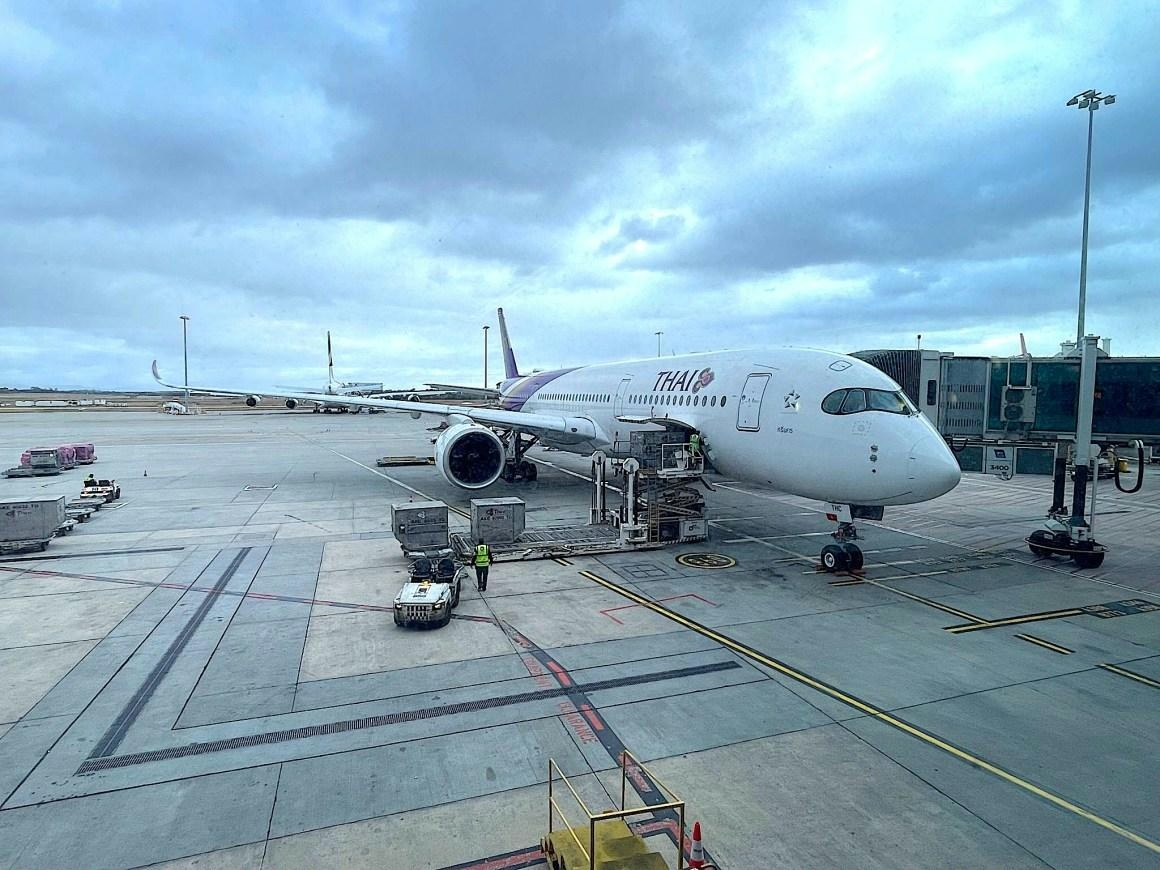
Thai Airways Establishes Two New Maintenance Subsidiaries
Thai Airways has announced the formation of two new subsidiaries focused exclusively on aircraft maintenance, signaling a strategic effort to enhance its technical capabilities and expand its presence in the maintenance, repair, and overhaul (MRO) sector. This development aligns with a broader regional trend where airlines are seeking to improve operational efficiency and reduce dependence on external service providers.
Strategic Implications and Industry Challenges
By establishing these subsidiaries, Thai Airways aims to position itself as a more formidable competitor within the MRO market, traditionally dominated by specialized providers. However, the airline faces several hurdles, including obtaining necessary regulatory approvals and effectively integrating the new entities with its existing maintenance operations. Aviation regulators and industry stakeholders are expected to closely evaluate the strategic rationale and operational efficiency of these subsidiaries, particularly given the intense competition in the regional MRO landscape.
Competitors are likely to respond by strengthening their own maintenance partnerships or pursuing acquisitions to safeguard their market share. This approach mirrors recent moves by other major carriers such as Turkish Airlines and Finnair, which have expanded their MRO capabilities in response to shifting market dynamics.
Market Context and Future Prospects
Recent industry data indicates that while Thai Airways is focused on increasing its maintenance capacity and expertise, the broader aviation sector continues to be influenced by factors such as evolving aircraft engine partnerships and changing regional demand patterns. The success of Thai Airways’ new subsidiaries will depend on their ability to provide cost-effective, high-quality services amid these competitive pressures.
Related Industry Developments
In parallel with Thai Airways’ expansion, other airlines are making significant fleet and technical investments. flydubai has signed a memorandum of understanding for 150 Airbus A321neo aircraft, marking a notable shift for the Emirates Group carrier, which has historically operated an all-Boeing fleet. Etihad Airways plans to grow its widebody fleet with an order for 15 Airbus A330-900s—comprising six direct purchases from Airbus and nine leased from Avolon—while also increasing its A350 fleet. Meanwhile, Air Sénégal is preparing to finalize its first Boeing order, committing to nine firm and six optional Boeing 737-8 aircraft.
As airlines across Asia and beyond continue to invest in fleet expansion and technical capabilities, the competitive environment for MRO services is expected to intensify. Thai Airways’ newly established subsidiaries are poised to play a critical role in the carrier’s strategic future within this evolving market.

Etihad Airways Suspends Airbus A380 Flights on Key Route

Aditya Birla Group Seeks Approval for Aircraft Leasing in GIFT City

Qatar Airways Highlights Innovation and Connectivity at Arabian Travel Market 2026

Hong Kong's Five-Year Plan Includes Andrew Fan's Aircraft Parts Processing Hub Proposal

ACIA Aero Leasing Delivers ATR72-600 to Air Nostrum

RTX Appoints Jill Albertelli as Head of Pratt & Whitney

TAT Technologies Joins Beyond Aero Hydrogen Aircraft Program

AURAK Study Highlights Barriers to Air Taxi Adoption in Emerging Economies

Xiamen Air Selects Altitude for 787 Maintenance at Heathrow

Etihad and Swissport Extend Global Partnership
