Imagen

AeroGenie — Tu copiloto inteligente.

Pregunta cualquier cosa. Analiza todo. Actúa al instante.

Tendencias

Categories

The Role of American Propulsion in Future Global UAV Missions
March 19, 2026By ePlane AI
The Role of American Propulsion in Future Global UAV Missions
0
0
Northwest UAV
UAV Propulsion
Single-Fuel Mandate

The Role of American Propulsion in Future Global UAV Missions

Advancing UAV Propulsion Through Strategic Innovation

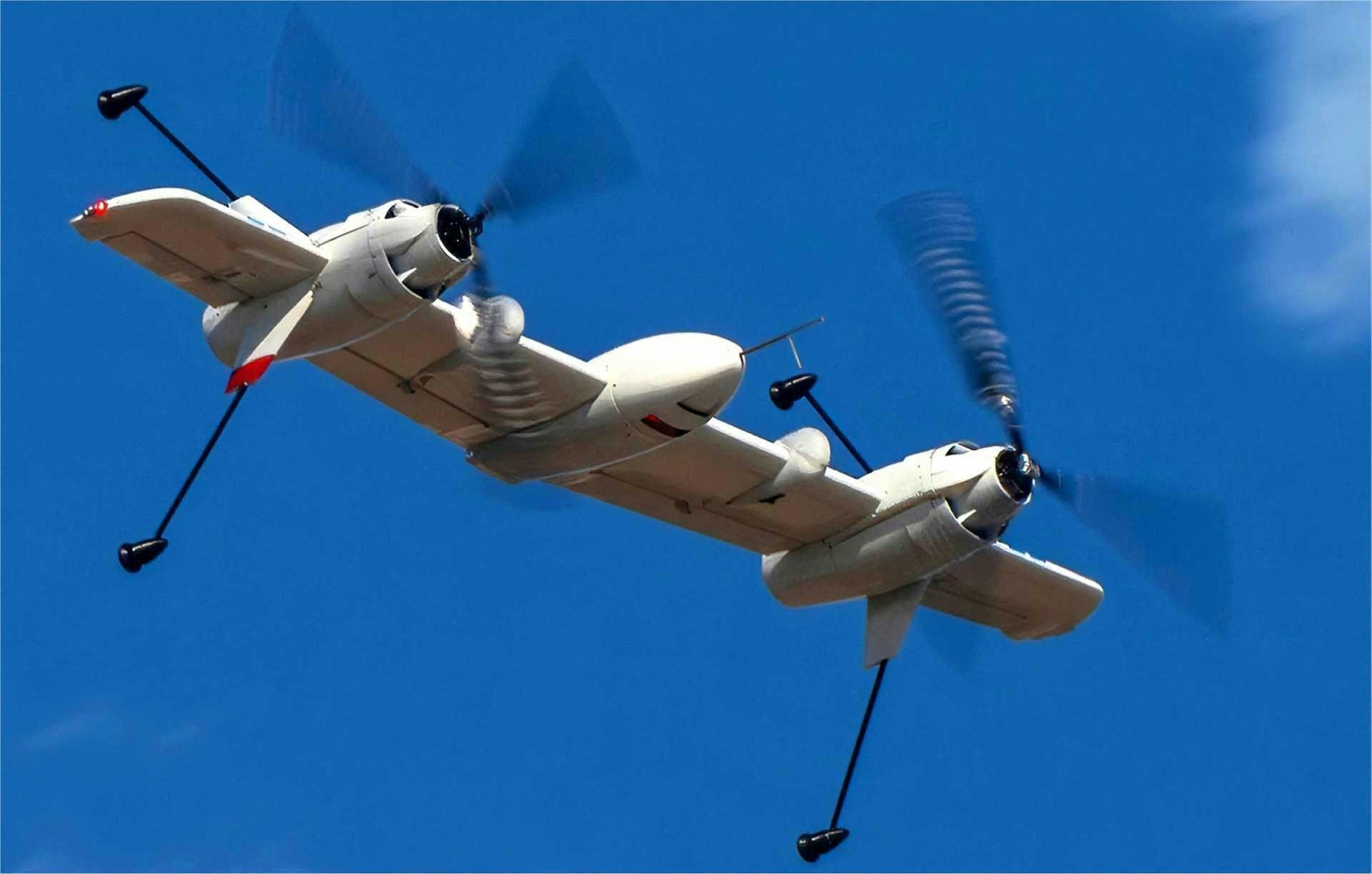
The global unmanned aerial systems (UAS) sector is experiencing a significant transformation driven by escalating geopolitical tensions and an increasing demand for sophisticated intelligence capabilities. Central to this evolution is Northwest UAV (NWUAV), an Oregon-based company that has emerged as a pivotal force within the American UAV propulsion industry. NWUAV’s approach is anchored in three strategic pillars: the Single-Fuel Mandate, Supply Chain Sovereignty, and Vertical Integration. Through these initiatives, the company is not only manufacturing advanced engines but also strengthening the resilience of national security infrastructure.

The Single-Fuel Mandate addresses a longstanding logistical challenge faced by military operations, which have traditionally managed multiple fuel types across different platforms. While ground vehicles and manned aircraft commonly utilize heavy fuels such as JP-8, many tactical UAVs have depended on high-octane gasoline, creating a complex and potentially hazardous dual-fuel environment. NWUAV’s portfolio of heavy-fuel engines—including the NW-44, NW-88, and NW-230—is engineered to operate efficiently on the same fuels already deployed in military theaters. These multi-fuel systems streamline logistics, enhance operational safety, and improve survivability, aligning closely with NATO’s “Single Fuel” initiative. Moreover, NWUAV engines are capable of performing at density altitudes up to 36,000 feet, enabling seamless mission launches from a variety of environments while reducing logistical burdens and associated risks.

Ensuring National Security Through Domestic Manufacturing

As the drone industry matures, dependence on global supply chains has evolved from a matter of convenience to a critical vulnerability. Foreign-manufactured propulsion components pose risks including embedded “kill switches,” data breaches, and abrupt supply interruptions. In response, NWUAV has committed since 2013 to developing a fully American-made propulsion stack, consolidating all design, manufacturing, and support operations at its AS9100D-certified facility in McMinnville, Oregon. This reshoring effort guarantees that U.S. defense contractors and agencies have access to propulsion systems free from adversarial influence. The company’s adherence to EAR99 export approval and stringent American aerospace standards provides customers with transparency and reliability—factors that are increasingly vital as secure supply chains and trusted microelectronics become top priorities for the Department of Defense.

Navigating Global Competition and Emerging Opportunities

Despite these technological and strategic advancements, American propulsion manufacturers face formidable competition from established foreign entities, particularly China, which has rapidly expanded its drone industry. With signals from Congress and the current administration indicating increased investment in revitalizing the domestic drone sector, demand for American-made propulsion systems is anticipated to grow substantially. This development may prompt intensified efforts by foreign competitors to maintain their market share, while U.S. companies like NWUAV capitalize on their domestic manufacturing capabilities and national security advantages.

The escalating global threat posed by drones, as emphasized by leaders of counter-drone task forces, highlights the urgent need for advanced and secure propulsion solutions. In this context, American propulsion technology is positioned to play a critical role in shaping the future of global UAV missions, offering not only innovation but also the assurance of supply chain integrity and operational security.

More news
AI and Machine Learning in the 2026 Marine Aviation Sustainment Plan

AI and Machine Learning in the 2026 Marine Aviation Sustainment Plan

AI and Machine Learning Transform the 2026 Marine Aviation Sustainment Plan The 2026 Marine Aviation Plan represents a significant evolution in the Marine Corps’ approach to aviation readiness, placing artificial intelligence (AI) and machine learning (ML) at the heart of a new predictive sustainment model. This strategic shift departs from decades of reactive maintenance and supply practices, aiming to establish a data-driven framework that anticipates operational needs and enhances agility. Such innovation is particularly critical as Marine Aviation confronts the challenge of maintaining high readiness levels across dispersed and austere environments with limited logistical support. The plan candidly acknowledges the current limitations: “Marine Corps Aviation remains reactive in maintenance, supply, and operations planning, limiting readiness and reducing the ability to sustain distributed aviation operations and crisis response.” Traditional sustainment models, which rely on centralized maintenance, predictable supply chains, and steady operational tempos, are increasingly inadequate for Distributed Aviation Operations (DAO) in contested regions such as the Indo-Pacific. In these scenarios, the conventional practice of returning aircraft to main bases for scheduled maintenance or enduring lengthy waits for parts is no longer viable. A New Sustainment Paradigm: Dynamic Supply, Predictive Maintenance, and Optimized Operations To overcome these challenges, the AI and ML sustainment initiative is organized around three integrated Lines of Operation: Dynamic Aviation Supply, Predictive Maintenance, and Optimized Operations. Together, these efforts seek to establish a seamless data flow between maintenance, supply, and operational functions. AI and ML algorithms will uncover patterns beyond human detection, enabling Marines to anticipate and mitigate failures before they degrade combat readiness. This approach signifies a fundamental reimagining of how the Marine Corps sustains its aviation combat power rather than a mere incremental improvement. The first line of effort, Dynamic Aviation Supply, tackles the persistent difficulty of ensuring the timely availability of the right parts, especially when operating from widely dispersed and austere locations. Traditional supply packages, which are based on historical averages and stable environments, falter when squadrons operate from multiple Forward Arming and Refueling Points (FARPs) or expeditionary airfields where resupply opportunities are irregular. Dynamic Aviation Supply envisions adaptive, AI-driven spare parts packages that respond in real time to operational conditions and evolving aircraft configurations. Machine learning algorithms will analyze extensive datasets—including aircraft configurations, operational tempo, environmental conditions, mission profiles, and component failure rates—to identify subtle patterns. For example, AI can detect that F-35B aircraft operating in high-temperature, high-humidity maritime environments with specific weapons loads experience distinct wear patterns compared to those based at temperate locations. Integration Challenges and Broader Implications Despite its promise, the integration of AI and ML into Marine Aviation sustainment faces significant challenges. Rapid technological adoption is essential, yet ensuring interoperability with existing legacy systems remains a formidable obstacle. Additionally, the high costs associated with advanced AI capabilities present considerable budgetary constraints. Beyond the military domain, these technological advancements are influencing the defense industry and financial markets. Investor responses to AI-driven developments have been marked by volatility, oscillating between panic selling and euphoric rallies. Concurrently, competitors are accelerating their own research and development efforts, forging strategic partnerships, and pursuing acquisitions to maintain pace with the Marine Corps’ technological advancements. As the 2026 Marine Aviation Plan progresses, its success will hinge not only on the transformative potential of AI and machine learning but also on the Marine Corps’ capacity to manage the complexities of integration, cost, and a rapidly evolving technological environment.
Joby Electric Air Taxi Conducts Test Flights at Half Moon Bay Airport Following FAA Approval

Joby Electric Air Taxi Conducts Test Flights at Half Moon Bay Airport Following FAA Approval

Joby Electric Air Taxi Conducts Test Flights at Half Moon Bay Airport Following FAA Approval Joby Aviation, a prominent developer of electric vertical takeoff and landing (eVTOL) aircraft, has recently completed a series of test flights at Half Moon Bay Airport (HAF) after securing approval from the Federal Aviation Administration (FAA). These flights represent a pivotal step for the California-based company as it moves closer to launching commercial air taxi services. Advancing Urban Air Mobility The test flights, conducted with the collaboration of airport personnel and partners, took place over the Moss Beach Distillery and featured Joby’s all-electric air taxi. Designed to provide fast, quiet, and convenient urban transportation, the aircraft is central to Joby’s vision of operating its own air taxi service in cities worldwide, alongside plans to sell the aircraft to other operators. This progress aligns with a broader surge of interest and investment in urban air mobility, reflecting growing optimism about the future of electric air taxis. Industry Context and Challenges Ahead Joby’s recent FAA approval has been met with enthusiasm from investors, yet the company faces a competitive environment. Rivals such as Archer Aviation and Beta Technologies are also intensifying their testing and certification efforts in response to Joby’s advancements. Despite the successful test flights, Joby must still overcome significant challenges before commencing commercial operations. These include ongoing regulatory scrutiny as the company pursues full FAA certification, as well as technical and manufacturing hurdles related to scaling production and meeting rigorous safety and performance standards. Joby has announced plans to initiate early operations under the FAA’s eVTOL Integration Pilot Program (eIPP) in 2026. The company aims to increase manufacturing capacity to four aircraft per month by 2027, with a long-term goal of producing up to 500 aircraft annually at its Ohio facilities. The Future of Electric Air Taxis The urban air mobility sector is rapidly evolving, with companies competing to secure regulatory approvals and establish market leadership. The growth of this industry will depend on continued technological innovation, effective regulatory collaboration, and public acceptance of electric air taxis as a practical mode of transportation. For further details on Joby Aviation and its developments, visit www.jobyaviation.com.
Why American Airlines Chooses the Boeing 787 Over the Airbus A350

Why American Airlines Chooses the Boeing 787 Over the Airbus A350

Why American Airlines Chooses the Boeing 787 Over the Airbus A350 The Airbus A350 has gained recognition as a premier widebody aircraft, celebrated for its advanced composite construction, extended range, and fuel efficiency. Numerous leading international carriers have incorporated the A350 into their long-term fleet strategies, capitalizing on its lower operating costs and enhanced passenger comfort. However, American Airlines presents a notable divergence from this trend, having selected the Boeing 787 Dreamliner as the cornerstone of its long-haul operations. The Airbus A350’s Market Position The A350 family, equipped with Rolls-Royce Trent XWB engines and featuring a carbon-fiber fuselage, offers a compelling combination of range, capacity, and reduced emissions. The A350-900 variant is optimized for long, thin routes, while the larger A350-1000 is designed to serve high-demand trunk routes. Airlines benefit from operational efficiencies through shared training and maintenance across these variants, while passengers experience improved cabin pressurization and humidity levels, contributing to enhanced comfort and premium yields. Additionally, the A350 includes an ultra-long-range version, currently operated by Singapore Airlines, and a forthcoming freighter model, the A350F, aimed at modernizing cargo fleets in response to increasingly stringent environmental regulations. American Airlines’ Fleet Strategy American Airlines’ engagement with the A350 began indirectly through US Airways, which had placed an order for 20 A350s in 2005 to support its long-haul ambitions following restructuring. After the merger with American Airlines, the combined carrier reevaluated its fleet requirements and ultimately canceled the A350 order, opting instead to concentrate on the Boeing 787 for its future widebody needs. This decision was influenced by several factors. The Boeing 787’s operational flexibility, fuel efficiency, and compatibility with American’s existing Boeing fleet presented a more attractive proposition. The airline concluded that the 787 better aligned with its network strategy and capacity demands, facilitating streamlined pilot training, maintenance, and scheduling processes. Industry Dynamics and Market Implications American Airlines’ exclusive commitment to the Boeing 787 occurs amid intensified competition between Boeing and Airbus. In February, Boeing reported its highest aircraft delivery figures in nine years, while Airbus maintained steady deliveries despite a slower start to the year. American’s choice may have broader implications for market share, potentially strengthening Boeing’s position and prompting strategic responses from Airbus. In response, competitors might adjust their fleet strategies or seek to leverage the A350’s advantages. Airbus may pursue technological enhancements or targeted marketing initiatives to bolster the A350’s appeal and regain traction in the North American market. Influence on Route Expansion The selection of the Boeing 787 also impacts transatlantic route development. As American Airlines, alongside carriers such as Aeromexico and Alaska Airlines, plans new long-haul services, the preference for the 787 over the A350 could affect route economics, flight frequency, and passenger experience. This decision highlights the intricate relationship between aircraft capabilities, market forces, and airline strategy in shaping the future landscape of international air travel. While the Airbus A350 remains a foundational aircraft for many global airlines, American Airlines’ choice of the Boeing 787 reflects a deliberate alignment of fleet efficiency, operational requirements, and market positioning—factors that continue to influence the competitive dynamics of commercial aviation.
FAA Restricts Helicopter Flights Near Busy Airports Following AI Review of Aviation Incidents

FAA Restricts Helicopter Flights Near Busy Airports Following AI Review of Aviation Incidents

FAA Imposes New Restrictions on Helicopter Flights Near Major Airports Following AI Safety Review The Federal Aviation Administration (FAA) has introduced stringent new regulations governing helicopter operations in the vicinity of busy airports, prompted by an artificial intelligence-driven analysis of aviation incidents that exposed critical safety vulnerabilities. This policy shift, outlined in an order released on Wednesday, departs from the traditional reliance on the “see and avoid” method, whereby helicopter pilots visually maintain separation from other aircraft in congested airspace. Enhanced Radar Monitoring to Prevent Collisions Under the revised framework, air traffic controllers will employ radar technology to actively monitor helicopters as they navigate flight paths used by arriving and departing airplanes. This change responds to a series of recent near-misses and a fatal collision that highlighted the inadequacies of visual separation alone. On January 29, 2025, a U.S. Army Black Hawk helicopter collided with an American Airlines regional jet during its landing approach at Ronald Reagan Washington National Airport. Despite the helicopter pilot’s report of having the passenger plane in sight, the crash over the Potomac River resulted in 67 fatalities. Investigations by the National Transportation Safety Board revealed that the FAA had access to raw data documenting over 15,000 close calls at the airport between October 2021 and December 2024. However, this information was not thoroughly analyzed until after the deadly accident. In response, the FAA deployed AI tools to conduct a comprehensive assessment of airports nationwide where helicopters and fixed-wing aircraft frequently share airspace, uncovering previously unrecognized patterns and risks. Transportation Secretary Sean Duffy emphasized the significance of this approach, stating, “Using innovative data analysis, the safety team at the FAA has identified the need for enhanced protocols at all airports across the National Airspace System.” Operational Implications and Industry Response The FAA’s announcement also referenced several recent incidents underscoring the urgency of the new measures, including a February 27 event where a police helicopter entered the final approach path of an American Airlines flight, and a March 2 occurrence at Hollywood Burbank Airport in which a helicopter had to maneuver to avoid a converging private aircraft. While the radar-based separation requirements are anticipated to enhance safety, the FAA acknowledged that they may introduce operational challenges, particularly delays for routine helicopter flights. Nonetheless, urgent missions such as medical evacuations and law enforcement operations will continue to receive priority clearance, with fixed-wing traffic temporarily halted to accommodate these critical flights. This policy adjustment has intensified scrutiny of aviation safety protocols and raised concerns about potential disruptions to essential helicopter services, including police, medical, and news operations that depend on rapid access to congested airspace. Airlines and other stakeholders are now adapting to the updated regulations to ensure compliance while striving to maintain operational efficiency. As the FAA strengthens oversight in light of technological advancements and tragic events, the aviation sector is entering a phase of transition focused on preventing future accidents and reinforcing public confidence in the safety of shared airspace.
SWISS Appoints Wagner as Head of Technical Division

SWISS Appoints Wagner as Head of Technical Division

SWISS Appoints Thoralf Wagner as Head of Technical Division Swiss International Air Lines (SWISS) has announced the appointment of Thoralf Wagner as the new head of technical fleet management, effective June 1, 2026. In this capacity, Wagner will be responsible for overseeing the technical operations of the airline’s fleet, encompassing maintenance, technical development, and adherence to aviation regulatory standards. Extensive Industry Experience and Leadership Wagner brings more than twenty years of experience in the aviation sector to his new role. He succeeds Claus Bauer, who has moved to a different position within the Lufthansa Group. Since 2021, Wagner has served as chief executive of Lufthansa Technik Budapest Ltd., and prior to that, he held various management positions at Lufthansa Technik and Lufthansa Technik Logistik Services. His comprehensive background in aircraft maintenance and international maintenance network management positions him well to lead SWISS’s technical division. Oliver Buchhofer, chief operating officer of SWISS, highlighted the importance of Wagner’s appointment, stating, “The technical division forms the backbone of stable flight operations. In Thoralf Wagner we are gaining a leader who is thoroughly familiar both with the operational realities of aircraft maintenance and with managing international maintenance networks. His experience will help us further strengthen the technical reliability of our fleet and successfully implement our upcoming fleet modernisation programmes.” Strategic Challenges and Industry Implications Wagner’s appointment arrives at a critical juncture for SWISS, as the airline navigates the complexities of fleet harmonization amid ongoing uncertainty surrounding the future of its Airbus A220-100 fleet. These challenges demand careful management to maintain operational efficiency and ensure compliance with regulatory requirements. Market responses to the leadership change have been mixed; some investors view the move as a strategic effort to enhance operational streamlining and technical reliability, while others remain cautious about potential impacts on the A220 program. Competitors within the industry are closely observing SWISS’s evolving technical strategy. Some are anticipated to reassess or adjust their own technical divisions in response to any competitive advantages that may emerge under Wagner’s leadership. Educational Background and Future Outlook Wagner holds a degree in transport engineering with a specialization in aviation from the Technical University of Dresden. During his academic tenure, he gained early practical experience with SWISS and Crossair as a student and diploma candidate. As SWISS embarks on its forthcoming fleet modernization initiatives, Wagner’s expertise in operational maintenance and international network management is expected to be instrumental in shaping the airline’s technical future.
Electric Flying Taxis Near Commercial Launch

Electric Flying Taxis Near Commercial Launch

Electric Flying Taxis Poised for Commercial Launch Joby Aviation is spearheading a transformative shift in urban transportation through its partnership with Virgin Atlantic, advancing the commercial introduction of electric air taxis. The company’s electric vertical takeoff and landing (eVTOL) aircraft is designed to carry four passengers, providing a quieter and zero-emission alternative to conventional helicopters. Equipped with six tilting rotors, the air taxi can hover, ascend, and cruise at speeds reaching 200 miles per hour, with a range of approximately 100 miles on a single battery charge. Successful test flights conducted in both the United States and Japan have validated the vehicle’s operational capabilities in real-world conditions. Commercial Rollout and Industry Challenges Joby Aviation aims to commence commercial services in Dubai and London by late 2025, signaling a potential paradigm shift in short-range urban travel. Despite this progress, the path to widespread adoption remains complex. Regulatory challenges persist as authorities work to develop comprehensive safety standards and operational frameworks for this emerging mode of transport. Public acceptance also poses a significant hurdle, with concerns surrounding safety, noise pollution, and the integration of air taxis into already congested urban airspaces. The market for electric flying taxis is becoming increasingly competitive, with companies such as Archer Aviation and Eve Air Mobility vying alongside Joby to establish a dominant presence. This rivalry has already led to legal confrontations, including Archer’s counterclaim against Joby alleging fraud, underscoring the high stakes involved in this nascent industry. Regulatory Progress and Future Outlook Regulatory bodies are actively facilitating the sector’s growth. The Federal Aviation Administration (FAA) has approved pilot programs for electric air taxis across 26 states, marking a critical step toward commercialization. However, some major metropolitan areas, including Los Angeles, were excluded from these test sites, potentially affecting local efforts to become early adopters of urban air mobility solutions. As the industry approaches commercial launch, significant questions remain regarding the pace at which electric air taxis will secure public trust and regulatory endorsement. If these challenges are successfully navigated, electric air taxis could revolutionize urban travel by offering a fast, clean, and efficient alternative to traditional ground transportation.
Madrid Wins Ryanair’s Largest European Maintenance Hub, Impacting Aviation Jobs in Spain

Madrid Wins Ryanair’s Largest European Maintenance Hub, Impacting Aviation Jobs in Spain

Madrid Secures Ryanair’s Largest European Maintenance Hub, Transforming Spain’s Aviation Sector Madrid has emerged as a pivotal center in European aviation with Ryanair’s inauguration of its largest aircraft maintenance facility at Madrid-Barajas Airport. This €25 million investment represents the airline’s most substantial ground-level commitment to date, positioning Spain as a key player in Ryanair’s future expansion plans. The new maintenance, repair, and overhaul (MRO) center is set to reshape the aviation employment landscape across the country. A State-of-the-Art Facility and Its Impact on Employment Occupying 22,000 square meters within the airport’s industrial zone, the new MRO center is capable of servicing up to seven aircraft simultaneously. It is equipped to perform a wide range of tasks, from routine inspections to complex engineering operations, necessitating a highly skilled workforce trained to meet rigorous international standards. The facility is expected to generate approximately 700 skilled jobs, offering stable and well-compensated employment opportunities in a sector where technical expertise is increasingly in demand. The inauguration ceremony, attended by Madrid’s Mayor José Luis Martínez-Almeida, highlighted strong municipal support and aligned with broader initiatives to establish Madrid-Barajas as a premier European aviation hub. However, the expansion also introduces challenges. Industry experts, including the CEO of Danish Air Transport, have cautioned about potential oversaturation in the aircraft, crew, maintenance, and insurance (ACMI) market. The increased maintenance capacity may intensify competition among service providers in Spain, raising concerns about job security for existing aviation workers as the market adapts to these new dynamics. Spain’s Growing Strategic Role in Ryanair’s Operations Ryanair currently operates 109 aircraft from 11 bases across Spain, making the country a cornerstone of its Southern European network. The Madrid maintenance hub now serves as a central node within Ryanair’s network of seven EU-based maintenance centers. This development complements the airline’s existing Spanish infrastructure, which includes another facility at Barajas, a maintenance center in Seville, a crew training site, and a technology hub in central Madrid. Together, these assets reinforce Spain’s strategic importance to Ryanair’s operations. The establishment of the Madrid hub is also expected to prompt competitive responses from other airlines, which may reconsider their maintenance strategies and potentially relocate operations to Madrid to capitalize on the new facility’s capabilities. This could further heighten competition for skilled labor and maintenance contracts within the Spanish aviation sector. Supporting Ryanair’s Ambitious Growth Targets Ryanair’s investment in Madrid is closely linked to its long-term vision of operating 800 aircraft and transporting 300 million passengers annually by 2034. The new maintenance hub is designed to enhance operational efficiency by reducing logistical dependencies and turnaround times, thereby supporting this ambitious growth trajectory. Moreover, the facility may influence Ryanair’s future route planning. Market analyses indicate untapped potential for routes such as Newcastle to Madrid, which could become more viable as the airline consolidates its operations in the Spanish capital. As Ryanair deepens its commitment to Madrid, the move presents both significant opportunities and challenges for Spain’s aviation sector. It promises a substantial boost in employment while simultaneously reshaping the competitive landscape for maintenance services across Europe.
SITA Introduces Bag Radar to Enhance Predictive Baggage Tracking

SITA Introduces Bag Radar to Enhance Predictive Baggage Tracking

SITA Introduces Bag Radar to Enhance Predictive Baggage Tracking The aviation sector is poised to make a substantial advancement in reducing baggage disruptions with the launch of SITA Bag Radar, a cloud-based analytics platform designed to predict and prevent mishandled luggage, missed connections, and operational bottlenecks in real time. As global air travel continues to grow, baggage mishandling remains a persistent issue, often leading to passenger dissatisfaction and significant financial costs for airlines. From Reactive to Proactive Baggage Management Historically, airlines have managed baggage issues reactively, addressing problems only after they have caused operational disruptions. SITA Bag Radar represents a strategic shift by employing historical data, real-time monitoring, and artificial intelligence to deliver early warnings of potential baggage disruptions. This proactive approach empowers airlines, airports, and ground handlers to intervene before issues escalate, thereby improving operational efficiency and enhancing the overall passenger experience. Operational Mechanics of SITA Bag Radar The platform processes extensive operational baggage data, transforming it into actionable insights. By detecting anomalies and emerging risks—such as patterns that suggest likely missed connections or congestion at transfer points—SITA Bag Radar enables operational teams to implement corrective measures, including rerouting baggage or reallocating resources. The objective is to mitigate disruptions before they affect travelers. Persistent Challenges in Baggage Handling Despite technological progress, baggage mishandling continues to be a challenge due to the complexity of global airline networks. Baggage frequently passes through multiple systems, handlers, and airports, with data often fragmented across disparate platforms. This fragmentation complicates efforts to maintain a comprehensive view of baggage movement, allowing delays and inefficiencies to escalate rapidly. Integration and Industry Reception The success of SITA Bag Radar depends on addressing several critical challenges. Integration with existing legacy baggage tracking systems used by airlines and airports is essential to ensure reliable, real-time insights. Additionally, the accuracy and consistency of data collected from diverse sources are vital for the effectiveness of predictive analytics. Privacy concerns also arise from real-time location tracking, necessitating stringent measures to safeguard data security and maintain passenger trust. Industry response to Bag Radar has been mixed. Some airlines remain skeptical about the technology’s efficacy and the potential costs associated with its implementation. Meanwhile, competitors are expected to enhance their own baggage tracking solutions or develop alternative technologies to maintain competitive advantage. Future Prospects SITA Bag Radar signifies a major step toward embedding predictive intelligence within aviation operations, addressing a longstanding gap in baggage management. Should the challenges of integration and data quality be successfully navigated, the platform has the potential to establish a new benchmark for proactive baggage handling, reducing mishandling rates and improving the travel experience for millions of passengers worldwide.
Bordeaux Airport uses AI to reduce passenger waiting times

Bordeaux Airport uses AI to reduce passenger waiting times

Bordeaux Airport Implements AI to Reduce Passenger Waiting Times Bordeaux-Mérignac Airport has initiated a trial of advanced artificial intelligence technology aimed at improving passenger flow and minimizing waiting times within its terminal. Collaborating with Outsight, a specialist in real-time data solutions, the airport has deployed a ‘Physical AI’ system—referred to as a “motional digital twin”—to monitor and manage crowd movements more effectively. Enhancing Operational Efficiency Through Real-Time Data Since March 16, the AI system has been operational at strategic locations in Hall A, including security checkpoints. Utilizing 3D LiDAR sensors, the technology captures three-dimensional data on passenger movements, providing real-time insights into crowd density, queue lengths, and spatial utilization. This continuous stream of information allows airport personnel to dynamically adjust resource allocation, such as deploying additional security staff or opening extra service counters when necessary. The system also generates alerts in instances of overcrowding or capacity breaches, enabling swift operational responses. This capability is particularly pertinent given the recent introduction of the Entry/Exit System (EES), which has increased security checks and contributed to longer wait times. Talel Jaouad, head of airport process operations at Bordeaux Airport, emphasized that the trial aims to deepen understanding of passenger flows to optimize resource deployment and enhance overall passenger satisfaction. The airport’s official statement highlighted that data-driven management of passenger movement is becoming a critical factor in operational performance. Importantly, the AI technology ensures passenger privacy by providing only anonymized visualizations, with no personal identification recorded. This confidential data offers a comprehensive, real-time overview of terminal capacity, supporting efforts to prevent bottlenecks and reduce queue lengths at key points. Broader Implications for the Aviation and Travel Industries Bordeaux’s adoption of AI reflects a growing trend across the aviation sector, where airports increasingly rely on anonymized AI tools to optimize passenger throughput and improve operational efficiency. Raul Bravo, president and co-founder of Outsight, noted that airports like Bordeaux are integrating technologies that seamlessly fit into existing operations while delivering immediate, measurable benefits. Handling approximately six million passengers annually, Bordeaux Airport plans to expand its capacity to 7.8 million by 2027. Serving over 80 destinations through 24 airlines, including planned growth from major carriers such as EasyJet, the airport is prioritizing the optimization of its current infrastructure. Passenger volumes currently stand at about 85 percent of pre-pandemic levels, underscoring the importance of efficient terminal management. Beyond airport operations, the integration of AI is reshaping the wider travel industry. As AI-driven agents increasingly automate planning, booking, and operational tasks, traditional business models—particularly those of intermediaries like online travel agencies—may encounter mounting challenges. Recent volatility in sectors such as logistics and software has been linked to rapid AI advancements, and Bordeaux’s initiative may encourage competitors to adopt similar technologies to maintain their competitive edge. This evolution raises important questions about the future role of intermediaries and the overall landscape of travel services. By leveraging AI, Bordeaux Airport seeks not only to improve passenger experience but also to position itself at the forefront of an industry undergoing rapid technological transformation, where innovation is essential for maintaining competitiveness and operational excellence.
Stratus Aero Partners Announces CEO Transition

Stratus Aero Partners Announces CEO Transition

Stratus Aero Partners Announces CEO Transition Amid Industry Challenges Stratus Aero Partners has revealed a significant leadership change, with Chief Executive Officer Mark Harris set to retire on March 31 following a distinguished tenure. Harris played a pivotal role in shaping the company and its subsidiaries, fostering strong relationships with customers and partners, and positioning the business for sustained growth. The company credited his leadership with establishing Stratus as a well-recognized aviation platform. New Leadership and Strategic Continuity Althea Arvin will succeed Harris as Chief Executive Officer effective April 1, following a carefully managed transition period during which she worked closely with the outgoing CEO and the leadership team. Arvin brings a blend of continuity and strategic clarity to the role, poised to build upon the solid foundations laid by her predecessor. Her leadership is expected to uphold the company’s commitment to high service standards, operational excellence, and enduring partnerships with customers and stakeholders. Navigating a Complex Market Environment This leadership transition occurs amid a challenging market landscape for Stratus Aero Partners and the broader aviation sector. The company faces inherent risks associated with executive change, compounded by industry pressures such as market oversaturation in the European ACMI (Aircraft, Crew, Maintenance, and Insurance) segment and structural obstacles within Brazil’s aviation market. These factors may amplify investor concerns regarding leadership stability and operational continuity during the handover. Competitors may seek to exploit this period of change by adjusting their strategies to capitalize on any perceived vulnerabilities at Stratus. In response, the company has emphasized that the transition has been carefully structured to ensure uninterrupted business operations, with customers and partners continuing to receive consistent, high-quality service and support. Stratus Aero Partners expressed confidence in Arvin’s ability to lead the company through its next phase, extending gratitude to employees, customers, and partners for their ongoing support, which it described as vital to future success. The company remains focused on addressing industry challenges while pursuing growth and maintaining its reputation for excellence.
line










