
Orquesta conocimientos de IA para convertirlos en acción

Tendencias
Categories
Transatlantic Flights Operated by U.S. Boeing 757s
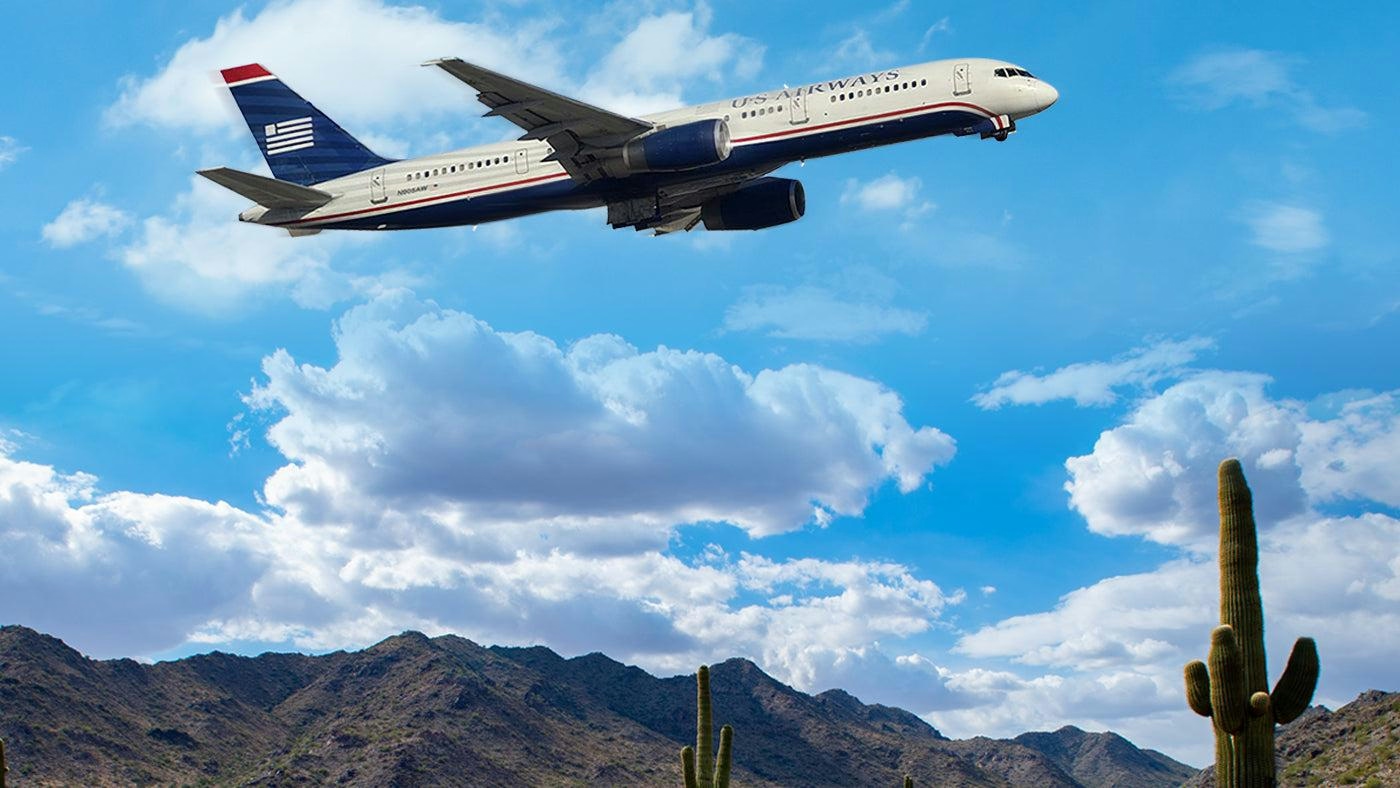
Transatlantic Flights Operated by U.S. Boeing 757s
The Enduring Role of the Boeing 757
In 2026, the Boeing 757 continues to serve as a crucial aircraft in transatlantic operations between the United States and Europe, despite the gradual introduction of newer narrowbody models such as the Airbus A321XLR. U.S. carriers, particularly United Airlines, depend heavily on the 757 for thousands of flights annually across the Atlantic. The aircraft’s combination of nearly 4,000 nautical miles of range, solid performance, and moderate seating capacity of approximately 180 seats makes it especially well-suited for “long and thin” routes. These routes typically connect secondary cities on both sides of the Atlantic, where passenger demand does not justify the deployment of larger widebody jets.
United Airlines stands out as the second-largest commercial operator of the Boeing 757, with a fleet of 61 aircraft. It operates the most extensive transatlantic 757 network among U.S. carriers, primarily from its major East Coast hub at Newark Liberty International Airport (EWR), near New York City. From Newark, United serves a variety of smaller European destinations including Porto, Edinburgh, Dublin, Reykjavik, Bilbao, Faro, Shannon, and Malaga. The 757’s capabilities enable nonstop service to these cities, which might otherwise require connecting flights or the use of larger aircraft.
United Airlines’ Transatlantic 757 Network in 2026
United’s 2026 transatlantic schedule features 14 routes operated by the 757, with eight departing from Newark, three from Chicago O’Hare (ORD), and three from Washington Dulles (IAD). Both ORD and IAD offer flights to Edinburgh and Reykjavik, while O’Hare provides seasonal summer service to Shannon. Washington Dulles maintains year-round service to Dublin, which is the busiest route in this network, with 529 flights and over 93,000 seats scheduled for the year. Newark to Porto also sees significant 757 utilization, with flights operating up to twice daily during peak seasons. Other routes such as Newark to Bilbao, Faro, and Reykjavik are served less frequently, reflecting varying demand levels.
Challenges Facing the Transatlantic Market
The transatlantic aviation market faces several challenges that could affect the future deployment of the Boeing 757. Geopolitical tensions, including the ongoing conflict involving Iran, are reshaping global airline routes and influencing competitive pricing and route availability. These developments have led to shifts in airline alliances and code-sharing agreements, with carriers like Turkish Airlines expanding their market share, while others such as Qatar Airways encounter setbacks. Additionally, new entrants are intensifying competition; for example, Brazilian carrier GOL Linhas Aéreas plans to enter the transatlantic market with Airbus A330 aircraft, targeting key corridors.
Regulatory issues further complicate the landscape. Potential U.S. retaliation against Dublin Airport’s passenger cap could disrupt transatlantic operations, particularly on routes where the 757 plays a central role. These geopolitical and regulatory factors are likely to influence airline strategies, fleet deployment decisions, and the viability of certain routes in the coming years.
Despite these challenges, the Boeing 757 remains a vital asset for connecting the United States and Europe. Its ability to efficiently serve niche markets ensures its continued relevance as airlines navigate a rapidly evolving global aviation environment.

Etihad Airways Suspends Airbus A380 Flights on Key Route

Aditya Birla Group Seeks Approval for Aircraft Leasing in GIFT City

Qatar Airways Highlights Innovation and Connectivity at Arabian Travel Market 2026

Hong Kong's Five-Year Plan Includes Andrew Fan's Aircraft Parts Processing Hub Proposal

ACIA Aero Leasing Delivers ATR72-600 to Air Nostrum

RTX Appoints Jill Albertelli as Head of Pratt & Whitney

TAT Technologies Joins Beyond Aero Hydrogen Aircraft Program

AURAK Study Highlights Barriers to Air Taxi Adoption in Emerging Economies

Xiamen Air Selects Altitude for 787 Maintenance at Heathrow

Etihad and Swissport Extend Global Partnership
