
Orquesta conocimientos de IA para convertirlos en acción

Tendencias
Categories
Transportation Secretary Sean Duffy Pilots Electric Air Taxi
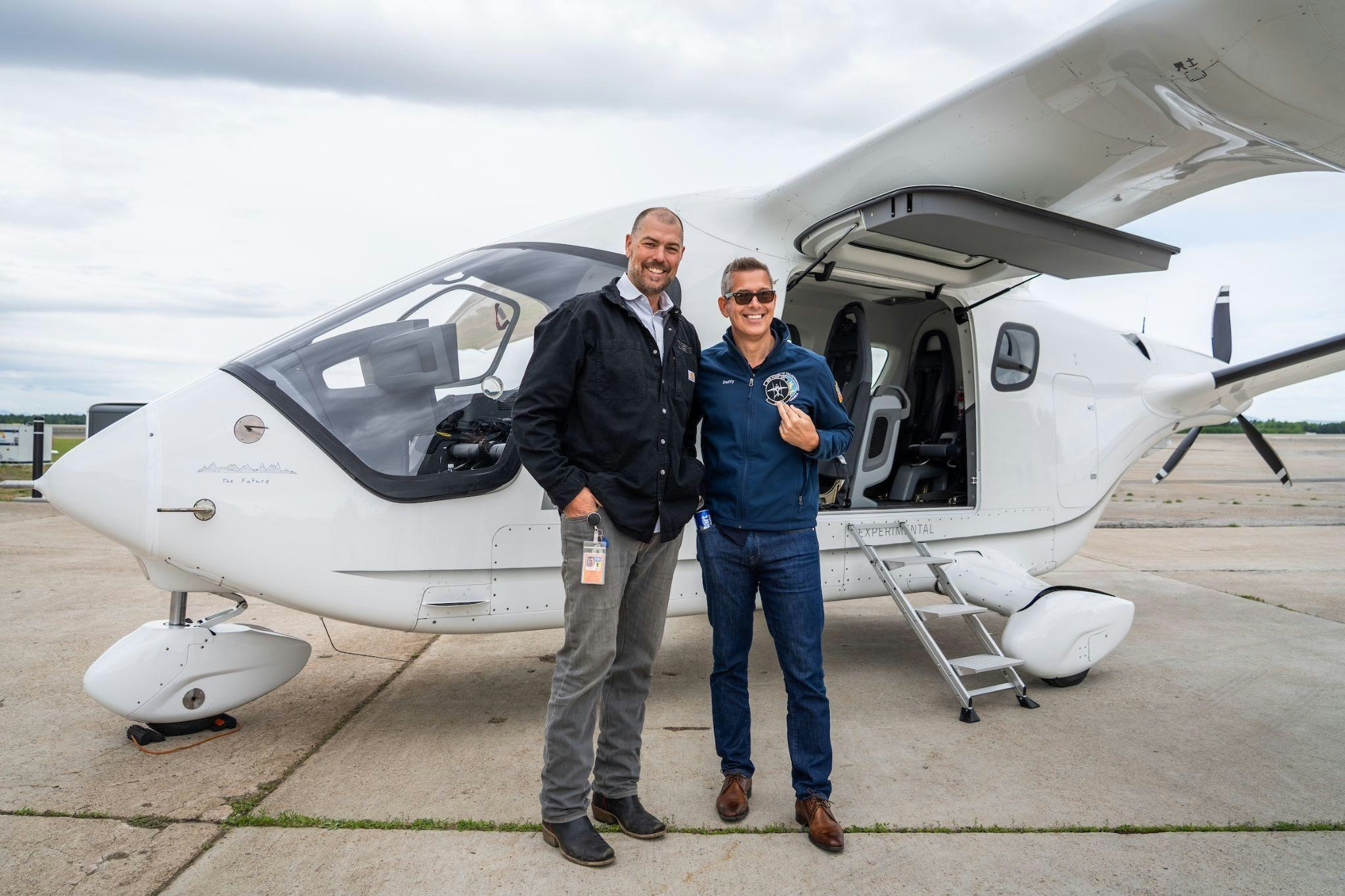
Transportation Secretary Sean Duffy Pilots Electric Air Taxi, Marking Milestone for eVTOL Industry
Historic Flight Demonstrates Federal Commitment to eVTOL Technology
U.S. Transportation Secretary Sean Duffy recently made history as the first transportation secretary to pilot an electric vertical takeoff and landing (eVTOL) aircraft. The flight took place at Beta Technologies’ headquarters in Burlington, Vermont, where Duffy flew the company’s Alia model. Describing the experience as a “historic flight into the future,” Duffy emphasized the transformative potential of eVTOLs, stating that they will “fundamentally change the way people and products move.” His remarks underscore the growing federal interest in advancing electric aviation technologies.
This milestone coincides with the Department of Transportation’s (DOT) preparations to broaden the integration of eVTOL aircraft into U.S. airspace. Beta Technologies is among several manufacturers participating in the Federal Aviation Administration’s (FAA) eVTOL Integration Pilot Program (eIPP), which is expected to launch as early as September. The program, set to run for at least three years across 26 states, will enable participants to operate precertified eVTOL aircraft at real airports. Collaborating closely with air traffic controllers, the initiative aims to test a variety of applications, including urban air taxi services, regional passenger transport, autonomous flight, and cargo and medical deliveries.
Industry Collaboration and Technological Advancements
The DOT has designated eight lead participants comprising state and local transportation departments working alongside manufacturers, operators, and infrastructure providers. Beta Technologies is actively engaged with seven of these groups. Secretary Duffy highlighted the broad range of potential uses for next-generation aircraft, from emergency organ transplants to regional air travel, signaling a future where electric flight plays a critical role in transportation.
Beta plans to deploy both the Alia eVTOL, which Duffy piloted, and the CX300, a conventional takeoff and landing variant, during the eIPP. Both aircraft are fully electric, powered by Beta’s proprietary H500A engine, and designed for operational efficiency. The Alia is optimized for short-haul passenger and cargo missions, while the CX300 targets longer-range flights. Beta emphasizes the cost-effectiveness of its technology, noting that the Alia consumed only $3 worth of electricity during the demonstration flight. The company’s charging infrastructure currently spans approximately 50 sites nationwide, with plans for further expansion.
Challenges and Industry Outlook
Despite the progress, the electric air taxi sector faces significant obstacles. Regulatory challenges persist, particularly regarding FAA certification processes and the establishment of comprehensive charging infrastructure. Market responses remain mixed, with skepticism about the business model’s long-term viability and safety concerns related to integrating eVTOLs with traditional aircraft operations. The industry is also contending with legal disputes that could delay regulatory approvals and program implementation.
Competitors in the eVTOL space are responding in diverse ways. While some companies grapple with legal issues and diminishing investor confidence, others, such as Archer Aviation, maintain optimism about regulatory support and public acceptance. The eVTOL Integration Pilot Program, initiated under the Trump administration, has provided some validation for the sector, though ongoing legal challenges continue to pose risks.
Beta Technologies’ aircraft have already been tested by pilots beyond the company’s own staff. Republic Airways pilots have conducted multiple demonstration flights, including landings at Orlando International Airport and winter testing in New York and Vermont. Other industry players such as Bristow Group and Air New Zealand have evaluated Beta’s aircraft, while Surf Air Mobility plans to commence Alia passenger flights in Hawaii. Additionally, logistics companies UPS and United Therapeutics are exploring the aircraft’s potential for cargo operations.
As the eVTOL industry advances amid regulatory, technical, and market challenges, Secretary Duffy’s flight represents a significant moment of federal engagement and may signal a turning point for the future of electric aviation in the United States.

Etihad Airways Suspends Airbus A380 Flights on Key Route

Aditya Birla Group Seeks Approval for Aircraft Leasing in GIFT City

Qatar Airways Highlights Innovation and Connectivity at Arabian Travel Market 2026

Hong Kong's Five-Year Plan Includes Andrew Fan's Aircraft Parts Processing Hub Proposal

ACIA Aero Leasing Delivers ATR72-600 to Air Nostrum

RTX Appoints Jill Albertelli as Head of Pratt & Whitney

TAT Technologies Joins Beyond Aero Hydrogen Aircraft Program

AURAK Study Highlights Barriers to Air Taxi Adoption in Emerging Economies

Xiamen Air Selects Altitude for 787 Maintenance at Heathrow

Etihad and Swissport Extend Global Partnership
