
Orquesta conocimientos de IA para convertirlos en acción

Tendencias
Categories
Trump Administration Plans to Expand Flying Taxi Programs
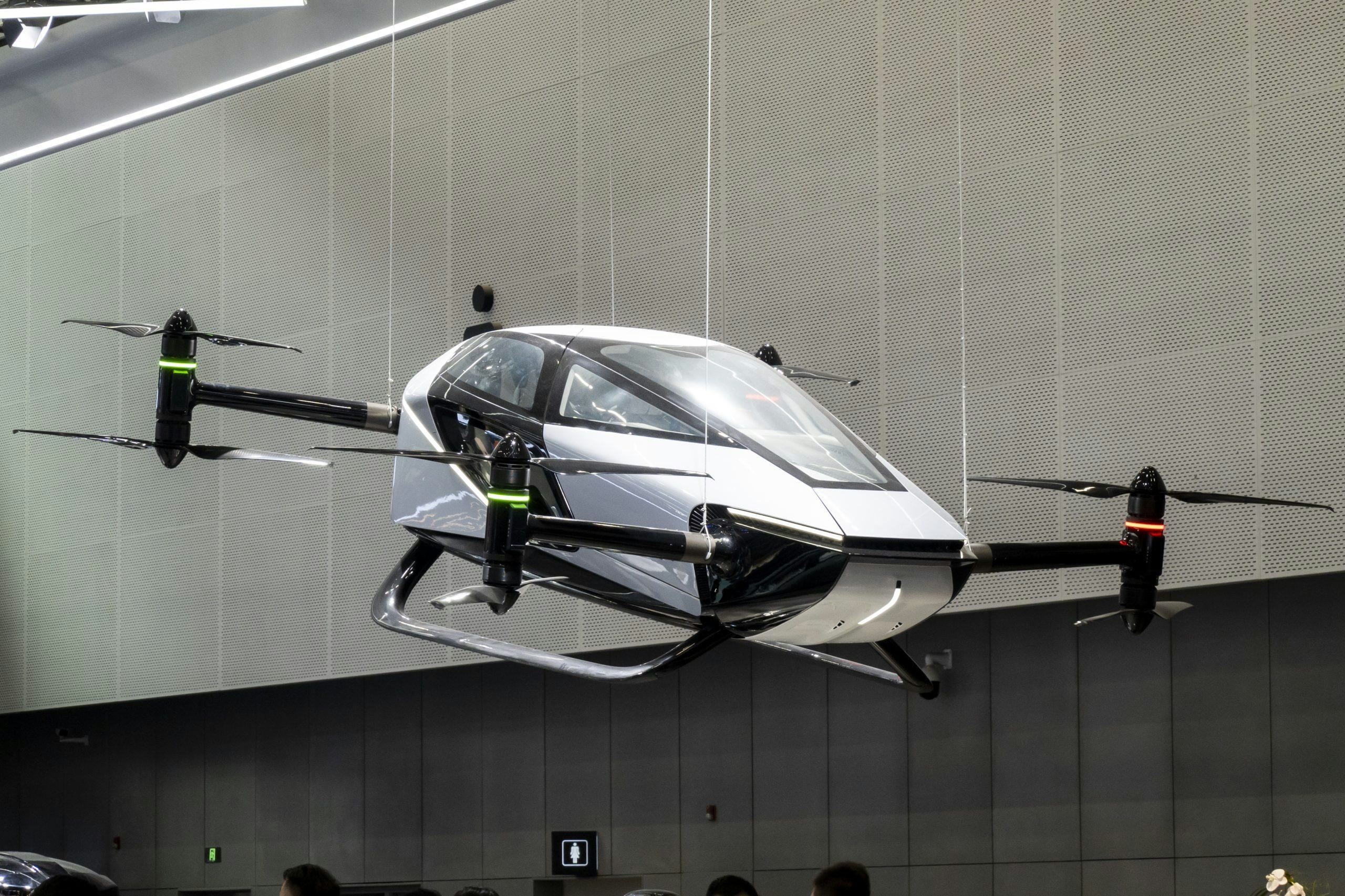
Trump Administration Advances Plans to Integrate Flying Taxis into U.S. Airspace
The Trump administration has announced a comprehensive framework designed to accelerate the integration of flying taxis into American airspace, signaling a significant step toward transforming what was once a futuristic concept into a tangible reality. Unveiled by Transportation Secretary Sean Duffy, the initiative forms part of a broader strategy to foster innovation within the aviation sector and to ensure that the United States remains competitive in the rapidly evolving global market.
Strategic Competition and Industry Momentum
Secretary Duffy emphasized the urgency of the initiative by highlighting the competitive landscape, particularly with China, which has made notable progress in flying taxi technology. Chinese companies such as EHang have already conducted public test flights and advanced regulatory approvals, intensifying the race for dominance in urban air mobility. In response, U.S. firms including Archer, Joby, and Beta Technologies are accelerating their development efforts. The economic stakes are high, as demonstrated by Beta Technologies’ recent 9% stock increase following a $1 billion motor deal with Eve Air Mobility, reflecting strong investor confidence in the sector’s growth potential.
Regulatory and Public Challenges
Despite the enthusiasm surrounding flying taxis, significant obstacles remain. Regulatory agencies face the complex task of establishing comprehensive safety standards and operational guidelines to govern these novel aircraft. Additionally, public concerns regarding safety, noise pollution, and potential airspace congestion must be carefully managed to facilitate widespread acceptance. These challenges underscore the delicate balance between fostering innovation and ensuring rigorous oversight.
Military Interest and Dual-Use Implications
The Pentagon’s interest in hybrid and autonomous air taxis for military applications introduces an additional layer of complexity and opportunity. This dual-use potential could accelerate technological development but also raises important questions about regulatory oversight and the implications of deploying such technology in defense contexts.
As the Trump administration advances its agenda to bring flying taxis to market, industry leaders and policymakers recognize that the success of this endeavor will hinge on harmonizing rapid innovation with stringent safety and regulatory frameworks. The coming years will be critical in determining whether the United States can sustain its leadership in this dynamic and competitive field.

Etihad Airways Suspends Airbus A380 Flights on Key Route

Aditya Birla Group Seeks Approval for Aircraft Leasing in GIFT City

Qatar Airways Highlights Innovation and Connectivity at Arabian Travel Market 2026

Hong Kong's Five-Year Plan Includes Andrew Fan's Aircraft Parts Processing Hub Proposal

ACIA Aero Leasing Delivers ATR72-600 to Air Nostrum

RTX Appoints Jill Albertelli as Head of Pratt & Whitney

TAT Technologies Joins Beyond Aero Hydrogen Aircraft Program

AURAK Study Highlights Barriers to Air Taxi Adoption in Emerging Economies

Xiamen Air Selects Altitude for 787 Maintenance at Heathrow

Etihad and Swissport Extend Global Partnership
