
Orquesta conocimientos de IA para convertirlos en acción

Tendencias
Categories
United 777 Makes Emergency Landing in Houston After Engine Fire
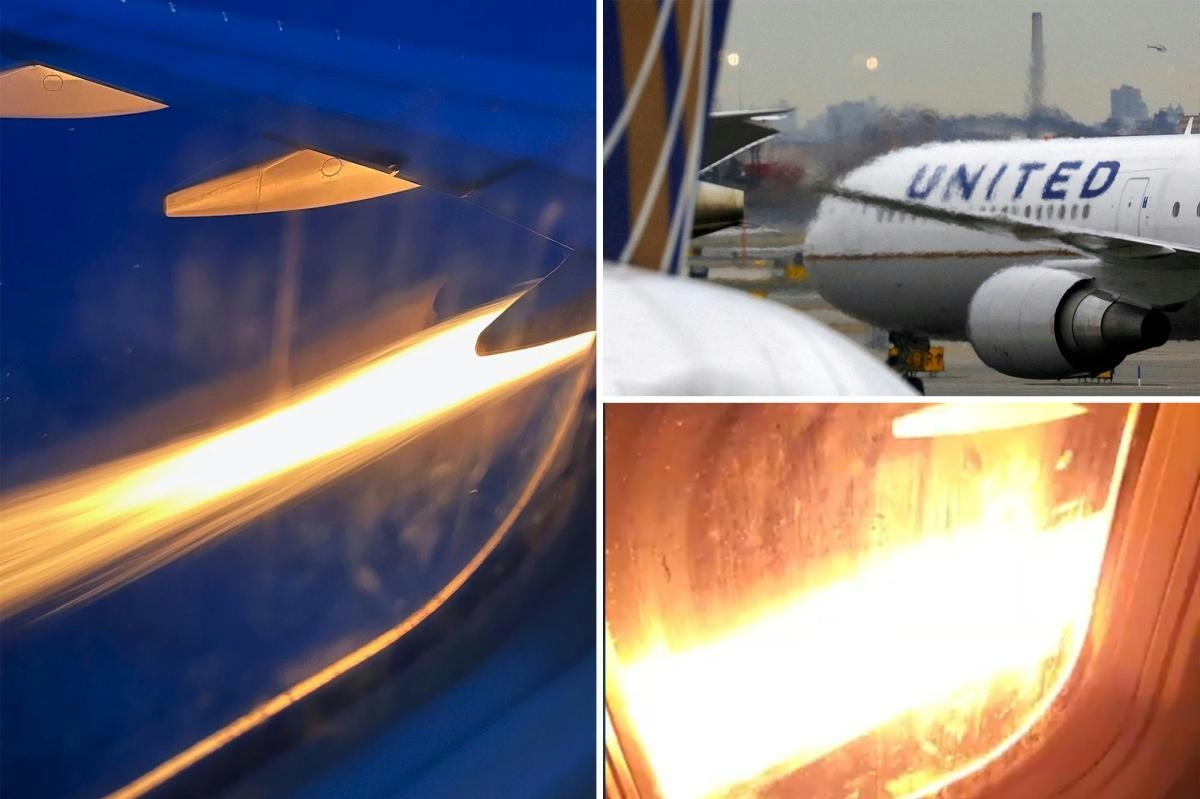
United 777 Makes Emergency Landing in Houston After Engine Fire
A United Airlines Boeing 777-200ER was compelled to execute an emergency landing at Houston George Bush Intercontinental Airport (IAH) on Friday evening following a reported engine fire shortly after takeoff. The aircraft, operating as Flight UA102 bound for Munich Airport (MUC), returned safely to Houston approximately 40 minutes after departure. All 280 individuals on board disembarked without injury.
Incident Details and Passenger Accounts
Passengers recounted hearing a series of loud bangs emanating from the right-hand engine soon after the plane departed Houston at 6:30 PM local time. Among those onboard was former NFL quarterback Robert Griffin III, who described witnessing flames and hearing "15 straight loud bangs." The flight crew promptly declared an emergency, notifying air traffic control that the aircraft had lost an engine. Maintaining an altitude of 3,000 feet, the plane circled back and landed safely at 7:10 PM. United Airlines confirmed the event, stating, "United flight 102 from Houston to Munich returned to George Bush Intercontinental Airport to address an engine issue. The flight landed safely and customers deplaned normally."
Aircraft Background and Fleet Context
The aircraft involved, a 27-year-old Boeing 777-200ER registered as N78009, joined United’s fleet in 2010 following the merger with Continental Airlines. According to ch-aviation data, the jet has accumulated over 127,000 flight hours and 13,000 flight cycles. On this flight, it was nearly at full capacity, carrying 267 passengers and 13 crew members. The cabin configuration includes three classes: 50 business, 24 premium economy, and 202 economy seats.
United operates a fleet of more than 70 Boeing 777-200s, some exceeding 31 years in service, making them among the oldest widebody aircraft in the airline’s inventory. While the majority of United’s 777s are powered by Pratt & Whitney PW4000 engines, the aircraft involved in Friday’s incident belongs to a sub-fleet of 22 former Continental jets equipped with General Electric GE90 engines. These ex-Continental 777s are also notable for being the first in United’s fleet to feature Starlink high-speed internet.
Industry Implications and Regulatory Context
This incident occurs amid increased scrutiny of engine reliability and maintenance within the aviation industry. Airline executives at the recent International Air Transport Association annual meeting criticized engine manufacturers for persistent delays and reliability challenges. The Federal Aviation Administration (FAA) has extended the deadline for required upgrades to the nacelles of Pratt & Whitney-powered Boeing 777s, underscoring broader concerns regarding engine safety and performance. Events such as this are expected to heighten market and regulatory pressure on engine manufacturers to provide timely and dependable solutions, helping airlines avoid costly operational disruptions.
Despite the alarming circumstances, no injuries were reported, and all passengers disembarked safely. United Airlines has not yet announced when the affected aircraft will return to service.

Etihad and Swissport Extend Global Partnership
Sepehran Airlines B737 Returns to Mashhad After Tyre and Engine Issues

Etihad Deploys Widebody Fleet to Meet Strong Demand

Korean Air Finalizes $36.2 Billion Deal with Boeing

Australia’s RFDS Queensland Section Orders Six King Air 260Cs

Korean Air Finalizes Order for 103 Boeing Jets and Engines

Embraer E195-E2 Features Distinctive Engine Placement Among Regional Jets

What Passengers Can Expect on Boeing’s New 777X Jet

How Ethiopian Airlines Became Africa’s Leading Carrier Amid Gulf Competition

Joby Aviation Extends Autonomous Flight Capabilities with Cross-Country Tour
