
Orquesta conocimientos de IA para convertirlos en acción

Tendencias
Categories
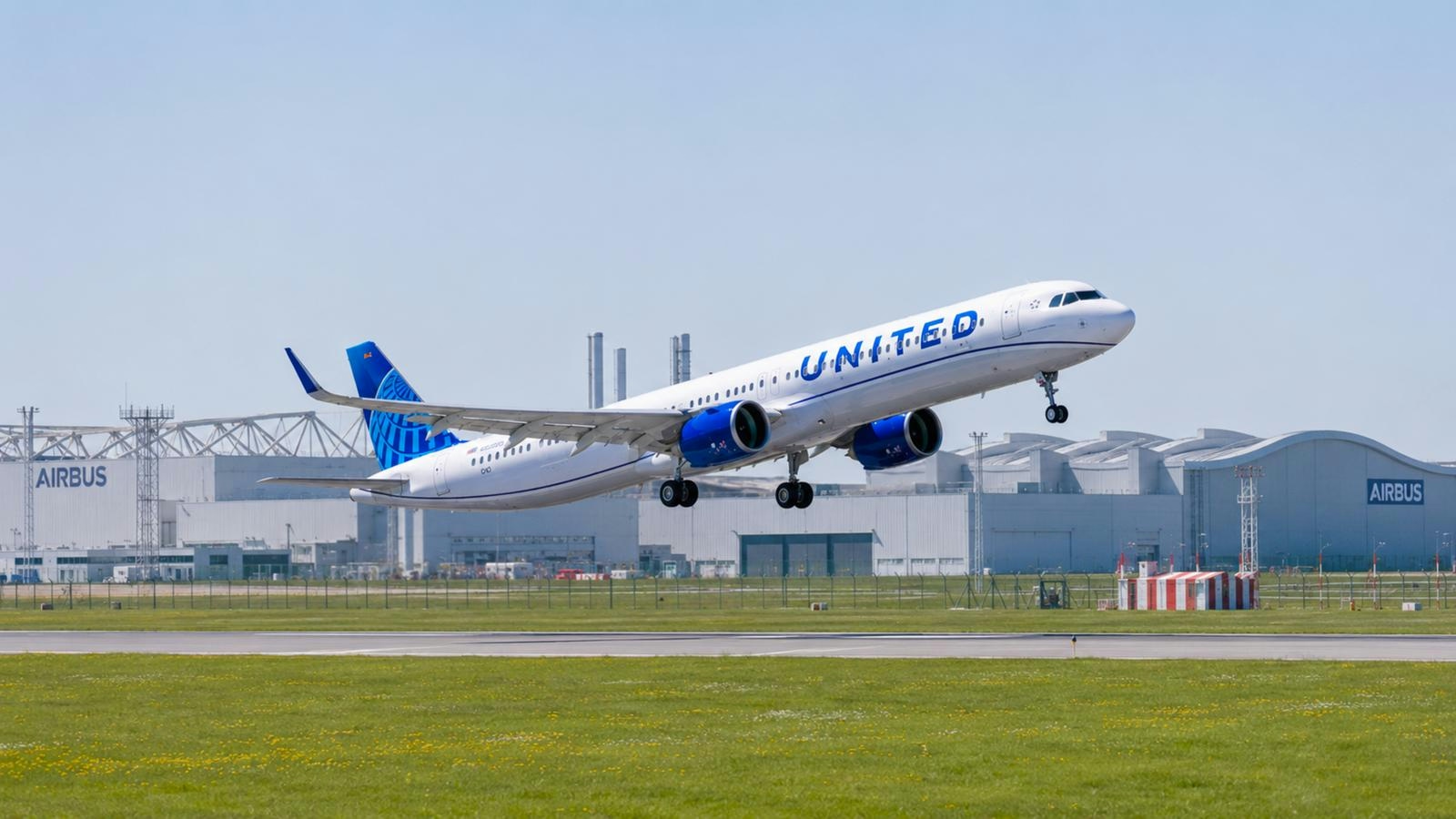
United Airlines Receives First Airbus A321XLR in Hamburg
United Airlines Receives First Airbus A321XLR in Hamburg
United Airlines has taken delivery of its first Airbus A321XLR, marking a pivotal advancement in the carrier’s long-haul single-aisle fleet strategy. The aircraft, registered as N64321, departed Airbus’ Hamburg Finkenwerder facility on June 3, completing a transatlantic flight of over ten hours to Tampa International Airport (TPA). This delivery initiates a new chapter for United, as the A321XLR is poised to replace the aging Boeing 757-200s and facilitate the launch of new long-thin international routes.
Strategic Advantages of the A321XLR
The A321XLR distinguishes itself from the standard A321neo through its extended range and a premium-heavy cabin configuration. United’s version, featuring just 150 seats, offers a true long-haul premium experience with Polaris business class, Premium Plus, Economy Plus, and standard Economy sections. This cabin segmentation, typically reserved for widebody aircraft on international flights, enables United to operate thinner routes with greater efficiency and lower risk compared to deploying larger widebody jets.
Following its arrival in Tampa, the aircraft will be outfitted with Starlink high-speed WiFi, a critical element of United’s onboard connectivity enhancement. After installation, the A321XLR will undergo a series of domestic proving and familiarization flights before commencing long-haul service.
Fleet Renewal and Market Implications
United’s acquisition of the A321XLR is part of a broader fleet renewal initiative, which includes an order for 50 of these aircraft placed in 2019. Over the next two years, the airline plans to introduce more than 250 new aircraft, including 68 Airbus A321neo “Coastliner” and A321XLR models. While the A321neo variants will primarily serve transcontinental routes, the XLRs are specifically tailored for extended international operations.
Andrew Nocella, United’s chief commercial officer, highlighted the strategic value of the A321XLR, describing it as an ideal one-for-one replacement for older, less efficient aircraft operating on key intercontinental routes. He emphasized that the aircraft’s range capabilities will enable United to explore new destinations and expand its global network, offering customers increased travel options.
Challenges and Competitive Landscape
Integrating the A321XLR into United’s existing fleet will require careful operational adjustments, including crew training and system integration. The airline must also navigate a competitive environment where other carriers are deploying or reconsidering similar aircraft. Saudia has already taken delivery of the A321XLR, while LATAM is reassessing its plans for the type. Meanwhile, competitors such as Qantas and AirAsia are adapting their route strategies and fleet management in response to the capabilities introduced by the XLR.
The introduction of the A321XLR is expected to intensify competition on long-thin international routes, as airlines leverage the aircraft’s range and efficiency to open new destinations and optimize existing networks. United’s move underscores the growing significance of next-generation narrowbody aircraft in shaping the future landscape of global air travel.

Etihad Airways Suspends Airbus A380 Flights on Key Route

Aditya Birla Group Seeks Approval for Aircraft Leasing in GIFT City

Qatar Airways Highlights Innovation and Connectivity at Arabian Travel Market 2026

Hong Kong's Five-Year Plan Includes Andrew Fan's Aircraft Parts Processing Hub Proposal

ACIA Aero Leasing Delivers ATR72-600 to Air Nostrum

RTX Appoints Jill Albertelli as Head of Pratt & Whitney

TAT Technologies Joins Beyond Aero Hydrogen Aircraft Program

AURAK Study Highlights Barriers to Air Taxi Adoption in Emerging Economies

Xiamen Air Selects Altitude for 787 Maintenance at Heathrow

Etihad and Swissport Extend Global Partnership
