
Orquesta conocimientos de IA para convertirlos en acción

Tendencias
Categories
US Airlines With the Most Improved Narrowbody Seats in 2026
US Airlines With the Most Improved Narrowbody Seats in 2026
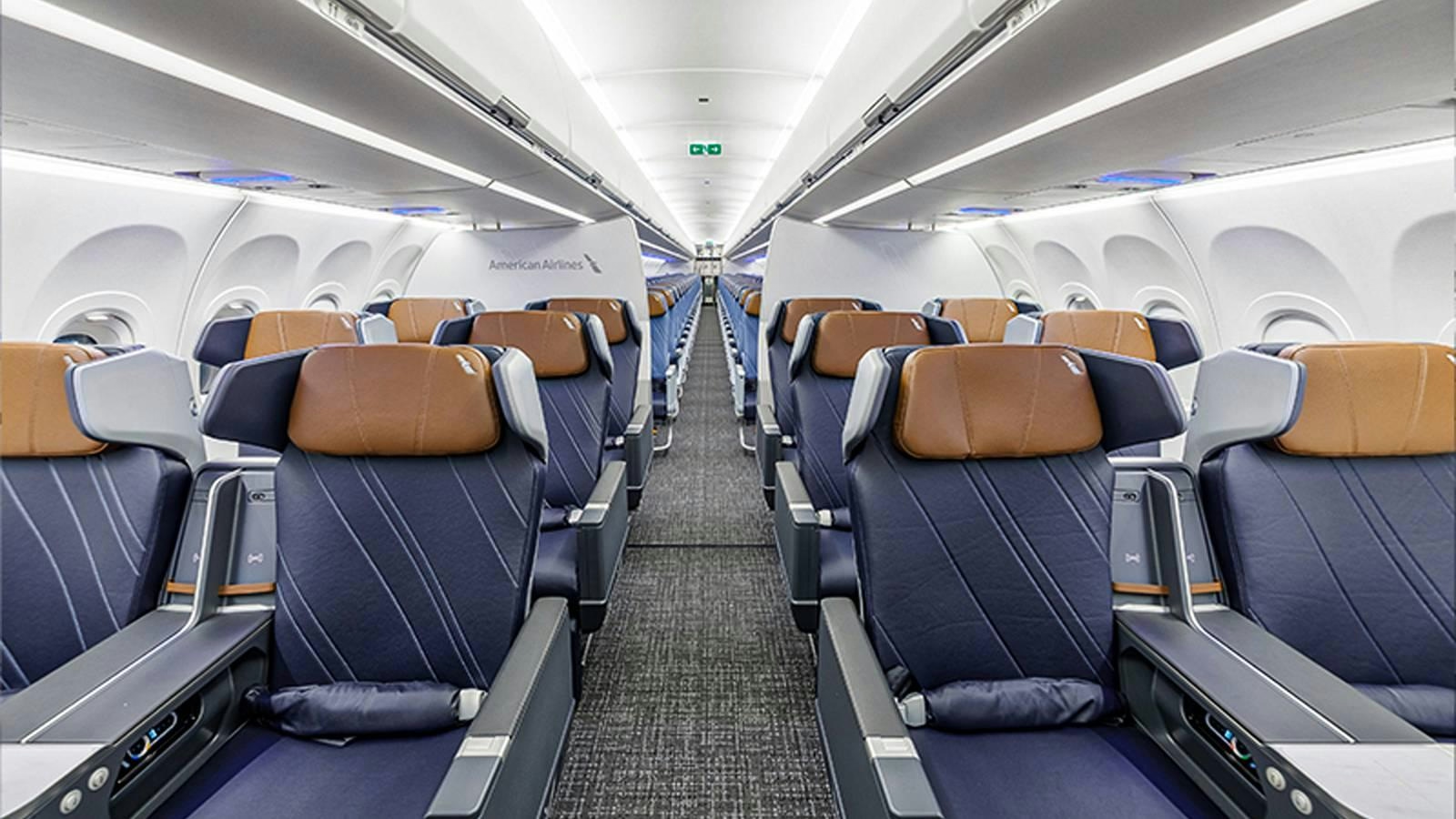
For many years, flying on narrowbody aircraft within the United States was synonymous with cramped seating, limited legroom, and a relentless effort by airlines to maximize passenger capacity. However, in 2026, this long-standing perception is undergoing a significant transformation. A wave of cabin enhancements is reshaping the narrowbody experience, driven by the expanding market for aircraft such as the Airbus A321neo and Boeing 737 MAX, alongside intensifying competition to attract premium travelers.
These upgrades extend beyond superficial marketing claims. Airlines are introducing innovative seat designs that better preserve knee space, incorporating enhanced cushioning to improve comfort on longer journeys, and installing larger, more robust tray tables. Modern in-seat power outlets and thoughtful amenities such as improved device holders, adjustable headrests, and more reliable Wi-Fi connectivity are becoming standard. Collectively, these improvements represent a meaningful elevation in passenger comfort, particularly for those undertaking domestic and short-haul international flights.
The Backbone of US Aviation
Narrowbody jets remain the cornerstone of commercial aviation in the United States, managing the majority of daily departures and servicing routes across North America, the Caribbean, and parts of Central and South America. The largest carriers—American Airlines, Delta Air Lines, and United Airlines—operate extensive fleets comprising Airbus A319, A320, and A321 variants, as well as Boeing 737 models. These aircraft are essential for feeding major hubs and maintaining high-frequency service on critical routes. For these airlines, modernizing cabins to enhance comfort is a strategic imperative to attract both business and leisure travelers.
Southwest Airlines distinguishes itself as the largest narrowbody specialist, operating an all-Boeing 737 fleet focused on point-to-point service and rapid aircraft turnarounds. JetBlue utilizes its Airbus A320 family to offer a blend of leisure and premium transcontinental flights, while Alaska Airlines employs its Boeing 737 fleet to connect the West Coast and expand its national reach. On the ultra-low-cost carrier front, Spirit and Frontier Airlines operate high-density Airbus A320-family fleets designed to minimize costs, whereas Allegiant Air uses a mix of A320-family aircraft to support its leisure-oriented network. Regional airlines, flying smaller jets such as the Embraer E175, continue to play a vital role by bridging the gap between mainline and regional services.
Upgrades and Challenges in 2026
American Airlines is undertaking one of the most substantial improvements in narrowbody comfort this year, emphasizing faster connectivity, consistent in-seat power, and a more contemporary onboard environment across its fleet. After years of inconsistent cabin experiences, the airline is now focused on standardizing its interiors to meet rising passenger expectations.
Delta Air Lines is responding to evolving market demands by expanding its premium seating offerings, particularly as demand grows among high-yield travelers. Central to this strategy is the ongoing investment in its A321neo fleet, which provides additional premium seats and upgraded amenities. JetBlue, despite facing fleet and airport slot constraints that have slowed its transatlantic expansion, is differentiating itself through new airport lounges and enhanced onboard products to maintain competitiveness as rivals introduce more premium narrowbody aircraft.
Southwest Airlines, traditionally known for its no-frills service, has adapted by modifying its Boeing 737-700 fleet to include assigned seating and extra-legroom options, reflecting a broader industry trend toward improved passenger comfort.
Despite these advancements, US airlines continue to grapple with challenges such as fleet limitations and airport slot restrictions, which can impede the pace of cabin upgrades and network expansion. Nonetheless, the competition to deliver the most comfortable and modern narrowbody experience is intensifying, heralding a new era for passengers across the country.

Etihad Airways Suspends Airbus A380 Flights on Key Route

Aditya Birla Group Seeks Approval for Aircraft Leasing in GIFT City

Qatar Airways Highlights Innovation and Connectivity at Arabian Travel Market 2026

Hong Kong's Five-Year Plan Includes Andrew Fan's Aircraft Parts Processing Hub Proposal

ACIA Aero Leasing Delivers ATR72-600 to Air Nostrum

RTX Appoints Jill Albertelli as Head of Pratt & Whitney

TAT Technologies Joins Beyond Aero Hydrogen Aircraft Program

AURAK Study Highlights Barriers to Air Taxi Adoption in Emerging Economies

Xiamen Air Selects Altitude for 787 Maintenance at Heathrow

Etihad and Swissport Extend Global Partnership
